

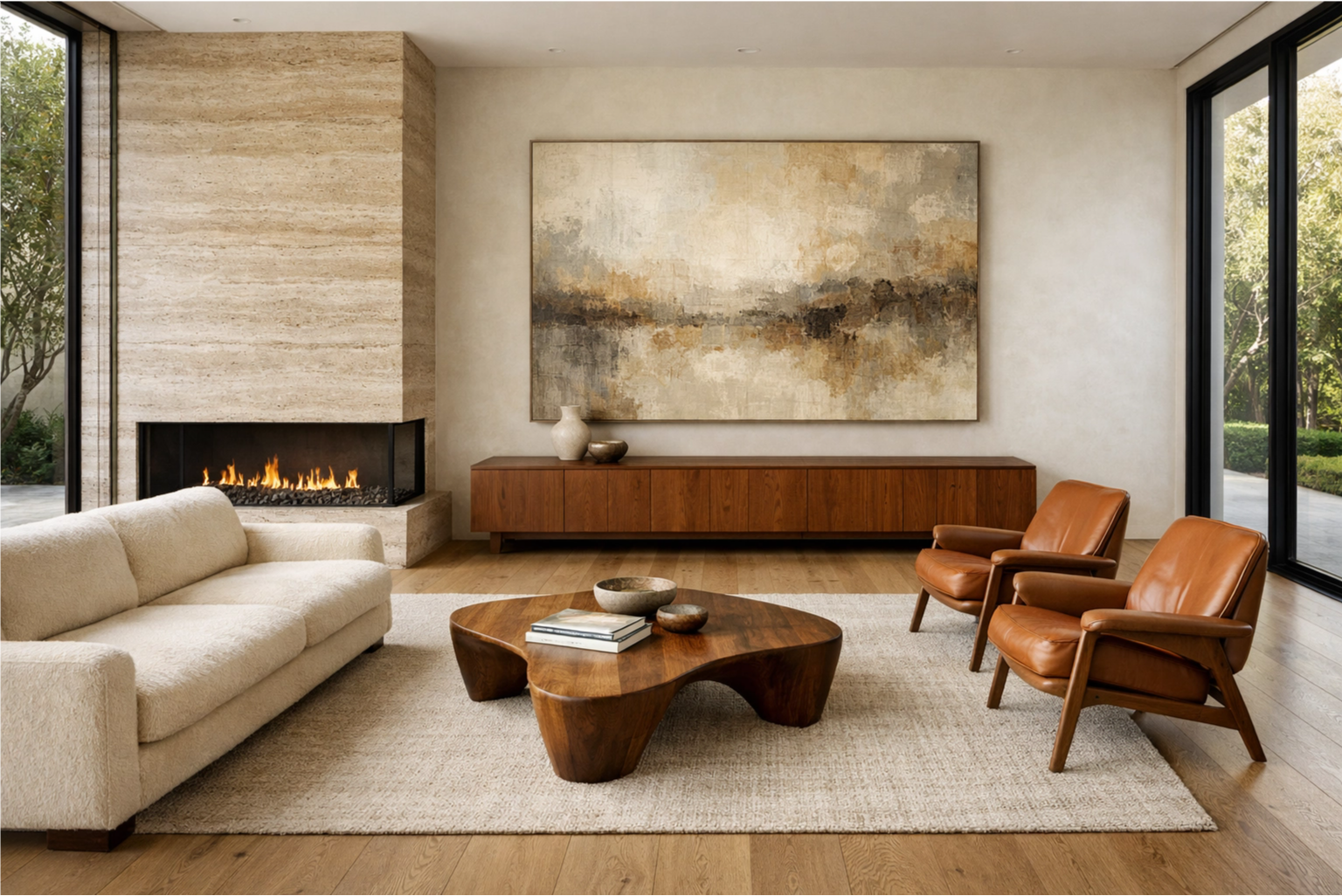
The contemporary movement toward minimalist luxury emerges from exhaustion with both sterile white-box modernism and cluttered maximalism, seeking instead what designers increasingly call "warm minimalism" or "quiet luxury"—spaces that achieve sophistication through material quality, proportion, and restraint rather than through abundance or obvious display. For collectors, this evolution in interior thinking offers more than stylistic guidance; it provides a framework for creating environments where artwork commands the attention it deserves rather than competing with decorative noise for viewer engagement.
The terminology surrounding this movement reveals its conceptual depth. "Quiet luxury" derives from fashion's rejection of logo-driven status signaling in favor of materials and construction that communicate quality to those capable of recognizing it. "Warm minimalism" describes the evolution from cold, clinical reductions to spaces that maintain simplicity while incorporating natural materials, texture, and color that create emotional resonance. "Wabi-sabi," the Japanese aesthetic celebrating beauty in imperfection and transience, provides philosophical grounding for approaches that value authenticity over perfection. Together, these concepts converge on five principles that transform how collectors display and experience significant artwork.
Explore artists whose work rewards the contemplative attention that minimalist environments encourage at Artestial, where collectors find practices that benefit from thoughtful display contexts rather than competing visual noise.
Principle One: Quality Over Quantity
The Investment Mindset
The first and most fundamental principle of minimalist luxury mirrors what serious collectors already understand about building holdings: fewer, better things chosen for lasting value create more satisfaction than abundant accumulations of unremarkable pieces. This principle applies equally to the objects that surround artwork as to the artwork itself, demanding investment in exceptional furniture, materials, and finishes that will age gracefully rather than require periodic replacement.
The approach manifests in preference for solid furniture that can be repaired and refinished rather than replaced, for finishes that develop patina rather than deteriorating, and for materials selected as much for how they will appear in twenty years as for how they look when installed. A single exceptional sofa that lasts thirty years with reupholstering costs less per year than a succession of disposable alternatives while providing vastly superior daily experience. The discipline runs counter to fast-furniture consumption patterns, just as serious art collecting requires patience that runs counter to impulse buying.
For display environments specifically, quality over quantity means investing in architectural elements that create optimal viewing conditions rather than filling spaces with decorative objects that divide attention. A beautifully finished wall in the right color, properly lit, serves artwork better than elaborate decoration that competes for the viewer's eye. The money saved by not purchasing unnecessary objects funds the materials and craftsmanship that make significant differences in how artwork appears.
Materials That Earn Their Place
The quality principle extends to every material selection within minimalist luxury spaces. Stone appears throughout these interiors—as flooring, fireplace surrounds, countertops, and accent features—precisely because it communicates permanence while aging gracefully. Current preferences favor honed rather than polished finishes, as honed stone hides fingerprints and minor scratches while creating softer light effects that don't compete with artwork for visual attention.
Wood provides warmth that prevents minimalist spaces from feeling clinical while offering natural variation that mass-produced materials cannot replicate. Current preferences favor woods with visible grain and character: walnut with its chocolate tones and varied figuring, oak with open grain that creates texture, ash with lighter tones that work well with certain color palettes. The common thread is authenticity—materials that look like what they are rather than attempting to simulate something else.
Natural fiber textiles—linen, wool, cotton, silk—complete the material palette, providing texture while supporting the authenticity that minimalist luxury demands. Heavy velvet absorbs light and creates intimate atmospheres; light linen diffuses brightness and creates airy feelings; wool provides warmth that can make cool artwork feel more accessible. These materials age gracefully, developing character through use rather than deteriorating toward replacement.
Principle Two: Embrace Imperfection Through Wabi-Sabi
Finding Beauty in the Authentic
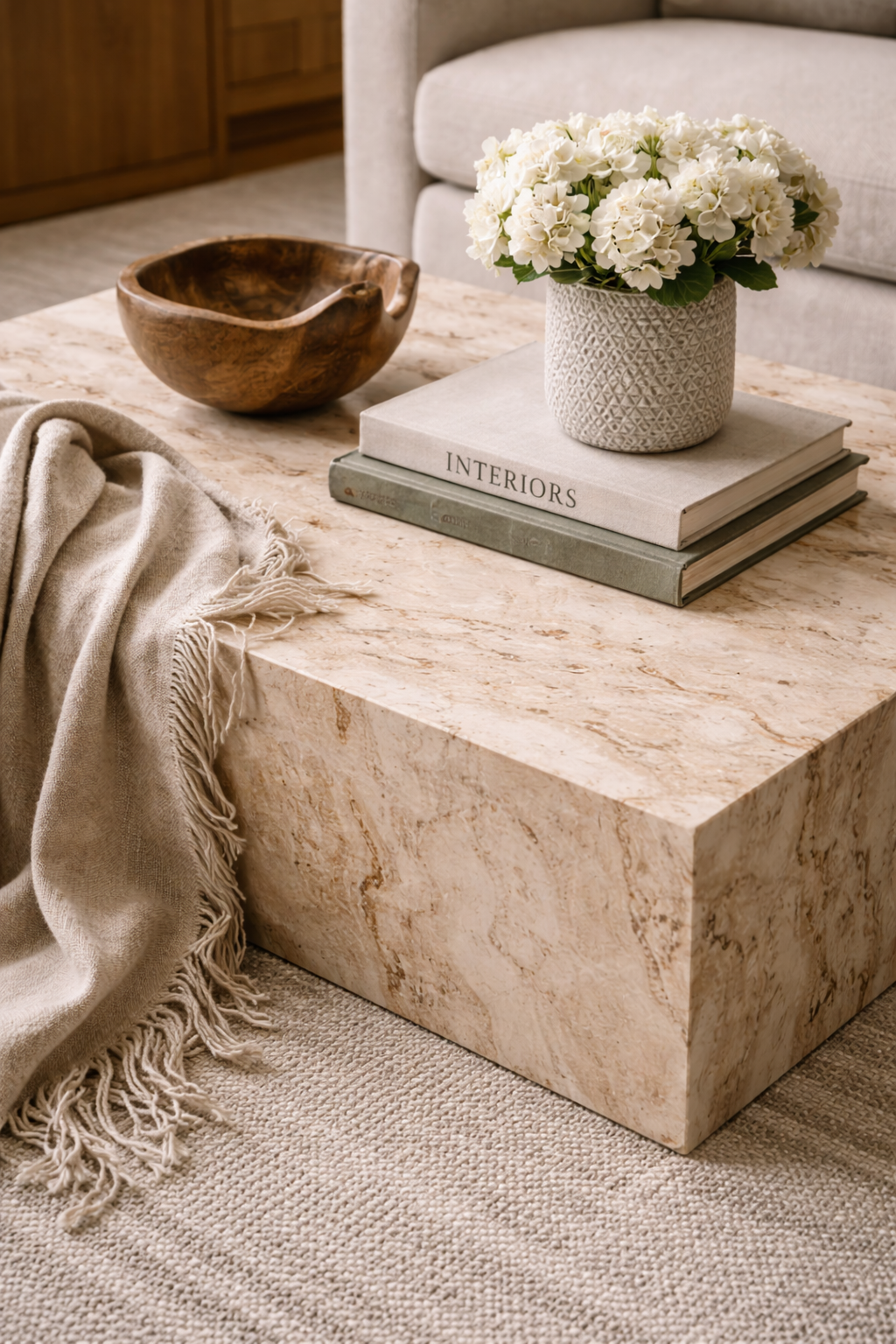
The second principle draws from Japanese aesthetic philosophy to challenge Western assumptions about perfection. Wabi-sabi celebrates asymmetry, roughness, and the marks that time leaves on objects, providing language for appreciating qualities that mass production cannot replicate—the irregularities of handmade objects, the patina that develops through use, the character that emerges from aging. For collectors, this principle validates approaches to both artwork and display environments that prioritize authenticity over pristine perfection.
The kintsugi practice—repairing broken ceramics with gold, making the repair itself a feature rather than something to hide—exemplifies wabi-sabi applied to objects. Rather than concealing damage, the approach celebrates it, creating pieces more valuable and more interesting than the originals. Collectors who embrace this sensibility find themselves less troubled by the minor condition issues that affect most artwork over time and more appreciative of the histories that such evidence represents.
Applied to interiors, wabi-sabi means accepting that a vintage frame with minor wear may suit certain artwork better than pristine contemporary framing because it communicates that the work has been lived with, valued, and cared for across time. A slightly uneven hand-plastered wall creates more interesting light effects than machined perfection while signaling the human craft involved in its creation. The goal is environments that feel authentic rather than staged, lived-in rather than showroom-perfect.
Natural Materials and Time's Action
Wabi-sabi's emphasis on natural materials connects to minimalist luxury through shared appreciation for how authentic materials change over time. Stone develops patina. Wood darkens or lightens depending on exposure. Leather softens and takes on character. Linen relaxes into comfortable drape. These changes represent not deterioration but evolution—the objects becoming more fully themselves through use and time.
This perspective contrasts sharply with synthetic materials engineered to resist change, maintain uniform appearance, and eventually fail catastrophically rather than aging gradually. The wabi-sabi approach prefers materials that may require more care but reward that attention with increasing character. A well-maintained leather sofa at thirty years old possesses qualities no new piece can match, just as an old master painting's craquelure becomes part of its aesthetic identity rather than mere damage.
For display environments, this means selecting materials that will enhance rather than detract from artwork as both age together. Stone floors that develop wear patterns where feet travel most frequently. Wood architectural details that darken to complement rather than compete with the works they frame. Plaster walls that may show minor imperfections but create light effects that make paintings appear to glow from within. The goal is environments that mature alongside collections rather than requiring periodic replacement to maintain appearance.
Principle Three: Light as Primary Material
The Gallery Approach at Home
The third principle recognizes what professional galleries understand: illumination fundamentally shapes how artwork appears. Light deserves treatment as a primary design material rather than mere practical necessity, with natural light, carefully controlled artificial light, and the interplay between them becoming central considerations in creating spaces where artwork can be properly experienced.
Current design thinking emphasizes maximizing natural light through clean windows, minimal window treatments, and spatial arrangements that allow daylight to penetrate deeply into interiors. This preference reflects both wabi-sabi's connection to nature and practical understanding that natural light reveals artwork's colors more accurately than most artificial alternatives. North-facing windows in the Northern Hemisphere provide consistent, indirect light ideal for artwork, while other orientations require treatment to prevent direct sunlight from damaging work or creating uncomfortable viewing conditions.
For evening viewing and supplementary illumination, the trend moves toward hidden sources and warm color temperatures. Rather than visible track lighting that reads as institutional, current approaches integrate lighting into architectural elements—coves that wash walls with indirect light, recessed fixtures that disappear into ceilings, picture lights that attach directly to frames. Color temperature selections around 2700-3000 Kelvin provide warmth that complements both artwork and human skin tones without the yellow cast of older incandescent sources.
Creating Optimal Conditions
The lighting principle requires understanding how different approaches affect artwork viewing. Wall-washing from ceiling-mounted fixtures creates even illumination across entire surfaces, eliminating shadows and hot spots that distract from artwork. Picture lights attached to frames or walls above works provide targeted illumination for individual pieces, though their visible presence may conflict with minimalist aesthetics. Track systems offer flexibility for rotating collections but introduce visual apparatus that cluttered spaces should avoid.
Natural light requires management as well as celebration. UV radiation damages many art materials, requiring window treatments that admit visible light while blocking harmful wavelengths. Direct sunlight creates glare and uneven illumination that interferes with viewing while potentially causing fading and deterioration. The solution typically involves motorized shading systems that adjust throughout the day, admitting maximum light during overcast conditions while protecting against direct sun when necessary.
The investment in proper lighting infrastructure—whether during construction or renovation—pays dividends throughout a collection's lifetime. Artwork shown in optimal lighting conditions reveals details, colors, and qualities invisible under poor illumination. The difference between adequately lit and properly lit spaces often determines whether collectors genuinely engage with displayed works or merely glance at them in passing.
Principle Four: The Power of Negative Space
Empty as Essential
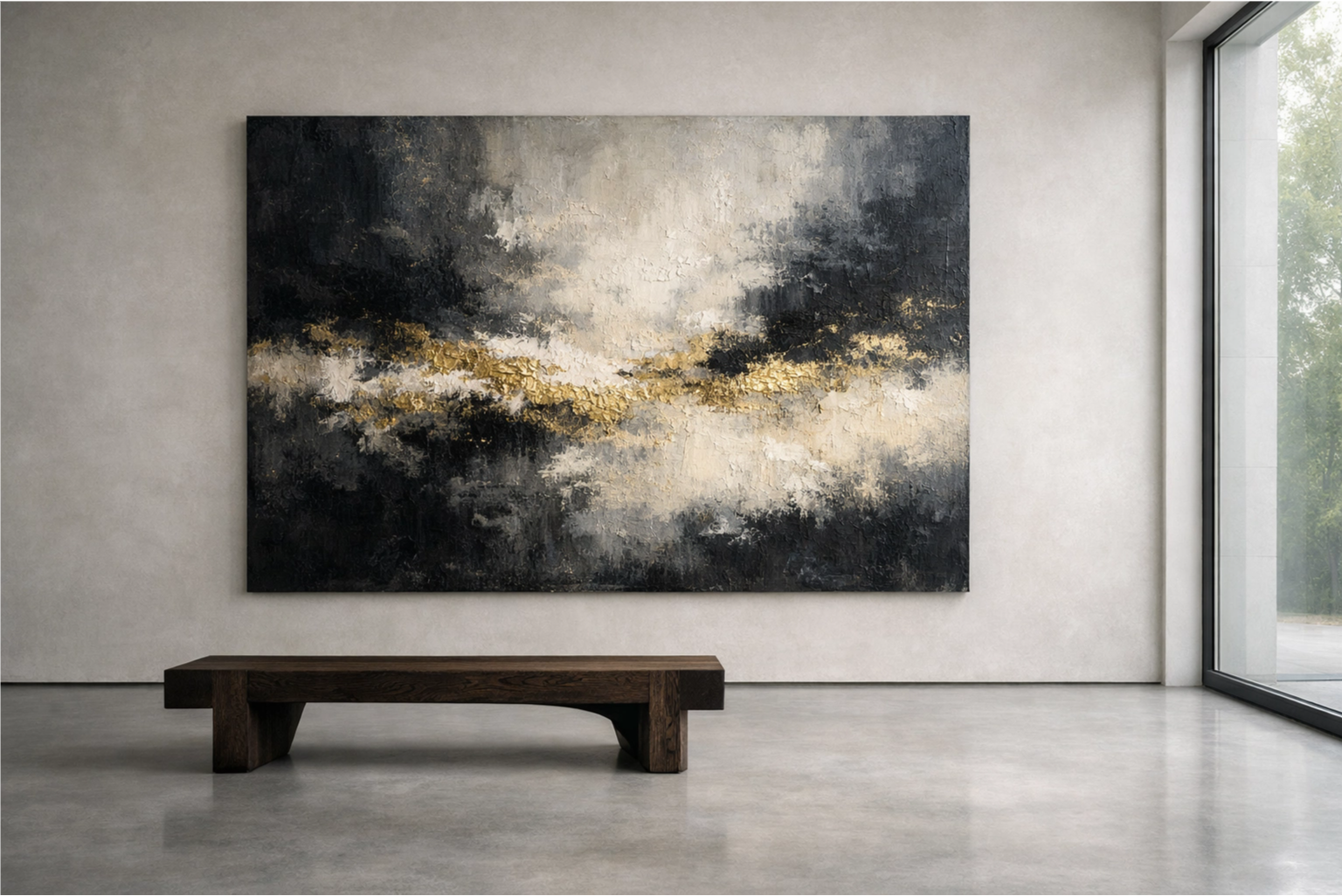
The fourth principle challenges the instinct to fill every available surface. Negative space—the empty areas around and between objects—proves as important as the objects themselves in minimalist luxury interiors. Rather than viewing empty wall space as waste to be filled, this principle treats emptiness as essential component that allows displayed works to occupy visual attention without competition.
For artwork, generous negative space provides the visual equivalent of breathing room. A painting surrounded by ample wall area appears more significant than the same work crowded among others, not because of any change in the work itself but because the display communicates importance through the space allocated to it. Museums understand this principle, which is why major works typically hang alone on large walls while minor pieces cluster in study galleries where the goal is documentation rather than experience.
The psychological research supporting this approach suggests that humans can meaningfully attend to only limited visual information at once. A room with twenty artworks provides roughly five percent of the viewer's attention to each, while a room with five works provides twenty percent—a fourfold increase in potential engagement with each piece. The mathematics simplify, but the principle holds: restraint in quantity enables depth of experience that abundance prevents.
The Single Statement Approach
Perhaps the most significant implication of the negative space principle involves reconsidering how many artworks any given space should display. Where traditional approaches often filled every available wall surface, current thinking increasingly favors single significant works that can be fully appreciated rather than multiple pieces competing for attention.
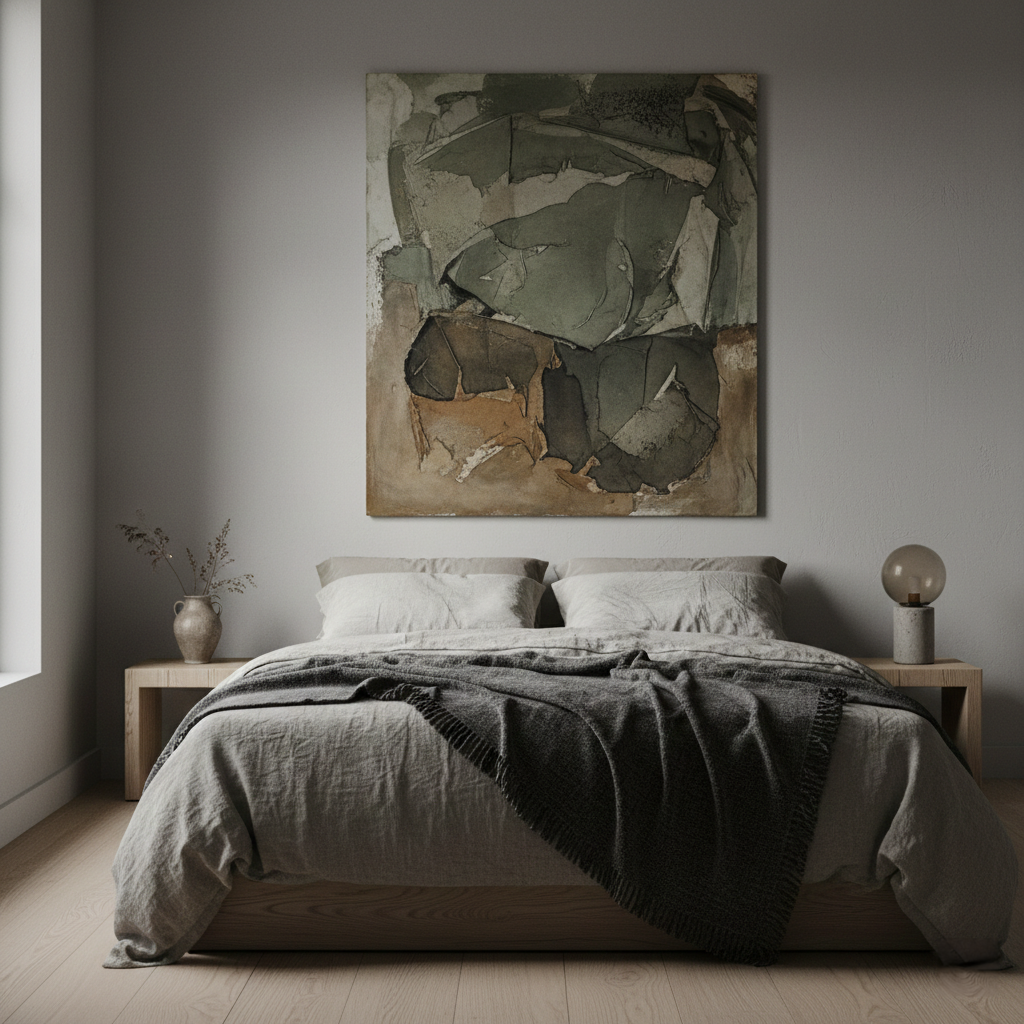
This approach treats each room as a curatorial opportunity to present one work—or carefully selected grouping—in optimal conditions. The living room might feature a single major painting above a fireplace or on a primary wall. The bedroom might host a quieter work suited to contemplative viewing. The entry might present something that establishes collection character for arriving visitors. Rather than trying to show everything simultaneously, the collector rotates works or maintains separate viewing and storage, ensuring that displayed pieces receive the attention they deserve.
The practical application involves resisting the tendency to fill every surface. Walls benefit from large areas of uninterrupted surface that make displayed works more impactful. Furniture arrangements benefit from negative space that creates visual rest areas between objects. Shelving benefits from empty sections that prevent the cluttered appearance of complete filling. In every case, the restraint required proves more challenging than abundance but creates significantly more powerful results.
For collectors whose 2026 holdings include digital or kinetic works—screen-based pieces, LED installations, or works with integrated lighting—negative space takes on additional technical importance. Light-bleed from digital displays can affect the viewing experience of nearby physical paintings, washing out colors or creating unwanted reflections on varnished surfaces. These works require dedicated breathing room that prevents their luminosity from competing with or diminishing adjacent pieces. The solution often involves positioning digital works on separate walls or in alcoves where their light remains contained, treating the transition zones between digital and physical works as essential buffer rather than wasted space.
Principle Five: Intentional Editing as Ongoing Practice
The Curatorial Discipline
The fifth principle recognizes that minimalist luxury requires ongoing attention rather than one-time achievement. Intentionality transforms design from mere decoration into curatorial practice, where every object earns its place through contribution to the whole rather than through individual impact alone. This curatorial approach aligns naturally with how collectors think about their holdings—evaluating not just individual quality but how pieces work together, what gaps exist in coverage, and whether new acquisitions strengthen or merely expand existing collections.
The discipline required to maintain intentional spaces proves considerable. Domestic environments accumulate objects over time through gifts, travel acquisitions, inherited items, and various practical necessities. The minimalist luxury approach demands regular editing—assessing whether each object continues to merit its place, whether accumulation has compromised the coherence that made the space effective initially, and whether changes in collection or lifestyle require spatial reconfiguration.
This ongoing attention distinguishes designed environments from decorated ones. A designed space maintains its character because someone continues thinking about it, making adjustments as circumstances change, removing what no longer serves. A decorated space freezes at a moment of completion and gradually degrades as life's inevitable additions accumulate without corresponding subtractions.
Rotation as Solution
For collectors whose holdings exceed display capacity, rotation provides the mechanism for maintaining minimalist principles while living with substantial collections. Rather than permanent installations that eventually fade into backgrounds, regular changes maintain the attention that revealed why each work mattered initially. Seasonal rotations can respond to changing light conditions; thematic groupings can explore connections between works; new acquisitions can receive featured display before finding permanent places in rotation schedules.
This approach requires appropriate storage for works not currently displayed—conditions that protect against damage while allowing efficient access for rotation. The investment in proper storage, including climate control, physical protection, and organization systems, proves essential for collectors whose holdings exceed display capacity. The storage becomes part of the collection infrastructure rather than mere afterthought, enabling the minimalist display philosophy that makes individual works more impactful.
The editing process benefits from external perspective, whether from designers, consultants, or trusted friends who can evaluate spaces without the emotional attachments that owners bring. What seems essential to someone living with it may appear obviously excessive to fresh eyes. The editing question shifts from "should this stay?" to "does this earn its place?"—a higher standard that reveals much currently displayed out of inertia rather than intention.
Discover artists whose practices reward the focused attention that thoughtfully designed spaces enable at Artestial, where collecting emphasizes quality over quantity and pieces selected for lasting significance rather than temporary impact.
Putting the Principles Into Practice
Beginning With Assessment
Implementing these five principles starts with honest evaluation of current conditions. This involves documenting everything currently displayed, assessing how well existing environments serve collection purposes, and identifying which principles require most attention. The process often reveals that reduction benefits artwork more than addition—removing competing visual elements creates larger improvements than adding sophisticated systems to already-cluttered spaces.
The editing process should proceed systematically, evaluating each object against the question of whether it earns its place. Objects that serve genuine functional purposes, that provide significant aesthetic contribution, or that hold irreplaceable personal meaning may warrant retention. Objects that merely fill space, that arrived through gift or inheritance without genuine significance, or that represent outdated style preferences become candidates for removal through sale, donation, or storage.
Material upgrades should follow editing rather than preceding it. There's little point in investing in sophisticated lighting or wall treatments when visual improvement will come primarily from removing clutter. Once spaces have been appropriately edited, material assessment can identify where investment would most improve collection display conditions—perhaps better lighting, more neutral wall color, or flooring replacement that eliminates visual distraction.
Integration and Evolution
The five principles work together rather than independently. Quality materials (Principle One) that age gracefully support the wabi-sabi aesthetic (Principle Two). Proper lighting (Principle Three) reveals the qualities that justify negative space allocation (Principle Four). Ongoing editing (Principle Five) maintains the conditions that all other principles establish. Collectors who internalize these principles as integrated philosophy rather than separate rules find them mutually reinforcing.
The relationship between space and collection evolves as both change, requiring periodic reassessment of whether current configurations still serve. A painting that commanded attention when first installed may have faded into familiarity, suggesting either new context or storage rotation. An arrangement that seemed perfect initially may have been compromised by subsequent additions. The minimalist luxury framework provides discipline for these ongoing assessments through clear criteria: Does each displayed work receive adequate attention? Does the space feel coherent rather than accumulated? Do the materials and colors support rather than compete with displayed works?
Conclusion: The Art of Living With Less
The five principles of minimalist luxury—quality over quantity, embracing imperfection, light as material, the power of negative space, and intentional editing—offer collectors more than stylistic guidance. They provide philosophical framework for thinking about the relationship between people, spaces, and objects that aligns naturally with serious collecting practice. The shared emphasis on fewer but better things, on authenticity over perfection, on materials that age gracefully, and on editing as ongoing discipline describes approaches to both interior environments and collection building that reinforce each other.
The challenge lies in implementation. Creating and maintaining genuinely minimalist spaces requires discipline that runs counter to consumer culture's constant encouragement toward acquisition. Editing possessions, resisting additions that compromise spatial integrity, investing in fewer but better objects—these practices demand ongoing attention that many find difficult to sustain. Yet collectors who accept this discipline often discover that living with less enables experiencing more: deeper appreciation of individual works, more meaningful relationships with possessed objects, and spaces that support contemplation rather than stimulating anxiety.
For collectors approaching new spaces or reconsidering existing ones, these five principles provide useful discipline. Quality over quantity ensures that what remains truly matters. Embracing imperfection allows authentic materials and honest aging. Light as primary material creates conditions where artwork reveals its full character. Negative space enables focused attention rather than divided glancing. Intentional editing maintains the coherence that makes everything else work. Together, these principles transform display environments from decorated backgrounds into designed experiences worthy of significant collections.
Ready to explore contemporary work that rewards the contemplative attention minimalist environments enable? Visit Artestial where collectors find artists whose practices benefit from the focused viewing conditions that these five principles create, or connect with specialists for guidance building collections that deserve the spaces you design around them.
Frequently Asked Questions
How do these five principles specifically benefit art collectors compared to general interior design approaches?
The five principles of minimalist luxury address challenges specific to displaying and living with significant artwork that general interior design often overlooks. Where typical design approaches treat art as decorative element among many, these principles recognize artwork as the primary focus around which environments should be organized. The quality-over-quantity principle ensures that surrounding objects don't compete with artwork for attention or diminish its presence through visual noise. The wabi-sabi principle validates the natural aging that affects both artwork and display environments, reducing anxiety about minor condition changes while celebrating the authenticity that develops through time.
The lighting principle incorporates gallery-level understanding of how illumination affects artwork appearance—knowledge that general interior design may not prioritize. Collectors implementing proper lighting discover details, colors, and qualities in their holdings that remained invisible under inadequate illumination. The negative space principle directly addresses the tendency to overcrowd walls that prevents genuine engagement with any single work, while the editing principle provides framework for ongoing collection management that keeps display conditions optimal as holdings grow.
General interior design may produce attractive spaces without serving collection needs, while these five principles ensure that aesthetic decisions consistently support rather than compromise artwork display. The framework helps collectors evaluate design proposals against specific criteria: Will this material choice enhance or compete with displayed works? Does this lighting approach create optimal viewing conditions? Does the furniture arrangement provide adequate negative space around significant pieces? These questions produce different answers than general aesthetic evaluation would.
What are the most common mistakes collectors make when trying to implement minimalist luxury principles?
The most frequent mistake involves pursuing minimalism aesthetically without embracing it philosophically—removing visible clutter while retaining the mindset that every surface should eventually be filled. This approach produces spaces that appear minimal temporarily but gradually accumulate objects until the original problems return. Genuine minimalist luxury requires accepting that empty space serves essential function rather than awaiting future filling, that editing must be ongoing rather than one-time exercise, and that restraint in quantity enables depth of experience.
Another common error involves selecting materials for minimal appearance rather than minimal maintenance and graceful aging. White surfaces that show every mark, delicate fabrics that cannot withstand daily use, and finishes that require constant attention to maintain appearance undermine the peaceful experience that minimalist luxury should create. The wabi-sabi principle suggests choosing materials that improve rather than deteriorate with age and use—stone that develops patina, wood that darkens gracefully, textiles that soften over time.
Collectors also frequently underinvest in lighting while overspending on decorative elements. A beautifully designed space with inadequate lighting fails to serve artwork properly, while even modest environments with excellent lighting can display collections effectively. The lighting principle should receive priority in both planning and budget allocation, as no other factor more significantly affects how artwork appears.
Finally, many collectors resist the editing discipline that the fifth principle requires. Emotional attachments to objects, reluctance to acknowledge past purchasing mistakes, and simple inertia combine to preserve arrangements that no longer serve. External perspective—from designers, consultants, or trusted friends—often proves necessary to identify what should be removed when owners cannot evaluate objectively.
How should collectors approach the tension between minimalist principles and the desire to display substantial collections?
The tension between minimalist display principles and substantial collections resolves through rotation rather than compromise. Rather than displaying everything inadequately, the collector shows selected works optimally while maintaining proper storage for pieces awaiting their turn. This approach treats the home as exhibition space with changing shows rather than permanent installation, creating fresh viewing experiences while ensuring that each displayed work receives appropriate attention.
Effective rotation requires infrastructure that many collectors underestimate: climate-controlled storage that protects works from damage, organization systems that enable efficient access, and documentation that tracks what has been shown when and where. The investment in storage often equals or exceeds display space costs but enables the minimalist principles that make displayed works more impactful.
Rotation scheduling can follow various logics. Seasonal changes might respond to shifting natural light conditions, displaying works that benefit from summer's brightness or winter's intimacy. Thematic groupings might explore connections between works that permanent display would obscure. New acquisitions might receive featured presentation before entering rotation. Anniversary or occasion-based display might honor significant works on meaningful dates.
The rotation approach also enables collectors to live with works they might not display permanently. A challenging piece that rewards occasional contemplation but would prove exhausting in constant view can enter rotation for periodic engagement. Works that relate to specific seasons, occasions, or moods can appear when most appropriate rather than competing for space year-round.
What role does color play in minimalist luxury interiors designed for art display?
Color in minimalist luxury interiors for art display requires careful consideration of how wall tones interact with diverse artworks. The safest approach involves neutral walls in warm off-whites or very subtle warm grays that support most artwork without competing or clashing. These backgrounds allow artwork colors to register accurately while providing enough warmth to prevent clinical coldness that undermines the wabi-sabi principle of authentic, lived-in spaces.
However, neutral doesn't mean identical throughout. Different rooms might employ slightly different neutral tones to suit their light conditions, functions, or the specific works they typically display. A north-facing room with cool natural light might benefit from warmer wall tones, while a south-facing space might handle cooler neutrals. Rooms dedicated to specific works or collection segments might be calibrated to those particular pieces.
The current trend toward "warm minimalism" specifically rejects the stark whites that characterized earlier minimalist aesthetics in favor of cream, sand, warm gray, and mineral tones that provide neutral backgrounds while contributing atmospheric warmth. These colors align with wabi-sabi principles by suggesting natural materials and avoiding the sterile perfection of pure white.
Color elsewhere in the space—furniture, textiles, accessories—should similarly support rather than compete with artwork. Neutral upholstery allows displayed works to provide the color interest that makes spaces feel alive. When collectors desire color beyond their artwork, it should appear in easily changed elements like pillows or throws rather than permanent fixtures, maintaining flexibility as collections evolve.
How do these principles apply to collectors with limited budgets or existing spaces that cannot be extensively renovated?
The five principles scale across budget levels because their core requirements involve discipline and perspective more than expenditure. Quality over quantity actually reduces costs by avoiding unnecessary purchases; collectors who resist accumulating decorative objects save money while creating better display conditions. The wabi-sabi principle validates existing materials that have aged gracefully rather than demanding replacement with new finishes. Editing requires only time and honesty, removing objects that don't serve rather than adding expensive alternatives.
Lighting improvements offer high impact relative to cost. Changing bulbs to appropriate color temperatures, adding simple picture lights, or repositioning existing fixtures to wash walls rather than spot-illuminate can dramatically improve artwork display without renovation. The investment in a few proper LED fixtures with high color rendering indices often produces more improvement than expensive furniture purchases.
Paint represents another high-impact, modest-cost intervention. Repainting walls in appropriate neutral tones suitable for artwork display transforms spaces at fraction of renovation costs. When selecting colors, test actual samples against artwork in the lighting conditions where they'll be viewed—relationships that appear right under store lighting may prove wrong at home.
The negative space principle costs nothing to implement while producing immediate improvement. Removing objects that divide attention, leaving walls partially empty, and resisting the urge to fill every surface all happen without expenditure. Many collectors discover that their spaces improve more through subtraction than any affordable addition could achieve.
For existing spaces that cannot be structurally modified, the principles still guide furniture arrangement, object selection, and display decisions within existing constraints. A collector in a rental apartment with fixed lighting can still implement quality-over-quantity object selection, wabi-sabi material choices, negative space allocation around displayed works, and ongoing editing discipline—adapting the principles to circumstances rather than abandoning them entirely.
Ready to discover contemporary work that rewards thoughtful display and sustained attention? Visit Artestial where collectors find artists whose practices benefit from the focused viewing conditions that these five principles create, or connect with specialists for guidance building collections worthy of the spaces you design around them.
Curating excellence, one insight at a time.
— AURUM Team
Disclaimer: This article provides design and aesthetic commentary about interior design principles for informational purposes only. It does not constitute professional advice regarding interior design, architecture, construction, conservation, or investment decisions. Material selections, lighting systems, and architectural modifications should be evaluated by qualified professionals familiar with specific project requirements, local building codes, and conservation standards appropriate for particular artwork types. The design principles described reflect current industry discourse as of early 2026 and represent one approach among many valid alternatives. Individual aesthetic preferences vary, and what works for some collectors may not suit others. Investment in interior modifications should reflect personal circumstances and goals rather than trend-following. No financial relationships exist between the author or publication and mentioned designers, materials, or services. All observations represent analytical perspective and may not apply to specific individual circumstances or future developments.