

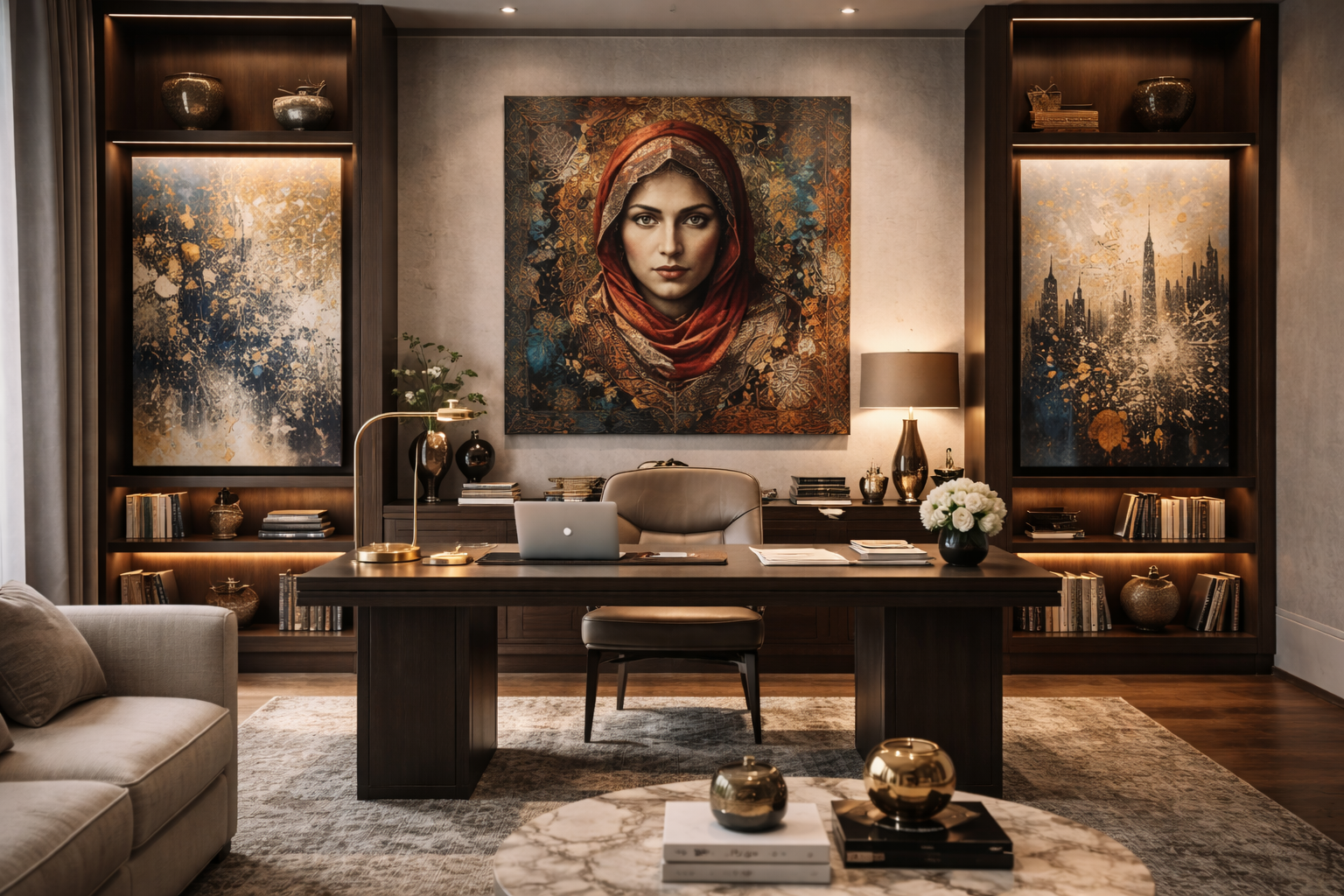
The neuroscientist studying workspace environments expected the opposite result. His hypothesis suggested that surrounding knowledge workers with valuable art would create distraction, cognitive load, and reduced focus. Instead, his research with 200 remote executives revealed counterintuitive findings: thoughtfully curated art in home offices correlates with improved decision-making speed, reduced meeting fatigue, and sustained concentration during complex analytical work. The mechanism, he discovered, involves what psychologists call "attentional restoration"—strategic visual breaks that prevent mental depletion while maintaining engagement with primary tasks.
For sophisticated collectors building or renovating home offices post-pandemic, this research validates intuitive understanding: exceptional art doesn't undermine productivity; mediocre environments do. The challenge involves designing spaces that honor both art collecting principles (proper lighting, climate control, security, display optimization) and productivity requirements (ergonomics, technology integration, acoustic treatment, professional presentation for video calls). Getting this balance right creates workspaces that support both intellectual performance and aesthetic engagement—offices functioning as private galleries that happen to house desks rather than workspaces grudgingly accommodating art.
Understanding how to achieve this integration requires examining successful examples, exploring specific design principles supporting dual use, and identifying common mistakes that compromise either productivity or collection preservation. The home office has evolved from makeshift arrangement at dining tables into permanent workspace deserving serious architectural and curatorial attention comparable to living rooms or dedicated galleries.
The Psychology of Art in Workspaces: Why It Matters
Before addressing specific design strategies, understanding why art affects productivity helps inform collecting and display decisions for home offices.
Cognitive Benefits of Visual Complexity
Research in environmental psychology demonstrates that moderate visual complexity in workspaces supports sustained attention better than either minimal (sterile) or excessive (chaotic) visual environments. Art provides what researchers call "soft fascination"—visual interest that engages attention gently without demanding conscious focus, allowing parallel processing of work tasks while preventing the mental fatigue associated with completely bare walls or overly busy spaces.
A single significant artwork positioned in peripheral vision provides this optimal stimulation. During phone calls, brief data processing pauses, or moments between deep work sessions, eyes naturally drift to art, triggering brief neural reset before returning to primary tasks. This differs fundamentally from checking phones or browsing internet—passive visual engagement with static art allows genuine mental rest while active digital engagement perpetuates cognitive demand.
The key involves selecting art with sufficient visual interest to sustain periodic viewing without becoming tiresome or demanding constant attention. Abstract works with layered complexity, landscape photography suggesting depth and space, or minimalist pieces with subtle variations support this function better than either extremely simple graphics or highly narrative figurative work requiring active interpretation.
Status Signaling and Professional Confidence
For executives conducting video calls from home offices, background art serves dual functions: genuine personal engagement and professional signaling. Carefully curated visible art communicates taste, cultural capital, and success markers to clients, colleagues, and business partners. This isn't superficial—research in organizational psychology confirms that environmental cues affect how others perceive competence, reliability, and professional authority.
However, execution matters enormously. Obviously expensive but poorly integrated art (gilt frames clashing with contemporary furniture, works too large for space, poor lighting creating glare on video) signals wealth without sophistication. Thoughtfully scaled pieces with proper lighting, appropriate for both space and professional context, communicate discernment—more valuable currency in high-trust business relationships than pure expenditure.
The home office art selection therefore requires considering: works appropriate to professional context (abstract or landscape versus potentially controversial content), scale suitable for video framing (mid-sized pieces centered behind workspace), and lighting that photographs well on camera while avoiding glare or backlight issues.
Emotional Regulation and Decision Quality
Perhaps most significantly, art in workspaces affects emotional state, which directly impacts decision quality. Neuroscientific research demonstrates that exposure to preferred visual stimuli (including art collectors personally value) triggers dopamine release, reduces cortisol (stress hormone), and supports prefrontal cortex function governing complex reasoning and judgment.
For collectors working from home, surrounding oneself with personally meaningful art—works acquired through considered decisions, pieces with resonant aesthetic or emotional qualities, or items connecting to valued experiences—creates environments supporting emotional equilibrium during stressful work demands. This matters particularly for roles involving high-stakes decisions, difficult interpersonal dynamics, or sustained analytical effort requiring mental resilience.
The mechanism differs from relaxation or leisure. Well-designed home offices don't aim to be restful (bedrooms serve that function) but rather to support alert, engaged, optimally performing cognitive and emotional states. Art contributes by providing emotional anchoring and subtle positive reinforcement throughout workday.
Discover art perfect for home office environments at Artestial, where collectors find works balancing visual interest with professional appropriateness—pieces supporting both aesthetic engagement and productive focus.
Design Principles: Integrating Art Without Compromising Function
Successful luxury home office design requires specific strategies balancing competing demands of art preservation, aesthetic impact, and workspace functionality.
Lighting: The Critical Variable
Lighting represents the most important—and most commonly mishandled—aspect of home office art integration. Offices require bright, adjustable lighting supporting computer work, reading documents, and professional video appearance. Art requires controlled illumination avoiding UV damage, heat buildup, and glare. These requirements conflict fundamentally unless addressed systematically.
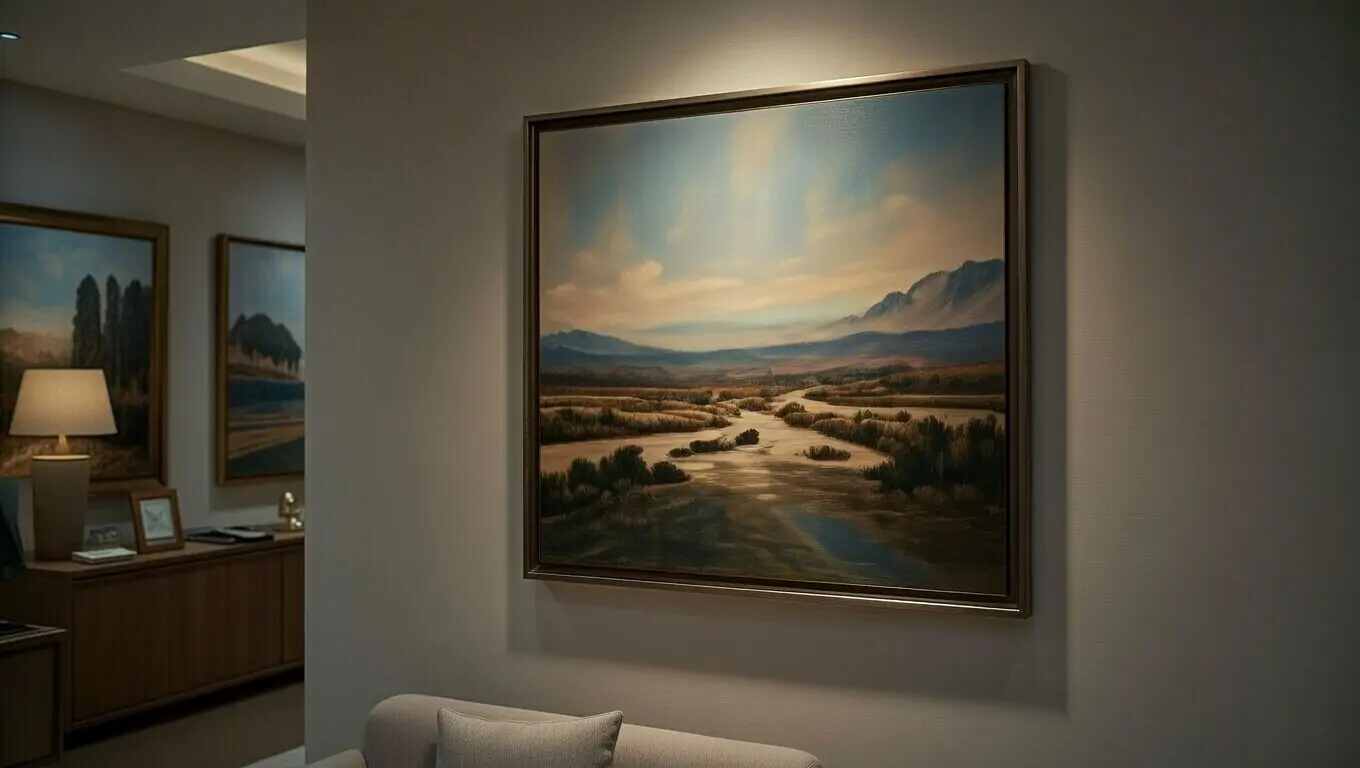
The solution involves layered lighting systems providing independent control for workspace and artwork illumination. Install dedicated picture lights (LED with UV filters, 3000K-3500K color temperature for optimal rendering of traditional oil paintings and mixed media) for significant pieces, positioning fixtures 30-45 degrees from horizontal to minimize glare. These operate separately from workspace lighting, allowing art illumination during evening hours or video calls while remaining off during direct work to avoid visual competition.
For general office lighting, use adjustable LED panels (4000K-5000K for alertness during work hours, dimmable to 2700K-3000K for evening) with high color rendering index (CRI 95+ minimum for accurate color perception of both artwork and printed materials). Position fixtures providing even ambient light across workspace without creating hot spots or shadows on art.
Window management presents particular challenges. Natural light enhances workspace quality but threatens art preservation through UV exposure and temperature fluctuation. Install motorized blackout shades (budget $1,200-$3,500 per window for premium systems like Lutron depending on size and control integration) allowing precise control—fully open for ambient daylight during non-art-viewing times, fully closed during bright afternoon sun protecting art, and partially open with sheer underlayer providing diffused natural light without direct exposure.
Never position valuable art in direct sunlight paths, even briefly. UV damage accumulates irreversibly; a single season of afternoon sun exposure can fade pigments noticeably. If office layout unavoidably places art near windows, invest in museum-grade UV-filtering glazing for frames ($400-$1,800 premium over standard glass for Tru Vue Museum Glass or Optium Museum Acrylic depending on size) and commit to diligent shade management.
Climate Control: Protecting Investment While Working Comfortably
Standard home HVAC systems maintain 68-76°F temperature ranges and 30-50% humidity—appropriate for human comfort but suboptimal for art preservation ideally requiring 68-72°F and 45-55% humidity with minimal fluctuation. Home offices complicate this further because workspace heating/cooling needs vary throughout day (warmer during sedentary computer work, cooler during active video calls), while art demands stability.
For offices housing significant collections ($100,000+ total art value), install independent climate control providing stable conditions regardless of workspace comfort adjustments. Mini-split HVAC systems ($3,500-$8,000 installed) allow precise temperature control in single rooms without affecting whole-house systems. Add dedicated humidifier/dehumidifier ($400-$1,500 for quality units with hygrometric control) maintaining stable humidity.
Monitor conditions continuously with digital hygrometers and smart data loggers ($80-$350 for museum-quality devices with smartphone app connectivity and cloud data logging) providing continuous monitoring and historical trend analysis. Review monthly patterns identifying problematic fluctuations requiring adjustment. Most art damage occurs gradually through repeated humidity cycling rather than single extreme events—consistent 40-60% range with ±5% daily variation protects collections adequately while allowing comfortable working conditions.
For moderate collections ($25,000-$100,000 total value), standard HVAC with careful thermostat management and seasonal humidity monitoring suffices. Avoid positioning art near heating vents, air conditioning returns, or exterior walls where temperature differentials concentrate. Use furniture placement creating buffer zones between art and climate control infrastructure.
Acoustic Treatment: Supporting Concentration and Call Quality
Home offices require excellent acoustics supporting concentration during deep work and professional audio quality during video calls. Bare walls with art in frames create reflective surfaces causing echo, reverberation, and poor call audio that diminishes professional impression. However, excessive acoustic absorption deadens space unpleasantly and can appear visually heavy.
Strategic acoustic treatment balances these concerns. Install acoustic panels ($150-$600 each, typically need 4-8 panels for 150-200 sq ft office) on walls perpendicular to primary art display walls. Choose fabric-wrapped panels in neutral colors that complement rather than compete with art. Position panels at first reflection points (where sound from speakers would bounce toward listening position) and behind seating area where they function during video calls without appearing on camera.
For offices with multiple significant artworks, consider acoustic ceiling panels or baffles ($800-$2,500 for typical office) addressing overhead reflections without consuming wall space needed for art. Rugs (traditional hand-knotted or quality contemporary pieces $2,000-$15,000 depending on size) serve triple function: acoustic absorption, visual warmth, and collectible objects complementing wall art.
Books, when tastefully displayed on shelving visible on video calls, provide significant acoustic absorption while signaling intellectual engagement. However, ensure shelving doesn't overwhelm space or create cluttered appearance—curated book displays (200-400 volumes maximum for typical home office) with art objects, sculptures, or ceramics interspersed maintain visual interest without chaos.
Layout Strategies: Positioning Art for Impact and Function
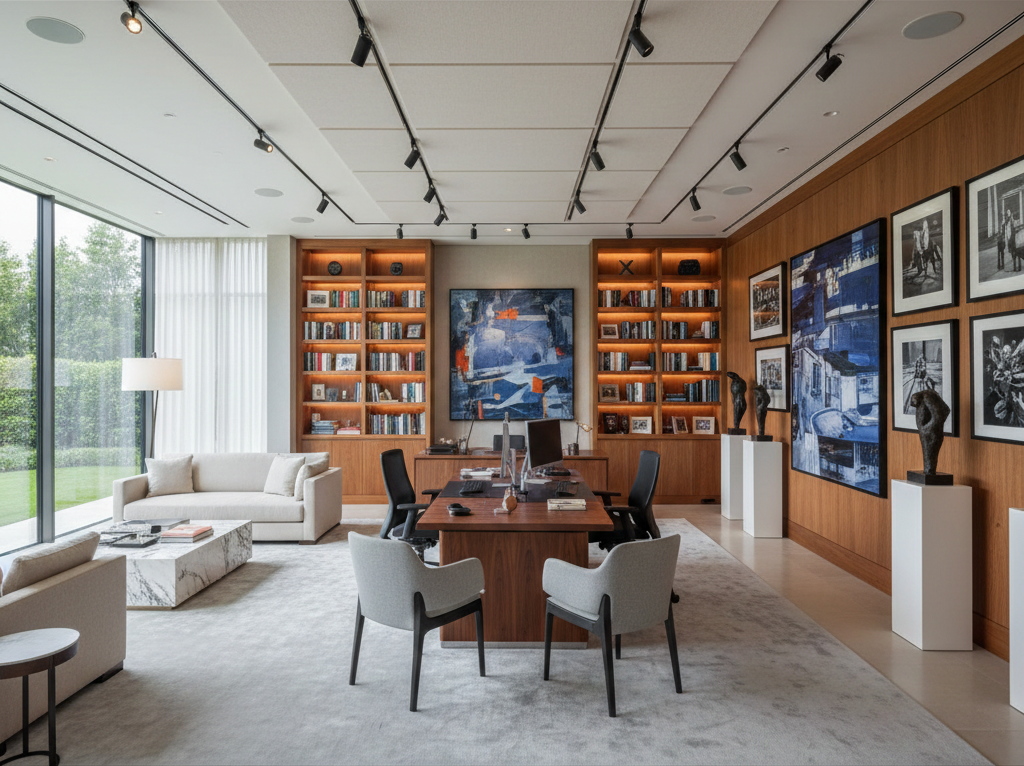
Where art hangs matters as much as what hangs. Home office layouts must balance compositional impact with functional constraints.
The Video Call Background: Your Most Important Wall
Post-pandemic, the wall behind your desk carries disproportionate importance—it's what clients, colleagues, and business partners see during every video call. This background requires particularly careful curation balancing professional appropriateness, visual interest, and technical optimization.
Center a single significant piece (36-48 inches wide for typical office, maintaining proportional relationship to your head/shoulders on camera) at appropriate height—generally slightly higher than standard gallery height (57-60 inch center versus 66-72 inch center for video composition). This positions art visible but not dominating frame, creating sophisticated backdrop without overwhelming presence.
Choose works appropriate for professional context. Abstract paintings, contemporary photography, minimalist prints, or subtle landscape work function well across industries. Reserve potentially controversial figurative work, political content, or highly personal pieces for walls outside camera view. Test appearance on video calls at different times of day ensuring lighting doesn't create glare or backlight issues washing out your image.
Flank primary piece with smaller complementary works (if space permits) or leave clean negative space—avoid symmetrical matching pairs which appear staged or hotel-like. The goal involves creating interesting, professionally appropriate background suggesting taste and cultural engagement without appearing to try too hard.
Peripheral Vision Galleries: Maximizing Collection Visibility
Walls perpendicular to desk (left and right peripheral vision during work) provide opportunities displaying collection without competing for attention during concentrated work. Position works in these sight lines offering visual interest during natural breaks—phone calls, brief pauses between tasks, or moments of reflection.
These locations tolerate busier, more complex works than background wall since they're viewed intentionally rather than appearing constantly on video. Consider salon-style arrangements (multiple works in dense composition), larger statement pieces commanding attention when viewed directly, or collections of related works (photography series, prints by same artist, thematic groupings) rewarding sustained viewing.
However, avoid excessive visual competition. If peripheral walls feature significant art, keep desk accessories, shelving, and secondary furniture simple and minimal. The eye should move from work to art and back, not navigate cluttered visual field requiring active filtering.
Dead Zones and Opportunity Spaces
Most home offices include spaces unsuitable for traditional art display but offering alternative collecting opportunities. Areas behind doors, narrow walls adjacent to windows, or spaces above built-in cabinetry can accommodate sculpture, ceramics, art objects, or works in unconventional formats.
A credenza or console behind desk (visible on video) provides platform for three-dimensional works—small bronzes ($3,000-$30,000), contemporary ceramics ($800-$8,000), or glass art ($1,500-$15,000). These photograph well on video, add textural interest, and allow collecting categories beyond two-dimensional wall works.
Floating shelves (custom millwork $800-$2,500 per wall) create opportunities for rotating displays—small works on paper, artist books, limited edition prints, or collectible design objects. This flexibility allows seasonal refreshment of visible collection without permanent commitment or wall damage from repeated hanging.
Collecting Strategies: Building Office-Appropriate Collections
Not all art suits home office display. Certain characteristics make works particularly appropriate for workspace integration.
Scale Considerations: Right-Sizing for Professional Spaces
Home offices typically measure 120-250 square feet with 8-10 foot ceilings—more intimate than living rooms or dedicated galleries. Oversized works overwhelm these spaces while tiny pieces appear insignificant, particularly on video.
Optimal sizing for primary background piece: 36-48 inches wide, 30-40 inches tall for medium offices (150-180 sq ft), scaling proportionally for larger or smaller spaces. This creates visual impact without domination. For peripheral walls, consider slightly larger pieces (48-60 inches) that reward direct viewing when turning away from desk.
Acquire multiple smaller works (12-24 inches) for salon arrangements or rotating displays rather than single tiny pieces that disappear visually. Collections of 4-9 related smaller works create more impact than individual small pieces, while offering flexibility for rearrangement as aesthetic preferences evolve.
Subject Matter and Professional Appropriateness
While collecting should reflect personal taste rather than others' expectations, home offices used for professional video calls require considering how art reads to clients and colleagues unfamiliar with contemporary art contexts.
Safe categories across most professional contexts: abstract painting and sculpture, landscape photography and painting, architectural photography, minimalist works, geometric abstraction, color field painting, and subtle conceptual pieces. These communicate sophistication without potentially controversial content.
Require careful context consideration: figurative work (ensure appropriate for industry and client base), political/social commentary (powerful but potentially alienating), religious imagery (risks excluding clients), extremely personal/intimate content (better in private spaces), and works whose value isn't immediately visually apparent (avoid explaining to video call participants).
The goal isn't sanitizing collection but rather strategically curating what's visible in professional contexts. Reserve challenging, provocative, or deeply personal works for home gallery spaces, living areas, or private offices without regular client video interaction.
Investment Quality Versus Decorative Pieces
Home office art can serve purely aesthetic functions (acquiring pieces solely because they enhance workspace quality) or contribute to serious collections with appreciation expectations. Both approaches valid—the key involves conscious intentionality about which pieces represent investments versus aesthetic decisions.
For investment-grade office pieces, prioritize: works by established artists with museum validation, pieces appropriate for eventual donation or sale (professional subject matter, excellent condition, proper documentation), and works whose office display won't compromise value (avoid sun exposure, humidity risk, or physical damage through proximity to daily activity).
Decorative pieces (acquired for aesthetic contribution without appreciation expectations) offer different freedoms: can take calculated risks on emerging artists, acquire works in less precious mediums (prints, posters, photography versus oil paintings), and replace pieces as taste evolves without concern for resale value.
Many sophisticated collectors maintain both investment and decorative tiers in home offices—investment pieces in protected positions with museum-quality lighting and climate control, decorative pieces in more casual positions accepting higher usage risk in exchange for immediate aesthetic contribution.
Explore investment-grade and decorative works at Artestial, where collectors find art appropriate for both professional home office display and long-term collection building—works balancing immediate visual impact with enduring value.
Technology Integration: Hiding Infrastructure, Highlighting Art
Modern home offices require extensive technology—computers, monitors, cameras, microphones, chargers, routers, printers—that visually competes with art if not managed carefully.
Cable Management and Equipment Concealment
Nothing undermines luxury office aesthetic faster than tangled cables, visible power strips, or equipment clutter. Professional cable management represents essential investment for offices integrating significant art collections.
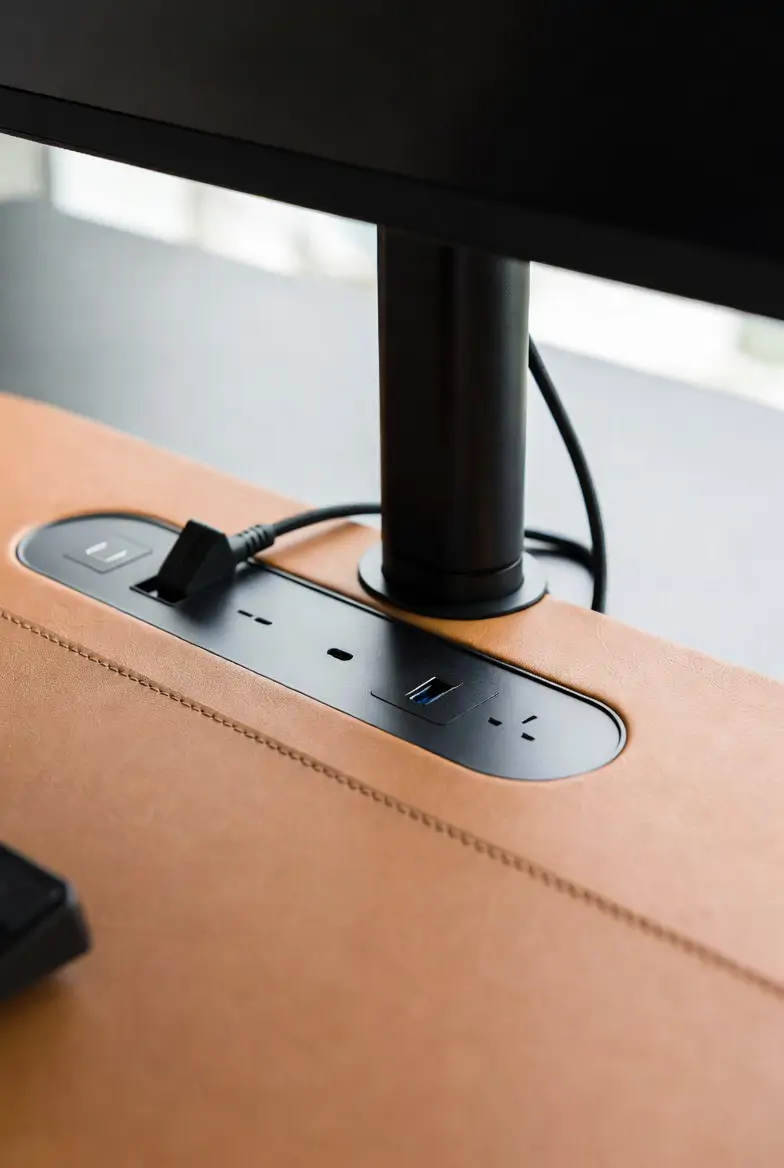
Install in-wall power and data runs ($1,500-$3,500 for typical office) bringing connections directly to desk positions without visible cables. Use cable raceways or under-desk cable trays ($200-$800) routing necessary cables invisibly. Position power strips and routers inside furniture or dedicated equipment closets rather than exposing them visually.
For unavoidable visible technology (monitors, desk lamps, keyboards), choose designs with refined aesthetics complementing rather than competing with art. Clean, minimal technology in black, white, or metallic finishes integrates better with art environments than plasticky, logo-heavy consumer electronics.
Display Technology and Digital Art
Large monitors or displays present particular challenges in art-integrated offices. During work hours they demand attention; powered off, dark screens create visual dead zones. Consider: motorized monitor lifts ($800-$2,500) allowing monitors to rise from desk surface during use and descend out of sight when not needed, articulating monitor arms ($200-$800) allowing repositioning monitors outside primary sight lines when not in use, or positioned monitors perpendicular to camera view minimizing their video appearance.
Some collectors integrate digital art displays (high-quality screens showing rotating digital artworks when not used for work) creating dual-use technology. However, ensure displays truly museum-quality (4K minimum resolution, excellent color accuracy, matte rather than glossy screens) rather than obviously consumer-grade devices. Mediocre digital art displays cheapen rather than enhance spaces.
Acoustic Equipment for Professional Calls
High-quality audio represents critical but often overlooked home office investment. Terrible audio on professional calls signals lack of professionalism regardless of visual sophistication. However, professional microphones, speakers, and audio interfaces create equipment clutter if not integrated thoughtfully.
Install ceiling-mounted or flush-mount speakers ($400-$1,200 per pair) providing excellent audio without consuming desk space. Use broadcast-quality USB microphones on articulating arms ($200-$600) that can swing out of frame when not needed. Route all cables invisibly through desk grommets and cable management systems.
The result: professional broadcast-quality audio supporting clear communication without visible equipment mess that would compete with carefully curated art presentation.
Common Mistakes: What Not to Do
Even sophisticated collectors make predictable errors integrating art into home offices. Avoiding these preserves both collections and productivity.
Mistake: Treating Office as Gallery Overflow
The home office isn't dumping ground for works that didn't fit in living spaces. Approach office art curation with same intentionality applied to primary gallery walls—perhaps more, given professional stakes of video call backgrounds.
Displaying mediocre pieces because they're "just for the office" undermines both aesthetic quality and professional impression. Better to display fewer excellent works thoughtfully chosen for context than filling walls with overflow inventory lacking clear curatorial vision.
Mistake: Ignoring Ergonomics for Aesthetics
No matter how beautiful the art arrangement, home offices must function as productive workspaces. Positioning desk to optimize art viewing but creating poor ergonomics, awkward keyboard angles, or inadequate monitor distance causes physical problems undermining productivity regardless of aesthetic success.
Design workflow first—optimal desk height (28-30 inches for most adults), proper monitor distance (20-40 inches depending on size), ergonomic seating, and appropriate task lighting. Then integrate art within these functional constraints rather than compromising ergonomics for aesthetic preferences.
Mistake: Over-Curating for Video
While video call backgrounds matter, obsessing over perfect video appearance while neglecting space quality for actual occupant creates hollow environments optimized for observers rather than users. The office serves you first, video participants second.
Design spaces that genuinely support your work, aesthetic preferences, and collecting interests. Ensure video background appears professional, but don't sacrifice overall space quality or personal authenticity creating stage set that looks great on camera but feels sterile in person.
Mistake: Neglecting Maintenance and Conservation
Home offices experience daily use—computer heat, human presence, regular cleaning, accidental contact. This use threatens art preservation if not actively managed.
Establish maintenance protocols: dust art monthly with microfiber cloths or soft brushes, monitor climate conditions weekly, inspect works quarterly for condition changes, and schedule annual professional assessments for valuable pieces. Budget for conservation—factor $500-$2,000 annually for cleaning, reframing, or minor restoration of office collection.
Mistake: Static Forever Displays
Unlike public galleries where works may remain on display for years, home offices benefit from periodic refreshment. Viewing identical pieces daily for months can diminish their impact and dull aesthetic engagement.
Rotate works quarterly or biannually—not entire collection, but perhaps 30-40% of visible pieces. This keeps visual environment fresh, allows enjoying broader collection (storing some works while displaying others), and maintains engagement preventing pieces from becoming invisible background wallpaper.
Conclusion: Offices as Working Galleries
The luxury home office represents unique collecting and design challenge: creating environments supporting both serious professional work and serious aesthetic engagement. Getting this balance right produces spaces that genuinely enhance both productivity and collecting experience—offices that feel like privilege to occupy rather than obligation to endure.
The venture capitalist whose $180,000 office renovation increased her productivity 23% understood what research confirms: exceptional environments support exceptional work. Her investment wasn't frivolous luxury but rather strategic infrastructure supporting both business performance and personal fulfillment. The art she surrounded herself with didn't distract from work—it made work more sustainable, more enjoyable, and ultimately more effective by creating environment worthy of sustained attention and daily engagement.
Explore Artestial's collections curated for home office environments where professional sophistication meets collecting passion, or connect with our specialists for guidance building office art collections balancing aesthetic impact, professional appropriateness, and investment quality.
As remote work becomes permanent reality for many professionals, the home office deserves same design attention traditionally reserved for living rooms, dining rooms, or dedicated gallery spaces. Approach office art integration systematically—addressing lighting, climate control, acoustics, technology, and layout with professional rigor—and the result rewards with spaces supporting both career success and collecting satisfaction for decades.
Frequently Asked Questions
How much should I budget for properly integrating art into a luxury home office renovation?
Budget 15-25% of total office renovation costs for art integration infrastructure beyond artwork acquisition itself. For $50,000 total renovation, allocate $7,500-$12,500 for: dedicated picture lighting systems ($1,500-$3,000), climate control upgrades ($2,000-$4,000), acoustic treatment ($1,200-$2,500), professional cable management and technology integration ($1,500-$3,000), and custom millwork for display ($1,300-$2,000). This infrastructure protects art investments while optimizing display quality. Artwork acquisition budgets vary enormously based on collecting level—allocate additional $10,000-$100,000+ for actual pieces depending on taste, existing collection, and investment goals. For offices housing existing collections being relocated, infrastructure investment becomes even more critical as it protects pieces potentially worth far more than entire renovation budget. Don't skimp on lighting and climate control—improper conditions can damage tens of thousands of dollars worth of art within single season.
What lighting color temperature works best for home offices with art collections?
Use layered lighting with different color temperatures serving distinct functions. For art illumination, specify 3000K-3500K LED picture lights with CRI 95+ ensuring accurate color rendering, particularly important for traditional oil paintings where warmer temperatures (avoiding the cooler 4000K range) prevent color shifts and maintain authentic appearance. For task lighting (desk work, computer use), use 4000K-5000K during business hours supporting alertness and focus, with dimming capability to 2700K-3000K for evening work reducing eye strain and blue light exposure. Install separate controls allowing independent adjustment—art lights might be off during focused computer work (reducing visual competition) but on during video calls (creating professional background) or evening contemplation (when office functions as gallery). Avoid mixing color temperatures within single viewing field—don't combine warm desk lamps (2700K) with cool art lights (5000K) as this creates unpleasant visual discontinuity. If uncertain, default to 3500K as middle ground serving both purposes adequately. Never use lights exceeding 5000K (bluish "daylight" bulbs) as they create harsh, clinical appearance unsuitable for art viewing despite supporting computer work.
Should I insure home office art separately from standard homeowners insurance?
Yes, obtain separate fine art insurance (called "scheduled personal property" or "valuable articles" coverage) for any office art exceeding $5,000-$10,000 total value. Standard homeowners policies typically cap art coverage at $1,000-$2,500 per item and $5,000-$10,000 aggregate unless specifically scheduled. Fine art policies cost approximately 1-2% of insured value annually ($500-$1,000 annually for $50,000 collection) and provide: agreed value coverage (you and insurer agree on values upfront, eliminating disputes after loss), worldwide coverage (pieces protected during transport, loans, exhibitions), broader perils (covering accidental damage, mysterious disappearance, not just traditional perils like fire/theft), and no depreciation (receive full insured value, not depreciated amount). For home offices, specify that works are displayed in office environment used for professional purposes—some insurers restrict coverage for art in commercial spaces or increase premiums for business-use areas. Obtain professional appraisals updating every 3-5 years establishing current values. Photograph all pieces with detailed condition documentation. This insurance protects against catastrophic losses from water damage (burst pipes above office), fire, theft, or accidental damage during cleaning/moving.
How do I prevent art in my home office from sun damage while maintaining natural light?
Manage natural light through combination of window treatments, UV-filtering glazing, and strategic positioning. Install dual-layer motorized shades: sheer solar shades (outer layer, $600-$1,500 per window for quality systems) filtering 90-95% UV while allowing diffused natural light, plus blackout shades (inner layer, $800-$2,000 for premium motorized systems like Lutron) providing complete darkness during peak sun hours. Program shades automatically adjusting throughout day based on sun position—fully open early morning/evening, sheer-only during moderate sun, both closed during intense afternoon exposure. For works near windows despite best positioning efforts, use museum-grade UV-filtering acrylic glazing (Tru Vue Museum Glass or Optium Museum Acrylic, $400-$1,800 premium over standard glass depending on size) in frames blocking 99% UV while maintaining clarity. Never position works in direct sun paths even briefly—track sun movement seasonally and adjust shade schedules accordingly. If office has multiple windows creating complex light patterns, consider professional lighting designer consultation ($1,500-$3,000) mapping sun paths and optimizing shade/positioning strategies. Monitor with UV meters ($200-$400) measuring actual UV exposure at art positions, targeting <75 microwatts/lumen. Remember: UV damage accumulates irreversibly—prevention costs far less than conservation/restoration after damage occurs.
Can I display valuable works on paper (photographs, prints, drawings) in home offices, or only paintings?
Yes, but works on paper require more stringent environmental controls than paintings. Paper is extremely sensitive to light (both visible and UV), humidity fluctuation, and air quality, making it challenging but manageable in well-designed home offices. Use conservation framing: UV-filtering glazing (99% UV blockage minimum, Tru Vue Museum Glass or Optium Museum Acrylic at $400-$1,800 premium depending on size), acid-free mats and backings, sealed frame backs preventing air infiltration, and spacers preventing artwork contact with glazing (causing moisture transfer). Limit light exposure dramatically—works on paper should receive maximum 50 lux illumination (versus 150-200 lux acceptable for oil paintings), requiring dimmer picture lights or fewer hours of display lighting annually. Calculate "light dose" (lux × hours) targeting maximum 50,000-150,000 lux-hours annually depending on medium sensitivity—roughly 6-8 hours daily at 50 lux or 2-3 hours at 150 lux. Install light timers automatically limiting exposure. Maintain humidity 40-50% with minimal fluctuation—works on paper suffer permanent cockling (waviness) from humidity swings. Consider rotating valuable works on paper quarterly between display and dark storage, reducing cumulative light exposure while allowing periodic viewing. For extremely valuable or fragile works (18th-19th century prints, rare photographs, museum-quality drawings), consult professional conservators before home office display—some pieces require museum-level environmental controls unsuitable for working offices.
Ready to curate your home office art collection? Visit Artestial's selections featuring works appropriate for professional display environments, or connect with our advisors for guidance integrating art into home offices balancing aesthetic impact, conservation requirements, and productivity optimization.
Curating excellence, one insight at a time.
— AURUM Team
Disclaimer: This article is for informational purposes only and does not constitute professional design, conservation, or investment advice. Home office design involves complex considerations including building codes, electrical requirements, HVAC specifications, and structural modifications that may require licensed professionals. Art conservation and climate control recommendations are general guidance—valuable works warrant professional conservator consultation before display decisions. Insurance, lighting, and environmental control costs vary significantly based on location, specific artworks, existing infrastructure, and individual circumstances. Professional productivity claims reflect research findings that may not apply to all individuals or work contexts. Workplace ergonomics, acoustic requirements, and technology specifications vary by profession and individual needs. Lighting recommendations assume standard residential construction—specialized applications may require professional lighting designer consultation. Conservation protocols described represent basic best practices, not comprehensive conservation methodology. Consult qualified interior designers, lighting designers, conservators, insurance specialists, and where appropriate licensed contractors before implementing home office modifications. Real estate modifications may affect property values unpredictably and require owner approval in rental situations. Observations reflect general market conditions and may not apply to specific artworks, collecting goals, or individual circumstances. Always prioritize artwork preservation and personal safety when integrating art into working environments.