


The Academy Awards ceremony operates on multiple registers simultaneously. There is the official business of recognizing cinematic achievement across twenty-four categories, including the new Best Casting award making its inaugural appearance this year. There is the entertainment spectacle, with performances of nominated songs including "Golden" from KPop Demon Hunters and "I Lied to You" from Sinners. And then there is the parallel ceremony that often commands equal attention: the red carpet, where the global fashion industry stages its most visible showcase.
For collectors, these registers intersect in meaningful ways. The costume design nominees offer a masterclass in period accuracy and visual storytelling. The red carpet itself functions as a gallery of contemporary couture. And the broader cultural moment, with its renewed emphasis on theatrical spectacle and communal viewing experiences, signals shifts in how audiences engage with visual culture that inevitably ripple through art markets.
The production team returns with continuity that promises stability after several rocky years for the ceremony. Raj Kapoor and Katy Mullan serve as executive producers for the third consecutive year, with Hamish Hamilton returning as director. Jeff Ross and Mike Sweeney, longtime collaborators of Conan O'Brien, return as producers and writers. Academy CEO Bill Kramer and President Janet Yang praised the team for producing "a hugely entertaining and visually stunning show that celebrated our nominees and the global film community in the most beautiful and impactful way."
This year's ceremony arrives freighted with historical significance. Sinners has shattered nomination records while also setting a new benchmark with ten Black individuals nominated for a single film. Ruth E. Carter has become the most-nominated Black woman in Oscar history with her fifth nomination for Best Costume Design. Autumn Durald Arkapaw has become the fourth woman and the first woman of color nominated for Best Cinematography. Chloé Zhao has become the second woman, following Jane Campion, and the first woman of color to be nominated for Best Director twice. These milestones matter beyond their symbolic weight because they expand the visual vocabularies available to audiences and, by extension, to collectors considering what cultural moments deserve documentation and preservation.
The presenter lineup reflects Hollywood's commitment to honoring both contemporary talent and nostalgic moments. Gwyneth Paltrow, Robert Downey Jr., Anne Hathaway, Will Arnett, Priyanka Chopra Jonas, and Paul Mescal join previously announced presenters including last year's acting winners Adrien Brody, Mikey Madison, Kieran Culkin, and Zoe Saldaña. Chris Evans, Javier Bardem, Chase Infiniti, Demi Moore, Kumail Nanjiani, and Maya Rudolph round out the roster.
Discover works by artists engaging with cultural spectacle and contemporary visual narratives at Artestial, where collectors find creators who understand how fashion, film, and fine art increasingly speak the same visual language.
The Nomination Landscape: What Sixteen Nominations Actually Mean
Sinners and the New Oscar Calculus
Ryan Coogler's Sinners arrives at the 98th ceremony with sixteen nominations, the most any single film has received in Oscar history. The vampire narrative set in 1930s Mississippi collected recognition across every major category: Best Picture, Best Director, Best Actor for Michael B. Jordan, Best Supporting Actor for Delroy Lindo, Best Supporting Actress for Wunmi Mosaku, Best Original Screenplay, and a sweep of craft categories including Cinematography, Costume Design, Makeup and Hairstyling, Original Score, Original Song, Sound, Visual Effects, Film Editing, and the new Best Casting award.
The breadth of these nominations suggests something beyond mere quality, though the film's $370 million worldwide gross indicates genuine audience enthusiasm. The Academy appears to be recalibrating its relationship with genre filmmaking and with Black cinema simultaneously. Sinners functions as a horror film, a period piece, a family drama, and a meditation on American history. Its success in earning nominations across technical and creative categories demonstrates that genre boundaries continue to dissolve in ways that matter for how visual culture gets categorized and valued.
One Battle After Another: The Front-Runner's Burden
Paul Thomas Anderson's One Battle After Another follows with thirteen nominations, including Best Picture, Best Director, Best Actor for Leonardo DiCaprio, two Best Supporting Actor nominations for Sean Penn and Benicio Del Toro, Best Supporting Actress for Teyana Taylor, and recognition across craft categories. The film has been the presumed front-runner for much of awards season, though recent momentum from Sinners has complicated predictions.
The supporting actress race has become particularly competitive. Teyana Taylor won the Golden Globe but faced challenges from Wunmi Mosaku's BAFTA victory and Amy Madigan's surprise win at the Actor Awards. Madigan, nominated forty years after her first Oscar nomination for Twice in a Lifetime, represents a different kind of narrative, one about longevity and late-career recognition that the Academy has historically found compelling.
The Craft Categories: Where Artistry Meets Investment
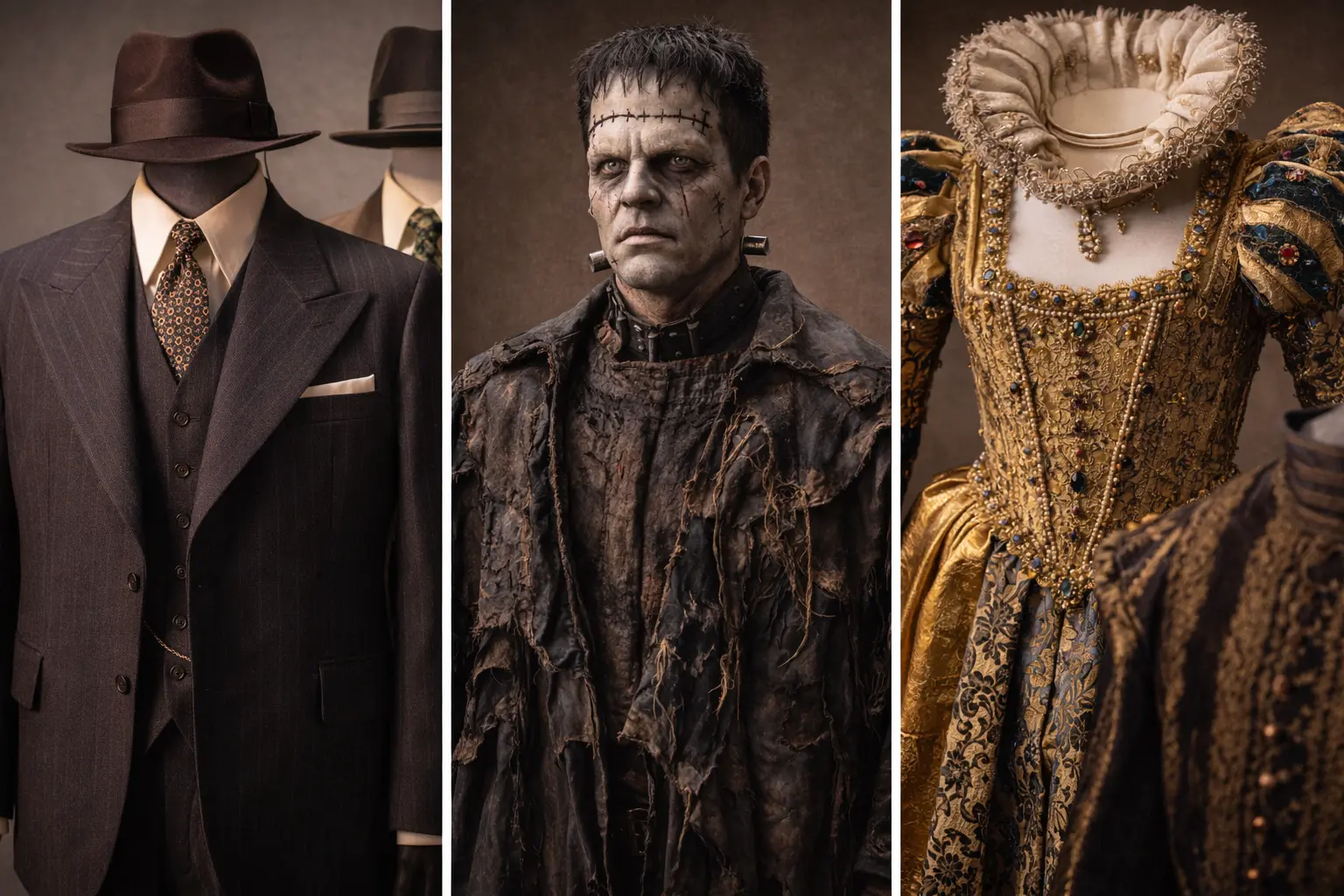
For collectors interested in understanding how visual excellence gets recognized and valued, the craft nominations offer essential education. The Best Costume Design category includes Ruth E. Carter for Sinners, representing her signature attention to period accuracy and character-driven wardrobe choices. Carter's work on the film required extensive research into 1930s Mississippi fashion, distinguishing the Chicago-influenced wool suits of the twin protagonists from the lived-in clothing of supporting characters.
The category also recognizes Guillermo del Toro's Frankenstein, where period Gothic aesthetics meet contemporary sensibilities. Hamnet brings Elizabethan fashion to screen through Chloé Zhao's intimate family drama. Marty Supreme, Josh Safdie's period piece set in 1950s New York, earned nominations for Miyako Bellizzi's costume work that has already influenced contemporary fashion through A24's merchandising strategy. Avatar: Fire and Ash rounds out the category with its fantastical approach to costume creation.
Ruth E. Carter: The Most-Nominated Black Woman in Oscar History
Five Nominations Across Four Decades
Ruth E. Carter's fifth Oscar nomination for Sinners represents more than personal achievement. It marks a kind of institutional acknowledgment that costume design constitutes artistic practice worthy of sustained recognition. Carter has been working for nearly forty years, beginning her career with Spike Lee on Do the Right Thing in 1989 and earning her first Oscar nomination in 1993 for dressing Denzel Washington in Malcolm X.
Her approach to Sinners demonstrates the research intensity that distinguishes exceptional costume design from mere wardrobe provision. Carter looked to American paintings to develop a red, white, and blue color palette. She theorized that the twin protagonists, Smoke and Stack, would have had their 1920s-style wool suits custom-made in Chicago before returning to Mississippi, creating visual distinction from the other characters. Stack wears red to reflect his passionate, changed personality, while Smoke appears in blue, more everyman-like in his presentation.
The character Annie required spiritual presence, leading Carter to create a raw silk fringed skirt with sequins, complemented by earrings and beaded prayer necklaces. Annie was one of few characters to wear jewelry, and her Haint Blue, a traditional Southern color believed to ward off spirits, carried both cultural meaning and narrative function.
The Economics of Costume Design Recognition
Carter's trajectory illuminates the persistent hierarchy within creative industries. As she has observed, costume designers lack the gravitas accorded to creative directors at major fashion houses, despite the narrative and historical expertise their work requires. The job involves designing clothes while also telling stories and accommodating practical requirements like blood effects and action sequences.
The 2026 ceremony may represent a turning point in how costume design gets valued. Miyako Bellizzi has become the first Asian person nominated for the award. The Met Gala's upcoming exhibition, "Costume as Art," suggests growing institutional recognition that film costumes constitute a distinct artistic practice worthy of museum treatment. The red carpet itself increasingly features vintage and archive pieces, blurring the line between fashion history and contemporary style.
The Red Carpet as Gallery: Haute Couture Economics and Cultural Messaging
The Six-Month Campaign
The looks that appear on the Oscars red carpet represent months of planning, fitting, and negotiation. Celebrity stylists retain fashion designers to custom-make gowns or loan existing pieces. The process involves multiple fittings, either at the designer's couture house or with samples shipped for review. Stylists conduct trial runs under bright paparazzi-style lighting to identify any issues before the actual event.
The client, stylist, hair and makeup team, manager, and publicist narrow options to top favorites, discussing which styles best represent the image they intend to project. This collaborative process, which can involve teams of a dozen or more people, produces the apparently effortless moments that viewers consume in seconds.
The financial stakes are substantial. Haute couture houses invest significantly in red carpet dressing because celebrity endorsement influences consumer interest in their ready-to-wear and accessory lines. The relationship is mutually beneficial: designers gain global visibility, while celebrities demonstrate cultural relevance and fashion authority. The approximately three-hour broadcast reaches audiences in more than two hundred territories.
2026 Fashion Predictions
Industry observers anticipate several trends for the 98th ceremony. Sharper couture silhouettes have dominated awards season so far, with intentional yet looser tailoring and commitment to sheer fabrics and crystal embellishments as primary rather than accessory elements. Hair styling has trended toward less produced, more touchable, lived-in looks that soften intense wardrobe choices.
Method dressing remains controversial but persistent. The approach, where actors' red carpet choices reference their characters' visual identities, has been both celebrated and criticized as marketing gimmick. Defenders argue that actors form personal relationships with characters after months of investment, making visual homage a form of honor rather than mere promotion.

Historical Moments: The Red Carpet's Evolution as Cultural Platform
From Practical Pathway to Global Runway
The red carpet did not arrive at the Academy Awards until 1961, serving initially as a practical guide to direct celebrities toward the venue. By 1964, the Academy recognized public interest in the fashion display and extended the carpet's layout, beginning systematic coverage of arrivals. The transformation from functional pathway to global fashion showcase happened incrementally, but the change fundamentally altered how formal dress gets conceived and consumed.
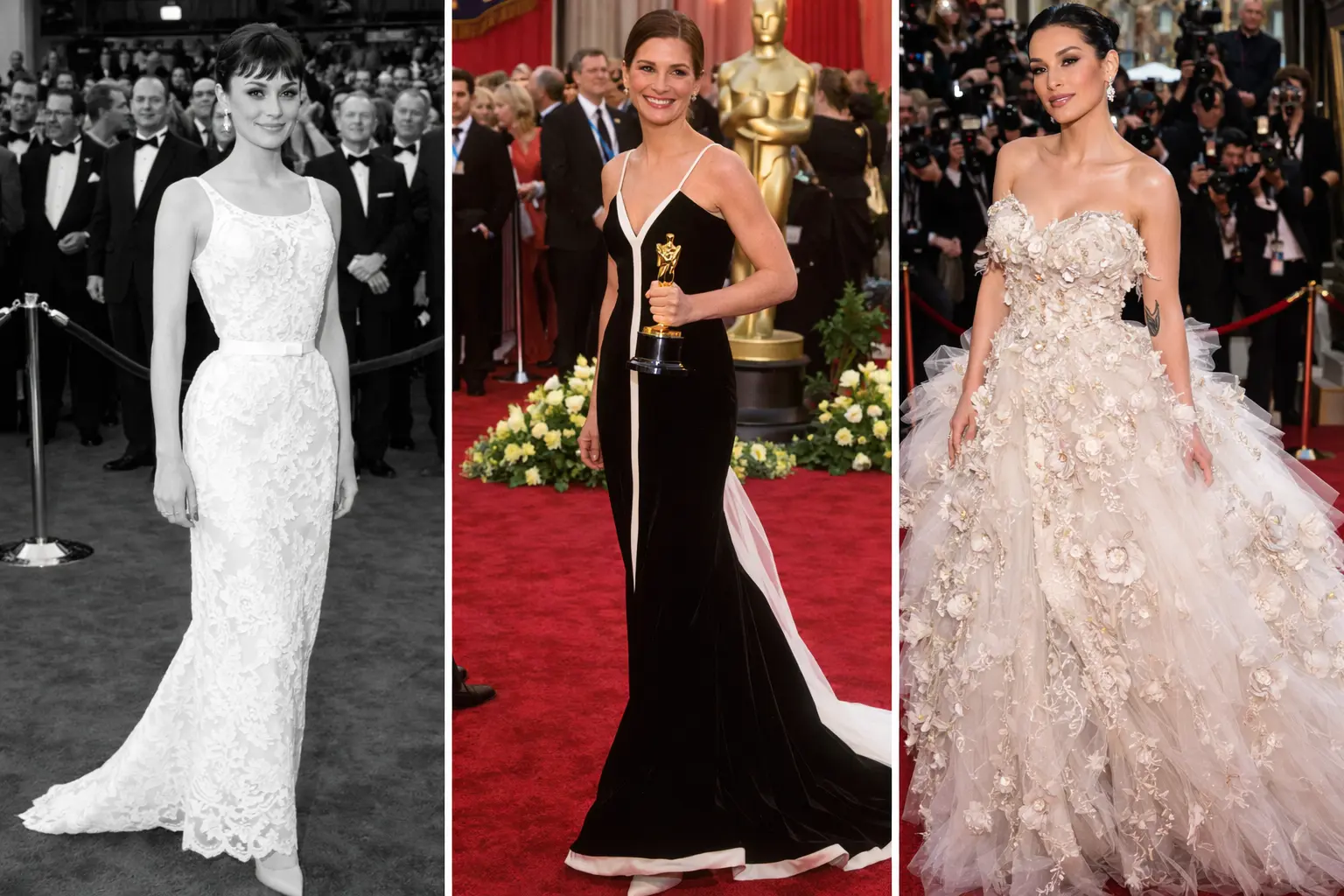
Key moments punctuate this evolution. Sharon Stone's 1996 emergency ensemble, combining a Gap turtleneck with Valentino and Armani pieces, pioneered high-low dressing before the term existed. Halle Berry's 2002 Elie Saab gown, worn when she became the first Black woman to win Best Actress, launched a then-little-known designer into fashion prominence. Celine Dion's backward tuxedo in 1999 and Björk's swan dress in 2001 demonstrated that the red carpet could accommodate avant-garde choices that would spark conversation for decades.
The Contemporary Red Carpet Landscape
In recent years, the red carpet has become increasingly political and increasingly sustainable. Actors choose designers carefully to make statements about representation, environmental responsibility, and cultural values. Vintage and archive pieces appear more frequently as climate concerns influence celebrity styling decisions.
The 2026 ceremony will honor several poignant moments. Barbra Streisand is expected to perform during the in memoriam segment to honor Robert Redford, who died in September 2025. Billy Crystal and Meg Ryan will honor Rob Reiner, killed along with his wife Michele in December 2025. Kristen Wiig, Maya Rudolph, Melissa McCarthy, and Rose Byrne will present together to mark the fifteenth anniversary of Bridesmaids.
These tributes remind viewers that the Academy Awards ceremony functions as cultural record, documenting not only cinematic achievement but also the broader landscape of loss and celebration that shapes any given year.
The Fashion-Art-Collecting Nexus
When Costume Design Enters Museums
The relationship between film costume, fashion, and fine art continues to deepen. Unique red carpet dresses sometimes find permanent homes in museum exhibitions at institutions like the Metropolitan Museum of Art and the Victoria & Albert Museum. The upcoming Met Gala exhibition, "Costume as Art," explicitly addresses this intersection, potentially inspiring red carpet choices that reference or engage with costume design history.
For collectors, these crossovers matter. The skills that distinguish exceptional costume design, including period research, material expertise, narrative understanding, and visual communication, parallel competencies that inform serious collecting. Understanding why Ruth E. Carter's Sinners work earned nominations requires the same analytical frameworks collectors apply when evaluating contemporary art: attention to craft, awareness of historical context, and sensitivity to how visual choices communicate meaning.
The film Marty Supreme offers a case study in costume-to-fashion crossover. Miyako Bellizzi's costume design for the Josh Safdie film has influenced contemporary fashion not through traditional awards recognition alone but through A24's aggressive merchandising strategy. As observers have noted, you can visit bars in Highland Park and find thirty people wearing wide trousers, striped button-down shirts tucked in with loafers, all referencing the film's 1950s New York aesthetic. This merchandising approach, which began with Uncut Gems and accelerated through Beau Is Afraid and other A24 releases, suggests that costume design increasingly functions as fashion design through different distribution channels.
Couture as Collectible
The haute couture gowns worn on the Oscars red carpet constitute their own collectible category. While few collectors compete for pieces worn by individual celebrities, the broader market for vintage couture has strengthened as sustainability concerns and desire for uniqueness drive interest in archive pieces.
Julia Roberts accepting her 2001 Oscar in an archival 1992 Valentino Couture gown marked an early high-profile embrace of vintage. Renée Zellweger's 1950s Jean Dessès gown the same year came from Lily et Cie, one of Hollywood's vintage meccas. At the time, exclusivity was the primary allure. Now, with climate concerns influencing fashion choices, reuse sends a different message. Stars wearing vintage demonstrate that sustainability and glamour need not conflict.
The 2026 ceremony arrives as major houses including Schiaparelli, Dior, Balenciaga, Valentino, and Louis Vuitton return to red carpet dressing with renewed vigor. In a fragmented media landscape, the Oscars red carpet remains fashion's most potent global broadcast, second perhaps only to the Met Gala in concentrated visibility. Schiaparelli has been particularly prominent this awards season, with the house's avant-garde designs that merge art with fashion earning consistent red carpet placement.
The Stylist Economy
Behind every red carpet moment stands a celebrity stylist whose influence often exceeds public recognition. These professionals retain fashion designers to custom-make gowns and loan existing pieces. They schedule fittings, conduct trial runs under paparazzi-style lighting, and navigate the complex negotiations between celebrity image, designer ambition, and practical constraints.
Jen Atkin, who has styled clients from the Kardashians to Hailey Bieber to the Hadid sisters, predicts that hair trends for the 2026 Oscars will favor "hair that's not overly produced, real and touchable and lived-in." The aesthetic softens intense wardrobe choices and makes romantic looks feel more bohemian. This prediction matters because hair, makeup, and clothing function as integrated systems on the red carpet, each element informing the others.
Explore artists engaging with fashion, performance, and cultural spectacle at Artestial, where collectors find works that understand the visual vocabularies connecting red carpet culture to fine art practice.
The New Category: Best Casting
An Overdue Recognition
The 98th ceremony introduces Best Casting as the first new competitive Oscar category since Best Animated Feature was added in 2001. The addition brings the total to twenty-four categories and recognizes a discipline that fundamentally shapes how films get made and how audiences respond to them.
Casting directors occupy a unique position in film production. They understand how particular actors might embody particular characters, balancing creative vision with practical constraints. As Cassandra Kulukundis, nominated for One Battle After Another, observed during a panel discussion: "I'm realizing on this journey that people really don't understand what we do. It's the same as anything. You study for hours, you know the history, you know the looks."
Francine Maisler, nominated for Sinners, captured the collaborative spirit: "Casting directors are amazing people who lift other people up." The new category's inaugural nominees include work on Sinners, One Battle After Another, Hamnet, Marty Supreme, and Sentimental Value.
What the Category Reveals
For collectors interested in creative processes, the casting category illuminates decision-making that often remains invisible. Why does Michael B. Jordan work for the twin roles in Sinners? How does Teyana Taylor's presence transform One Battle After Another? These questions address the same kind of fit and context questions collectors navigate when considering how particular artworks might function in particular collections.
Viewing the 98th Academy Awards
Broadcast Details
The 98th Academy Awards will be televised live by ABC and streamed on Hulu on Sunday, March 15, 2026. The ceremony begins at 7:00 PM Eastern Time / 4:00 PM Pacific Time. The official Oscars red carpet show begins at 6:30 PM Eastern, with extended coverage available on E! starting at 4:00 PM Eastern.
Conan O'Brien returns as host after widespread acclaim for his 2025 debut. In announcing his return, O'Brien joked that "the only reason I'm hosting the Oscars next year is that I want to hear Adrien Brody finish his speech," referencing the notoriously long acceptance speech that characterized the previous ceremony.
The Evening's Shape
Predictions suggest Sinners and One Battle After Another will split major awards, with approximately five wins each. Frankenstein may dominate craft categories with as many as four victories. KPop Demon Hunters is expected to win Best Animated Feature and possibly Best Original Song for "Golden."
The acting categories remain genuinely contested. Jessie Buckley appears favored for Best Actress for Hamnet. The Best Actor race features strong campaigns from Timothée Chalamet for Marty Supreme, Leonardo DiCaprio for One Battle After Another, and Michael B. Jordan for Sinners. Supporting categories are particularly unpredictable, with Teyana Taylor, Amy Madigan, and Wunmi Mosaku all claiming major precursor wins in the Supporting Actress race.
The Larger Cultural Moment
Cinema as Event Experience
The 2026 Oscars arrive at what critics describe as an inflection point for theatrical exhibition. After years of streaming dominance, audiences appear newly interested in theatrical spectacle, in films designed for communal viewing on large screens. The Best Picture nominees reflect this shift: Sinners grossed $370 million worldwide, while several other nominees earned significant theatrical audiences.
The ten Best Picture nominees span considerable range. Bugonia features Emma Stone in Yorgos Lanthimos's latest absurdist vision. F1 brings Joseph Kosinski's directorial style to Formula One racing with Brad Pitt. Frankenstein offers Guillermo del Toro's lavish adaptation with Oscar Isaac and Jacob Elordi. Hamnet presents Chloé Zhao's intimate portrait of Shakespeare's family. Marty Supreme follows Josh Safdie's characteristically intense approach to 1950s New York. One Battle After Another represents Paul Thomas Anderson's sweeping historical vision. The Secret Agent brings Brazilian director Kleber Mendonça Filho's grindhouse stylization to the competition. Sentimental Value has earned nine nominations including four in acting categories. Train Dreams adapts Denis Johnson's novella with Joel Edgerton. And Sinners anchors the field with its record-breaking recognition.
For collectors, this renewed emphasis on event cinema suggests parallel possibilities for art exhibition and acquisition. If audiences seek experiences that justify gathering and watching together, might similar dynamics influence how art gets shown and sold? The question has no definitive answer, but the Academy's celebration of theatrical spectacle creates context for considering how visual art might similarly command collective attention.
The Oscar Week Calendar
The ceremony itself represents only one moment in a week of related events. Dior's Club J'adore party on Monday expects guests including Quinta Brunson and Tyler James Williams. The South Asians at the Oscars pre-party on Tuesday features hosts including Priyanka Chopra Jonas and Aziz Ansari. Diane Von Furstenberg's Oscar luncheon and the Essence Black Women in Hollywood gala on Thursday will honor the women of Sinners, including cinematographer Autumn Durald Arkapaw, production designer Hannah Beachler, costume designer Ruth E. Carter, and stars Wunmi Mosaku and Jayme Lawson.
The Elton John AIDS Foundation Academy Awards Viewing Party, hosted by Elton John and David Furnish alongside Neil Patrick Harris and David Burtka, will feature a performance by Lola Young. Vanity Fair celebrates at LACMA, a new location for the magazine's legendary post-ceremony party. These events constitute their own fashion runway, with designers competing for visibility across multiple high-profile occasions throughout the week.
Diversity as Visual Expansion
The record nominations for Sinners, including ten Black individuals nominated for a single film, represent more than symbolic progress. They indicate expanded visual vocabularies entering mainstream recognition. Ruth E. Carter's research into 1930s African American fashion, Ryan Coogler's rendering of Mississippi Delta landscapes, and the film's engagement with horror genre conventions all contribute to visual cultures that collectors might consider engaging more deeply.
Warner Bros. Pictures earned thirty nominations at this year's ceremony, tying its own record set in 2005. The studio's success reflects strategic investment in both Sinners and One Battle After Another, demonstrating that major studios can compete effectively across prestige and genre categories simultaneously. For those watching how cultural production gets financed and distributed, these patterns suggest ongoing recalibration of what kinds of visual stories attract institutional support.
Explore works by artists engaging with history, representation, and visual storytelling at Artestial, where collectors find creators whose practices resonate with the expanded visual vocabularies celebrated at this year's Academy Awards.
Frequently Asked Questions
What makes the 98th Academy Awards historically significant? The 98th ceremony breaks records on multiple fronts. Sinners has earned sixteen nominations, surpassing the fourteen shared by All About Eve in 1950, Titanic in 1997, and La La Land in 2016. The film also sets a record for most Black individuals nominated for a single film, with ten. Ruth E. Carter has become the most-nominated Black woman in Oscar history with her fifth nomination. Autumn Durald Arkapaw has become the first woman of color nominated for Best Cinematography. The ceremony also introduces Best Casting as the first new competitive category since Best Animated Feature was added in 2001, bringing the total to twenty-four categories. These milestones collectively suggest an Academy recalibrating its relationship with representation, genre filmmaking, and the craft disciplines that shape visual storytelling.
How does the red carpet function as a cultural institution? The Oscars red carpet has evolved from a practical pathway guiding celebrities to the venue in 1961 to fashion's most globally visible showcase. The approximately three-hour broadcast reaches audiences in more than two hundred territories, making it among the most concentrated fashion moments in media. Red carpet looks represent months of collaborative work involving designers, stylists, hair and makeup artists, managers, and publicists. Celebrity endorsement through red carpet placement significantly influences consumer interest in designers' ready-to-wear and accessory lines. The red carpet has also become a platform for political and cultural messaging, with actors choosing designers carefully to make statements about representation, environmental responsibility, and social values. Historic moments like Sharon Stone's 1996 high-low ensemble and Halle Berry's 2002 Elie Saab gown have shaped fashion conversation for decades.
Why should art collectors pay attention to costume design nominations? Costume design nominees offer masterclasses in period research, material expertise, narrative function, and visual communication, skills that parallel competencies informing serious art collecting. Ruth E. Carter's work on Sinners required extensive research into 1930s Mississippi fashion, African American sartorial history, and character-driven wardrobe differentiation. Understanding why such work earns recognition develops analytical frameworks applicable to evaluating contemporary art. The growing institutional recognition of costume design, including the upcoming Met Gala exhibition "Costume as Art," suggests that boundaries between film costume, fashion, and fine art continue to dissolve in ways collectors benefit from understanding.
What are the key predictions for major categories? Industry observers predict Sinners and One Battle After Another will split the evening's major awards, with approximately five wins each. Frankenstein is expected to dominate craft categories with as many as four victories. Best Picture appears contested between these two front-runners. Jessie Buckley is favored for Best Actress for Hamnet. Best Actor predictions divide among Timothée Chalamet for Marty Supreme, Michael B. Jordan for Sinners, and Leonardo DiCaprio for One Battle After Another. The Supporting Actress race is particularly competitive, with Teyana Taylor, Amy Madigan, and Wunmi Mosaku all claiming major precursor wins. Supporting Actor predictions favor either Sean Penn for One Battle After Another or Delroy Lindo for Sinners.
How can viewers watch the 98th Academy Awards? The 98th Academy Awards will be televised live by ABC and streamed on Hulu on Sunday, March 15, 2026. The ceremony begins at 7:00 PM Eastern Time and 4:00 PM Pacific Time. The official Oscars red carpet show begins at 6:30 PM Eastern, providing early coverage of arrivals. Extended red carpet coverage is available on E! starting at 4:00 PM Eastern for viewers interested in comprehensive fashion commentary. Conan O'Brien returns as host for the second consecutive year following his acclaimed 2025 debut. The ceremony will feature live performances of Best Original Song nominees "Golden" from KPop Demon Hunters and "I Lied to You" from Sinners, with remaining nominated songs receiving specially produced introduction segments.
Ready to explore works by artists engaging with the visual cultures celebrated at this year's Academy Awards? Visit Artestial where collectors find creators whose practices resonate with fashion, film, and contemporary spectacle, or connect with specialists for guidance building collections that engage artistic production across traditional boundaries.
Curating excellence, one insight at a time. — AURUM
Disclaimer: This article provides cultural commentary and event information for educational purposes only. It does not constitute investment, fashion, or collecting advice, and readers should consult appropriate professionals before making acquisition decisions. All predictions regarding Oscar winners reflect industry consensus and analyst commentary as of publication date and should not be treated as authoritative forecasts. Award outcomes, broadcast details, and red carpet appearances may change. Information regarding nominations, ceremony details, and historical records derives from Academy of Motion Picture Arts and Sciences announcements, entertainment industry publications, and fashion journalism sources. The author has no financial relationship with any fashion house, film studio, or production mentioned.