

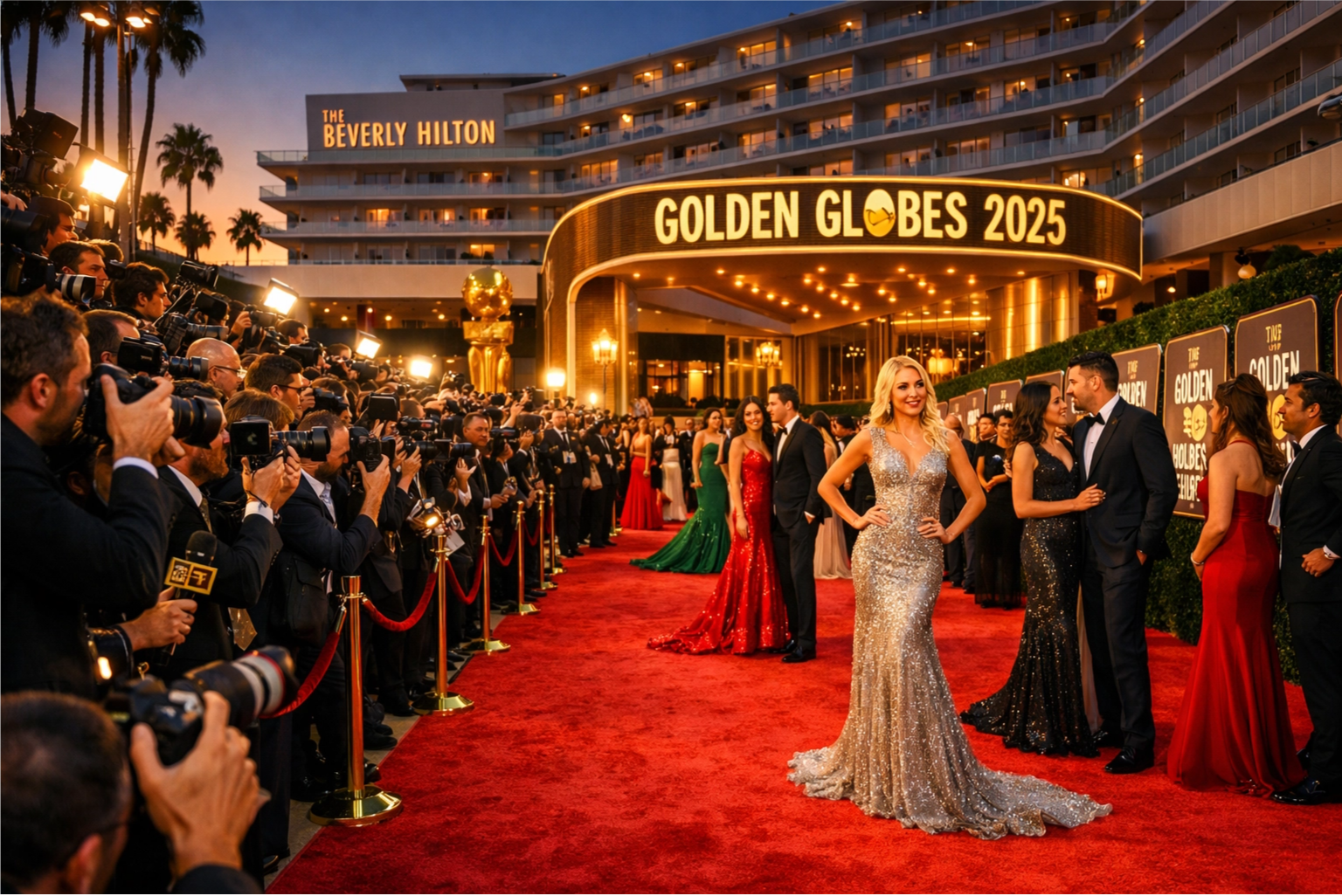
The textile conservator examining photographs from the 82nd Golden Globes (January 5, 2025) paused at Ariana Grande's vintage Givenchy gown. "That's not a dress," she observed. "That's a 59-year-old artifact in near-perfect condition, valued well into six figures, worn for ninety seconds of red carpet time." Her assessment captures a fundamental shift in how Hollywood's most visible platform—awards show red carpets—has evolved from fashion showcase into display venue for collectible wearable art commanding investment-grade attention.
The Golden Globes, Hollywood's traditional season opener, sets trends that influence fashion markets, designer reputations, and collecting behavior for months afterward. The 2025 ceremony at LA's Beverly Hilton featured standout fashion with gold as the evening's dominant trend—from Mikey Madison's Bottega Veneta gown with scale-like gold sequins to Ariana Grande's intricate 1960s Givenchy archive piece. For sophisticated collectors who understand fashion's intersection with contemporary art, the Golden Globes provides annual masterclass in how celebrity endorsement, media exposure, and cultural moment converge to create value in luxury textiles.
Understanding which pieces merit collecting attention versus ephemeral fashion requires analyzing designer provenance, construction quality, cultural significance, and market trajectories. The 2025 Golden Globes offered exceptional examples across categories—archive fashion demonstrating appreciation potential, custom couture showcasing peak craftsmanship, and emerging designer moments signaling future collecting opportunities.
The Gold Standard: Metallics Dominate the 2025 Red Carpet
Gold emerged as the ceremony's signature color, with attendees embracing golden hues and embellishments from Demi Moore's sculptural Armani Privé outfit to Mindy Kaling's Ashi Studio column dress and Cate Blanchett's custom Louis Vuitton gown embroidered with gold beads. This collective embrace of metallic opulence wasn't accidental—it reflected broader luxury market trends and established visual language collectors recognize as culturally significant.
Archive Fashion: The Givenchy Moment
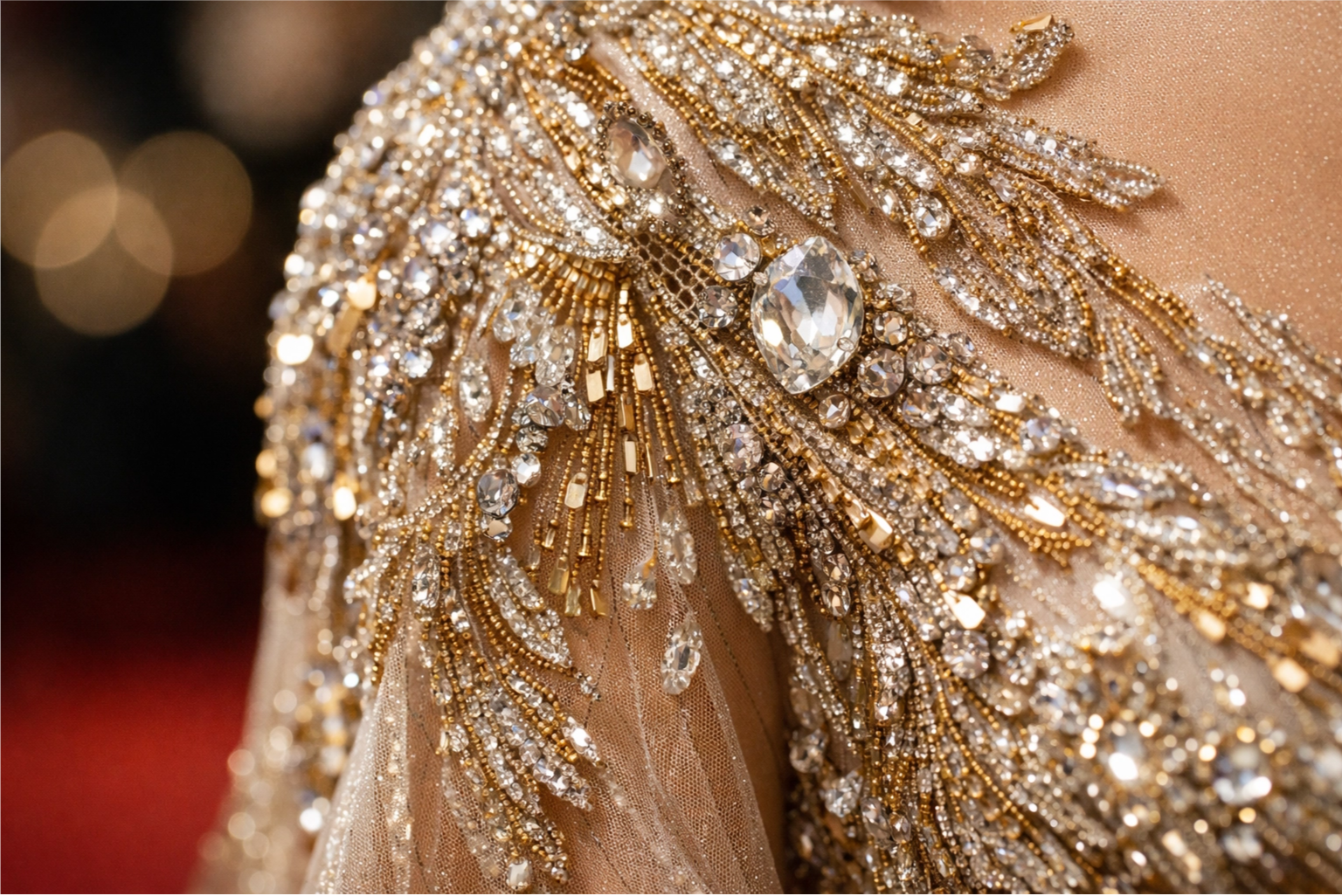
Ariana Grande wore vintage Givenchy from 1966, channeling old Hollywood glamour, representing collecting category with clearest investment thesis. Haute couture from fashion's golden age (1950s-1970s) achieves strong auction results when provenance and condition excel. A museum-quality Givenchy piece from this era, if properly documented and preserved, commands $80,000-$250,000 at specialized fashion auctions depending on designer significance, celebrity association, and rarity.
Grande's choice demonstrates sophisticated understanding of fashion-as-art. By wearing archive rather than custom contemporary piece, she positioned herself within fashion history continuum while providing massive publicity to specific era and house. Auction specialists note that major celebrity appearances in vintage pieces can drive 20-40% price increases for comparable era/designer combinations in subsequent months as collectors seek similar investments.
The collecting implications extend beyond specific garment. When major celebrities consistently choose archive over contemporary custom pieces, it validates vintage fashion market and encourages broader collector participation. Archive fashion offers advantages contemporary pieces lack: finite supply (houses cannot produce more 1960s Givenchy), documented historical significance, and decades-long track record demonstrating durability and timelessness.
Custom Couture: Peak Contemporary Craftsmanship
Zendaya channeled old Hollywood glamour in custom Louis Vuitton, Cate Blanchett wore custom Louis Vuitton embroidered with gold beads, Demi Moore arrived in sculptural Armani Privé, Nicole Kidman wore custom Balenciaga couture—these bespoke creations represent contemporary collecting opportunities requiring different evaluation than archive pieces.
Custom couture for major awards shows involves hundreds of hours of atelier work, often utilizing techniques and materials unavailable in ready-to-wear production. An Armani Privé gown created specifically for Golden Globes and worn by Best Actress winner represents peak investment from both house (production costs potentially $80,000-$150,000) and wearer (publicity value, stylist coordination, insurance). These pieces occasionally appear at fashion auctions years later, particularly if celebrity achieves legendary status or gown becomes culturally iconic.
However, contemporary custom pieces face appreciation challenges archive fashion doesn't: they must survive decades to achieve vintage status, they lack historical perspective that makes earlier eras collectible, and oversupply of celebrity custom pieces dilutes individual significance. Collectors considering contemporary awards show couture should prioritize: winners (not just nominees), career-defining moments (first major award, comeback victories), houses with strong archival programs (Dior, Chanel, Armani maintain better documentation than emerging designers), and designs representing clear artistic vision rather than merely expensive construction.
The Bottega Veneta Chapter Closes
Mikey Madison wore Bottega Veneta featuring glittering metallic details—one of the last custom designs Matthieu Blazy created for the fashion house before his departure. This represents unique collecting opportunity: designer's final works for major houses often achieve premium values as they represent concluded chapters. Blazy's Bottega Veneta tenure transformed the house's aesthetic; his final custom pieces carry both artistic significance (representing his vision's culmination) and market premium (finite body of work at specific house).
Fashion historians recognize these transitional moments create collecting inflection points. When designer departs major house, their work bifurcates—pieces created at former house gain closure premium (final chapter), while work at new house (if any) gains discovery premium (fresh start). Collectors who identified and acquired Blazy's Bottega pieces during his tenure may see appreciation as his departure creates finite catalog.
Explore wearable art and fashion photography at Artestial, where collectors building comprehensive luxury portfolios find museum-quality works bridging fashion, contemporary art, and design.
Winners' Fashion: How Academy Recognition Affects Value
Awards show fashion carries different investment weight depending on wearer's status. Winners' gowns achieve premium values versus nominees' identical pieces due to cultural association with victory moment.
First-Time Winners and Career Breakthroughs
Demi Moore won Best Actress in a Musical or Comedy for The Substance, marking her first Golden Globe win despite decades-long career. Her Armani Privé gown worn during this career breakthrough carries significance comparable to Gwyneth Paltrow's pink Ralph Lauren Oscar dress (1999) or Jennifer Lawrence's Dior gown at her first Oscar win (2013)—pieces that become synonymous with career-defining moments.
Fernanda Torres became the first Brazilian actress to win a Golden Globe in an acting category for I'm Still Here, as well as the first South American and first Portuguese-speaking actor to win Best Actress in Drama. Historic firsts create premium collecting opportunities. The gown Torres wore represents cultural milestone that transcends fashion—it's artifact of Brazilian cinema history, Latin American representation achievement, and Golden Globes evolution toward global recognition. Auction houses and museums recognize such pieces as having cultural value beyond aesthetic or construction quality.
Zoe Saldaña took home Best Supporting Actress award for Emilia Pérez wearing sequin dress and silk taffeta cape by Saint Laurent. Saldaña's win combined with her gown's dramatic silhouette and photographability creates strong collecting proposition. Saint Laurent under current creative direction emphasizes theatrical evening wear that photographs exceptionally—critical factor for awards show pieces whose value partly derives from image circulation and cultural penetration.
Television Winners and Emerging Categories
Jean Smart won Best Actress in a Television Musical or Comedy for Hacks, while Jeremy Allen White won Best Actor in Television Musical or Comedy for The Bear. Television categories historically received less fashion attention than film, but streaming platform dominance and television's cultural ascendancy elevate TV winners' fashion significance. Smart's consistent fashion choices across multiple Hacks wins create recognizable aesthetic that fashion archivists document as representing specific cultural moment.
Designer Strategies: Brand Building Through Celebrity Dressing
Fashion houses deploy sophisticated strategies positioning pieces through awards show exposure.
Louis Vuitton's Dominance
Zendaya, Cate Blanchett, Emma Stone, and Cynthia Erivo all wore custom Louis Vuitton, with Zendaya's look featuring Louis Vuitton dress and Bulgari jewelry. Louis Vuitton's concentration strategy—dressing multiple major nominees in custom pieces—demonstrates house's resources and stylist relationships. This saturation creates visual association between brand and awards glamour while diversifying risk (even if most nominees lose, winners likely among Louis Vuitton wearers through statistical advantage).
For collectors, Louis Vuitton's contemporary awards show pieces offer institutional backing, strong archival programs, and global brand recognition supporting long-term value. However, volume potentially dilutes individual piece significance—when house dresses ten celebrities per show, each specific garment carries less uniqueness premium.
Emerging Designers and Breakthrough Moments
Awards shows provide launching platforms for emerging designers achieving major celebrity dressing. While 2025 Golden Globes featured primarily established houses, the mechanism matters for collectors: when relatively unknown designer achieves major awards show placement (particularly on winner), that moment often marks career inflection point. Collectors who acquire pieces from designer's breakthrough period—before international recognition drives prices upward—position ahead of market.
The challenge involves identifying which breakthrough moments represent sustainable careers versus one-time celebrity stylist connections. Fashion historians suggest waiting for secondary placement (designer dresses major celebrity at second or third major awards show) before investing significantly, as repeat presence indicates established industry relationships rather than fortunate one-off styling.
Archive Houses and Heritage Positioning
Tilda Swinton wore head-to-toe Chanel including custom embroidered jacket, representing established houses leveraging heritage credentials. Chanel's positioning emphasizes continuity, craftsmanship, and timeless elegance rather than trendy innovation. For collectors, Chanel awards show pieces benefit from house's comprehensive archives, consistent resale market, and decades-long track record supporting appreciation.
Swinton's consistent Chanel loyalty across multiple awards appearances creates collecting sub-category: specific celebrity-house partnerships that develop recognizable aesthetic signatures. These long-term relationships produce cohesive bodies of work that museums and serious collectors value for documenting sustained creative collaboration.

Market Implications: How Awards Shows Drive Fashion Value
The Golden Globes' influence extends beyond immediate celebrity fashion coverage to affect designer reputations, auction results, and collecting priorities for months afterward.
The "Awards Show Bump" in Designer Stock
Fashion houses whose pieces dominate awards show coverage typically see measurable market impact—increased ready-to-wear sales, stronger stock performance (for publicly traded luxury conglomerates), and elevated auction estimates for comparable pieces. When multiple winners wear specific designer, market interprets this as validation of creative direction and brand strength.
Bottega Veneta's presence despite creative director transition demonstrates brand equity transcending individual designer tenure. For collectors, this signals mature market recognizing house identity independent of specific creative leadership—positive indicator for long-term value retention.
Auction Market Response
Specialized fashion auction houses (Kerry Taylor Auctions, William Doyle, Christie's/Sotheby's vintage fashion departments) track major awards show moments and adjust estimates for comparable pieces accordingly. A significant awards show appearance by archive piece can increase auction estimates for similar era/designer/style combinations by 15-30% in subsequent sales.
Contemporary pieces require longer timeframes—typically 10-20 years minimum before entering auction markets, as fashion collecting tradition holds that pieces must achieve vintage status (generally 20+ years old) before serious collecting consideration. However, exceptional circumstances (iconic cultural moments, legendary celebrity careers, designer significance) can accelerate this timeline.
Museum Acquisition Priorities
Major fashion and textile museum departments (Metropolitan Museum Costume Institute, V&A, Fashion Museum Bath, Musée des Arts Décoratifs Paris) monitor awards shows identifying acquisition targets. Winners' gowns from career-defining moments, historic firsts, or culturally significant performances receive prioritization for institutional collecting.
Museums' acquisition interest matters for private collectors because it provides exit strategy (donation for tax benefits), validates collecting decisions (institutional endorsement), and supports long-term value (museum-quality designation increases marketability if selling privately or at auction).
Collecting Strategies: Applying Golden Globes Insights
For collectors interested in fashion as investment category, awards shows provide annual case studies in value creation and market dynamics.
Focus on Historic Firsts and Cultural Milestones
Fernanda Torres's historic win as first Brazilian actress creates collecting opportunity similar to Halle Berry's 2002 Oscar win (first Black woman Best Actress Oscar) or Michelle Yeoh's 2023 Oscar win (first Asian woman Best Actress Oscar). These moments transcend fashion to become cultural artifacts documenting representation progress and industry evolution.
Collectors should prioritize pieces worn during verifiable historic firsts—particularly when winner explicitly references cultural significance in acceptance speeches or post-event interviews. Documentation becomes critical: preserve programs, press coverage, photographs, and any materials linking specific garment to specific historic achievement.
Archive Fashion Over Contemporary Custom
Given appreciation patterns and market liquidity, archive fashion generally offers better investment proposition than contemporary custom pieces for average collectors. A quality 1960s-1970s couture piece by major house (Givenchy, Balenciaga, Dior) purchased at $30,000-$60,000 has clearer appreciation path over 10-20 years than contemporary custom piece at similar price point.
Contemporary custom pieces require exceptional circumstances to merit investment: winner's legendary career trajectory (Meryl Streep, Cate Blanchett tier), iconic cultural moment (comparable to Lupita Nyong'o's 2014 Oscar Prada dress or Björk's 2001 Oscar swan dress), or designer's extraordinary significance. Most awards show custom pieces, regardless of beauty or craftsmanship, won't achieve meaningful appreciation.
Designer Transitions and Final Collections
Pay attention to designer departures from major houses. Matthieu Blazy's final Bottega Veneta custom pieces, Pierpaolo Piccioli's final Valentino collections before 2024 departure, or any major creative director's concluding works represent finite catalogs that markets often reevaluate upward once creative chapter closes.
These opportunities require industry knowledge and timing—collectors must identify transitions quickly, as prices often increase once departures become public knowledge. Fashion industry publications, house announcements, and reliable fashion journalism provide signals worth monitoring.
Beyond the Red Carpet: Photography and Memorabilia
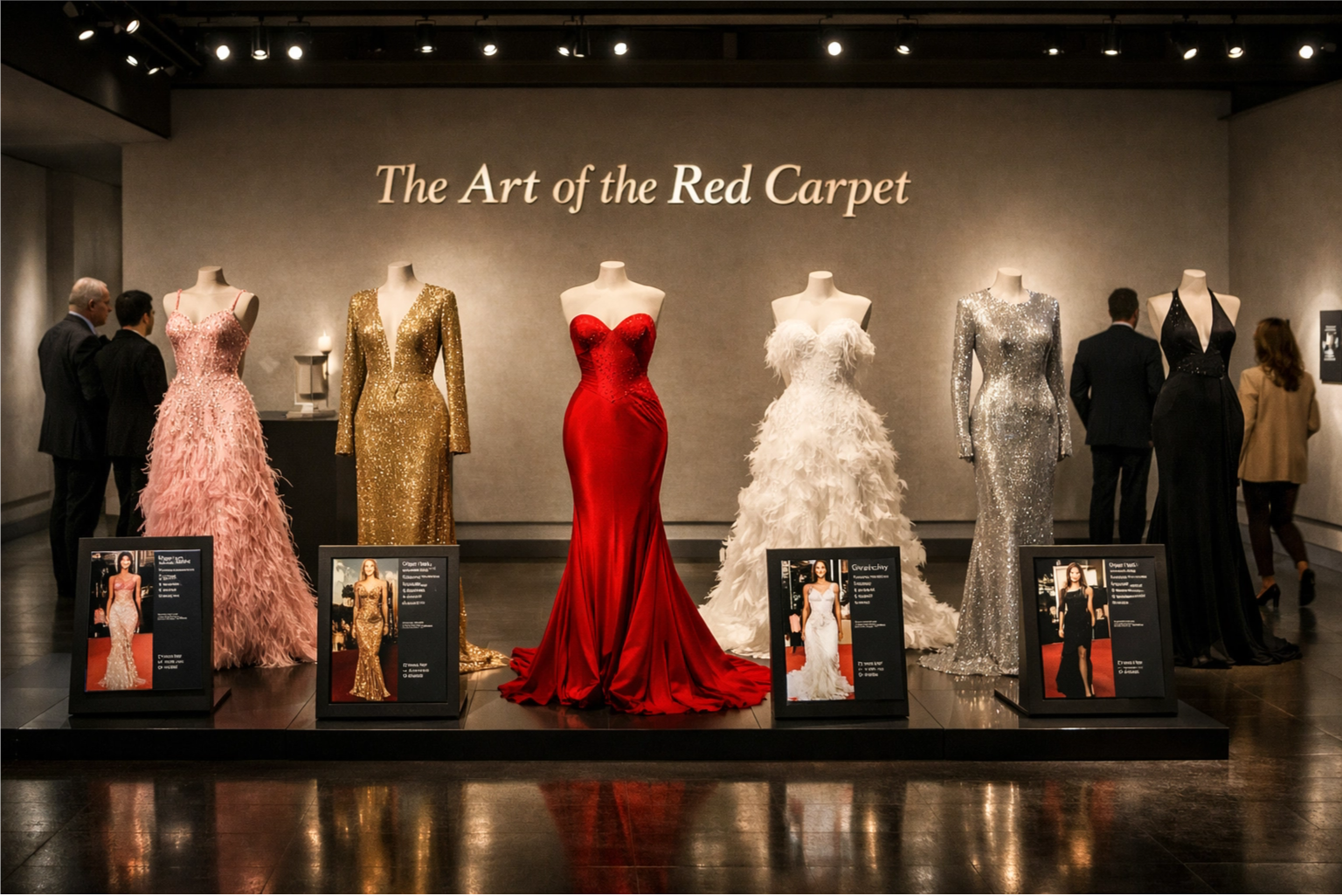
Awards show fashion's collectibility extends beyond physical garments to photography, sketches, and related memorabilia.
Fashion Photography as Accessible Entry Point
For collectors unable to invest $50,000-$200,000 in couture gowns, fashion photography offers accessible alternative. Limited edition prints by major red carpet photographers (Getty Images, Wire Image) or editorial fashion photographers covering awards shows cost $2,000-$15,000 while providing similar cultural engagement.
High-quality photographs documenting iconic fashion moments appreciate as moments gain historical significance. An exceptional photograph of historic winner in career-defining gown can become valuable cultural document rivaling garment itself in museum contexts.
Designer Sketches and Development Materials
Some collectors focus on designer sketches, toiles (muslins showing development process), and materials documenting how iconic pieces evolved from concept to completion. These ephemera often cost $3,000-$20,000 versus six-figure garment prices while offering unique insight into creative process.
Fashion archives and estate sales occasionally release these materials, providing collecting opportunities for those interested in design process rather than finished products. Museums value comprehensive archives showing piece's evolution, making sketch-plus-garment combinations particularly desirable for institutional acquisition.
Conclusion: Fashion as Collectible Cultural Production
The 2025 Golden Globes demonstrated fashion's evolution from decorative luxury to collectible cultural production deserving serious investment consideration. The evening's emphasis on gold metallics, archive fashion renaissance represented by Ariana Grande's vintage Givenchy, and custom couture showcasing by houses like Louis Vuitton, Armani Privé, and Balenciaga created multiple collecting opportunities across price points and categories.
For sophisticated collectors building comprehensive luxury portfolios, awards show fashion offers unique combination: cultural significance, celebrity association, exceptional craftsmanship, and documented provenance. Whether acquiring actual garments, fashion photography, or designer ephemera, approaching awards show fashion with same analytical rigor applied to contemporary art improves outcomes and builds collections with lasting value.
The conservator examining Golden Globes photographs understood fundamental truth: when Ariana Grande wore 59-year-old Givenchy couture valued at $200,000+, she demonstrated that exceptional fashion transcends its utilitarian purpose to become art. For collectors willing to recognize and acquire these pieces, awards shows provide annual opportunities to add culturally significant works to collections while engaging with fashion history as it unfolds.
Explore fashion-art intersection at Artestial's curated collections, or connect with our specialists for guidance building portfolios spanning contemporary art, design, and investment-grade fashion.
Approach awards show fashion with patience, selectivity, and historical perspective. The pieces commanding attention today may or may not achieve lasting value—but understanding which factors support appreciation versus fleeting trend enables strategic collecting building museum-quality holdings over decades.
Frequently Asked Questions
How much do Golden Globes custom couture gowns typically cost?
Custom haute couture pieces created specifically for Golden Globes represent extraordinary production investments. Based on industry estimates, celebrity red carpet couture typically costs $80,000-$200,000+ in pure production value (atelier hours, materials, fittings), though celebrities rarely pay these amounts—houses provide gowns as marketing investments valued at millions in equivalent advertising through media exposure and celebrity association. More accessible but still luxurious custom evening gowns (not haute couture level) range $20,000-$60,000. Archive vintage pieces like Ariana Grande's 1966 Givenchy can be valued $80,000-$250,000+ depending on designer significance, condition, and provenance. For collectors considering purchasing awards show fashion, expect costs of $30,000-$100,000 for quality vintage couture from recognized houses with proper documentation. Contemporary pieces occasionally appear at fashion auctions 15-25 years after events, typically achieving $15,000-$80,000 depending on designer, celebrity significance, and cultural moment importance.
Do awards show gowns appreciate in value like fine art?
Awards show fashion appreciation depends on multiple factors with highly variable outcomes. Historic firsts (Fernanda Torres's dress as first Brazilian actress Golden Globe winner) and legendary career moments (Meryl Streep winning record-breaking awards) appreciate most reliably. Archive fashion worn by major celebrities to important events can see 50-150% appreciation over 10-20 years if properly maintained and documented. However, most contemporary awards show pieces don't appreciate meaningfully—oversupply of celebrity custom gowns dilutes individual significance unless exceptional circumstances exist. Best opportunities: vintage pieces from fashion's golden age (1950s-1970s) by major houses (Givenchy, Balenciaga, Dior, Chanel), winners' gowns from career-defining moments, historic cultural milestones, or pieces by designers who achieve legendary status posthumously. Unlike fine art with relatively liquid secondary markets, fashion requires specialized auction houses (Kerry Taylor, Christie's vintage fashion) and patient 10-20+ year holding periods. Treat as passion collecting with potential appreciation rather than core investment strategy.
How do I authenticate and preserve awards show fashion if I acquire pieces?
Authentication requires multiple verification levels: obtain certificate of authenticity from selling gallery/auction house including designer confirmation, detailed provenance documentation (original owner, subsequent owners, exhibition history), photographic evidence linking specific garment to specific event (compare construction details, fabrics, embellishments against high-resolution red carpet photographs), and independent authentication from fashion historians or house archives for higher-value pieces ($50,000+). Major houses (Chanel, Dior, Givenchy) maintain archives and can verify pieces for fees ($500-$2,000 typically). Preservation follows museum textile conservation standards: climate-controlled storage (60-65°F, 50% humidity), acid-free tissue and storage materials ($100-300 for proper setup per garment), darkness (light degrades textiles), custom padded hangers or lying flat in archival boxes for heavily beaded pieces, professional conservation assessment every 3-5 years ($300-600), and never dry clean without consulting textile conservator (standard cleaning destroys vintage pieces). Budget $500-1,500 annually for proper preservation of small collection (5-10 pieces) including storage, conservation monitoring, and insurance (1-2% of value annually for specialized fashion insurance).
Which designers' awards show pieces have best long-term value retention?
Based on auction results and museum acquisitions, several designers show consistent value retention: Chanel (strong house archives, continuous market demand, timeless aesthetic), Dior (exceptional museum presence, detailed documentation, high-profile creative directors), Givenchy from Hubert de Givenchy era (1952-1995, particularly 1950s-1970s pieces achieving strong results), Valentino (Garavani-era pieces especially collectible), Balenciaga under Cristóbal Balenciaga (1937-1968, museum-quality craftsmanship), Saint Laurent (Yves Saint Laurent-designed pieces 1961-2002), and Armani for contemporary pieces (consistent quality, extensive archives, strong resale markets). Emerging designers require caution—wait for sustained career success (5-10+ years, multiple major awards show placements, museum acquisitions) before investing significantly. Designer transitions create opportunities: pieces from concluded creative director tenures at major houses (Blazy's Bottega Veneta, Piccioli's Valentino pre-2024) often appreciate as finite bodies of work. Avoid: fast-fashion collaborations with luxury houses, designers without proper archives, pieces lacking clear provenance, and anything marketed as "celebrity worn" without verification documentation.
Can fashion photography from awards shows be a good alternative investment to actual garments?
Yes, fashion photography offers accessible entry point to awards show collecting with advantages over physical garments. Limited edition prints by major photographers (Getty Images archives, established fashion photographers) cost $2,000-$15,000 versus $30,000-$200,000+ for couture gowns, require simpler storage (standard fine art photography preservation), have more liquid secondary markets (established photography auction infrastructure), and benefit from same cultural moments that drive garment value. Focus on: historically significant moments (first wins, cultural milestones), iconic images that enter popular culture, photographers with strong art market presence (Annie Leibovitz, Mario Testino, Patrick Demarchelier), limited editions with clear documentation, and images published in major fashion/cultural publications. Appreciation potential runs 30-100% over 10-20 years for well-selected prints documenting important cultural moments. Combine photography with designer sketches ($3,000-$20,000), vintage fashion editorial pages, and related memorabilia to build comprehensive fashion archive at fraction of couture acquisition costs. This approach provides cultural engagement and investment potential while avoiding conservation challenges, storage costs, and illiquidity challenges associated with physical garments.
Ready to explore fashion-art collecting? Visit Artestial's curated collections bridging contemporary art, design, and luxury fashion photography, or connect with our specialists for guidance building collections documenting cultural moments through wearable art and related mediums.
Curating excellence, one insight at a time.
— AURUM Team
Disclaimer: This article is for informational purposes only and does not constitute financial, investment, or fashion collecting advice. Fashion markets involve significant risks including illiquidity, authentication challenges, preservation requirements, uncertain appreciation, and market volatility. Most awards show fashion pieces do not appreciate meaningfully in value. Celebrity-worn provenance requires extensive verification to prevent fraud. Preservation costs can exceed acquisition costs over decades. Fashion auction markets remain less developed than fine art markets with limited institutional buyers. Designer reputations fluctuate unpredictably affecting values. Cost estimates, appreciation projections, and market observations are approximate and vary dramatically based on specific pieces, designers, cultural moments, and market conditions. Museum acquisition possibilities depend on institutional priorities that cannot be predicted. Conservation requires specialized expertise—improper storage destroys valuable textiles. Consult qualified fashion historians, textile conservators, appraisers, and financial advisors before making significant fashion collecting investments. Information reflects market conditions as of early 2025 and may not apply to specific circumstances or future conditions.