

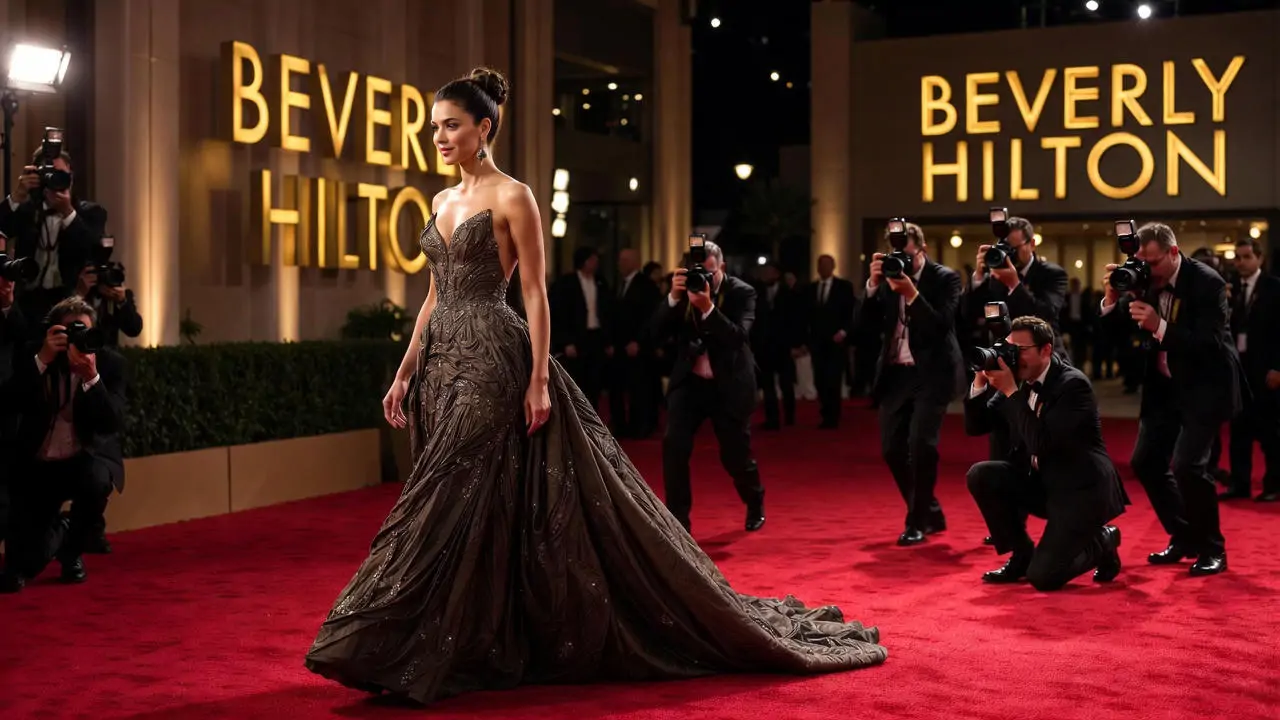
The red carpet unfurls at the Beverly Hilton. Cameras flash like strobe lights in a gallery opening. A sculptural gown flows past—not merely clothing, but three-dimensional art moving through space.
January 11, 2026, marks the 83rd Golden Globes ceremony. Hollywood's first major awards show sets the tone for the entire season. Collectors understand that this event showcases more than celebrity style. It functions as a mobile exhibition where haute couture transcends fashion to become contemporary art.
The boundaries between atelier and art studio have dissolved. Designers like Iris van Herpen employ 3D printing techniques indistinguishable from sculptural practices. Schiaparelli channels surrealist traditions directly into wearable forms. These aren't costumes—they're museum-worthy pieces that happen to be worn for three hours before entering private collections.
When Runway Becomes Gallery
Haute couture occupies a unique position in contemporary art discourse. Pieces require hundreds of hours of handwork by skilled artisans. They exist in extremely limited quantities. Collectors acquire them not for utility but for aesthetic significance.
Paris Haute Couture Week precedes major award shows deliberately. Designers unveil their most ambitious work, knowing red carpets provide global exposure. The Golden Globes offer particular advantages. Its relaxed atmosphere compared to the Oscars encourages bolder fashion choices. Celebrities experiment with avant-garde pieces they might avoid at more conservative ceremonies.
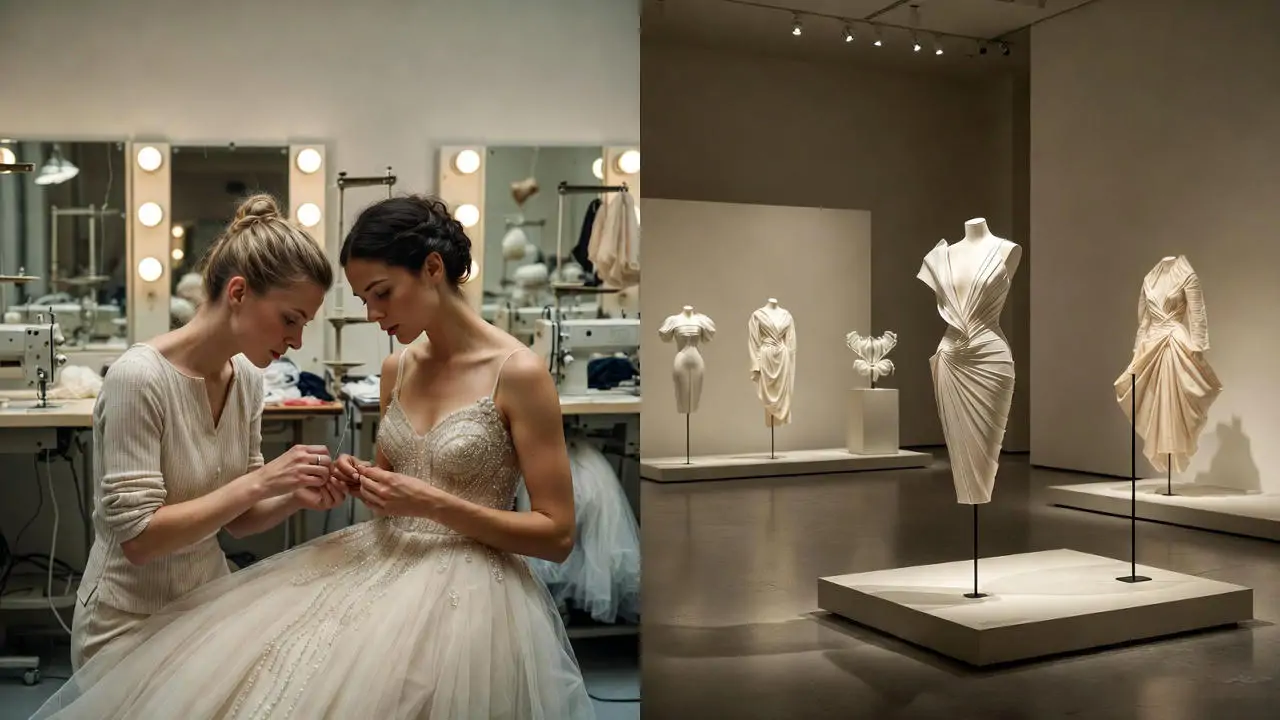
Consider recent Golden Globes moments. Sculptural silhouettes defy traditional garment construction. Materials combine in unexpected ways—3D-printed polymers meet hand-embroidered silk. Colors reference art movements from Bauhaus geometry to Abstract Expressionist palettes. Each dress tells stories through form, texture, and cultural references.
Art collectors increasingly recognize haute couture's investment potential. Major auction houses now feature fashion departments. Museums mount blockbuster costume exhibitions, drawing millions of visitors. The Metropolitan Museum's Costume Institute galas generate more attention than many contemporary art openings. This institutional validation elevates fashion's status within collecting hierarchies.
The Designers Blurring Boundaries
Several designers operate explicitly at fashion-art intersections. Their work belongs in conversations about contemporary sculpture and conceptual art as much as clothing design.
Iris van Herpen pioneered technology-driven couture. She collaborates with architects, scientists, and engineers. Her dresses employ 3D printing, laser cutting, and magnetic structures. Museums, including Victoria & Albert and the Philadelphia Museum of Art, have acquired her work for permanent collections. When celebrities wear van Herpen to the Golden Globes, they're displaying museum-quality contemporary art.
Schiaparelli under Daniel Roseberry revives surrealist traditions. His Fall 2025 couture featured crow motifs and fluid silhouettes echoing Dalí and Magritte. The house's history—founder Elsa Schiaparelli collaborated directly with Salvador Dalí, Jean Cocteau, and Man Ray—informs contemporary collections. Wearing Schiaparelli means participating in a nearly century-long dialogue between fashion and fine art.
Alessandro Michele brings a maximalist artistic vision to Valentino. His Spring 2025 couture debut demonstrated how extensively researched historical references can create contemporary statements. Michele studied art history before fashion. This background manifests in collections functioning as visual essays about beauty, identity, and cultural memory.
Gaurav Gupta transforms Indian textile traditions into sculptural forms. His origami-inspired pleating techniques and nature-based abstractions represent cross-cultural artistic synthesis. Gupta demonstrates how non-Western design approaches expand contemporary fashion's artistic vocabulary. His work appeals to collectors interested in global contemporary art movements.
Viktor & Rolf approach fashion conceptually. Their collections explore form and volume through exaggerated proportions and architectural construction. Pieces often comment on fashion industry absurdities while pushing garment construction to physical limits. Their haute couture occupies space between performance art and wearable sculpture.
Art Historical References on the Red Carpet
Sophisticated observers recognize how Golden Globes fashion references art history. Designers mine centuries of visual culture for inspiration. Understanding these connections deepens appreciation for what appears on the red carpet.
Color choices often reference specific art movements. Valentino's signature red evokes Renaissance masters. Balenciaga's architectural black recalls minimalist sculpture. Schiaparelli's bold hues channel Fauvism and Pop Art. These aren't random aesthetic decisions—they're deliberate engagements with art historical traditions.
Silhouettes frequently echo sculptural forms. Structural gowns reference Constantin Brâncuși's elegant abstractions. Fluid drapery recalls classical statuary. Geometric constructions engage with the Cubist decomposition of form. Designers translate three-dimensional art concepts into wearable objects.
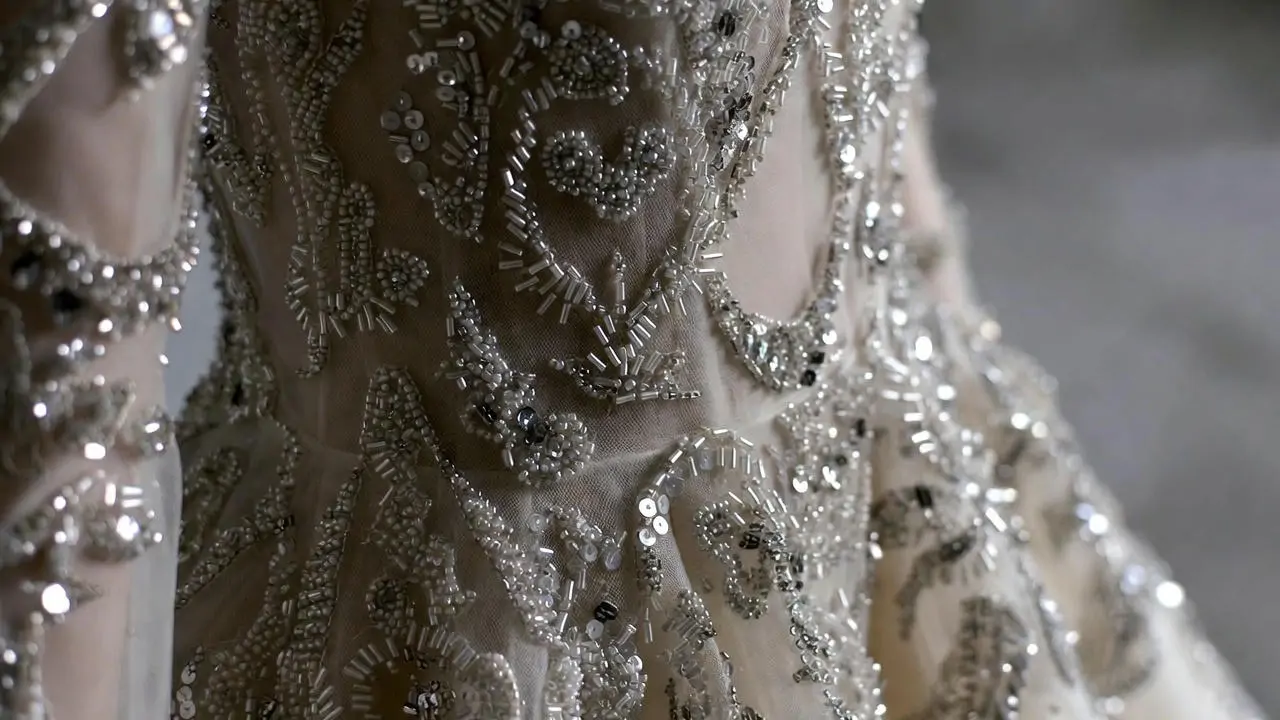
Surface treatments employ techniques borrowed from painting and printmaking. Hand-embroidery creates effects similar to impasto brushwork. Beading produces pointillist effects. Appliqué functions like collage. Textile manipulation generates textures comparable to Abstract Expressionist gesture. These technical parallels aren't coincidental—many designers study fine art before entering fashion.
Cultural references layer meaning into designs. A Dior gown might reference 18th-century portraiture while commenting on contemporary femininity. A Chanel piece could engage with Coco Chanel's art world connections—her friendships with Picasso, Cocteau, and Stravinsky. These intellectual dimensions separate haute couture from mere fashion.
The Collecting Perspective
Art collectors approach Golden Globes fashion differently than casual viewers. They evaluate pieces using criteria applied to contemporary art: originality, craftsmanship, cultural significance, and potential lasting value.
Provenance matters enormously. A gown worn by a major actress at a significant ceremony carries historical weight. This increases both cultural importance and market value. Auction houses have sold celebrity-worn couture for substantial sums. Marilyn Monroe's dresses command millions. More recent pieces worn by cultural icons appreciate rapidly.
Documentation becomes crucial. Professional photography from red carpets provides exhibition-quality images. These function like artwork documentation, proving authenticity and capturing the piece's presentation. Collectors maintain comprehensive archives of when and where pieces appeared publicly.
Conservation presents unique challenges. Haute couture uses delicate materials requiring specialized care. Beading, embroidery, and unconventional structural elements demand expert handling. Collectors work with textile conservators, ensuring pieces remain pristine despite their fragility. Climate-controlled storage prevents degradation.
Display options vary widely. Some collectors loan pieces to museum exhibitions. Others create private galleries in their homes. A few wear pieces to exclusive events, treating them as living art rather than static objects. Each approach reflects different collecting philosophies about fashion-as-art.
Market dynamics increasingly resemble contemporary art. Prices depend on the designer's reputation, craftsmanship quality, cultural significance, and celebrity association. Emerging designers can be acquired relatively affordably. Established names from major houses command premium prices. Vintage pieces from legendary designers appreciate substantially over time.
Discover curated contemporary art and design at Artestial, where our specialists understand how artistic expression transcends traditional mediums, from canvas and sculpture to innovative fashion and design that redefines luxury collecting.
Beyond the Red Carpet
The Golden Globes ceremony itself constitutes a type of performance art. Hundreds of artists (celebrities) wear commissioned works by other artists (designers) in an elaborate, choreographed event. The Beverly Hilton transforms into a temporary exhibition space where living sculptures move through carefully lit environments.
This theatrical dimension appeals to collectors interested in performance and conceptual art. The event's ephemeral nature—lasting only hours before pieces return to private archives—creates scarcity. Only through photography and video does the complete artistic experience persist beyond the ceremony.
Social media extends the artwork's reach exponentially. Images circulate globally within minutes. Millions view and discuss each look. This immediate, worldwide response mirrors how viral art moments function in contemporary culture. The democratization of viewing contrasts sharply with haute couture's extreme exclusivity.
Critics analyze Golden Globes fashion using art criticism methodologies. They discuss composition, color theory, cultural references, and conceptual frameworks. Fashion journalism increasingly adopts academic art historical approaches. This intellectual seriousness validates fashion's position within contemporary art discourse.
Educational institutions recognize these connections. Museum costume departments employ curators with art history credentials. Universities offer courses analyzing fashion through contemporary art lenses. Academic conferences examine fashion-art intersections rigorously. This institutional support strengthens fashion's claims to art status.
Essential Questions About Fashion as Art
How do collectors differentiate between high fashion and wearable art?
The distinction lies primarily in intention and execution. Haute couture pieces created for major events like the Golden Globes typically involve unprecedented craftsmanship and artistic vision. They're commissioned as unique works rather than produced for commercial sale. When designers collaborate with artists, employ innovative techniques, or create pieces requiring hundreds of hours of handwork, the result transcends fashion. Museums and serious collectors evaluate these works using contemporary art criteria rather than fashion market standards.
Can Golden Globes dresses be acquired by private collectors?
Yes, through several channels. Some celebrities sell worn pieces through auction houses like Christie's or Sotheby's. Proceeds often benefit a charity. Designers occasionally offer similar pieces to private clients, though these lack celebrity provenance. Collectors can also commission custom pieces from designers using similar techniques and materials. However, the exact dress worn by a major actress at a significant ceremony remains unique. Provenance significantly affects value—identical dresses have vastly different worth depending on who wore them when.
What investment potential do haute couture pieces offer?
Market performance varies widely. Pieces by established designers (Dior, Chanel, Valentino) with strong celebrity association and historical significance appreciate most reliably. Vintage haute couture from legendary designers has shown substantial gains. However, fashion markets remain less liquid than fine art. Selling requires specialized auction houses or dealers. Insurance costs run high due to fragility. Collectors should acquire primarily for aesthetic appreciation rather than pure financial return. The strongest investments combine exceptional design, significant cultural moment, and impeccable condition.
How do museums approach fashion exhibitions?
Major institutions increasingly treat fashion as contemporary art deserving serious curatorial attention. The Metropolitan Museum, Victoria & Albert, and the Los Angeles County Museum of Art maintain extensive fashion collections. Exhibitions employ museological standards: climate control, professional lighting, interpretive materials, and scholarly catalogs. Blockbuster shows like "Alexander McQueen: Savage Beauty" and "Heavenly Bodies" demonstrate fashion exhibitions' public appeal. Museums recognize haute couture's cultural significance and collect strategically to document design history comprehensively.
Where Art Meets Evening Wear
January 11 offers more than entertainment industry recognition. The Golden Globes presents an annual exhibition where contemporary art takes wearable form. For three hours, the Beverly Hilton functions as a gallery space showcasing cutting-edge design, innovative techniques, and cultural commentary expressed through garments.
Collectors who appreciate contemporary art should consider haute couture seriously. The disciplines share fundamental characteristics: skilled craftsmanship, conceptual depth, cultural significance, and aesthetic innovation. Major designers operate at art's highest levels. Their work deserves recognition alongside painting, sculpture, and installation art.
The red carpet democratizes access to these artistic achievements. Millions witness works that would otherwise remain hidden in private ateliers or exclusive showrooms. This visibility serves fashion-as-art admirably. It generates discourse, influences culture, and establishes designers' positions within contemporary creative practice.
For those building comprehensive art collections, fashion represents an opportunity. The field offers relatively accessible entry points compared to blue-chip contemporary art. Emerging designers create museum-quality work at prices far below comparable sculpture or painting. Established names provide prestige and proven value appreciation. Strategic collecting builds holdings across creative disciplines.
The Golden Globes ceremony celebrates storytelling through film and television. Equally, it celebrates storytelling through design. Each gown narrates through form, color, texture, and cultural reference. These visual narratives merit the same attention and appreciation collectors direct toward other contemporary art forms.
Explore expertly curated art and design at Artestial, the luxury platform connecting discerning collectors with exceptional works across traditional and innovative mediums, where fashion, art, and design converge for sophisticated portfolios.
Curating excellence, one insight at a time.
— AURUM Team
Disclaimer: This article is for informational purposes only and does not constitute financial, legal, or investment advice. Fashion and haute couture markets involve significant costs and specialized knowledge. Market values fluctuate based on numerous factors, including designer reputation, celebrity association, condition, and cultural trends. Pieces require professional conservation and proper storage. Consult qualified fashion historians, textile conservators, and specialized auction house experts before making haute couture acquisitions. Information reflects industry knowledge as of early 2026 and may not apply to specific situations.