

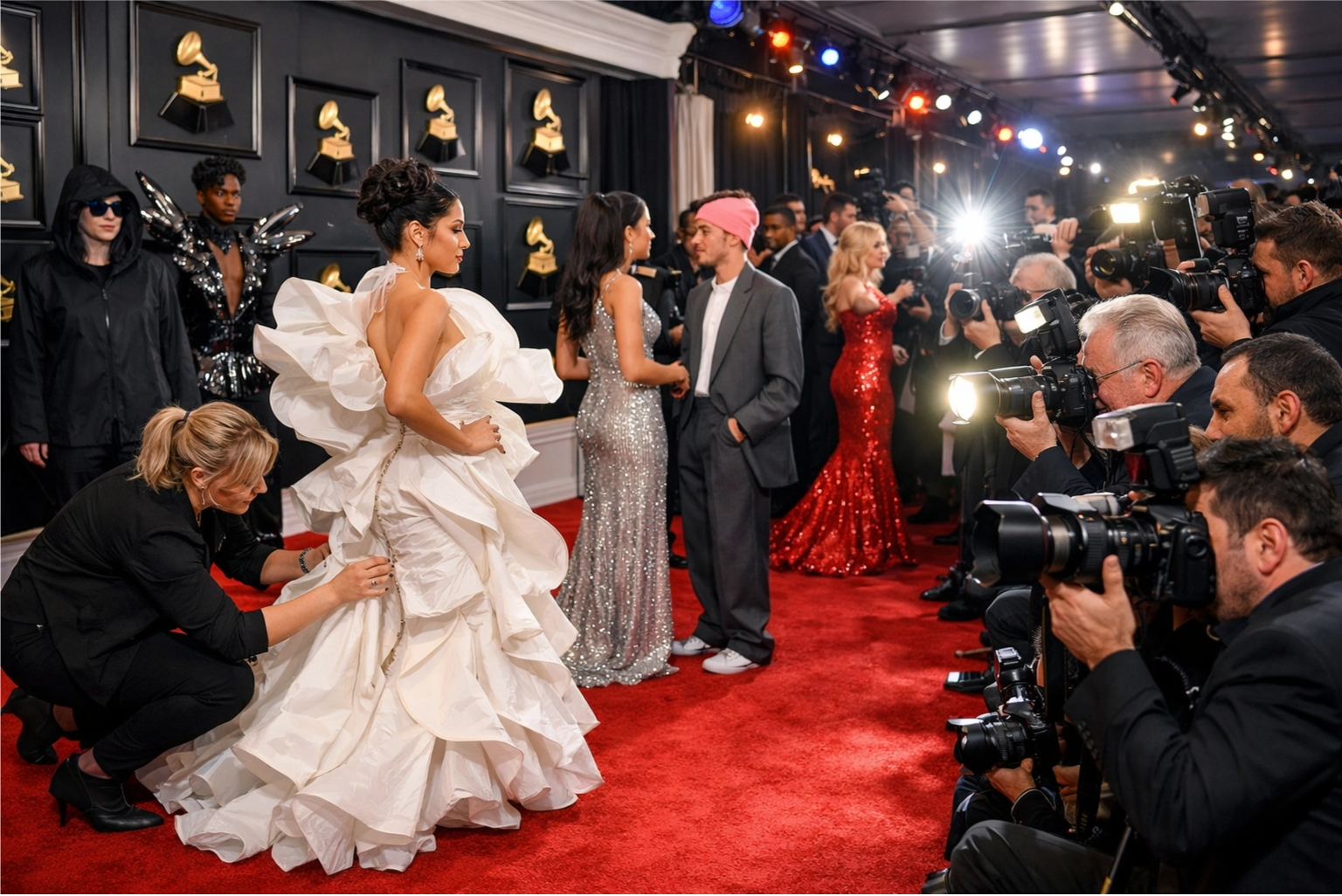
The collector observing Grammy red carpet arrivals through design lens rather than celebrity gossip recognizes patterns distinguishing music industry fashion from other awards shows. Musicians generally take greater creative risks than actors, wearing more experimental silhouettes, bolder color combinations, and conceptually complex pieces that traditional Hollywood stylists might deem "too much." This creative freedom stems partly from music industry's different relationship to image—musicians build brands through ongoing visual evolution across albums, tours, and public appearances rather than subordinating personal style to specific film role requirements. Grammy attendees also tend toward younger demographic with less institutional pressure to maintain classical elegance, creating space for emerging designer partnerships and avant-garde experimentation.
The Grammy fashion ecosystem particularly values designer-musician collaborations where both parties contribute creative vision rather than stylist simply pulling designer pieces for passive celebrity wearing. When Beyoncé worked with Balmain's Olivier Rousteing developing custom Grammy looks across multiple years, the collaboration involved genuine creative dialogue about silhouette, embellishment, cultural references, and performance requirements beyond standard red carpet considerations. When Harry Styles partners with Gucci's Alessandro Michele creating gender-fluid glamorous wardrobes, the relationship reflects shared aesthetic sensibility and mutual influence rather than transactional celebrity endorsement.
These collaborations sometimes produce genuinely innovative design work. Daniel Roseberry's Schiaparelli creations for musicians including Doja Cat and Cardi B push surrealist fashion traditions into contemporary context, translating Elsa Schiaparelli's 1930s iconoclasm through modern materials and celebrity platform. The Grammy red carpet provides opportunity for designers to show work that fashion runways couldn't accommodate—pieces too specific to individual wearer, too conceptually complex for commercial viability, or too performance-focused for traditional fashion presentation. This creates interesting design laboratory where commercial constraints loosen slightly, enabling experimentation that sometimes influences broader fashion discourse.
However, the commercial and celebrity dynamics also create legitimate concerns about whether Grammy fashion represents serious design contribution or merely expensive spectacle. Designers often create custom pieces specifically for celebrity visibility knowing media coverage generates brand value exceeding design fees. Musicians select looks primarily for attention-generating potential rather than purely aesthetic merit. The massive social media response to controversial or innovative Grammy looks can overshadow the actual music awards ceremony, raising questions about whether fashion serves artistic expression or merely fuels celebrity media machine.
Understanding Grammy fashion's role in contemporary design requires navigating this complexity—recognizing genuine creative partnerships and innovative design work while acknowledging commercial motivations and celebrity spectacle dynamics that complicate assessing artistic merit. The most interesting Grammy fashion moments involve musicians using platform for cultural statements, designers pushing creative boundaries enabled by celebrity visibility, and collaborations producing work that transcends both parties' individual capabilities while accepting that much red carpet fashion represents skilled styling rather than groundbreaking design innovation.
Explore contemporary fashion-inspired artworks at Artestial, where collectors find pieces engaging with fashion, identity, performance, and wearable art traditions, or where style-conscious collectors discover work by artists examining fashion's cultural role.
The Designer-Musician Collaboration: Creative Partnership or Commercial Transaction?
Grammy fashion's most compelling aspects emerge from genuine creative partnerships between musicians and designers developing custom looks reflecting shared artistic vision, but distinguishing authentic collaboration from commercial arrangements where designers provide free clothing for celebrity visibility requires examining relationship dynamics, creative process, and resulting work.
Authentic Creative Partnerships
True designer-musician collaborations involve extended creative dialogue where both parties contribute ideas, challenge each other's assumptions, and produce work neither could create independently. These relationships often develop over years rather than emerging for single Grammy appearance, with musicians and designers building mutual understanding enabling increasingly ambitious creative risks.
Beyoncé's ongoing partnership with Olivier Rousteing at Balmain exemplifies sustained creative collaboration. Rousteing doesn't simply dress Beyoncé; he designs specifically for her performances, body, and artistic vision, incorporating her feedback about movement requirements, symbolic references, and cultural significance into custom creations. The 2023 Grammy performance look featuring gold bodysuit with intricate beadwork and dramatic cape required months of development, multiple fittings, and extensive technical problem-solving ensuring costume supported choreography while achieving desired visual impact. This process resembles theatrical costume design more than celebrity styling—functional art serving performance requirements while making powerful aesthetic statement.
Similarly, Harry Styles' relationship with Alessandro Michele at Gucci evolved into genuine creative partnership exploring gender-fluid fashion, vintage inspiration, and maximalist glamour. Michele designs for Styles understanding his artistic evolution, incorporating symbolic elements referencing specific songs or album concepts, and creating pieces that work both on Grammy red carpet and across tour performances. The collaboration influenced Michele's broader Gucci collections, with Styles serving as muse inspiring design directions that appeared in runway shows and commercial lines. This mutual influence distinguishes creative partnership from one-directional celebrity endorsement.
Billie Eilish's collaboration with various designers including Gucci, Louis Vuitton, and Oscar de la Renta similarly involves creative dialogue about silhouette, sustainability, and challenging conventional beauty standards. Her custom Grammy looks often feature oversized proportions, unexpected fabric combinations, and references to streetwear challenging traditional red carpet glamour. Designers working with Eilish must engage her specific aesthetic vision and values including sustainability requirements—several custom pieces incorporated upcycled materials or sustainable production methods reflecting both designer commitment and musician's public platform for environmental advocacy.
These authentic partnerships share common characteristics: extended timeframes allowing creative development rather than rushed last-minute styling, genuine creative dialogue where musician provides input beyond simply approving designer proposals, work reflecting both parties' aesthetic signatures rather than designer style alone, and resulting pieces serving artistic purposes beyond single red carpet appearance by incorporating into performances, music videos, or tour wardrobes.
Commercial Arrangements and Transactional Styling
Conversely, much Grammy fashion involves transactional relationships where designers provide custom or couture pieces primarily for visibility generated by celebrity wearing, while musicians accept designer creations primarily because they're free, prestigious, and media-attention generating. These arrangements aren't necessarily problematic—they serve both parties' commercial interests—but they differ fundamentally from creative partnerships.
Standard celebrity styling for awards shows typically involves stylists contacting design houses requesting pieces for specific clients, designers providing options from current or upcoming collections (sometimes with minor customization), stylists selecting best fits and most attention-generating looks, and celebrities wearing pieces without substantial creative input. The designer gains celebrity visibility potentially translating to commercial sales, the celebrity receives prestigious designer fashion without cost, and stylist facilitates mutually beneficial transaction. This process produces many elegant and visually successful Grammy looks, but it represents skilled styling rather than collaborative creative partnership.
The distinction matters when evaluating Grammy fashion's design significance. Genuine collaborations often push creative boundaries, explore new aesthetic territories, and produce work influencing broader fashion discourse because both parties invest creatively beyond commercial transaction. Transactional arrangements more often result in safe choices optimizing for positive media response while minimizing creative risk—beautiful, skillfully executed looks that nonetheless offer limited design innovation.
Collectors and observers interested in fashion as creative practice benefit from distinguishing these relationship types. When designer and musician collaborate authentically, resulting work often demonstrates genuine design innovation meriting attention beyond celebrity spectacle. When relationship remains primarily commercial, resulting looks might be visually successful but rarely advance design discourse significantly beyond demonstrating that prestigious houses can produce elegant custom pieces for major celebrities.
The Role of Celebrity Stylists
Celebrity stylists function as crucial intermediaries in Grammy fashion ecosystem, but their role creates interesting tensions between creative vision and commercial optimization. Stylists like Law Roach (Zendaya, Celine Dion), Jason Bolden (Yara Shahidi, Taraji P. Henson), or Karla Welch (Olivia Rodrigo, Tracee Ellis Ross) develop strong aesthetic signatures and creative relationships with both designers and musician clients, sometimes functioning as genuine creative collaborators and sometimes primarily as commercial facilitators.
The most successful stylist partnerships involve understanding musician's artistic vision and career positioning well enough to propose looks that enhance rather than overshadow artistic identity. Law Roach's work with Zendaya demonstrates this understanding—he creates red carpet moments that generate extensive media coverage while carefully managing Zendaya's image evolution from Disney star to serious actress and fashion icon. Grammy looks form part of long-term brand building rather than isolated styling decisions.
However, stylist economics create pressures toward commercial optimization over creative risk. Stylists typically receive percentage of musician earnings rather than salary, creating incentive to maximize positive media coverage and avoid controversial styling choices that might generate negative publicity. This can result in safe, crowd-pleasing looks over more experimental or challenging fashion that might divide opinion but advance creative discourse. The balance between commercial success and creative risk-taking defines stylist skill—great stylists know when client should play safe and when creative risk serves long-term positioning better than cautious elegance.

Cultural Statements Through Fashion: Identity, Representation, and Political Expression
Grammy red carpet serves as platform for cultural statements where musicians use fashion choices to express identity, advocate for representation, or make political commentary with visibility that traditional fashion contexts rarely provide.
Gender Expression and Fluidity
Music industry's embrace of gender-fluid and non-binary fashion significantly exceeds other entertainment sectors, with Grammy red carpet often showcasing most visible examples of designers and musicians collaborating to challenge conventional gender presentations. Harry Styles wearing Gucci gowns, suits with sheer blouses, or pearl-adorned ensembles normalizes men wearing traditionally feminine elements for massive mainstream audience. Lil Nas X's camp glamour and gender-bending Grammy looks similarly use high-visibility platform to expand acceptable masculine presentation.
These fashion choices carry cultural significance beyond individual style preferences. When major musicians wear gender-fluid fashion to prominent awards shows, it influences how millions of viewers perceive acceptable self-expression, provides visibility for LGBTQ+ communities often excluded from mainstream media representation, and demonstrates that creative success doesn't require conforming to traditional gender presentation norms. The fashion industry benefits from these high-profile examples enabling designers to show more experimental gender-fluid work knowing musicians provide willing collaborators and platforms reaching beyond traditional fashion audiences.
Female musicians similarly use Grammy fashion to challenge or subvert conventional femininity expectations. Artists might choose menswear-inspired suiting rather than gowns, opt for comfortable sneakers with couture, or wear designs explicitly referencing feminist art history or political movements. These choices signal artistic autonomy and resistance to pressure that female performers must always present conventional glamour regardless of their music genre or artistic identity.
Cultural Heritage and Identity Expression
Musicians from various cultural backgrounds increasingly use Grammy red carpet to showcase heritage through fashion collaboration with designers sharing or celebrating those traditions. This creates visibility for cultural aesthetic traditions often excluded from mainstream fashion coverage while providing designers from underrepresented backgrounds platforms reaching global audiences.
Latin artists wearing designers like Carolina Herrera or Latino emerging talents, African American musicians showcasing Black designers from Kerby Jean-Raymond (Pyer Moss) to Telfar Clemens, Asian artists collaborating with Asian designers—these partnerships celebrate cultural heritage while challenging fashion industry's historical Eurocentrism. The visibility matters both commercially (proving market demand for diverse design perspectives) and culturally (demonstrating that prestigious occasions can celebrate multiple aesthetic traditions rather than requiring assimilation to Western glamour standards).
Cultural heritage fashion at Grammys sometimes involves literal traditional garment elements incorporated into contemporary designs, and sometimes manifests more subtly through color symbolism, textile choices, or silhouette references only fully legible to those familiar with specific cultural traditions. Both approaches serve cultural expression purposes while navigating Grammy red carpet's pressure toward universal visual legibility and media-friendly spectacle.
Political Statements and Advocacy
Some Grammy fashion choices explicitly reference political movements or social justice causes, using high-visibility platform to amplify messages beyond what music performances alone might communicate. Musicians might wear colors associated with specific causes (black for protest movements, rainbow for LGBTQ+ rights), incorporate symbolic imagery (names of victims of violence, protest slogans), or choose designers whose work explicitly engages political themes.
These political fashion moments face delicate balance between meaningful advocacy and virtue signaling criticism. When fashion choices connect authentically to musician's sustained advocacy work and artistic practice, they can effectively amplify important causes to audiences who might not otherwise engage. When political fashion feels performative or disconnected from musician's actual commitments, it risks trivialization reducing serious issues to superficial aesthetic gesture.
The most effective political Grammy fashion tends to embed advocacy within beautiful, well-executed design rather than treating fashion as mere message delivery vehicle. Joy Villa's explicitly political Grammy dresses (wearing MAGA gown, pro-life gown, border wall gown across different years) generated extensive coverage but faced criticism for prioritizing provocative messaging over aesthetic merit or fashion innovation. Conversely, musicians who work with socially conscious designers creating beautiful pieces that happen to incorporate sustainable materials, celebrate cultural heritage, or challenge conventional beauty standards often communicate political values more effectively through demonstrating alternatives rather than explicit messaging.
Performance Fashion: When Costume Design Meets Couture
Grammy's live performance segments create unique fashion opportunities where musicians commission custom designs specifically for televised performances rather than red carpet, blurring boundaries between costume design, couture fashion, and performance art.
The Technical Requirements of Performance Fashion
Designing for Grammy stage performances involves constraints absent from red carpet or runway fashion. Pieces must allow full range of motion for choreography, accommodate microphone packs and in-ear monitors, survive energetic performance without wardrobe malfunctions, potentially facilitate quick changes between songs, and read clearly from distance under stage lighting while also succeeding in extreme close-up camera shots. These technical requirements demand genuine costume design expertise beyond couture fashion skills.
Successful performance fashion designers understand theatrical costume construction techniques ensuring garments stay in place during athletic choreography, know how to work with performance fabrics that move beautifully while remaining durable, and can incorporate hidden structural support maintaining silhouette under movement. Many Grammy performance looks involve collaboration between couture fashion houses providing aesthetic direction and theatrical costume shops handling technical execution—combining fashion house's design prestige with costume shop's performance construction expertise.
The most ambitious Grammy performances feature multiple custom looks with quick changes executed in seconds rather than minutes. Beyoncé's 2017 Grammy performance while pregnant required multiple custom looks with concealed structure accommodating pregnancy while allowing choreographed movement, necessitating months of development with both fashion designers and costume technicians. The resulting pieces functioned as both high fashion and performance costume, demonstrating how Grammy performances can showcase design work that purely fashion or purely theatrical contexts couldn't achieve.
Performance Fashion as Design Innovation
Grammy performance constraints sometimes drive genuine design innovation as designers solve technical problems enabling new aesthetic possibilities. Fabric technology developed for performance wear (moisture-wicking, stretch, durability) increasingly influences fashion runway collections. Construction techniques ensuring movement without sacrificing silhouette translate to ready-to-wear commercial lines. Color and embellishment choices optimized for stage lighting and broadcast cameras inform designer approaches to fashion photography and presentation.
The feedback loop between performance fashion and commercial design creates interesting cross-pollination where Grammy performances function as high-visibility design laboratory. Designers can test innovative materials, construction methods, or aesthetic concepts with musician collaborators willing to take creative risks, receive immediate response through social media and media coverage, and refine successful elements into commercial collections. This accelerates design innovation compared to traditional fashion cycle where runway concepts might take years reaching commercial implementation.
However, the performance-to-fashion pipeline also raises questions about design attribution and creative ownership. When costume technician solves technical problem enabling designer's aesthetic vision, who deserves credit for innovation? When performance requirements drive fabric or construction choices that designer then incorporates into commercial collections, how should collaborative nature of innovation be acknowledged? Fashion industry's historical undervaluing of costume design and theatrical costume technicians' contributions creates tensions around Grammy performance fashion credit.
The Economics of Performance Investments
Custom Grammy performance looks represent substantial financial investments—sometimes hundreds of thousands of dollars for single performance outfit when accounting for designer time, custom fabric development, skilled construction labor, fittings, and technical testing. Musicians typically cover these costs themselves or through label advancement, viewing performance fashion as career investment generating media coverage, establishing visual brand identity, and creating shareable content extending performance's reach beyond live television audience.
For emerging designers, creating Grammy performance looks for major musicians provides publicity potentially launching or substantially advancing careers. The exposure can outvalue typical fashion advertising spend, with single well-executed and widely covered Grammy look generating more brand awareness than seasons of paid campaigns. This creates interesting negotiation dynamics where designers might reduce or eliminate fees in exchange for credit and visibility, while established houses charge substantial amounts reflecting brand prestige.
The investment calculation differs for musicians at various career stages. Established superstars can afford elaborate custom performance fashion as career maintenance, emerging artists may overextend financially hoping single viral Grammy moment launches career trajectory, and mid-level artists must carefully assess whether performance fashion investment likely generates sufficient publicity return. The occasional career-making Grammy fashion moment (Lady Gaga's meat dress, Rihanna's yellow Guo Pei gown) inspires hopeful investment that rarely delivers equivalent results, creating economic pressure toward ever more expensive and elaborate performance looks without guaranteed returns.

Emerging Designers and Grammy Platform: Career Launch Opportunities
Grammy red carpet and performances provide crucial visibility platform for emerging designers who might lack resources for traditional fashion week presentations or advertising campaigns, creating pathways to recognition and commercial success that fashion industry's conventional structures increasingly struggle to provide.
The Visibility Calculus
Single high-profile Grammy appearance for emerging designer can generate more publicity than entire fashion career to that point. When Zendaya wore vintage Valentino to 2019 Oscars (wrong awards show but same principle), designer got credit despite piece being archive rather than contemporary creation. When musicians wear emerging designers to Grammys, tagged Instagram posts immediately expose designer to millions of potential customers, media coverage often identifies designer even in brief captions, and fashion industry insiders take notice of names appearing in major celebrity contexts.
This visibility model particularly benefits designers lacking traditional fashion industry access—designers from underrepresented backgrounds who face barriers entering established fashion houses, designers working in non-Western fashion centers without automatic New York/Paris/Milan visibility, designers who cannot afford fashion week participation or traditional wholesale relationships. If single celebrity wears emerging designer's work and social media amplifies that moment, designer can potentially build direct-to-consumer business through resulting visibility without needing conventional fashion industry gatekeepers.
However, the celebrity-dependent visibility model also creates precarious career foundations. If initial celebrity exposure doesn't convert to sustainable customer base, designer may find brief spotlight actually harmful—raised expectations without infrastructure to fulfill demand, pressure to replicate viral moment rather than develop authentic artistic vision, and potential typecast as "celebrity designer" rather than serious creative talent. The most successful emerging designers treat Grammy visibility as opportunity requiring substantial follow-through rather than destination guaranteeing success.
Designer Diversity and Representation
Grammy fashion ecosystem has become important vehicle for increasing designer diversity in ways traditional fashion industry has historically failed to achieve. Black designers, Latin designers, Asian designers, LGBTQ+ designers, and designers from various underrepresented backgrounds often find more opportunity through musician collaborations than through conventional fashion house career paths or fashion week presentations dominated by established (predominantly white, European) brands.
Musicians from various backgrounds tend to seek designers sharing cultural heritage or identity, creating natural collaboration opportunities. This benefits both parties—musicians get custom work from designers understanding their cultural context and aesthetic preferences, designers get visibility platform that might not be available through traditional fashion channels. The accumulated effect of numerous musicians championing diverse designers over successive Grammys has measurably increased public awareness of talents the broader fashion industry long overlooked.
This increased visibility creates commercial opportunities for emerging designers as consumers increasingly seek brands reflecting diverse perspectives and experiences. Designer who makes viral Grammy moment can convert attention to direct sales, wholesale partnerships, or investor interest in ways that traditional fashion career progression might not enable for years. The accelerated timeline both helps overcome historical industry barriers and creates new challenges as designers must rapidly scale businesses without conventional industry apprenticeship building operational expertise.
The Post-Grammy Sustainability Challenge
Perhaps most critical question for emerging designers involves converting single Grammy visibility moment into sustainable fashion career. History shows numerous examples of designers who received major celebrity visibility but failed to build lasting businesses—unable to scale production, lacking business operations expertise, creating designs too expensive or impractical for broader commercial success, or simply producing one viral piece without demonstrating sustained creative vision.
Successful trajectories typically involve designers treating Grammy exposure as beginning rather than culmination, using visibility to fund business infrastructure development, hiring operational expertise complementing creative vision, and carefully managing growth pace avoiding overextension. Designers who slowly build upon Grammy moment credibility through subsequent collections, thoughtful wholesale partnerships, and sustainable business practices often achieve more lasting success than those chasing equivalent visibility highs through increasingly desperate celebrity placements.
The fashion industry infrastructure increasingly recognizes value in supporting emerging designers after major visibility moments rather than leaving them to navigate complex business challenges without guidance. Programs providing business mentorship, production support, and strategic advice help bridge gap between design talent and sustainable business operations. These support systems recognize that converting celebrity visibility to lasting fashion business requires skills beyond creative design, and that industry benefits from helping talented designers survive past initial exposure.
Collecting Fashion-Inspired Art: What Grammy Moments Teach Collectors
For collectors interested in fashion as cultural production and artistic expression, Grammy fashion moments offer several insights applicable beyond celebrity spectacle into understanding contemporary design discourse and cultural dynamics.
Collaboration as Creative Model
Grammy's most successful fashion moments demonstrate power of genuine creative collaboration where musicians and designers co-create work neither could produce independently. This collaborative model increasingly characterizes contemporary art and design production more broadly—artists working with fabricators, technicians, and specialists to realize visions exceeding individual capabilities. Collectors can apply similar frameworks evaluating any collaborative creative work: Does collaboration demonstrate genuine creative dialogue or merely celebrity endorsement? Do resulting pieces show mutual influence rather than single vision? Does partnership enable innovation that separated individuals couldn't achieve?
Understanding collaboration dynamics helps collectors identify authentic creative partnerships producing meaningful work versus commercial arrangements yielding skilled but ultimately derivative products. The questions apply equally whether examining Grammy fashion collaborations, contemporary artists working with foundries or fabrication studios, or designers partnering with traditional craftspeople integrating heritage techniques into contemporary work.
Cultural Context Matters Beyond Aesthetics
Grammy fashion's cultural statements—gender expression, heritage celebration, political advocacy—demonstrate how design choices carry meaning beyond purely aesthetic considerations. Collectors building fashion-related collections (whether actual garments, fashion photography, or fashion-inspired artwork) benefit from understanding broader cultural contexts informing creative decisions. Why specific designer and musician collaborated, what cultural conversations piece engaged, how work positioned both parties within larger discourse—these contextual layers significantly affect work's cultural significance beyond visual qualities alone.
This contextual awareness prevents evaluating work purely on immediate aesthetic impact while missing cultural and historical significance that might be less visually obvious but more culturally important. It also enables collectors to identify work that may currently seem merely fashionable but engages cultural conversations likely giving it lasting significance beyond momentary trends.
Visibility Platform Versus Creative Merit
Grammy fashion teaches collectors to distinguish between work meriting attention due to genuine creative achievement versus work gaining visibility primarily through celebrity platform. Both serve purposes—visibility enables deserving work to reach audiences it might not otherwise find, and popular success doesn't automatically indicate creative mediocrity. But conflating visibility with merit leads collectors toward celebrity-endorsed work regardless of actual creative achievement while potentially overlooking less visible but more creatively significant design.
Developing independent assessment criteria enables collectors to identify genuinely innovative emerging designers whom Grammy exposure might bring to broader attention while also recognizing when celebrity visibility primarily serves commercial branding rather than creative advancement. The skill involves neither reflexively dismissing celebrity-associated design as commercially compromised nor uncritically celebrating all Grammy fashion as culturally significant.
Performance and Context Shape Meaning
Grammy performance fashion demonstrates how context fundamentally affects garment meaning and function. Piece designed for stage performance under specific lighting, for particular choreography, enabling specific artistic expression carries different significance than same design shown on fashion runway or worn for red carpet photography. Collectors interested in fashion as cultural production benefit from understanding how performance contexts inform design decisions and how removing work from original context might fundamentally change its meaning.
This contextual awareness matters particularly when considering fashion-related collectibles whether actual garments, performance documentation, or artwork engaging fashion themes. Understanding original context, intended function, and performance requirements provides fuller appreciation of creative decisions and design innovation that might not be apparent when viewing work in static museum display or photograph.

Conclusion: Fashion as Creative Expression Beyond Celebrity Spectacle
Grammy Awards fashion occupies interesting cultural position where genuine creative partnerships, innovative design work, and meaningful cultural statements coexist with commercial celebrity spectacle, transactional styling, and attention-seeking provocation. The most valuable collector perspective involves neither cynically dismissing all Grammy fashion as vapid celebrity nonsense nor uncritically celebrating every red carpet appearance as culturally significant design innovation. Instead, thoughtful engagement requires distinguishing authentic creative collaborations from commercial arrangements, recognizing cultural significance in fashion choices engaging broader social conversations, and appreciating genuine design innovation while acknowledging commercial and celebrity dynamics shaping what appears on Grammy red carpet and stage.
The designer-musician partnerships producing Grammy's most memorable fashion moments demonstrate power of collaborative creativity where both parties contribute vision, challenge each other's assumptions, and create work transcending either individual's typical output. When Beyoncé and Olivier Rousteing develop custom Grammy pieces through months of creative dialogue, when Harry Styles and Alessandro Michele partner exploring gender-fluid fashion, when Billie Eilish collaborates with various designers embedding sustainability values into custom looks, the resulting work merits attention for genuine creative achievement beyond celebrity visibility.
These authentic collaborations often advance design discourse in ways purely commercial fashion contexts might not enable—performance requirements driving technical innovation, celebrity platforms allowing designers to show experimental work commercial collections cannot accommodate, and cultural statements through fashion reaching audiences traditional fashion media never access. Grammy performances particularly create design laboratory where costume construction expertise meets couture aesthetics producing innovations that influence both theatrical costume and commercial fashion.
However, acknowledging genuine creative achievement doesn't require ignoring commercial motivations or celebrity spectacle dynamics that also shape Grammy fashion. Much red carpet styling represents skilled professional work optimizing for positive media coverage rather than creative risk-taking, serves primarily commercial purposes for both designers and musicians regardless of aesthetic outcomes, and generates attention through provocation or excess rather than thoughtful design innovation. These commercial aspects don't invalidate creative work occurring within same ecosystem, but recognizing both dimensions enables more sophisticated understanding than treating all Grammy fashion identically.
For collectors engaging fashion as cultural production, Grammy moments offer annual opportunity to observe how design functions in highly visible commercial contexts, how creative partnerships produce innovation, how cultural statements through fashion reach mainstream audiences, and how celebrity platforms enable or constrain design experimentation. The lessons extend beyond music industry fashion to broader questions about collaboration, cultural context, visibility versus merit, and how commercial dynamics affect creative work across all design and art production.
Explore fashion-inspired contemporary artworks at Artestial, where collectors find pieces engaging with fashion's cultural role, identity expression through style, and wearable art traditions, or connect with specialists understanding fashion as cultural production for guidance building collections appreciating design's broader significance beyond immediate aesthetic appeal.
The collector watching Grammy fashion with design-focused perspective recognizes that while celebrity spectacle certainly exists, genuine creative achievement also occurs—sometimes in same moments, sometimes in tension with commercial pressures, always requiring thoughtful evaluation distinguishing authentic innovation from skilled packaging of conventional ideas. That evaluative skill applies equally whether assessing Grammy red carpet fashion, contemporary art production, or any creative work emerging from complex intersection of artistic vision, commercial incentives, celebrity culture, and cultural conversations shaping how creativity functions in contemporary society.
Frequently Asked Questions
How do genuine designer-musician creative collaborations for Grammy fashion differ from standard celebrity styling arrangements, and what indicators help collectors identify authentic creative partnerships versus commercial transactions?
Genuine creative collaborations between designers and musicians involve extended development timelines allowing iterative design process, substantive creative dialogue where both parties contribute ideas rather than designer proposing and musician approving, resulting work reflecting both parties' aesthetic signatures not just designer style, custom pieces serving purposes beyond single Grammy appearance by incorporating into performances or tour wardrobes, and public discussion of collaborative process indicating actual creative exchange occurred. Authentic partnerships often develop over multiple years with designers creating numerous custom pieces for specific musician across various contexts, demonstrating sustained creative relationship rather than one-off transaction. Technical and conceptual complexity of resulting pieces also indicates genuine collaboration—work that required solving specific performance requirements, incorporating cultural or artistic references meaningful to musician's work, or pushing creative boundaries that designer and musician apparently developed together. Conversely, standard celebrity styling involves compressed timelines with pieces selected or customized weeks or days before event, minimal musician input beyond fit approval and aesthetic preference, resulting looks that could theoretically suit various celebrities indicating lack of personalization, and absence of subsequent use suggesting piece created purely for single red carpet appearance. Commercial arrangements typically involve stylists as primary contact rather than direct designer-musician communication, pieces drawn from current or upcoming collections with minor customization rather than built from concept specifically for individual, and public discussion focusing on designer brand and celebrity visibility rather than creative process or artistic vision. Collectors can identify authentic partnerships by examining relationship timeline and history of collaborations, looking for evidence of genuine creative dialogue in interviews or behind-scenes documentation, assessing whether resulting work demonstrates mutual influence or primarily reflects designer aesthetic with celebrity as passive wearer, and noting whether pieces integrate into musician's broader artistic practice or function solely as isolated red carpet moment. Multiple collaborations over time with increasing creative ambition suggest authentic partnership, while series of different designer pieces each year indicates transactional styling approach. Public statements also provide clues—when both designer and musician articulate shared creative goals, discuss specific design challenges solved collaboratively, or credit each other's creative contributions, authentic collaboration likely occurred; when discussion focuses primarily on brand prestige, celebrity status, or commercial visibility, transaction probably remained primarily commercial despite creative outcomes. The distinction matters for understanding work's cultural significance and design innovation—authentic collaborations often advance design discourse and demonstrate genuine creative achievement, while commercial arrangements may produce aesthetically successful results without substantive design innovation or cultural contribution beyond demonstrating that prestigious designers can create beautiful custom pieces for major celebrities.
What role does Grammy fashion play in increasing visibility and commercial opportunity for emerging designers from underrepresented backgrounds, and does celebrity platform actually translate to sustainable fashion business success?
Grammy red carpet and performance fashion provides crucial visibility for emerging designers who might lack access to traditional fashion industry pathways including fashion week participation, wholesale relationships with major retailers, or advertising budgets enabling brand awareness campaigns. Single high-profile Grammy appearance can generate more media coverage and social media exposure than designer might otherwise achieve across entire career to that point, with tagged Instagram posts immediately reaching millions of potential customers and fashion industry insiders noting names appearing in major celebrity contexts. This visibility model particularly benefits designers from underrepresented backgrounds—Black designers, Latin designers, Asian designers, LGBTQ+ designers, designers from non-Western fashion centers—who face documented barriers entering established fashion houses, securing wholesale partnerships, or gaining fashion media coverage. Musicians often seek designers sharing cultural heritage or identity for Grammy appearances, creating natural collaboration opportunities where both parties benefit from authentic cultural connection and visibility platform. The accumulated effect of numerous musicians championing diverse designers across successive Grammy ceremonies has measurably increased public awareness of talents broader fashion industry historically overlooked, with some designers experiencing career transformation following single viral Grammy moment. However, converting celebrity visibility into sustainable fashion business presents substantial challenges that many emerging designers fail to navigate successfully despite initial exposure. Common problems include inability to scale production meeting demand generated by visibility spike without infrastructure for manufacturing, fulfillment, and customer service; lacking business operations expertise in inventory management, wholesale negotiations, financial planning, and strategic growth that fashion school training often doesn't provide; creating designs too expensive, impractical, or specific to original celebrity context for broader commercial viability; or producing one viral piece without demonstrating sustained creative vision that convinces customers and wholesale partners of long-term potential. Designers who successfully build sustainable businesses following Grammy visibility typically treat exposure as beginning rather than culmination, use resulting revenue and investor interest to fund business infrastructure development, hire operational expertise complementing creative skills, carefully manage growth pace avoiding overextension that kills businesses through undercapitalization or quality degradation, and develop coherent brand identity beyond association with specific celebrity. Support systems have emerged recognizing these challenges—mentorship programs, business incubators focused on fashion, strategic consultants specializing in post-celebrity-visibility growth—helping bridge gap between design talent and sustainable business operations. The fashion industry increasingly understands that converting celebrity exposure to lasting business requires skills beyond creative design and that supporting talented emerging designers benefits entire industry through increased diversity and innovation. Successful trajectories often involve designers treating Grammy moment as credibility builder enabling investor conversations, wholesale negotiations, and media attention that might not occur without celebrity validation, but then methodically constructing business foundation supporting long-term growth rather than chasing equivalent visibility highs through increasingly desperate celebrity placements. Statistical success rates remain unclear given limited systematic study, but observable pattern suggests majority of designers receiving Grammy celebrity visibility fail to build sustainable businesses while minority who combine design talent with business acumen, adequate capitalization, and strategic patience achieve lasting success using Grammy moment as launching platform rather than business model itself.
How do Grammy performance fashion requirements and constraints drive design innovation that influences broader fashion discourse, and can collector distinguish genuine technical innovation from merely expensive custom work?
Grammy stage performance creates unique design constraints requiring pieces that allow full range of motion for choreographed dance, accommodate technical equipment including wireless microphones and in-ear monitors, survive energetic performance without wardrobe malfunction or damage, potentially facilitate lightning-quick costume changes between songs, and read clearly from theater distance under stage lighting while also succeeding in extreme close-up camera shots. These requirements demand costume design expertise beyond couture fashion skills including understanding of performance fabrics combining beautiful drape with durability and stretch, construction techniques ensuring garments stay securely in place during athletic movement without visible support structure showing under form-fitting fabrics, strategic reinforcement at stress points preventing tears or seam failures, and hidden closures enabling rapid changes executed backstage in seconds. Solving these technical challenges has driven genuine innovations that subsequently influenced broader fashion including development of high-performance fabrics incorporating moisture-wicking, four-way stretch, and recovery properties while maintaining luxurious appearance suitable for formal contexts; construction methods borrowing from athletic wear ensuring movement without sacrificing silhouette or requiring constant adjustment; color and embellishment choices optimized for specific lighting conditions and camera capture that inform fashion photography and presentation approaches; and modular design strategies enabling quick transformation through removable elements or layered construction. These innovations often begin as custom solutions for specific Grammy performances before designers recognize broader commercial applications, with technical advances developed for performance wear filtering into ready-to-wear collections across subsequent seasons. Specific examples include laser-cut appliqués developed for performance costumes providing embellishment without weight or stiffness that became commercial trend; bonding and welding techniques replacing traditional sewing for seamless garment construction that performance contexts drove but commercial fashion adopted; and LED and fiber-optic integration into fabrics enabling illuminated garments that Grammy performances prototyped before luxury fashion incorporated as design elements. Collectors can distinguish genuine innovation from merely expensive custom work by examining whether piece solved novel technical challenge requiring new materials, construction methods, or design approaches versus applying existing techniques to create luxurious but technically conventional garment; assessing whether design choices served actual performance requirements or purely aesthetic goals without functional justification; noting whether innovations appeared subsequently in commercial collections or runway shows indicating broader influence versus remaining one-off custom creation; and evaluating whether technical solutions could translate to other contexts demonstrating general applicability rather than being so specific to individual celebrity or performance that broader utility remains impossible. Genuine innovations typically involve designers articulating specific problems solved, sharing technical details about construction methods or materials developed, and demonstrating application beyond original Grammy performance through subsequent commercial collections or other projects. Expensive custom work often focuses discussion on cost, prestige, labor hours, or embellishment detail without addressing technical innovation or problem-solving that distinguished approach from conventional luxury construction. The distinction matters for understanding fashion's evolution—genuine technical innovations advance entire industry creating new possibilities for designers and consumers, while expensive custom work showcases existing craft skills without contributing substantive advancement despite impressive execution and aesthetic success. Both serve purposes and merit appreciation but represent different kinds of achievements requiring different evaluation criteria and offering different insights into contemporary fashion discourse.
What cultural significance do musicians' fashion choices at Grammys carry beyond individual style expression, particularly regarding gender presentation, cultural heritage representation, and political advocacy through clothing?
Musicians' Grammy fashion choices increasingly function as cultural statements carrying significance beyond personal style, with visibility platform reaching mainstream audiences rarely exposed to experimental gender presentation, diverse cultural aesthetic traditions, or political advocacy through fashion. Gender-fluid and non-binary fashion at Grammys particularly represents visible normalizing of presentations challenging conventional masculine and feminine norms, with major musicians like Harry Styles wearing traditionally feminine elements (gowns, sheer blouses, pearls), Lil Nas X embracing camp glamour and gender-bending silhouettes, and non-binary artists showcasing presentations that refuse binary categorization. These high-profile examples influence millions of viewers who may not otherwise encounter gender-fluid fashion, providing visibility for LGBTQ+ communities often excluded from mainstream media representation, and demonstrating that creative success doesn't require conforming to traditional gender presentation expectations. The cultural impact extends beyond fashion into broader social conversations about gender expression and identity, with Grammy moments frequently becoming reference points in cultural discussions about acceptable self-presentation and evolving gender norms. Cultural heritage representation through Grammy fashion provides visibility for aesthetic traditions often excluded from mainstream fashion coverage while enabling designers from underrepresented backgrounds to reach global audiences through musician collaborations. Latin artists wearing designers from Latin American countries or US-based Latino designers, African American musicians showcasing Black designers, Asian artists collaborating with Asian designers—these partnerships celebrate cultural heritage while challenging fashion industry's historical Eurocentrism that treated Western design aesthetics as universal standard and non-Western traditions as exotic alternatives. The visibility matters commercially by proving market demand for diverse design perspectives and culturally by demonstrating that prestigious occasions can celebrate multiple aesthetic traditions rather than requiring assimilation to narrow Western glamour standards. Some fashion choices involve literal traditional garment elements incorporated into contemporary designs providing educational opportunity for viewers unfamiliar with specific cultural dress traditions, while others reference heritage more subtly through color symbolism, textile choices, or silhouette details requiring cultural knowledge for full interpretation. Both approaches serve cultural expression while navigating Grammy red carpet's pressure toward universal visual legibility and media-friendly spectacle. Political statements through Grammy fashion occupy more contested territory where musicians wear colors associated with specific causes, incorporate symbolic imagery referencing movements or victims, or choose designers whose work explicitly engages political themes. Effectiveness of political fashion depends substantially on authenticity of connection between fashion choice and musician's sustained advocacy work—when styling connects to genuine long-term commitment and artistic practice, fashion choices can effectively amplify causes to audiences who might not otherwise engage; when political fashion appears performative or disconnected from actual commitments, it risks trivializing serious issues into superficial aesthetic gesture generating social media engagement without substantive impact. Most effective political fashion often embeds advocacy within beautiful, well-executed design rather than treating garments primarily as message delivery vehicle, with musicians who work with socially conscious designers creating pieces that incorporate sustainable materials, challenge conventional beauty standards, or celebrate marginalized aesthetics while remaining visually compelling. These embedded political values often communicate more effectively by demonstrating alternatives rather than explicit messaging that can feel heavy-handed or invite dismissive responses. The cumulative cultural impact of successive Grammy fashion statements around gender, heritage, and politics has measurably influenced broader cultural conversations, with fashion choices by major musicians sometimes sparking sustained media discussion, social movement adoption of specific styles or designers, and gradual normalization of previously controversial presentations. However, this cultural influence remains contested with critics arguing that celebrity fashion as political statement represents shallow engagement substituting aesthetic gesture for substantive action, that commercial fashion industry co-opts social movements for profit while making minimal structural changes, and that Grammy visibility prioritizes celebrities over grassroots activists doing unglamorous organizing work. These critiques merit serious consideration even while acknowledging that fashion choices can serve legitimate cultural expression and advocacy purposes when undertaken thoughtfully and connected to sustained commitment beyond single red carpet appearance.
For collectors interested in fashion as cultural production, what frameworks enable evaluating Grammy fashion moments beyond celebrity spectacle to identify genuine design innovation and cultural significance?
Collectors approaching Grammy fashion as serious cultural production rather than pure celebrity spectacle benefit from analytical frameworks examining multiple dimensions beyond immediate visual impact including creative partnership authenticity, technical innovation solving specific challenges, cultural context informing design choices, and broader influence on fashion discourse. Evaluating creative partnerships involves examining relationship timeline and development process distinguishing genuine collaboration from transactional arrangement, assessing whether resulting work shows mutual influence between designer and musician rather than passive celebrity wearing, noting whether pieces integrate into broader artistic practice beyond single appearance, and looking for evidence of substantive creative dialogue in interviews or documentation. Authentic collaborations typically feature extended development timelines, both parties articulating shared creative vision, resulting work that neither individual likely would produce independently, and sustainable relationship producing multiple projects over time. Technical innovation assessment requires understanding specific problems that performance or presentation contexts created and evaluating whether solutions represented novel approaches versus applying existing techniques to new contexts. Questions include: Did piece solve previously unsolved technical challenge? Did materials or construction methods differ substantively from conventional luxury fashion? Do innovations have broader applicability beyond specific Grammy use suggesting general advancement versus one-off custom solution? Has innovation influenced subsequent fashion collections or industry practices indicating genuine contribution? Genuine innovations typically involve designers articulating specific problems solved, technical community recognition of novel approaches, and visible influence on broader fashion production. Cultural context analysis examines what social conversations design choices engaged, how work positioned both designer and musician within larger cultural discourse, what heritage or identity expressions informed aesthetic choices, and whether fashion statements connected to sustained advocacy or represented isolated gestures. Significant cultural work typically demonstrates authentic connection to participants' backgrounds and commitments, engages ongoing conversations rather than opportunistically exploiting momentary trends, and resonates with communities being referenced rather than appropriating aesthetics superficially. Assessing broader influence involves tracking whether Grammy moments sparked sustained discussion, influenced subsequent fashion collections or cultural trends, provided visibility for underrepresented designers or aesthetic traditions that continued beyond initial exposure, and contributed to evolving standards of what constitutes acceptable or innovative fashion. Influential moments typically generate coverage beyond immediate celebrity gossip into serious fashion criticism, appear as reference points in subsequent discussions of design trends or cultural movements, and demonstrate measurable impact on designer careers or industry practices. Collectors can also examine economic and commercial dynamics without cynicism—understanding commercial motivations doesn't invalidate creative achievement, but recognizing when work primarily serves brand building versus advancing design discourse enables more sophisticated evaluation. Questions include: Does work demonstrate creative risk-taking or play safely to known audience preferences? Do commercial pressures appear to have constrained or enabled creative expression? Does celebrity platform serve genuine design innovation or merely provide prestigious context for conventional luxury work? These evaluation frameworks enable collectors to identify Grammy fashion worth serious attention for creative achievement, cultural significance, or design innovation while recognizing much red carpet styling, though skillfully executed, represents professional celebrity service rather than substantive design contribution. The ability to distinguish between these categories without reflexively dismissing all celebrity-associated fashion as commercially compromised or uncritically celebrating every Grammy appearance as culturally significant represents sophisticated collecting practice that can identify genuinely important work emerging from celebrity culture while maintaining critical perspective on commercial and spectacle dynamics inevitably shaping high-visibility fashion contexts. This evaluative skill applies equally whether assessing Grammy fashion for direct collection interest, using Grammy moments as lens understanding contemporary fashion discourse, or examining how celebrity platforms affect creative production across all design and art contexts beyond music industry specifically.
Ready to explore fashion-inspired contemporary art? Visit Artestial where collectors find work engaging with fashion's cultural role and identity expression, or connect with specialists for guidance building collections appreciating design's broader cultural significance.
Curating excellence, one insight at a time.
— AURUM Team
Disclaimer: This article provides cultural commentary analyzing Grammy Awards fashion as creative collaboration and design practice for informational and educational purposes only. It does not constitute professional advice regarding fashion investment, designer partnerships, celebrity styling, or collection strategies. Grammy Awards 68th ceremony details including date (February 2, 2026), venue (Crypto.com Arena, Los Angeles), and general event structure reflect publicly available information as of early 2026; specific attendees, performers, fashion choices, and award winners not yet determined at time of writing. Designer-musician collaboration examples reference documented past Grammy appearances and known ongoing partnerships but do not confirm specific 2026 Grammy participation or designer selections. Fashion designer references (Daniel Roseberry/Schiaparelli, Olivier Rousteing/Balmain, Alessandro Michele/Gucci, Harris Reed, Tomo Koizumi) cite actual designers and their work but should not be interpreted as confirmed Grammy involvement or endorsement. Celebrity stylist references (Law Roach, Jason Bolden, Karla Welch) acknowledge professional stylists' public work without confirming specific Grammy 2026 clients or participation. Cultural analysis regarding gender expression, heritage representation, and political advocacy through fashion represents interpretive framework, not objective assessment, and alternative perspectives exist viewing fashion choices as purely aesthetic or commercial rather than culturally significant. Technical innovation discussions describe general fashion industry developments and performance costume requirements without claiming specific Grammy performances drove particular innovations; innovation attribution in collaborative contexts remains complex and contested. Emerging designer visibility and business sustainability discussions present general patterns observed across fashion industry without guaranteeing Grammy exposure translates to commercial success for any specific designer. Economic estimates including custom piece costs, visibility value, or commercial returns represent general industry observations varying dramatically by designer prestige, musician status, piece complexity, and market conditions. Fashion collection market (whether actual garments, fashion photography, or fashion-inspired artwork) involves substantial risks including authenticity verification challenges, condition assessment complications, provenance documentation requirements, and highly variable market values influenced by celebrity association, designer reputation, cultural significance, and fashion trend cycles. No financial relationships exist between author/publication and mentioned designers, fashion houses, musicians, stylists, or fashion industry service providers. Fashion criticism and cultural analysis represent author's interpretive perspective informed by fashion history and cultural theory; alternative critical frameworks exist reaching different conclusions about specific works or broader industry dynamics. Observations about Grammy fashion's cultural significance, design innovation, and collaborative practices reflect analysis as of early 2026 and may not apply to future developments or specific individual circumstances. Article recommendations to evaluate fashion beyond celebrity spectacle represent educational framework, not prescriptive methodology determining how collectors should approach fashion culture. Collectors interested in fashion as cultural production should consult multiple critical sources, develop independent judgment, and recognize that fashion's cultural and commercial value remains highly subjective, context-dependent, and subject to changing tastes and historical reassessment.