

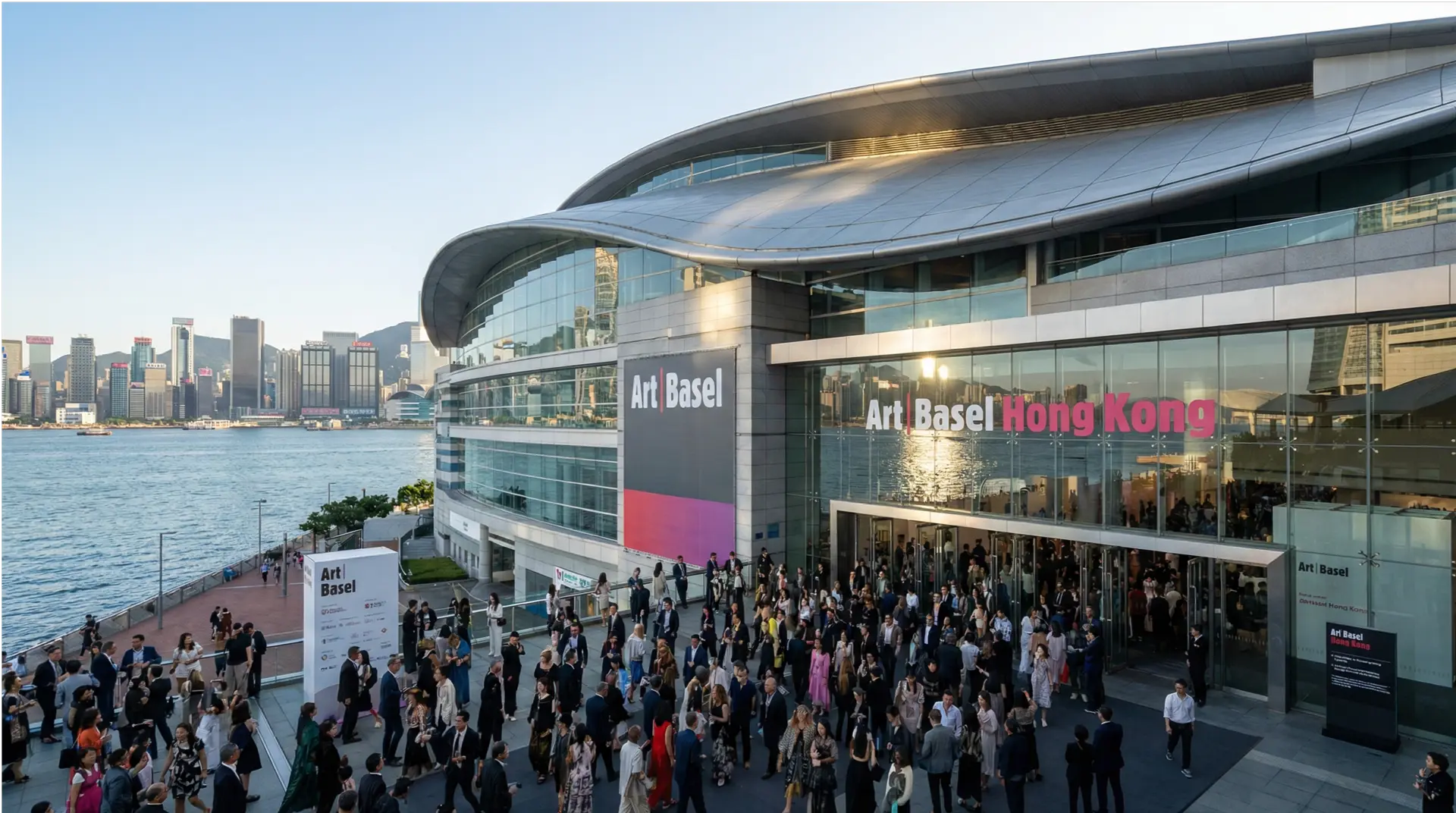
The thirteenth edition of Art Basel Hong Kong arrives at a moment when the Asian art market demands both attention and discrimination. The 2025 edition drew 91,000 visitors across VIP and public days, generated seven-figure sales at blue-chip galleries, and confirmed Hong Kong's resilience as Asia's cultural nexus—yet simultaneously revealed a market where collectors have grown more selective, more deliberate, and more focused on quality over quantity. This maturation benefits prepared collectors while punishing those who approach the fair without strategy.
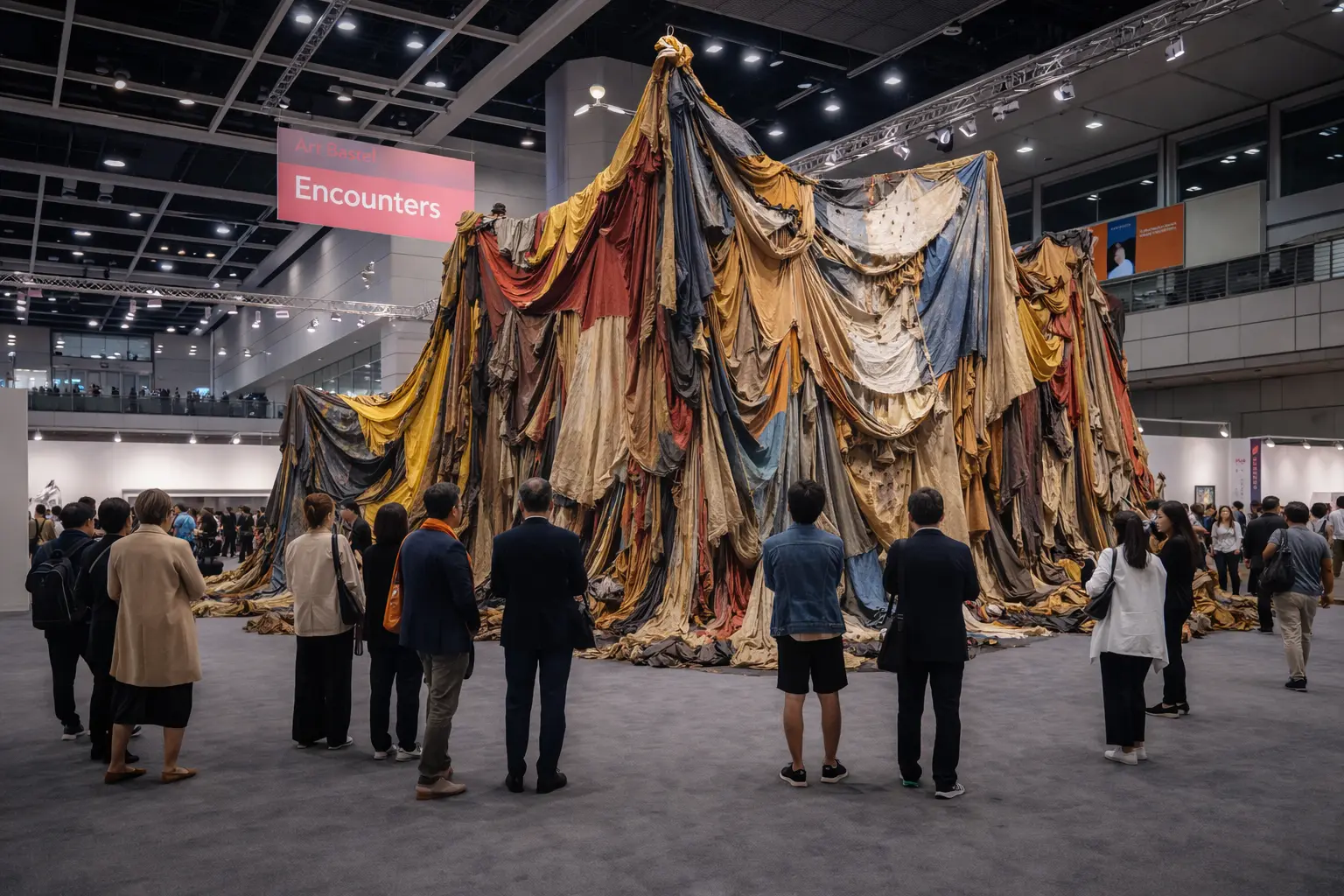
Art Basel Hong Kong 2026 introduces structural innovations that reward understanding. The new Echoes sector debuts, spotlighting works created within the past five years in focused presentations by up to three artists—a direct response to collector demand for concentrated encounters with emerging practices rather than overwhelming gallery surveys. The Encounters sector, dedicated to large-scale installations and performances, operates for the first time under collective curatorial leadership: Mami Kataoka of Tokyo's Mori Art Museum leads a team including Isabella Tam from M+, Alia Swastika from Jakarta, and Hirokazu Tokuyama from the Mori Art Museum. Their framework draws on the Five Elements—space, water, fire, wind, and earth—creating thematic coherence across twelve monumental works positioned throughout the convention halls.
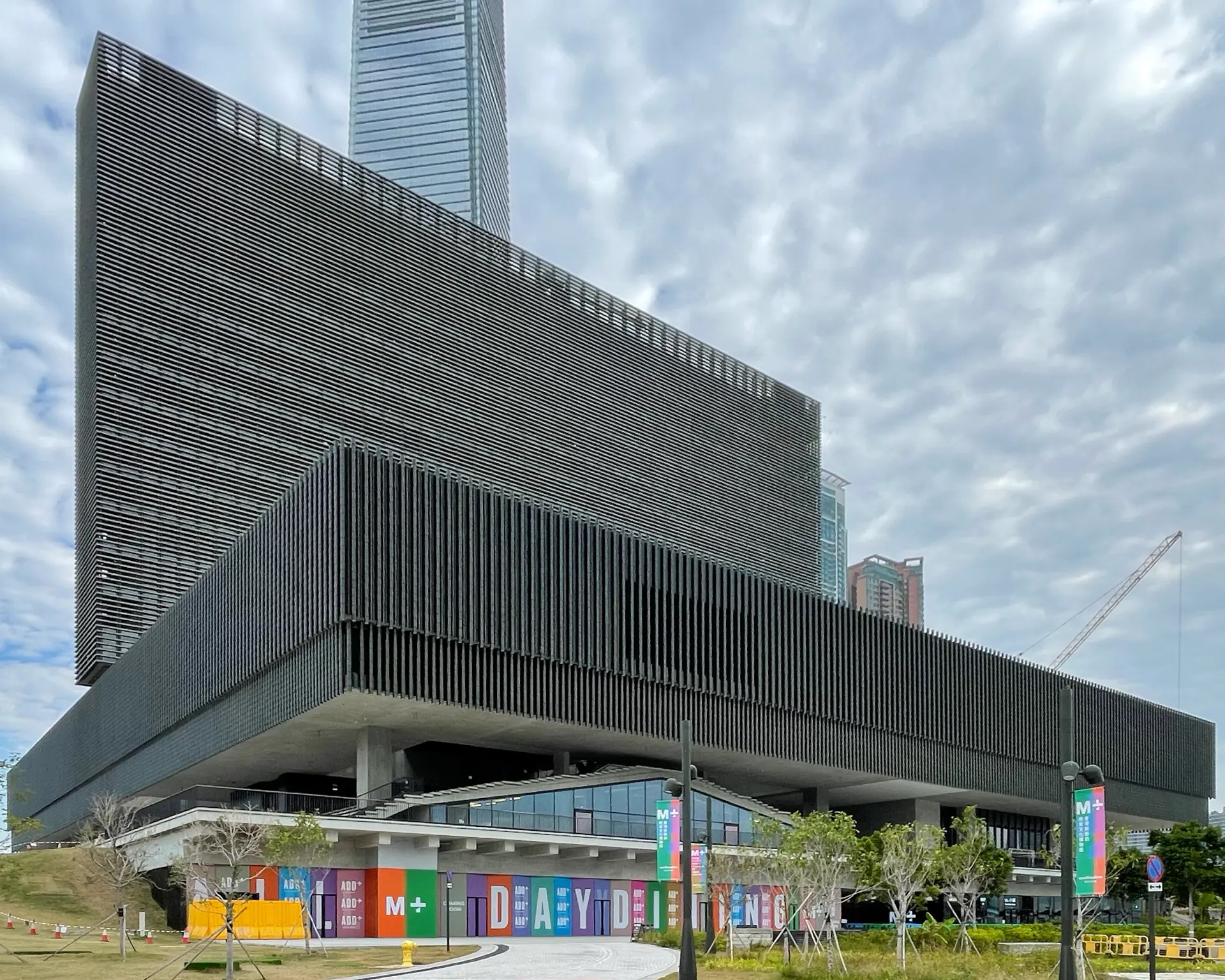
The fair's positioning within Hong Kong's broader cultural ecosystem has never been stronger. The Hong Kong International Cultural Summit convenes March 22-23, bringing museum directors and cultural district leaders from fifteen countries to West Kowloon. The West Kowloon Cultural District itself—anchored by M+, which just celebrated its fifth anniversary—provides institutional depth that transforms fair week from commercial exercise into cultural immersion. Shahzia Sikander's animation "3 to 12 Nautical Miles" illuminates the M+ Facade nightly from March 23, tracing historical trade routes in hand-painted watercolors scaled to monumental proportion.
For collectors, the fundamental question is not whether to attend but how to maximize the opportunity. The fair's structure—240 galleries, multiple sectors, citywide programming, concurrent auction sales—demands strategic navigation rather than passive wandering. The weeks before March 27 represent the preparation window that separates productive fair participation from exhausting tourism.
Discover contemporary artists from across Asia and beyond at Artestial, where collectors find emerging talents alongside established names working across the diverse practices represented at international art fairs.
Hong Kong's Structural Advantages: Why Location Matters
Tax-Free Status and Freeport Heritage
Hong Kong's appeal to international collectors rests on structural advantages that no other Asian city can match. The territory operates as a tax-free zone for art transactions—no VAT on sales, no tariffs on import or export, no capital gains tax on resale profits. While mainland China taxes art imports at rates approaching 34%, Hong Kong imposes zero duties, creating an arbitrage opportunity that has transformed the city into Asia's dominant art trading hub.
The numbers quantify this advantage. According to the Mishcon de Reya x ArtTactic China Art Market Report 2025, Hong Kong's share of the global art market doubled from 7% to 14% between 2015 and 2024, making it—alongside mainland China—the world's third-largest art market, rivaled only by Paris in sustained auction growth. The World Wealth Report 2023 by Capgemini identified 7.1 million high-net-worth individuals in the Asia Pacific region accessible through Hong Kong's financial infrastructure. This concentration of wealth seeking tax-advantaged acquisition drives the fair's commercial energy.
The absence of inheritance tax compounds the advantage. European and American collectors face estate planning complexities that Hong Kong-based assets simply avoid. Art purchased and stored in Hong Kong can transfer between generations without the probate complications and tax liabilities that reduce net value elsewhere. For collectors building multi-generational portfolios, Hong Kong acquisition represents not merely immediate tax efficiency but long-term wealth preservation.
Logistical Infrastructure and Connectivity
Beyond tax treatment, Hong Kong offers logistical advantages that simplify international collecting. The city's free-port heritage means art moves in and out without the customs bureaucracy that delays shipments elsewhere. English operates as an official language alongside Cantonese, eliminating communication barriers that complicate transactions in mainland China, Japan, or Korea. The Hong Kong International Airport provides direct connections to virtually every major city, while the territory's compact geography means collectors can attend fair programming, visit galleries, and conduct auction previews without the transit time that fragments attention in cities like London or New York.
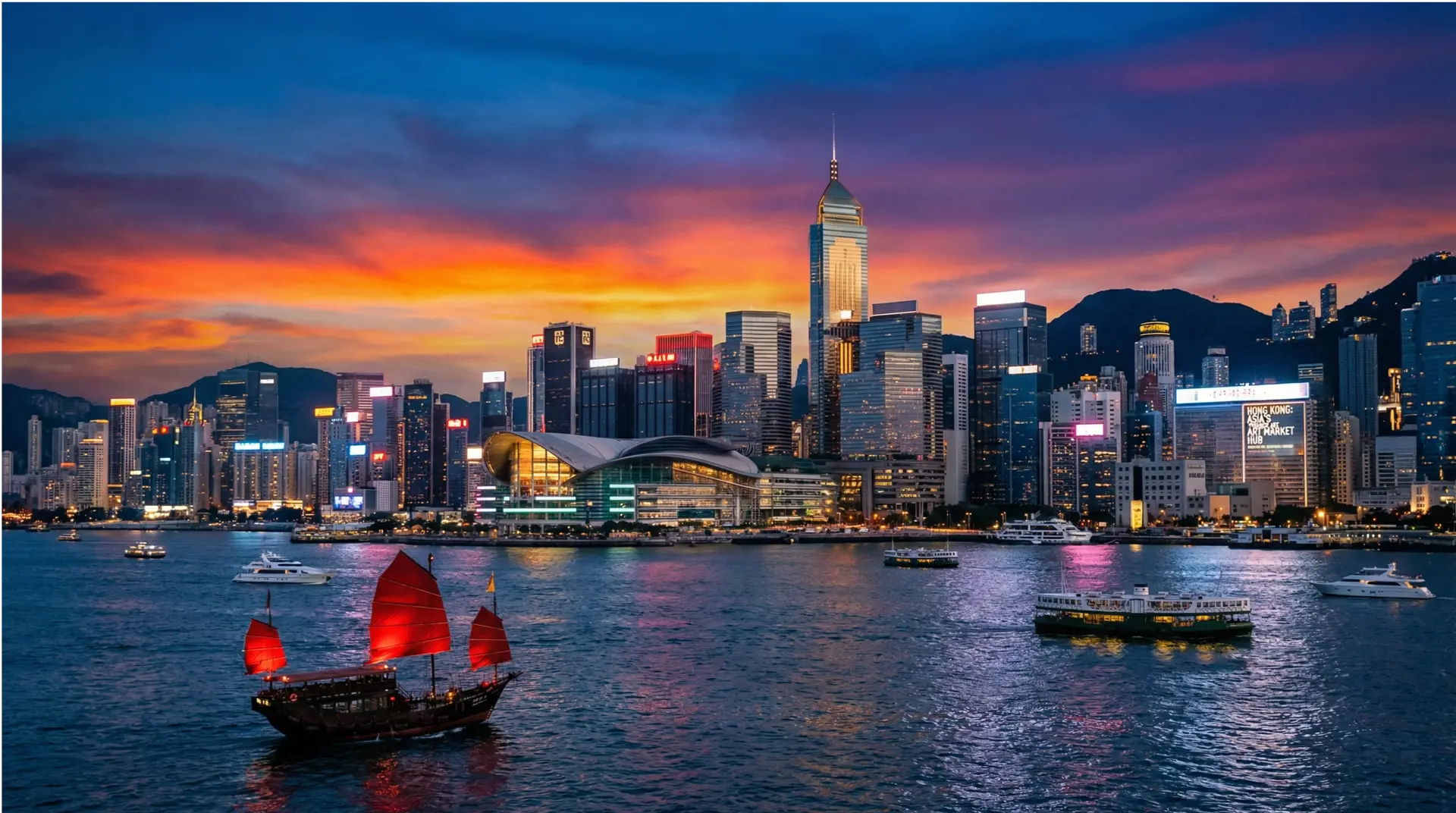
The convention center itself—the Hong Kong Convention and Exhibition Centre—sits on the Wan Chai waterfront with MTR access, ferry connections, and taxi ranks eliminating transportation friction. Collectors staying in Central, Admiralty, or Kowloon reach the fair in minutes rather than the hours that other cities' sprawl demands. This efficiency matters when fair week schedules stack gallery meetings, auction previews, dinner commitments, and studio visits into compressed timelines.
The West Kowloon Cultural District Ecosystem
The transformation of West Kowloon from reclaimed land to cultural district provides institutional depth that distinguishes Hong Kong from competing Asian art centers. M+, which opened in 2021 and celebrates its fifth anniversary during Art Basel week, anchors the district with collection holdings that contextualize contemporary practice within broader art historical narratives. The Hong Kong Palace Museum, opened in 2022, provides access to Chinese imperial collections that previously required Beijing travel. The Xiqu Centre offers traditional Chinese opera programming, while planned facilities continue expanding the district's scope.
For collectors, this institutional density creates learning opportunities that purely commercial fairs cannot offer. The Lee Bul survey at M+, running March 14 through August 9, 2026, provides comprehensive engagement with one of Asia's most influential contemporary artists—context that informs acquisition decisions at galleries representing similar practices. The Robert Rauschenberg and Asia exhibition, continuing through April 26, 2026, illuminates how major Western artists engaged the region—useful framing for collectors considering cross-cultural acquisitions.
Understanding the 2026 Fair Structure
The Galleries Sector: 182 International Exhibitors
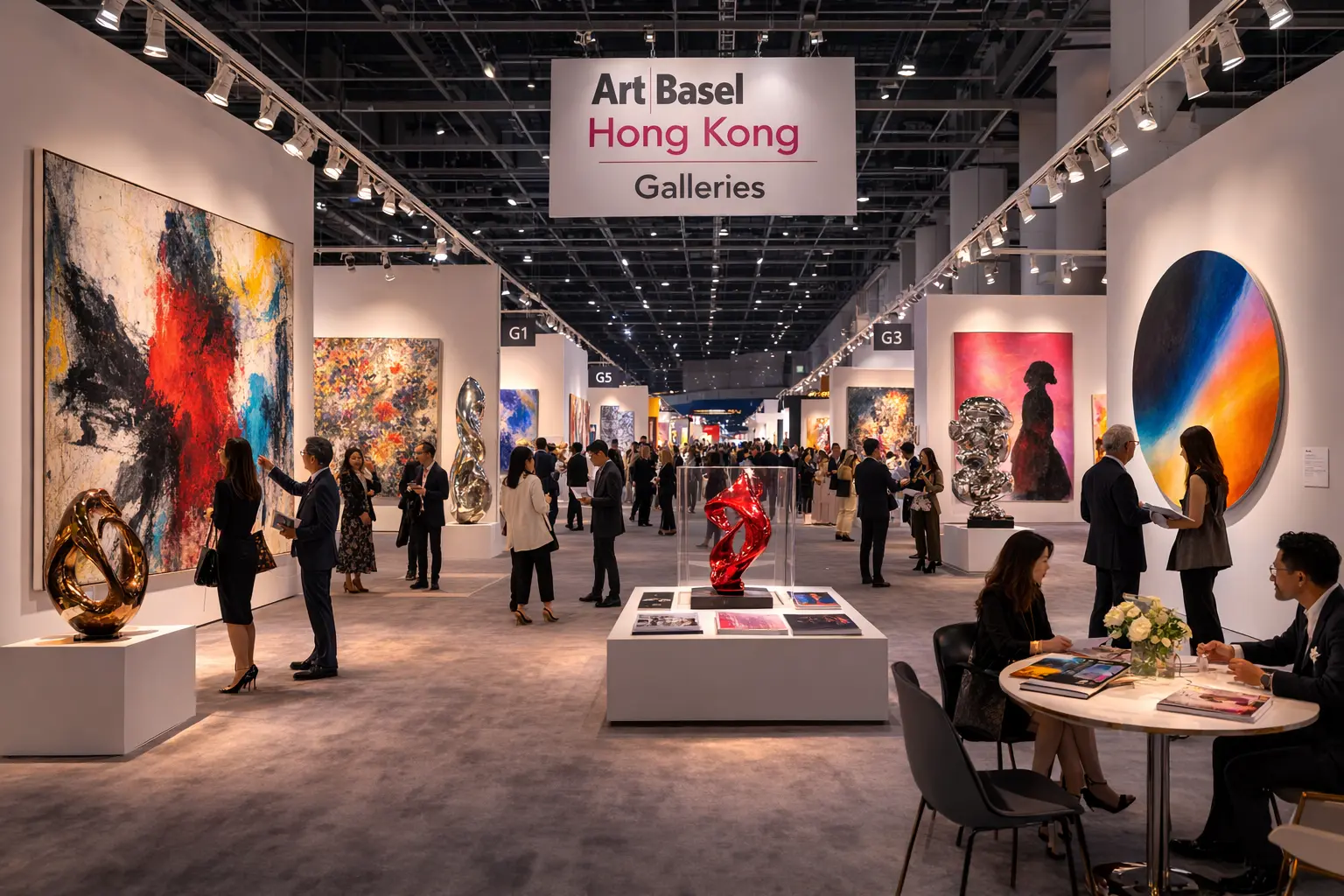
The main Galleries sector brings together 182 of the world's leading contemporary and modern art galleries, ranging from blue-chip operations like Gagosian, Hauser & Wirth, David Zwirner, and Pace to mid-size galleries with regional specializations and emerging spaces testing international waters. More than half of participating galleries operate spaces within the Asia-Pacific region, including 29 with Hong Kong locations—a ratio that distinguishes this fair from its Basel and Miami Beach siblings.
The 2025 edition demonstrated what these galleries bring to market. David Zwirner sold Yayoi Kusama's "INFINITY-NETS [ORUPX]" (2013) for $3.5 million on VIP preview day. Hauser & Wirth placed Louise Bourgeois's "Cove" (1988, cast 2010) for $2 million to an Asian collection and Zeng Fanzhi's untitled 2024 painting for $1.5 million. White Cube moved Georg Baselitz's "Hannoversche Treue" (2010) for €1.75 million. These transactions occurred within hours of the fair opening, demonstrating the premium that VIP access commands.
For 2026, thirty-two galleries make their Art Basel Hong Kong debut, including A Lighthouse called Kanata from Tokyo, The Commercial from Sydney, Pilevneli from Istanbul, and Uffner & Liu from New York. These newcomers bring practices and artists unfamiliar to Hong Kong audiences—opportunity for collectors willing to research beyond established names. Fourteen galleries return after hiatuses, including carlier | gebauer and Waddington Custot, suggesting that fair economics have shifted favorably for mid-size operations.
Discoveries: Emerging Artists and Galleries
The Discoveries sector focuses specifically on emerging artists and galleries, presenting work created specifically for the fair by artists whose market positions remain formative. This sector offers the highest risk-reward ratio at the fair: works price lower than established names, but artist trajectories remain uncertain. The 2025 MGM Discoveries Art Prize, awarded to Shin Min and Seoul gallery P21 for her installation "Ew! There is hair in the food!!", demonstrated how the sector generates visibility that accelerates careers.
Collectors approaching Discoveries should recognize the different research requirements. Blue-chip galleries have established artist rosters with auction records and institutional representation; emerging galleries present artists whose validation remains prospective rather than historical. Due diligence means examining exhibition histories, critical reception, educational backgrounds, and gallery commitment levels—information that established artists' catalogues raisonnés make accessible but that emerging artists require active investigation to assess.
Insights: Asia and Asia-Pacific Focus
The Insights sector presents curated projects by artists from Asia and the Asia-Pacific region spanning the twentieth and twenty-first centuries, offering historical depth that the contemporary-focused Galleries sector cannot provide. The 2025 edition saw HdM Gallery from Beijing achieve complete sellout of twenty works on paper by Chinese-French Modernist Sanyu, priced between €25,000 and €45,000—evidence that historical Asian artists command collector attention when properly contextualized.
For collectors building Asia-focused portfolios, Insights provides access to material that rarely appears at Western fairs. The sector's curatorial framework—projects rather than conventional gallery booths—encourages presentations that illuminate artistic development rather than simply displaying inventory. Collectors can trace influence lines, understand regional art histories, and identify undervalued positions within broader Asian modernism narratives.
Echoes: The New Sector for Recent Work
The debut Echoes sector responds to collector demand for focused engagement with very recent practice. Limited to works created within the past five years, presented in booths featuring up to three artists, Echoes offers concentrated encounters rather than overwhelming surveys. The format privileges depth over breadth—exactly what sophisticated collectors need when evaluating artists whose market positions remain emergent.
Inaugural presentations include Madrid's Max Estrella presenting Tiffany Chung's embroidered maps tracing historic spice routes alongside Miler Lagos's carved book sculptures, and Hong Kong's Double Q Gallery transforming its booth into an immersive geometric installation by Polish artist Natalia Załuska. These focused presentations allow collectors to understand artistic practice comprehensively rather than sampling individual works across crowded booths.
The Encounters Experience: Large-Scale Installations
The Five Elements Framework
The Encounters sector's 2026 transformation merits particular attention. For the first time, a collective of four Asia-based curators—led by Mami Kataoka, Director of Tokyo's Mori Art Museum, alongside Isabella Tam from M+, Alia Swastika from Jakarta, and Hirokazu Tokuyama from the Mori Art Museum—jointly curates the sector. Their framework draws on the Five Elements, an ancient cosmological system assigning space (or ether), water, fire, wind, and earth to specific areas throughout the convention halls.
Twelve large-scale artworks respond to this framework, positioned to create thematic journeys through the fair. Suki Seokyeong Kang's multimedia textile installation landscape represents space/ether, presented by Kukje Gallery. Parag Tandel's yarn-based installation exploring ancestral connections to the sea represents water, presented by Tarq. Masaomi Yasunaga's glazed ceramic forms and Christine Sun Kim's site-specific digital animation installation contribute additional elemental perspectives.
Beyond HKCEC: Offsite Encounters
Encounters extends beyond the convention center through offsite presentations supported by Swire Properties. Christine Sun Kim's "A String of Echo Traps" (2022-2026), presented by White Space, occupies Pacific Place's Park Court—bringing large-scale installation into commercial space where fair attendees naturally circulate. Kim's practice, interrogating the politics of sound through American Sign Language and written English, gains particular resonance in Hong Kong's multilingual environment.
The strategic collector treats Encounters not as spectacle but as market intelligence. The curators' selections indicate institutional perspectives on significant contemporary practice. Artists chosen for Encounters gain visibility that accelerates career trajectories and price appreciation. Collectors who acquire related works—smaller pieces from the same artists, or works by artists in dialogue with Encounters presentations—benefit from attention that the sector generates.
VIP Access and Ticket Strategy
The Preview Day Hierarchy
Art Basel Hong Kong's access structure rewards preparation and status. VIP preview days on March 25 and 26 precede public days running March 27-29. Within VIP access, gradations exist: first-choice collectors receive invitations directly from galleries, allowing entry before general VIP access begins. This hierarchy reflects market reality—serious acquisitions happen before general audiences arrive, and the best works sell during the earliest preview hours.
Gallery relationships determine preview access. Collectors who have purchased from exhibiting galleries, or who maintain active relationships with gallery directors, receive direct invitations. Museum patrons at appropriate giving levels often receive VIP credentials through institutional partnerships. Art advisors with gallery networks can facilitate access for their clients. The collector attending without established relationships faces a significantly different fair than the collector walking in with gallery appointments already scheduled.
Ticket Options and Pricing
For collectors without gallery relationships, Art Basel offers tiered ticket options. Vernissage tickets for March 26 cost HKD 990 (approximately $127), providing access to the preview day that follows first-choice VIP but precedes public opening. Premium tickets at HKD 4,880 (approximately $625) allow entry from March 26-29 with access to the Collectors Lounge, priority entry, and VIP hours. The Premium Discovery package at HKD 12,800 (approximately $1,640) adds curated itineraries, guided tours, and exclusive visits to private collections and artist studios.
Day tickets for public days range from HKD 350-680 for advance purchase (through March 9) and HKD 410-740 for standard pricing. Two-day passes for March 27 and 28 cost HKD 1,180-1,240. The economics favor advance purchase and premium access—the incremental cost of Vernissage or Premium access is trivial relative to acquisition values, while the enhanced opportunity justifies investment.
Building Gallery Relationships
The collector lacking current gallery relationships should recognize that Art Basel Hong Kong represents an opportunity to establish them. Galleries attend fairs specifically to meet new collectors. Approaching gallery staff with genuine interest, demonstrating knowledge of their artists' practices, and expressing serious acquisition intent creates openings that transactional approaches cannot. The fair's social programming—openings, dinners, conversations—provides contexts where relationships develop more naturally than across booth counters.
Long-term strategy matters more than immediate transactions. A collector who purchases thoughtfully in 2026, maintains communication with galleries, and demonstrates serious engagement with acquired artists becomes a priority contact for future opportunities. VIP access flows from relationship investment over time—the collector who attends consistently, purchases deliberately, and demonstrates genuine commitment to collecting earns consideration that occasional buyers cannot command.
Market Context: 2025 Results and 2026 Implications
Blue-Chip Performance and Collector Selectivity
The 2025 Art Basel Hong Kong revealed market dynamics that informed collectors should understand. Blue-chip galleries achieved strong results—seven-figure sales at David Zwirner, Hauser & Wirth, White Cube, and Pace confirmed continued demand for established artists. Yet the sales pattern showed increased collector selectivity: rather than purchasing multiple works, collectors focused on single exceptional acquisitions. Wendy Xu, White Cube's managing director for Asia, noted that collectors "are more conservative and more selective than previous years. Before, they might buy two or three or four works. Now they just want to buy one and they want to make sure they are buying the best quality work."
This selectivity benefits prepared collectors. Competition for truly exceptional works intensifies, making VIP preview access and gallery relationships more valuable. Simultaneously, works that might previously have sold quickly remain available longer, creating opportunities for patient acquisition of quality material that simply requires more evaluation time than boom-market conditions allowed.
The Emerging Collector Demographic
Art Basel Hong Kong director Angelle Siyang-Le identified a significant trend: "a new generation of collectors who tend to be open-minded as they explore different artists, especially when it comes to mediums—from digital and sculptural works to the more ephemeral and unconventional." This demographic shift—younger collectors comfortable with non-traditional practices, less bound by conventional collecting hierarchies—expands the range of practices that find commercial support.
For established collectors, this shift creates both competition and opportunity. Competition for digital works, installations, and conceptual practices has intensified. Opportunity exists in traditional media where younger collectors show less interest—painting, sculpture, and works on paper by artists outside trending categories may offer value disconnected from fashion cycles. The strategic collector reads demographic trends without following them blindly.
Auction Alignment and Fair Week Dynamics
Christie's and Sotheby's now time their Hong Kong spring sales to coincide with Art Basel Hong Kong—a structural change that concentrates market activity into a single week. The 2025 Christie's evening sale generated HKD 560 million with a 91% sell-through rate; Sotheby's achieved HKD 298 million with 95% sell-through. This alignment creates comparison opportunities: collectors can evaluate primary market pricing at the fair against secondary market results at auction, identifying where galleries price aggressively versus where auction estimates lag gallery asks.
The concentrated schedule demands careful time management. Auction previews, fair visits, gallery openings, and collector dinners stack into days that quickly become overwhelming. Strategic collectors prioritize: identify target works before arrival, schedule key appointments in advance, and resist the temptation to see everything. The fair rewards focus over comprehensiveness.
Citywide Programming: Beyond the Fair
The M+ Facade Commission
Shahzia Sikander's "3 to 12 Nautical Miles" transforms the M+ Facade into a luminous animation from March 23 through June 21, 2026. The fifth consecutive Art Basel and M+ co-commission, presented by UBS, traces historical imperial trade routes through hand-painted watercolors animated at monumental scale. The work's themes—power, exchange, colonial history—resonate particularly in Hong Kong, where these currents shaped the city's development and continue influencing its cultural identity.
Sikander delivers an illustrated lecture at M+ on March 26 at 5:00 PM, discussing her three-decade practice. Free screenings of her earlier animations run daily March 24-29 in the M+ Cinema. For collectors interested in her practice, these access points provide depth that fair encounters cannot match. Sikander's work appears in the UBS Art Collection; collectors seeking similar practices might investigate related artists whose galleries exhibit at the fair.
Film Program and Conversations
Ellen Pau's curation of the 2026 Film Program marks the first time an artist has directed this strand—a meaningful gesture in Hong Kong, where moving image and media art have distinct genealogies. The program, titled "In Between Magic and Reality," brings together films centered on imagination as resistance strategy. Ayoung Kim's "Al-Mather Plot 1991" (2025) threads personal reflection with historical inquiry; Sin Wai Kin's "The Fortress" (2024) critiques Western-centric systems.
The Conversations program includes talks curated by Venus Lau, Director of Museum MACAN in Jakarta, adding Asia-Pacific perspectives to the fair's forum for debate. UBS panel conversations on March 25 and March 28 address collecting practices and contemporary art's relationship to broader cultural dynamics. These programs provide intellectual framing that transforms fair attendance from commercial exercise into cultural engagement.
Concurrent Exhibitions and Events
Hong Kong's gallery districts activate during fair week. Central galleries extend hours and mount special exhibitions timed to visitor concentration. Tai Kwun's Artists' Night on March 28 presents experimental performances across multiple venues. The 54th Hong Kong Arts Festival runs concurrent programming. Art Central, positioned on the harbourfront with its own gallery roster and distinct curatorial perspective, provides additional fair experience with different energy than Art Basel's institutional atmosphere.
The strategic collector maps these opportunities before arrival. Which galleries represent artists of interest? Which institutional exhibitions provide context for fair offerings? Where do social events create networking opportunities? Fair week's compression demands that planning happen in advance rather than during the event itself.
Explore artists working across contemporary practices from Asia and beyond at Artestial, where collectors discover emerging talents and established names engaging the diverse traditions represented at international art fairs.
Practical Preparation: The Weeks Ahead
Research and Target Identification
The three weeks before Art Basel Hong Kong should be devoted to research. Review the exhibitor list—available on the Art Basel website—and identify galleries representing artists of interest. Examine galleries' current exhibition programs and announced fair presentations. The Art Basel Stories section previews participating artists; gallery websites and Instagram accounts reveal booth plans. This research transforms fair navigation from random discovery to targeted acquisition.
Create a physical map of priority galleries. The convention center's layout disperses galleries across multiple halls; knowing which galleries occupy which locations eliminates wasted transit time. Identify backup priorities—galleries to visit if primary targets disappoint or sell target works before you arrive. Build flexibility into schedules while maintaining focus on identified opportunities.
Financial and Logistical Preparation
Acquisition preparation means financial readiness. Ensure credit facilities, wire transfer capabilities, and gallery account setups allow immediate transaction completion. Works sell to collectors prepared to commit; hesitation while arranging financing loses opportunities to faster decision-makers. Discuss acquisition limits and priorities with art advisors, family offices, or financial planners before the fair opens.
Logistical preparation includes accommodation booking, transportation arrangements, and schedule coordination. Hotels near the convention center command premium rates during fair week; booking early ensures proximity that late arrivals sacrifice. Build buffer time between appointments—Hong Kong distances are manageable but crowds, weather, and unexpected meetings consume time. Confirm appointments with galleries several days before arrival.
Developing Evaluation Frameworks
Prepare evaluation frameworks for different acquisition types. Blue-chip acquisitions require authentication verification, provenance documentation, and condition reports. Emerging artist acquisitions require different due diligence: exhibition history review, critical reception assessment, gallery commitment evaluation. Establish criteria before arriving so that fair excitement doesn't override disciplined evaluation.
Consider conservation and installation requirements. Works acquired at Art Basel Hong Kong ship internationally—ensure that logistics partners handle art transport, that insurance covers transit, and that destination facilities can accommodate acquired works. Large-scale acquisitions may require installation planning that begins before purchase commitment.
Conclusion: Strategic Opportunity
Art Basel Hong Kong 2026 presents opportunity proportional to preparation. The fair's structural innovations—Echoes sector debut, collective Encounters curation, expanded citywide programming—create new access points for collectors willing to understand them. Hong Kong's tax advantages, logistical efficiency, and institutional depth provide context that purely commercial fairs cannot match. The market's evolution toward selectivity rewards collectors who arrive with clear priorities rather than general enthusiasm.
The practical timeline is specific. Ticket purchases benefit from advance pricing through March 9. Gallery appointment requests should happen now. Accommodation and travel arrangements become more constrained as dates approach. Research and target identification require the weeks remaining before VIP previews begin March 25.
What separates productive fair participation from exhausting attendance is not budget—collectors across price points can acquire meaningfully at Art Basel Hong Kong—but preparation. Understanding sector structures, gallery programs, and market dynamics transforms the fair from overwhelming spectacle into navigable opportunity. The collector who arrives knowing which galleries to prioritize, which artists to investigate, and which price points to target accomplishes what casual visitors cannot.
Hong Kong's position as Asia's art capital faces ongoing questions—mainland economic conditions, regional competition, global trade dynamics. Yet Art Basel Hong Kong 2026 demonstrates continued institutional commitment: fair structure innovations, enhanced curatorial leadership, expanded programming. For collectors engaged with Asian contemporary art, or seeking to build that engagement, the fair remains essential. March 27 will arrive regardless; the question is whether you'll arrive prepared.
Connect with specialists at Artestial for guidance navigating contemporary art markets and building collections that reflect genuine engagement with artistic practice.
Frequently Asked Questions
What advantages does acquiring art at Art Basel Hong Kong offer compared to other major art fairs?
Hong Kong's structural advantages create meaningful differences for international collectors. The territory's tax-free status eliminates VAT on art sales—unlike the 5-20% rates collectors face in European Union countries—while imposing no tariffs on import or export and no capital gains tax on resale profits. This zero-tax environment contrasts sharply with mainland China's 34% import duty on artworks, creating an arbitrage opportunity that has made Hong Kong Asia's dominant art trading hub. The absence of inheritance tax further compounds advantages for collectors building multi-generational portfolios.
Beyond tax treatment, Hong Kong offers logistical efficiency that other Asian markets cannot match. English functions as an official language, eliminating communication barriers that complicate transactions in mainland China, Japan, or Korea. The Hong Kong International Airport provides direct connections to virtually every major city, while the territory's compact geography means collectors can attend fair programming, visit galleries, and conduct auction previews without the transit time that fragments attention in cities like London or New York. The convention center sits on the Wan Chai waterfront with MTR access and ferry connections, eliminating transportation friction.
The concentration of cultural infrastructure distinguishes Hong Kong from competing Asian art centers. The West Kowloon Cultural District—anchored by M+, which celebrates its fifth anniversary during fair week, alongside the Hong Kong Palace Museum—provides institutional depth that transforms fair attendance from purely commercial exercise into cultural immersion. This ecosystem means collectors can contextualize fair offerings within broader art historical narratives, attend concurrent museum exhibitions, and engage programming that enriches acquisition decisions.
How should collectors approach the new Echoes sector and what opportunities does it present?
The Echoes sector debuts at Art Basel Hong Kong 2026 as a direct response to collector demand for focused engagement with very recent practice. Limited to works created within the past five years and presented in booths featuring up to three artists maximum, Echoes offers concentrated encounters rather than overwhelming surveys. This format privileges depth over breadth—exactly what sophisticated collectors need when evaluating artists whose market positions remain emergent.
The sector presents higher risk-reward ratios than established gallery presentations. Artists included have created work within a five-year window, meaning their practices remain in development and their market positions lack the validation that auction records and major institutional acquisitions provide established names. Due diligence requires examining exhibition histories, critical reception, gallery commitment levels, and practice trajectories—research that established artist catalogues raisonnés make accessible but that Echoes artists require active investigation to assess.
Inaugural presentations signal curatorial direction. Madrid's Max Estrella presents Tiffany Chung's embroidered maps tracing historic spice routes alongside Miler Lagos's carved book sculptures—artists engaging with geography, history, and material transformation. Hong Kong's Double Q Gallery transforms its booth into an immersive geometric installation by Polish artist Natalia Załuska. These focused presentations allow collectors to understand artistic practice comprehensively rather than sampling individual works across crowded booths. Collectors should treat Echoes presentations as opportunities for extended conversation with presenting galleries about artist development, upcoming projects, and placement strategies.
What VIP access strategies should collectors employ for maximum fair benefit?
Art Basel Hong Kong's access hierarchy determines acquisition opportunity. VIP preview days on March 25 and 26 precede public days; within VIP access, further gradations exist. First-choice collectors—those with established purchasing relationships with exhibiting galleries—receive direct invitations allowing entry before general VIP access begins. This hierarchy reflects market reality: serious acquisitions happen during earliest preview hours, and the most desirable works sell before broader audiences arrive.
Gallery relationships determine preview access and should be cultivated deliberately. Collectors who have purchased from exhibiting galleries receive direct invitations. Museum patrons at appropriate giving levels often receive VIP credentials through institutional partnerships. Art advisors with gallery networks can facilitate access for clients. The collector attending without established relationships faces a significantly different fair experience than the collector walking in with scheduled appointments at priority galleries.
For collectors lacking current gallery relationships, Art Basel offers tiered ticket options with strategic value. Vernissage tickets for March 26 at HKD 990 provide access after first-choice VIP but before public opening. Premium tickets at HKD 4,880 allow entry from March 26-29 with Collectors Lounge access and VIP hours. The Premium Discovery package at HKD 12,800 adds curated itineraries, guided tours, and exclusive visits to private collections—experiences that build relationships and knowledge simultaneously. The incremental cost of enhanced access is trivial relative to typical acquisition values; the investment in relationship development provides returns beyond individual fair attendance.
How does the concurrent auction schedule affect fair strategy and pricing evaluation?
Christie's and Sotheby's now time their Hong Kong spring sales to coincide with Art Basel Hong Kong, concentrating market activity into a single week. The 2025 Christie's evening sale generated HKD 560 million with 91% sell-through; Sotheby's achieved HKD 298 million with 95% sell-through. This alignment creates comparison opportunities that informed collectors can leverage: evaluating primary market pricing at the fair against secondary market results at auction identifies where galleries price aggressively versus where auction estimates lag gallery asks.
The auction previews provide market intelligence. Viewing works before they sell—observing condition, scale, and presentation—develops connoisseurship that transfers to fair evaluation. Auction results establish price benchmarks for artists who may also appear at gallery booths. Collectors should attend major evening sales when schedules permit, not necessarily to bid but to observe market behavior and price realization.
The concentrated schedule demands careful time management. Auction previews, fair visits, gallery openings, and collector dinners stack into days that quickly become overwhelming. Strategic collectors prioritize ruthlessly: identify target works and artists before arrival, schedule key appointments in advance, and resist the temptation to see everything. Fair week rewards focus over comprehensiveness. Build buffer time between commitments—Hong Kong distances are manageable but crowds, weather, and unexpected meetings consume time that overscheduled itineraries cannot accommodate.
What practical preparations should collectors complete before arriving at Art Basel Hong Kong 2026?
The three weeks before Art Basel Hong Kong should be devoted to structured preparation across research, financial, and logistical dimensions. Begin with the exhibitor list available on the Art Basel website, identifying galleries representing artists of interest. Examine galleries' current exhibition programs and announced fair presentations through their websites and social media. The Art Basel Stories section previews participating artists; Instagram accounts reveal booth plans and highlight works. This research transforms fair navigation from random discovery to targeted acquisition.
Financial readiness determines acquisition capability. Ensure credit facilities, wire transfer capabilities, and gallery account setups allow immediate transaction completion. Works sell to collectors prepared to commit; hesitation while arranging financing loses opportunities to faster decision-makers. Discuss acquisition limits and priorities with art advisors, family offices, or financial planners before the fair opens—not during VIP preview when decisions must happen rapidly.
Logistical preparation includes accommodation booking near the convention center (hotels command premium rates during fair week, making early booking essential), transportation arrangements, and schedule coordination with margin for unexpected opportunities. Confirm gallery appointments several days before arrival. Prepare evaluation frameworks for different acquisition types—authentication and provenance verification for blue-chip works, exhibition history and critical reception assessment for emerging artists. Consider conservation, shipping, and installation requirements for works you might acquire, ensuring logistics partners are prepared and destination facilities can accommodate new acquisitions.
Curating excellence, one insight at a time.
— AURUM Team
Disclaimer: This article provides cultural analysis and general information about Art Basel Hong Kong 2026 for informational purposes only. It does not constitute investment, financial, or professional advice. Art markets involve significant risk, and past performance does not guarantee future results. The fair details, ticket pricing, gallery information, and market data presented reflect information available as of early 2026, but readers should verify current details with official sources before making travel or purchasing decisions. Art valuations and investment outcomes vary significantly based on individual circumstances; readers should consult qualified professionals—art advisors, financial planners, legal counsel—before committing significant resources. The author and publisher have no financial relationships with Art Basel, any exhibiting galleries, or other entities mentioned in this article. All responsibility for decisions made based on information presented herein rests with the reader.