

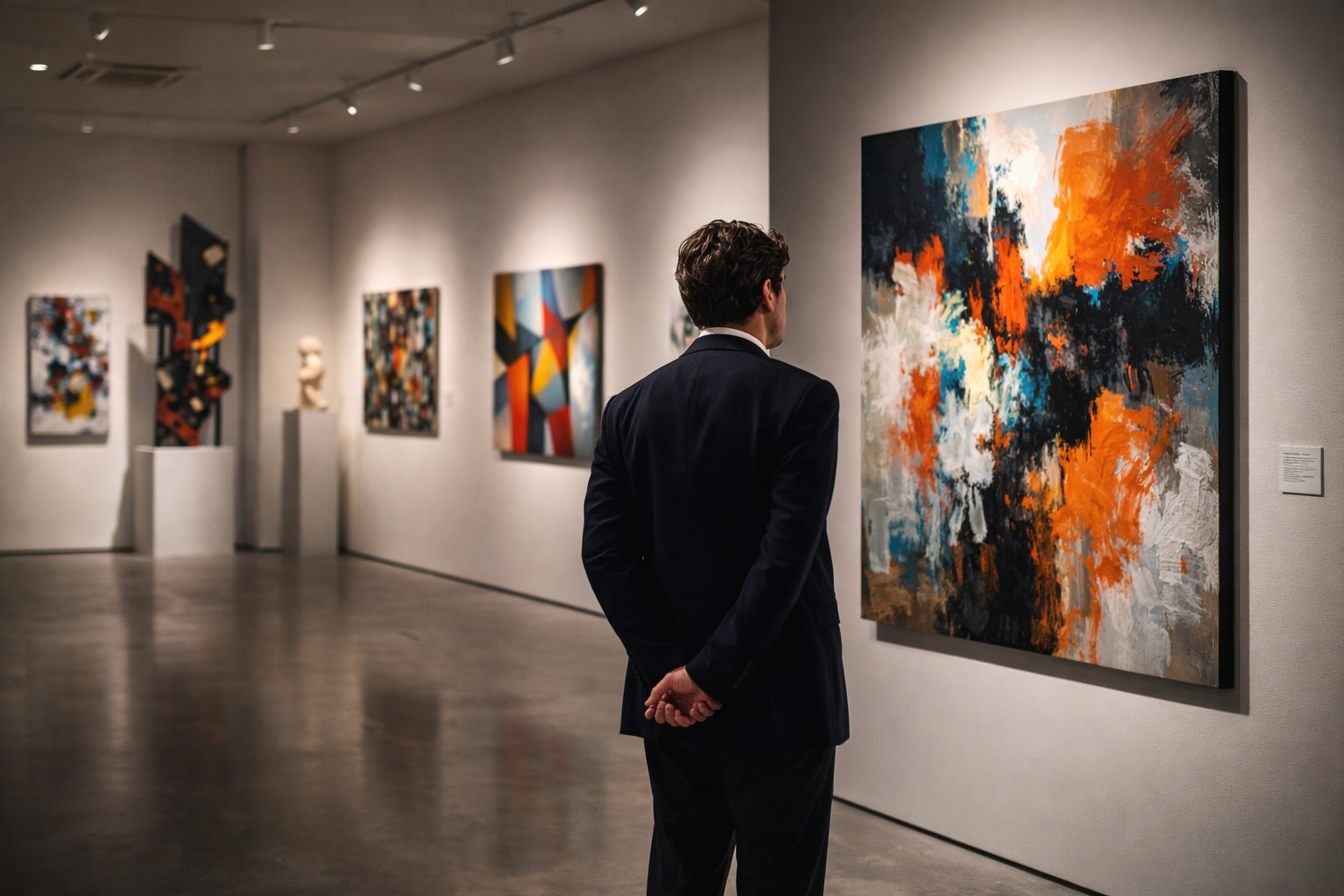
The woman stood before a small abstract painting priced at $8,500, her first potential art acquisition. "How do I know this is worth it?" she asked the gallery director. "You don't," came the honest reply. "But you're not buying certainty—you're buying possibility. Every major collection started with someone taking their first chance on an artist they believed in." She purchased the work. Ten years later, that artist's paintings sell for $180,000-$250,000, and her collection has grown to forty-three works worth over $3.2 million. The journey from first uncertain purchase to sophisticated collector follows patterns that anyone can learn.
Starting an art collection in 2026 offers unprecedented advantages over previous generations. Digital resources provide instant access to artist information, auction records, and gallery inventories. Online viewing rooms enable global collecting beyond local galleries. Yet these tools also create overwhelm—how does a beginning collector navigate infinite choices, avoid costly mistakes, and develop the expertise to distinguish exceptional works from mediocre ones?
This guide provides the framework that successful collectors use to build museum-quality portfolios from their first purchase forward. Whether your budget allows $5,000 or $500,000 annually for art, the principles remain constant: buy what resonates personally, educate yourself continuously, build relationships with trustworthy advisors, prioritize quality over quantity, and develop a coherent collecting vision rather than accumulating randomly. Apply these principles consistently, and your collection will provide both aesthetic pleasure and financial value for decades.
Establishing Your Foundation: Budget, Goals, and Education
Before purchasing anything, successful collectors establish a clear foundation addressing budget realities, collecting goals, and an educational baseline.
Setting a Realistic Budget
Art collecting requires a dedicated budget separate from general discretionary spending. The most successful beginning collectors allocate a specific percentage of annual income or net worth to art acquisition—typically 5-15% for serious collectors, though any amount enables meaningful collecting if deployed strategically.
Consider both acquisition costs and ongoing expenses. Purchasing art involves gallery prices, auction premiums (20-25% above hammer price), and shipping/insurance. Ownership requires insurance (typically 1-2% of value annually), conservation (budget $200-$500 per work every 3-5 years for condition assessment and minor conservation), proper framing ($300-$2,000+ depending on work size and materials), and potentially storage if space is limited ($50-$200 monthly per work for climate-controlled art storage).
Beginning collectors often succeed better with smaller, more focused budgets than large, unfocused ones. A $25,000 annual budget deployed thoughtfully over three years builds a more coherent collection than $75,000 spent impulsively in year one. The discipline of constraint forces careful selection and thorough research that random abundance doesn't require.
Defining Your Collecting Goals
Collections serve different purposes—aesthetic pleasure, investment appreciation, social status signaling, supporting living artists, and preserving cultural heritage. Clarity about your primary motivation shapes acquisition strategy. Collectors seeking investment returns prioritize blue-chip artists with established market trajectories and strong auction histories. Those prioritizing aesthetic pleasure can acquire less "safe" works by emerging artists whose market positions remain unproven but whose work provides personal satisfaction.
Most collectors balance multiple motivations—they want beautiful works that also appreciate in value. This balanced approach requires selecting artists with both aesthetic appeal and market indicators suggesting appreciation potential: gallery representation by respected dealers, institutional acquisitions by museums, critical attention from art publications, and auction records showing consistent price trends.
Beginning collectors benefit from initially defining a narrow focus rather than collecting broadly. Choose a specific area—contemporary photography, emerging painters, regional artists, abstract expressionism, whatever genuinely interests you—and develop expertise there before expanding. Specialists build stronger collections than generalists, attempting everything simultaneously.
Building Your Educational Foundation
Successful collecting requires continuous education. Beginning collectors should immerse themselves in the art world through multiple channels. Visit galleries regularly (weekly if possible) to train your eye by viewing hundreds of works. Attend museum exhibitions to see museum-quality work and understand institutional collecting standards. Read art publications (Artforum, Artnet News, The Art Newspaper, Frieze) to understand current discourse and market trends.
Follow auction results through platforms like Artprice and Artnet Price Database to understand how markets value different artists, mediums, and periods. Study specific artists you're considering collecting—research their exhibition history, gallery representation, museum collections holding their work, and critical reception. This research takes time but prevents expensive mistakes and builds confidence, enabling decisive action when appropriate opportunities arise.
Consider formal education options—many museums offer collector courses, universities provide continuing education in art history and contemporary practice, and independent organizations host seminars on collecting strategies. Investment of $500-$2,000 in education often prevents $10,000-$50,000 in acquisition mistakes.
Your First Purchases: Where and How to Buy
With the foundation established, beginning collectors face practical questions about where to buy and how to evaluate works.
Gallery Relationships: Your Primary Channel
Galleries represent the most reliable acquisition channel for beginning collectors. Unlike auctions (which require expertise in evaluating condition and authenticity) or private sales (which lack institutional oversight), galleries provide authentication documentation, condition guarantees, and often payment flexibility.
Build relationships with several galleries whose artists and aesthetic align with your interests. Visit regularly, introduce yourself to directors and staff, attend exhibition openings, and express a genuine interest in learning. Over time, gallery directors who recognize you as a serious emerging collector will offer early access to new works, guidance on artist selection, and sometimes pricing flexibility.
Beginning collectors should prioritize established galleries with strong reputations over unknown or newly opened spaces. Established galleries vet artists carefully, maintain rigorous authentication standards, and provide recourse if problems arise. Red flags include galleries pressuring purchases, unable to provide clear provenance documentation, or offering works by established artists at suspiciously low prices (likely indicating authentication issues or condition problems).
Art Fairs: Concentrated Opportunities
Art fairs—Art Basel, Frieze, ADAA Shows, regional fairs—bring multiple galleries together, enabling efficient viewing of hundreds of works. For beginning collectors, fairs provide educational value even before purchasing. Walking through major fair trains your eye faster than visiting individual galleries over months.
When ready to buy at fairs, focus on galleries exhibiting artists you've researched in advance. Fairs create urgency (works sell quickly), but avoid impulsive purchases. If work interests you, ask the gallery to hold it briefly while you review documentation, research the artist further, and confirm the piece fits your collection direction. Reputable galleries accommodate these reasonable requests.
Fair VIP days (requiring gallery invitations) offer first access to best works before public opening. As relationship with galleries develops, request VIP access enabling competitive advantage over general public arriving after top pieces have sold.
Auction Houses: Advanced Opportunity
Auction houses—Christie's, Sotheby's, Phillips, regional auction houses—offer works often unavailable through galleries, particularly by deceased artists or established names whose gallery representation maintains waiting lists. However, auctions require more expertise than gallery purchases.
Beginning collectors should attend auctions primarily for education initially. Preview exhibitions (held week before sale) allow viewing works in person. Attending live auctions teaches market dynamics—how bidding works, what prices different artists achieve, which works generate competition versus passing unsold.
When ready to bid at auction, research thoroughly. Study condition reports (detailed documentation of any damage, restoration, or condition issues), verify provenance (ownership history), and establish maximum bid before auction begins. Factor in buyer's premium (20-25% above hammer price) when calculating total cost. Never exceed your predetermined maximum regardless of auction excitement.
Online Platforms: Convenient but Requiring Caution
Online platforms—Artsy, Saatchi Art, gallery websites—enable global collecting from home. These platforms work well for prints, photography, and works by emerging artists priced under $10,000. For higher-value purchases, in-person viewing remains advisable whenever possible.
When buying online, prioritize established platforms with authentication guarantees and return policies. Request additional images beyond standard listings—detail shots showing surface texture, signature closeups, edge/verso views. Ask galleries for condition reports and provenance documentation before committing.
Discover curated contemporary art at Artestial, where beginning collectors find museum-quality works with transparent pricing, authentication documentation, and expert guidance navigating early collecting decisions.
Evaluating Works: What to Look For
Determining which works merit acquisition requires evaluating multiple factors beyond immediate aesthetic appeal.
Artistic Quality and Execution
Quality assessment improves with experience, but beginning collectors can apply basic standards. Look for technical proficiency—does the artist demonstrate mastery of their chosen medium? In painting, this means handling paint skillfully (whether realistic or abstract). In photography, it means sophisticated composition, lighting control, and print quality. In sculpture, it means material understanding and craftsmanship.
Conceptual depth matters equally. Does the work communicate ideas beyond decorative appeal? Strong contemporary art engages with cultural, political, or aesthetic questions rather than merely being visually pleasant. Read artist statements and exhibition texts to understand what artists attempt communicating, then assess whether works successfully realize those intentions.
Scale and presence count significantly. Works should command attention and maintain interest over time. Some pieces reveal complexity through extended viewing that initial glances miss—these often prove the most satisfying long-term acquisitions. Conversely, some works provide immediate impact but fade quickly upon repeated viewing.
Market Indicators and Investment Potential
While aesthetic satisfaction should drive collecting, understanding market indicators helps avoid works unlikely to appreciate. Strong indicators include: representation by respected galleries in major art centers (New York, London, Paris, Berlin, Los Angeles, Hong Kong), inclusion in museum collections (check artist CVs for institutional acquisitions), critical attention from major art publications, auction presence with consistent price trends (not erratic spikes and drops), and exhibition history at prestigious venues.
Red flags include: artists represented by multiple galleries simultaneously in the same city (suggests inability to maintain exclusive gallery relationships), auction records showing declining prices over time, lack of institutional recognition despite decades-long career, or extremely wide price variations suggesting authentication issues or inconsistent quality.
Remember that market success takes time—artists in their 30s-40s have decades ahead for reputation building. Don't expect immediate appreciation; plan 5-10 year minimum holding periods for works to develop meaningful investment value.
Authenticity and Condition
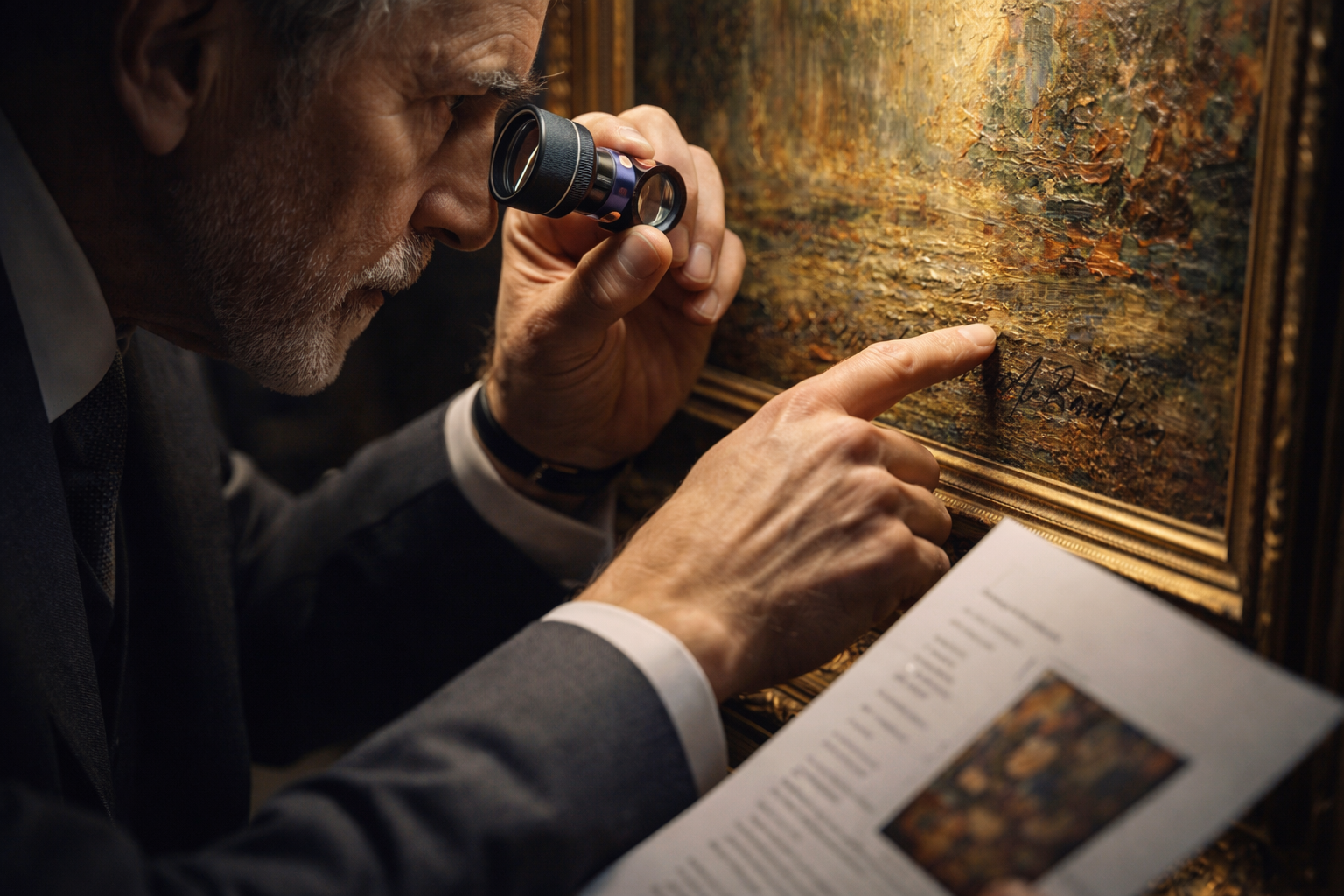
Always insist on certificates of authenticity from galleries or artists. COAs should include artist name, work title, date created, medium, dimensions, signature location, edition number (if applicable), and gallery/artist contact information. Without a proper COA, proving authenticity becomes difficult if you later sell the work.
Examine the condition carefully. For paintings, look for cracks, tears, discoloration, or previous restoration. For works on paper, check for fading, foxing (brown spots from moisture/age), tears, or creases. For photography, assess print quality and mounting. Minor condition issues may be acceptable for exceptional works, but should factor into pricing negotiations.
Frame quality matters more than many beginning collectors realize. Professional framing costs $300-$2,000+ but protects works and presents them properly. Budget for reframing when acquiring works in substandard frames.
Building a Cohesive Collection
The difference between accumulating random artworks and building a meaningful collection lies in coherence and intentionality.
Developing Your Collecting Thesis
Strong collections reflect a clear vision—a "collecting thesis" guiding acquisition decisions. This thesis might focus on a specific medium (contemporary photography), geography (Middle Eastern artists), theme (environmental art), period (emerging artists from the 2020s), or aesthetic approach (minimalism, maximalism, figuration).
Your thesis should feel personally meaningful while allowing room for evolution. Beginning collectors often start broadly, then narrow their focus as expertise develops. This refinement is natural—don't feel locked into the initial thesis if interests genuinely shift.
Collections with a clear thesis command more respect from art world professionals and are typically appreciated better than random assemblages. Gallery directors take focused collectors more seriously, offering better access and guidance. Museums consider thesis-driven collections for loans more readily than scattered holdings.
Quality Over Quantity
Novice collectors often acquire too much too quickly, resulting in mediocre works diluting collection quality. Experienced collectors emphasize selectivity—better to own three exceptional works than fifteen mediocre ones.
Set high bars for acquisition. Each work should either enhance existing collection coherence or represent deliberate expansion into new territory. If work doesn't clearly contribute to collection development, reconsider purchasing regardless of attractive pricing.
This discipline becomes easier once you've built a core collection of 10-15 strong works. These anchor pieces establish a quality baseline that subsequent acquisitions must meet or exceed. Many collectors report that their most regretted purchases occurred early when quality standards remained undefined.
Documentation and Collection Management
From the first purchase forward, maintain meticulous records. Create digital files for each artwork, including: purchase receipt, certificate of authenticity, condition reports, exhibition history, insurance appraisals, conservation treatments, and high-quality photographs. Cloud storage services (Dropbox, Google Drive) enable secure backup of critical documentation.
Consider collection management software (Artwork Archive, Artbinder) as the collection grows beyond 10-15 works. These platforms organize documentation, track valuations, manage insurance, and plan exhibition loans. While overkill for tiny collections, they become essential as holdings expand.
Update insurance coverage as the collection value increases. Standard homeowners/renters insurance typically caps art coverage at $1,000-$2,500 per item. Specialized art insurance provides higher limits, worldwide coverage including transit, and expertise in handling art-specific claims. Costs run approximately 1-2% of the collection value annually.
Common Mistakes to Avoid
Learning from others' mistakes saves money and regret.
Buying for Investment Rather Than Love
The most common mistake involves purchasing works solely for anticipated appreciation without a genuine aesthetic connection. These "investment-only" acquisitions often prove both financially and personally disappointing. If work doesn't appreciate as expected, you're stuck with artwork you don't actually enjoy. And markets frequently surprise—artists expected to appreciate stagnate while unexpected ones surge.
Buy works you'd happily keep forever regardless of market performance. Investment potential should be consideration, not sole motivation. This approach ensures personal satisfaction even if financial returns disappoint.
Overpaying for Hype Artists
Beginning collectors sometimes overpay for hyped emerging artists whose gallery creates artificial scarcity and inflated pricing, unsupported by career fundamentals. Warning signs include: artists with strong social media presence but limited institutional recognition, galleries pushing aggressive purchase timelines ("this artist sells out instantly—decide now or miss out"), and prices that seem high relative to the artist's career stage (a 28-year-old artist with one gallery show shouldn't command $50,000 for paintings).
Research artist thoroughly before buying hyped work. Has career developed gradually with consistent gallery representation and museum interest? Or did artist explode suddenly without institutional foundation suggesting unsustainable bubble pricing?
Neglecting Provenance and Authentication
Failing to secure proper documentation causes problems when selling. Auction houses and serious buyers require certificates of authenticity and clear provenance. Without these, proving work's legitimacy becomes difficult or impossible, dramatically reducing resale value.
Always obtain COAs from galleries at purchase. If buying from private seller or auction, verify authenticity through artist's studio, gallery of record, or authentication services before committing.
Decorating Rather Than Collecting
Some beginning collectors approach art as interior decoration, selecting pieces based solely on whether they "go with the sofa" or "match the wall color." This approach produces aesthetically cohesive interior design but rarely builds a meaningful art collection with appreciation potential.
While considering how works look in your space is reasonable, prioritize artistic quality and collection coherence over decorative coordination. Strong art often feels slightly uncomfortable or challenging initially—it demands attention rather than blending into the background. Over time, these challenging works provide the greatest satisfaction and value.
Growing Your Expertise and Network
Successful collecting is a lifelong learning process requiring continuous engagement with the art world.
Immerse Yourself in the Art Community
Attend gallery openings regularly—these provide opportunities to meet artists, collectors, and gallery professionals while viewing new work. Openings typically occur Thursday-Saturday evenings, feature wine/champagne, and welcome both collectors and curious visitors. Don't feel intimidated as a newcomer—everyone started somewhere, and galleries want to cultivate emerging collectors.
Join museum support groups (young collectors groups, acquisition committees, patron circles) matching your budget level. These memberships range from $500-$10,000+ annually but provide access to private tours, curator talks, and collector networks. The education and relationships justify costs even before considering tax deductibility.
Participate in art fairs beyond purchasing—attend talks, panels, and VIP events. These programming elements provide market insights and relationship-building opportunities with collectors, advisors, and gallery professionals.
Build Your Advisor Network
As the collection develops, consider engaging an art advisor for major acquisitions. Advisors charge 10-15% of the purchase price but provide expertise, preventing costly mistakes, access to works before public availability, and negotiation leverage with galleries. For purchases exceeding $25,000-$50,000, advisory fees often prove worthwhile.
Interview multiple advisors before engaging—ask about their backgrounds, current clients (can they provide references?), acquisition philosophy, and fee structures. The best advisors educate clients rather than merely facilitating purchases, helping you develop independent expertise over time.
Also develop relationships with conservators, appraisers, and art attorneys. These professionals become essential as collection value grows and issues like insurance claims, estate planning, or authentication questions arise.
Stay Current with Market Trends
Subscribe to art market newsletters (Artnet News, Art Market Monitor, The Art Newspaper), follow galleries and artists on social media, and track auction results regularly. This ongoing market awareness helps identify emerging opportunities, understand pricing trends, and avoid overheated market segments.
However, don't let market data override personal judgment. Some of history's most successful collectors ignored market consensus to pursue artists they believed in despite a lack of mainstream recognition. Your personal conviction, informed by education and experience, ultimately matters more than following current trends.
Conclusion: The Journey Ahead
Starting an art collection in 2026 offers exciting opportunities for those approaching it thoughtfully. The keys to success remain timeless: buy works you genuinely love, educate yourself continuously, build relationships with trustworthy advisors, prioritize quality over quantity, and develop a coherent collecting vision.
Your first purchase won't be perfect—every experienced collector recalls early acquisitions that seem questionable in retrospect. But each purchase provides a learning opportunity, improving judgment for subsequent decisions. Over years and decades, your collection will reflect your developing taste, growing expertise, and evolving interests while (if you've chosen well) appreciating in both personal and financial value.
The collector who purchased that $8,500 painting a decade ago didn't know it would become worth $180,000+. She simply responded to work authentically, researched the artist thoroughly, trusted her advisor's guidance, and made the leap. Her collection today reflects cumulative wisdom from hundreds of similar decisions—some spectacularly successful, others merely satisfactory, but all contributing to her education and the remarkable portfolio she's built.
Explore Artestial's curated collections where beginning collectors find museum-quality contemporary art with transparent pricing and expert guidance, or connect with our specialists for personalized advice, starting your collecting journey with confidence and sophistication.
Your art collection journey begins with a single bold step—that first purchase demonstrating commitment to lifelong engagement with artistic excellence. Take that step informed, thoughtful, and excited about the decades of discovery ahead.
Frequently Asked Questions
What's a realistic budget for starting an art collection in 2026?
Collections can begin at any budget level, but meaningful collecting typically requires a minimum $5,000-$10,000 annually for acquiring 1-3 quality works. This enables purchasing works by emerging artists from reputable galleries with proper authentication and documentation. Budgets of $25,000-$50,000 annually allow acquiring works by mid-career artists with established gallery representation and auction presence. Six-figure+ budgets access blue-chip contemporary artists and enable building a significant collection quickly. However, budget size matters less than consistency—$5,000 deployed thoughtfully every year for a decade builds a stronger collection than $50,000 spent impulsively in a single year. Consider allocating 5-15% of annual income or discretionary wealth to art, ensuring collecting remains sustainable long-term. Remember to budget for ongoing costs (insurance 1-2% of value annually, conservation $200-$500 per work every 3-5 years, framing $300-$2,000 per work) beyond acquisition prices.
Should I buy art as an investment or purely for enjoyment?
The healthiest approach balances both motivations—buy works you'd happily keep forever while considering investment potential. Pure investment collecting without aesthetic connection leaves you with artwork you don't actually enjoy if appreciation disappoints, while collecting exclusively for enjoyment without any investment consideration may result in a portfolio with poor resale value. Select artists showing both aesthetic appeal and market indicators suggesting appreciation potential: respected gallery representation, institutional acquisitions, critical attention, and consistent auction records. Apply the 80/20 rule—80% of decisions are driven by personal aesthetic response, 20% by investment analysis. This ensures you love what you own while building a portfolio that likely appreciates over a 5-10+ year timeframe. Even investment-focused collectors acknowledge that markets remain unpredictable—buying works you genuinely love provides insurance against disappointing financial returns.
How do I know if a gallery is reputable and the artwork is authentic?
Research galleries before purchasing by checking: membership in professional organizations (Art Dealers Association of America, International Fine Print Dealers Association), length of operation (established galleries have 10+ year track records), representation of artists with institutional recognition (museum acquisitions, major exhibitions), and online reviews/reputation. Red flags include: pressure tactics, inability to provide clear provenance documentation, prices significantly below market rates (suggesting authentication issues), and vague responses to authentication questions. For artwork authenticity, always obtain certificate of authenticity including artist name, work title, date, medium, dimensions, signature location, edition number (if applicable), and contact information. Research artist through their gallery of record, check if they maintain authentication services or estate foundation, and verify gallery actually represents the artist (some galleries sell works by artists they don't officially represent). For higher-value purchases ($25,000+), consider engaging independent authenticator or art advisor to verify legitimacy before finalizing purchase.
Is it better to specialize in one type of art or collect broadly?
Beginning collectors benefit from initially defining a narrow focus rather than collecting broadly—choose a specific area (contemporary photography, emerging painters, regional artists, particular medium or theme) and develop expertise there before expanding. Specialization enables: deeper market knowledge allowing better acquisition decisions, more meaningful relationships with galleries representing your focus area, collections with greater coherence commanding more respect from art world professionals, and better appreciation potential, and faster expertise development through concentrated study. However, collecting a thesis should allow flexibility as tastes evolve—many successful collectors start narrowly focused, then gradually expand as knowledge grows. Avoid a scatter-shot approach, acquiring random work across multiple categories without unifying vision. Thesis-driven collections (even if the thesis evolves over time) consistently outperform random assemblages both aesthetically and financially. You can always broaden your focus later once you've built a solid foundation in the core area.
When should I get insurance, and what type do I need?
Insure collection once the total value exceeds $5,000-$10,000 or when you own individual works worth more than your homeowners/renters policy's standard art coverage limits (typically $1,000-$2,500 per item). Standard policies provide inadequate art coverage—they often exclude certain types of loss, limit per-item values, and lack specialized art claim handling. Specialized art insurance costs approximately 1-2% of collection value annually and provides: higher per-item limits or blanket coverage, worldwide protection including transit between locations, coverage for more loss types (flood, earthquake often excluded from standard policies), expertise handling art-specific claims including conservation and restoration, and sometimes coverage during loan to exhibitions or museums. Compare policies from specialized art insurers (AXA Art, Huntington, Chubb) or work with an insurance broker experienced with art collections. Maintain updated inventory with photographs, purchase receipts, and recent appraisals to support claims if needed. Update coverage as collection value increases—annual appraisals recommended once collection exceeds $100,000 total value.
Ready to begin your art collecting journey with confidence? Visit Artestial's curated collections where beginning collectors find museum-quality works with transparent pricing and authentication documentation, or connect with our collecting specialists for personalized guidance in navigating your first purchases and building a collection strategy.
Curating excellence, one insight at a time.
— AURUM Team
Disclaimer: This article is for informational purposes only and does not constitute financial, investment, or professional collecting advice. Art markets involve significant risks, including illiquidity, price volatility, authentication challenges, and uncertain appreciation. Past performance of specific artists or markets does not predict future results. Collection value can decline as well as appreciate. Beginning collectors should conduct thorough due diligence, work with qualified advisors, and purchase only works from reputable sources with proper authentication documentation. Budget recommendations vary based on individual financial circumstances and should not substitute for personalized financial planning. Insurance requirements and costs vary by location, collection composition, and individual circumstances. Consult qualified art advisors, appraisers, conservators, insurance professionals, and financial advisors before making significant collecting decisions. Observations reflect general market conditions as of 2026 and may not apply to specific situations or future circumstances.