

The phone call came from a collector in London's Mayfair district. She'd just acquired a stunning Anish Kapoor sculpture—deep crimson, mirror-polished, breathtaking. The problem? Her pristine white walls made it disappear. "The piece costs more than most people's homes," she told her designer, "but it looks like a decorative afterthought."
This conversation happens more often than you'd think. Collectors invest tremendous resources in acquiring museum-quality art, then place it in interiors that fail to honor the work. The relationship between interior color and art presentation isn't decorative—it's fundamental to how we experience exceptional pieces. In 2026, that relationship is undergoing a profound transformation.
Paint brands have spoken. Benjamin Moore selected Silhouette, a rich espresso brown with charcoal undertones. Behr chose Hidden Gem, a smoky jade. Little Greene announced Adventurer, a regal plum aubergine. These aren't random choices—they signal a seismic shift in how discerning collectors approach their living spaces. The era of safe neutrals is over. Welcome to an age where color confidence meets curatorial precision.
The End of White Gallery Walls: Why 2026 Demands Color Courage
For decades, collectors defaulted to white walls. The logic seemed sound—neutral backgrounds let artwork speak. Museums reinforced this thinking.
Interior designers now challenge that orthodoxy. Strategic color enhances rather than competes with art. Designers report that clients are pushing for more warmth, depth, and risk in 2026, with jewel tones emerging as particularly significant—but with dustier, sophisticated finishes reminiscent of vintage jewelry.
This shift reflects deeper cultural movements. After years of minimalist interiors designed for resale value, collectors want homes that reflect genuine taste. They're choosing walnut over white oak, merlot over greige, and color combinations that create an undeniable atmosphere.
Consider how color affects art perception. A Rothko painting against pure white feels clinical. The same piece against Benjamin Moore's Silhouette suddenly breathes. The subtle brown undertones create dialogue rather than competition.
The 2026 Palette: Five Color Families Redefining Luxury Interiors
Dusty Jewel Tones: Sophistication Through Patina
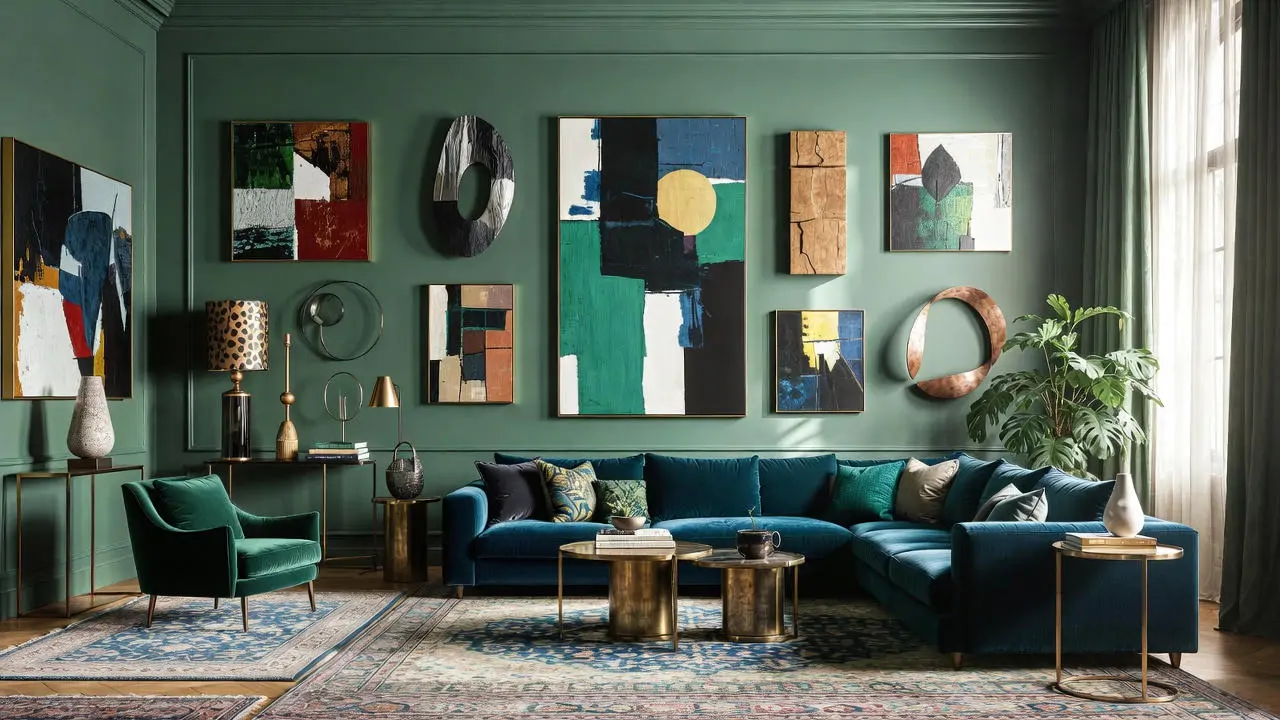
The defining characteristic of 2026's jewel tone trend involves dusty finishes—deep sapphire and Prussian blues, muted emerald and earthy greens, subdued cranberry reds—that ground spaces with calm while introducing personality and sophistication through careful layering.
These aren't the saturated gemstone hues of previous years. Think instead of colors that feel timeworn, as though they've lived in the house for generations. Olive green, deep teal, plum aubergine. Each shade brings depth without overwhelming.
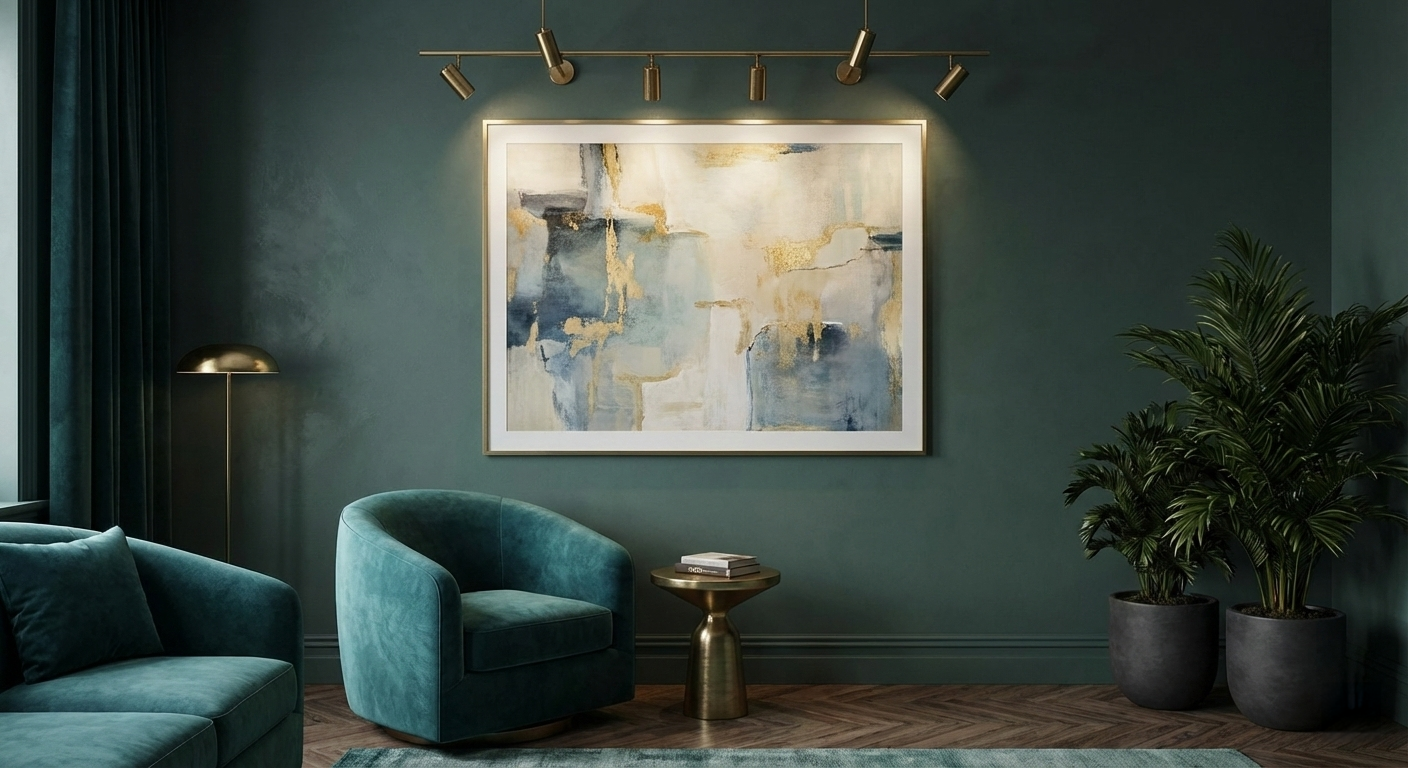
For collectors, this palette offers tremendous advantages. Dusty emerald walls make contemporary photography pop while complementing abstract expressionist works. Deep sapphire creates drama for minimalist sculpture. Plum tones provide richness for mixed-media installations.
Warm Neutrals with Complexity
White remains relevant—but it's evolved. Designers predict creamy whites with notes of chalk and raw linen will replace stark, bright white.
These sophisticated neutrals include caramel, taupe with pink undertones, warm khaki, and soft ochre. They deliver personality while maintaining neutrality sufficient to complement existing collections.
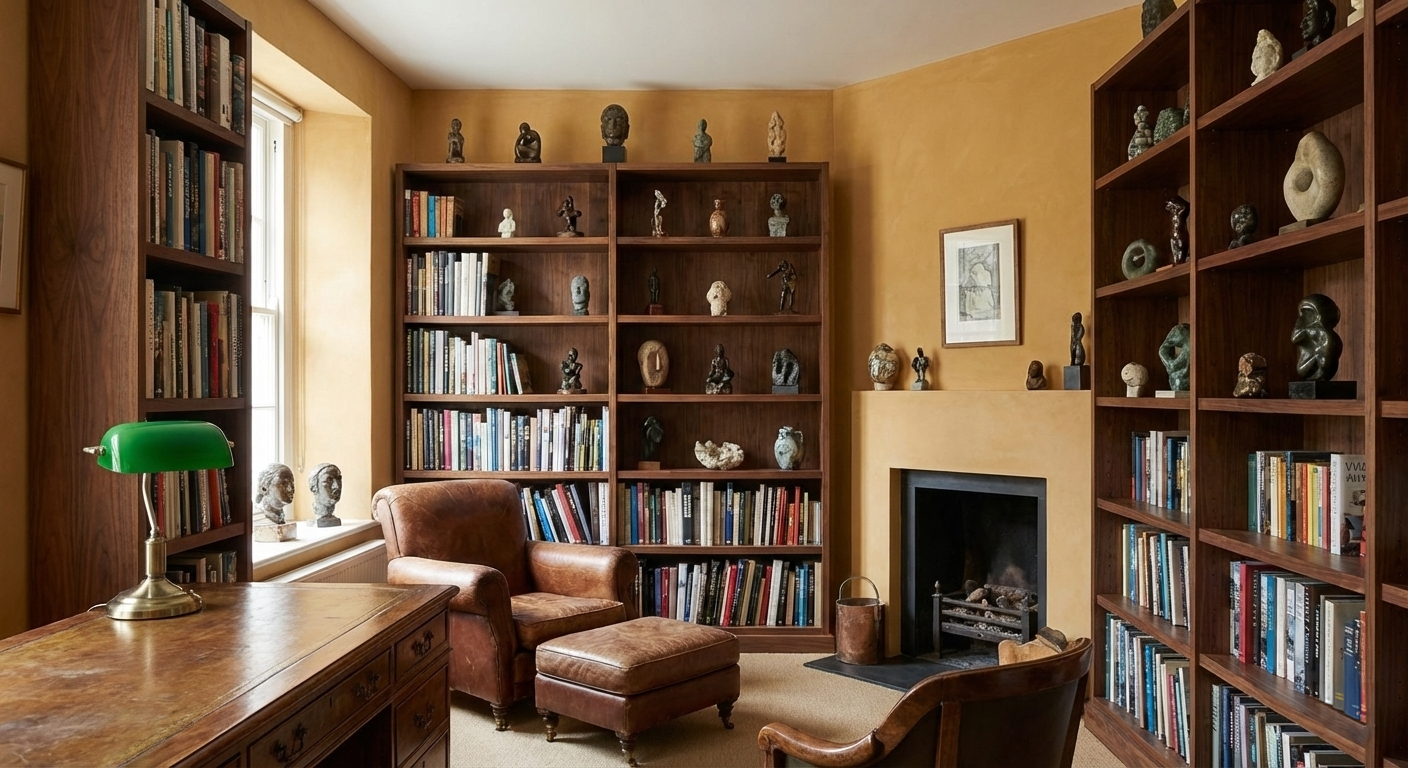
The sophistication lies in complexity. These aren't flat beiges. They're layered tones with multiple undertones that shift as natural light changes, creating perfect backdrops for rotating art displays.
Earth Tones Reimagined: Clay, Terracotta, and Moss
Earth tones in 2026 embrace richer, more saturated qualities than past minimalism—think clay red, warm ochre, moss green, and terracotta orange—pulling from soil, stone, and natural pigments to create tactile reality in our digital era.
These colors feel honest and grounded. They connect luxury interiors to organic materials and natural landscapes. For collectors focused on environmental themes or land art movements, this palette creates powerful resonance.
Terracotta walls provide warmth for ceramics and pottery collections. Moss green creates harmony with landscape photography. Clay tones complement bronze sculpture and mixed-media works incorporating natural materials.
High-Contrast Color Stories: The Bold Move
Perhaps the most exciting development involves unexpected high-contrast combinations—adrenaline-fueled hues like teal, cobalt, periwinkle, and chartreuse balanced by grounded counterparts, including combinations like satin periwinkle with velvet chocolate or high-gloss chartreuse with matte baby blue.
This approach requires confidence but delivers dramatic results. It's particularly effective for collectors who want their spaces to make statements rather than whisper suggestions.
The technique works because contrast creates hierarchy. A bold cobalt accent wall directs attention to the art displayed against it. The eye moves from wall color to artwork and back, creating a dynamic visual conversation.
Metallic Accents: Gold's Sophisticated Cousins
While gold maintains relevance, 2026 gives expanded prominence to copper, bronze, and rose gold—tones that feel grounded yet luxurious, particularly in sculpture and mixed-method practices where patina becomes a living narrative.
These warmer metals catch and reflect light throughout the day, creating living environments that change as sunlight shifts. For collectors, metallic accents in lighting fixtures, hardware, and frames can unify diverse collections across rooms.
Color Theory Meets Collecting Strategy: The Technical Framework
Understanding color relationships transforms how collectors design display spaces. Three principles matter most: complementary harmony, value contrast, and temperature balance.
Complementary colors sit opposite on the color wheel—blue and orange, purple and yellow, green and red. These pairings create visual energy. If your collection includes dominant warm tones, consider cool-toned walls for balance.
Value refers to lightness or darkness. High value contrast creates drama and focus. Low contrast offers subtlety and cohesion. Temperature involves psychological weight—warm colors advance and energize, cool colors recede and calm.
Luxury designers employ textures to enhance palettes—velvet upholstery in deep jewel tones, textured linen walls for photography backdrops, patterned rugs adding complexity without overwhelming focal art pieces.
Room-by-Room Application: Where Each Palette Thrives
Living Spaces: The Gallery Foundation
Living rooms function as primary display galleries. Deep earthy greens work particularly well, providing natural, calming backdrops that contrast beautifully with lighter surfaces and make natural wood grain look richer.
Consider allocating different wall colors within open-plan areas—dusty emerald for sculpture, warm neutrals for paintings, high-contrast statements for dramatic installations.
Bedrooms: Intimacy and Restoration
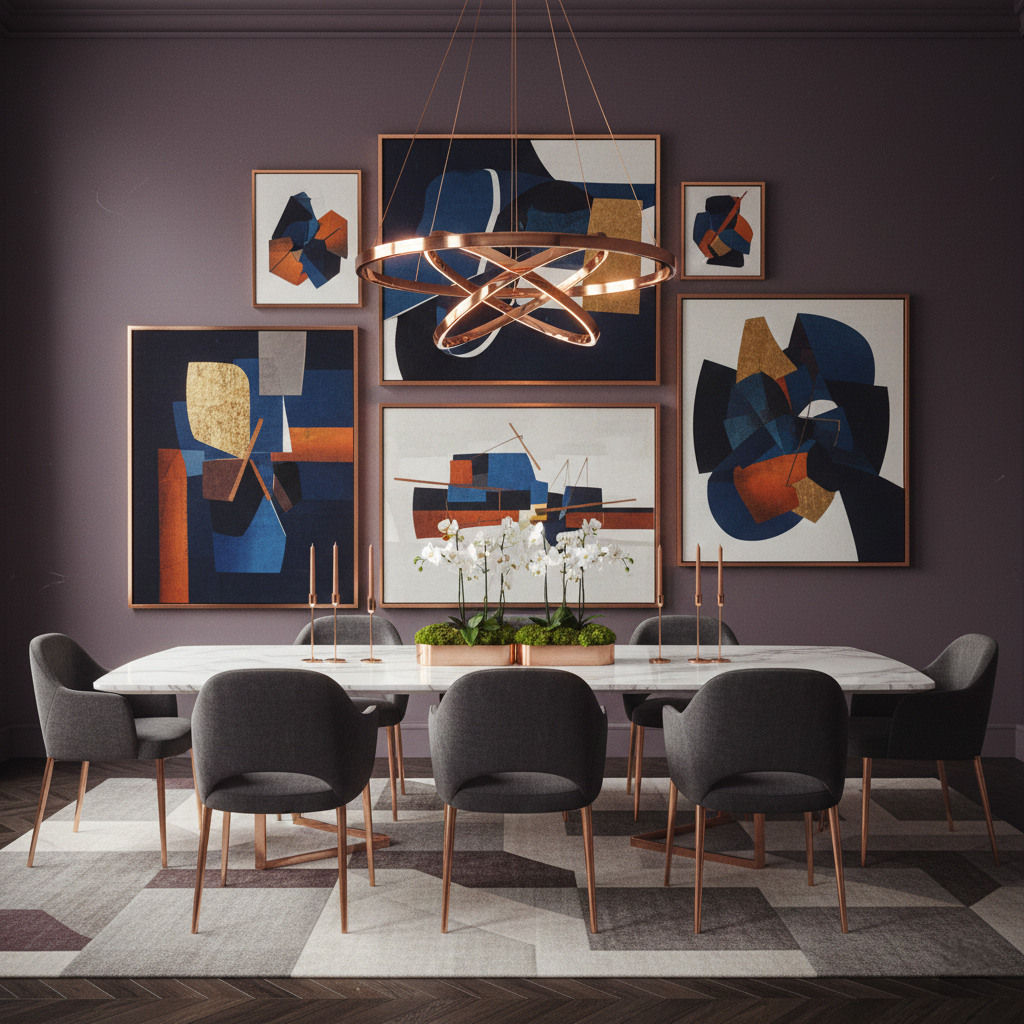
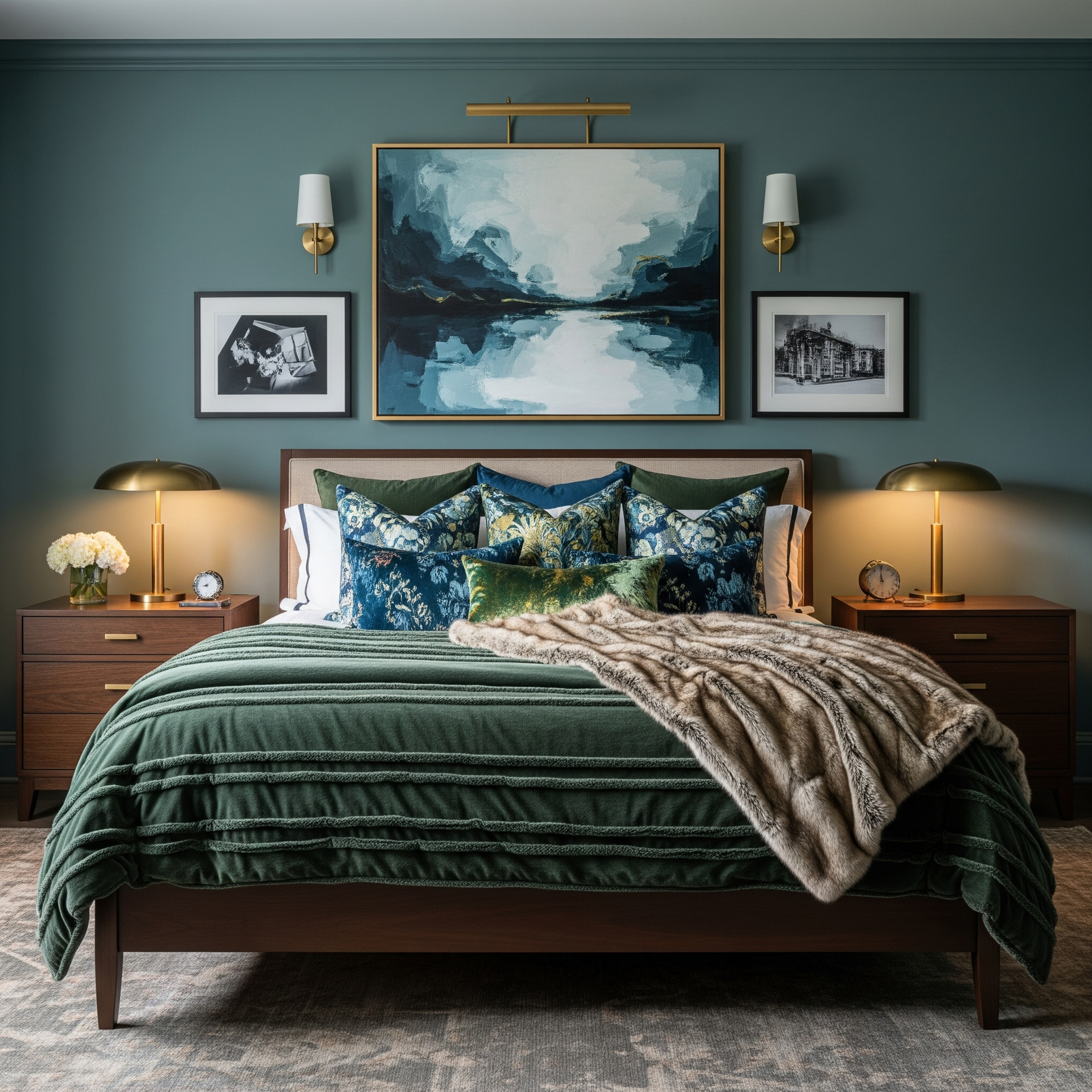
Regal plum aubergine hues prove particularly suited for bedrooms, providing luxury combined with tranquility. These rooms accommodate deeper, more saturated colors that might overwhelm public spaces.
Display intimate scale works here—drawings, small paintings, photography series. Deeper wall colors create cocoon-like environments where quieter pieces receive focused attention.
Dining Rooms: Drama and Conversation
Dining spaces accommodate dramatic color. Deep wine reds, rich navy blues, and charcoal grays create atmosphere and intimacy. Oxblood creates depth, commanding attention—particularly effective in large rooms with high ceilings.
Metallic accents enhance dining rooms. Copper pendant lighting reflects warmth onto art. Bronze frames unify diverse pieces.
Home Offices: Focus and Inspiration
Studies require different strategies. Atmospheric blues with violet undertones offer bright qualities that feel futuristic while supporting focused work. Choose wall colors that enhance your selected art's intended psychological effect.
Connecting Interior Palette to Collection Identity
The most successful luxury interiors don't just display art—they extend the collection's narrative into the architectural envelope. Your color choices should reflect and reinforce your collecting focus.
If you collect contemporary photography, consider sophisticated gray palettes with warm undertones. Photography often includes grayscale elements, and gray walls create natural harmony while preventing color casts on prints.
Abstract expressionist collectors might embrace bolder, more saturated backgrounds. These works already command attention—rich wall colors meet them with equal confidence rather than attempting to tame them through neutrality.
Minimalist and conceptual art often benefits from high-contrast settings. Pure white or deep charcoal walls create gallery-like environments that honor the work's intentional simplicity.
Mixed collections require the most careful planning. Explore curated contemporary art at Artestial, where expertly selected works span multiple movements and mediums, helping collectors develop cohesive acquisition strategies that inform interior design decisions.
Technical Considerations: Light, Scale, and Architecture
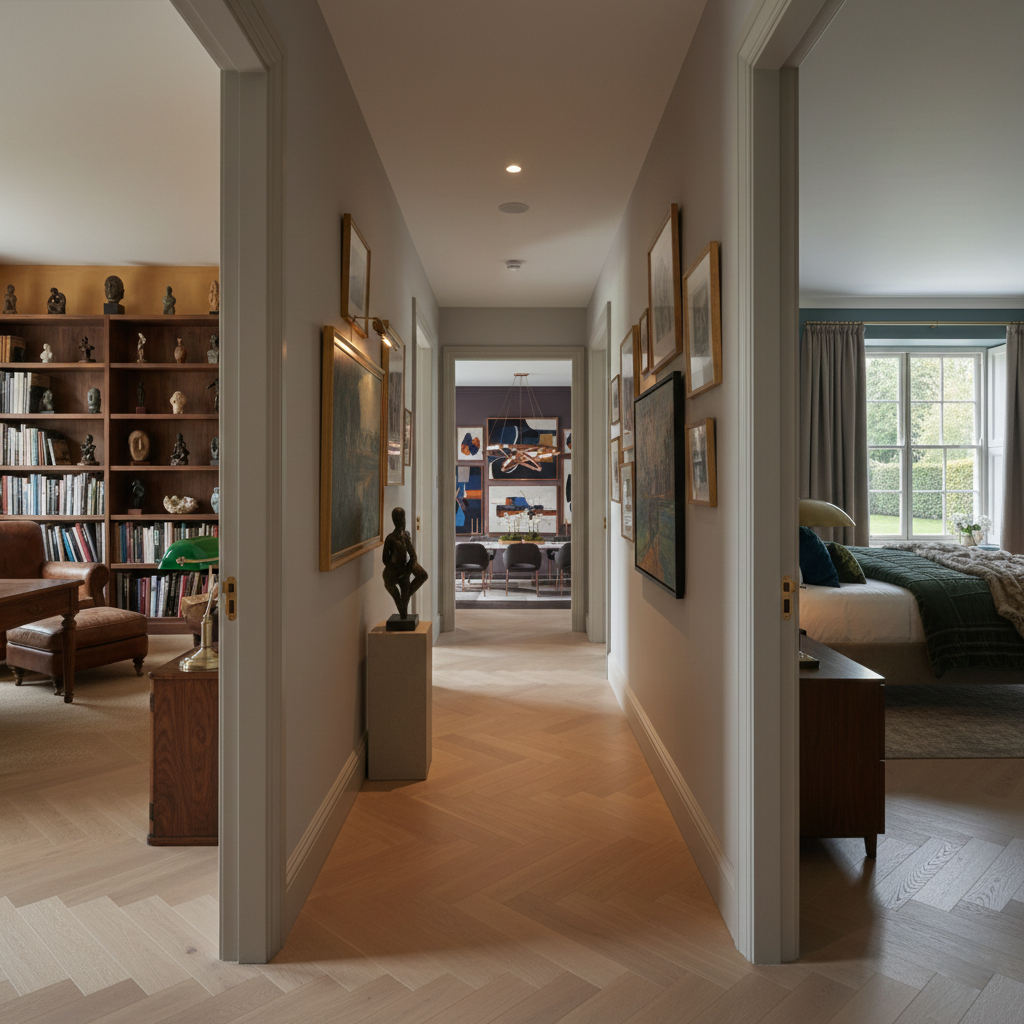
Color behaves differently depending on lighting, room dimensions, and architectural features. Before committing, test extensively by painting large swaths on walls and evaluating throughout the day under various lighting conditions.
North-facing rooms receive cooler light and benefit from warm palettes. South-facing spaces flood with warm light, allowing cooler choices. Room scale matters tremendously—large rooms accommodate saturated colors that overwhelm intimate spaces.
Architectural details influence choices. Crown molding, wainscoting, and ceiling beams create natural divisions supporting multiple coordinated hues. "Color capping" uses one color in various shades throughout a room for cohesive flow.
Investment Protection: Color's Role in Conservation
Color choices affect collection longevity. Specify low-VOC or zero-VOC paints for rooms housing valuable pieces. Dark walls absorb rather than reflect light, potentially reducing UV exposure—but require careful lighting design.
Temperature control becomes more critical with darker walls, which absorb heat. Maintain consistent climate control. Coordinate with professional conservators when planning significant changes in rooms housing valuable collections.
Implementation Strategy: Working with Design Professionals
Executing sophisticated color palettes requires expertise. Look for designers with gallery or museum experience who understand how lighting, color, and architecture interact to present art optimally.
Paint specialists offer services beyond application—custom color matching, subtle gradations, specialized finishes that reflect light differently. Lighting designers complete the equation, understanding color temperature, beam angles, and intensity needed to showcase work.
Build your collection with expertly curated contemporary works at Artestial, where acquisition guidance integrates with interior design considerations.
Beyond Trends: Creating Timeless Color Foundations
While 2026's palette offers exciting possibilities, the most successful interiors transcend trends. They balance current sophistication with lasting appeal.
The choice of versatile neutrals by major paint brands represents recognition that consumers experience trend cycle fatigue and desire colors offering comfort, stability, and staying power rather than fleeting fashion statements.
Achieve this balance by treating walls as long-term commitments and using more easily changed elements—textiles, rugs, accessories—for trend expression. A sophisticated dusty emerald wall remains relevant for years. Accent pillows in whatever jewel tone currently captivates can refresh the space seasonally.
Consider architectural permanence when selecting colors. Built-ins, cabinetry, tile work—these involve significant investment and labor to change. Choose colors for these elements even more conservatively than wall paint.
Test potential palettes against your existing collection. Bring artwork samples to paint stores. Request large paint samples and hang them near pieces you plan to display. Live with test colors for at least a week before committing.
Essential Questions Collectors Ask
How do I choose wall colors that won't compete with my art collection?
Select colors one or two values darker or lighter than your artwork's dominant tones, ensuring separation rather than competition. Cool-toned walls complement warm-toned art and vice versa. Test colors alongside actual pieces rather than trusting memory or imagination.
Can dark wall colors work with valuable artwork?
Absolutely, but it requires careful lighting design. Dark backgrounds create drama and make certain works more impactful, particularly pieces with strong internal contrast or lighter palettes. Ensure proper gallery lighting specifications—typically 150-300 lumens per artwork, depending on size.
What's the best approach for collections spanning multiple media and styles?
Create cohesive flow through temperature consistency rather than exact color matching. Choose warm neutrals throughout if most pieces skew warm, or cool neutrals for predominantly cool-toned collections. Use accent walls in bolder colors to highlight specific pieces or create visual variety.
How often should I update interior colors as my collection evolves?
Review palettes every 3-5 years or whenever acquiring major pieces that shift collection focus. Minor adjustments through accessories and lighting can accommodate new acquisitions without a complete renovation. Paint refreshes become necessary when walls no longer serve the collection effectively.
Should I match frame colors to wall colors or create contrast?
Both approaches work depending on the desired effect. Matched frames blend into walls, creating a seamless presentation. Contrast frames define boundaries and add visual interest. Consider using frame color as an intermediate value between wall and artwork colors for harmonious transitions.
The Future of Color in Collecting Spaces
The 2026 palette revolution represents more than an aesthetic shift—it reflects fundamental changes in how collectors conceptualize their environments. Homes transition from neutral backdrops to active participants in the art experience.
This transformation demands new skills. Collectors must become students of color theory, light behavior, and spatial psychology. The investment extends beyond acquisition budgets into environmental design.
But rewards justify the effort. Thoughtfully colored interiors elevate collections, create memorable experiences for viewers, and transform houses into true homes that reflect sophisticated taste and curatorial vision.
The pristine white gallery wall served its purpose. It communicated serious intent and let art speak. But it also created sterility and missed opportunities for enhanced presentation.
2026's color confidence offers liberation—permission to create spaces as intentionally designed as the collections they house. Dusty emerald, warm ochre, deep plum, smoky jade. These aren't just colors. They're tools for transforming how we experience and present exceptional art.
The London collector with the Kapoor sculpture? Her designer proposed deep charcoal walls with precise gallery lighting. The transformation was immediate. The sculpture now commands the space as intended—not despite the wall color, but because of it.
Curating excellence, one insight at a time.
— AURUM Team
Disclaimer: This article is for informational purposes only and does not constitute interior design, conservation, or investment advice. Color and design preferences vary by individual taste and property-specific conditions. Paint formulations, lighting requirements, and conservation considerations evolve. Consult qualified interior designers, art conservators, and lighting specialists before making significant changes to spaces housing valuable collections. Observations reflect industry knowledge as of early 2026 and may not apply to specific situations.