

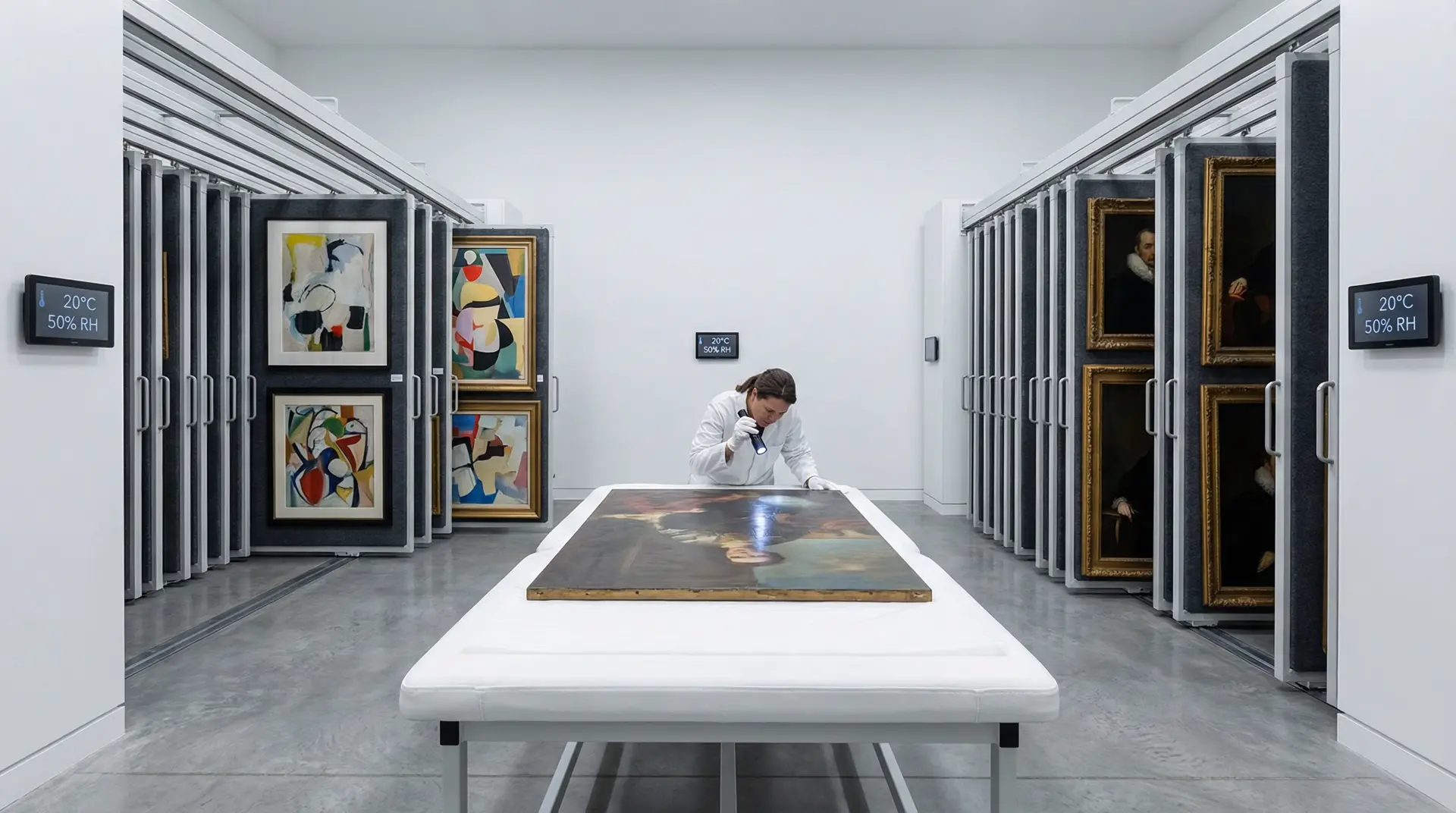
The fundamental problem with insuring art begins with a structural mismatch between standard insurance products and the nature of collectible property. Homeowners policies are designed to replace commodities—furniture, electronics, clothing—with equivalent items at current market prices. Art, by definition, resists this logic. A painting cannot be replaced with an equivalent painting. A sculpture cannot be swapped for a comparable sculpture. The irreplaceable nature of collectible property creates protection challenges that standard policies systematically fail to address, leaving collectors exposed to risks they often don't discover until filing a claim.
The Insurance Information Institute reports that approximately one in five American homeowners have valuable items that are underinsured, and this statistic likely understates the problem for art collectors specifically. Standard homeowners policies impose sublimits—internal caps on specific categories—that typically range from $1,000 to $5,000 per item for art and collectibles regardless of actual value. A collector with a $50,000 painting and a policy sublimit of $2,500 would receive maximum compensation of $2,500, leaving $47,500 entirely unprotected. The policy would technically have "covered" the loss while providing only 5% of the work's value.
These structural limitations compound when considering the range of risks art faces. Standard policies cover named perils—theft, fire, vandalism, and similar events specifically listed in the policy—but exclude the accidents, handling errors, and environmental damage that account for significant portions of art losses. Dropping a sculpture, spilling wine on a painting, or failing to maintain appropriate humidity levels typically fall outside standard policy coverage, leaving collectors responsible for damage that proper protection would address.
Discover how proper documentation and provenance strengthen both protection and value at Artestial, where collectors access professional standards for collection management.
The Architecture of Fine Art Insurance
Understanding Policy Types
Fine art insurance exists as a specialized product category distinct from standard property coverage, designed specifically for the unique risks and valuation challenges that collectible property presents. The market is served by carriers including AXA XL, Chubb, Hiscox, Allianz, and Lloyd's syndicates, each offering policies tailored to collectors, galleries, museums, and institutional clients. These specialized policies typically provide "all-risk" coverage, meaning they protect against all direct physical loss or damage unless specifically excluded—the inverse of standard homeowners policies that cover only named perils explicitly listed.
Collectors generally face three policy structures when considering protection. Scheduled personal property endorsements add specific items to existing homeowners policies, removing sublimit caps and providing agreed-value coverage for listed pieces. This approach works for collectors with a few significant works, though it requires updating schedules whenever acquiring or selling pieces and maintains the limitations of the underlying homeowners policy for coverage terms. Stand-alone fine art policies from specialized carriers provide comprehensive protection designed specifically for collectible property, including transit coverage, worldwide protection, and broader covered perils. These policies typically offer blanket coverage for entire collections with the ability to add scheduled itemization for particularly valuable individual pieces. Blanket coverage establishes total collection values without requiring individual scheduling of every work, though high-value pieces may require specific itemization and documentation.
The cost structure for fine art insurance generally runs 0.1% to 2% of collection value annually, with rates varying based on security measures, geographic location, collection composition, and claims history. A collection valued at $500,000 might cost $500 to $10,000 annually to insure depending on these factors. Specialized policies often cost less than scheduling the same items through homeowners endorsements while providing substantially broader coverage—a pricing dynamic that surprises collectors accustomed to assuming specialty products command premium prices.

Valuation Methods and Their Implications
Insurance valuation represents one of the most misunderstood aspects of art coverage, with different methods producing dramatically different outcomes during claims. Declared value allows collectors to state values to insurers without formal documentation, typically used for lower-value items or blanket coverage. However, insurers may challenge declared values during claims, adjusting settlements if they find stated values inflated compared to market evidence. This approach exposes collectors to the uncomfortable possibility of premium payments based on one value and claim settlements based on another.
Agreed value establishes specific amounts confirmed by both insurer and collector prior to any loss, typically requiring professional appraisals as documentation. When a total loss occurs, the insurer pays the agreed value without further negotiation—the collector receives exactly what the policy specifies regardless of market fluctuations that may have occurred since the appraisal. This certainty comes at the cost of regular appraisal updates, typically recommended every three to five years for established artists and every two to three years for contemporary works whose markets fluctuate more dramatically.
Retail replacement value represents the cost to replace a work with another of similar age, quality, origin, appearance, provenance, and condition within a reasonable timeframe in an appropriate market. This standard works well for categories where comparable pieces regularly trade but creates challenges for unique works or rare items where true equivalents may not exist. Fair market value—the price a willing buyer would pay a willing seller with both having reasonable knowledge of relevant facts—typically applies to estate and tax contexts rather than insurance but may become relevant during claim negotiations.
The distinction between replacement value and fair market value matters considerably. A painting acquired for $10,000 from an emerging artist who has since gained significant recognition might have replacement value of $100,000 (what comparable works now command at retail) while fair market value might be $75,000 (what the specific work might realize at auction after fees). Insurance appraisals should specify replacement value unless collectors explicitly require different standards, ensuring coverage reflects actual replacement costs rather than discounted secondary market estimates.
What Standard Policies Exclude
The Exclusions That Matter Most
Understanding policy exclusions often matters more than understanding coverage, since exclusions define the gaps where collectors remain exposed. Standard fine art policies typically exclude coverage for gradual deterioration, improper storage, inherent vice, pest damage, and authenticity disputes—categories that may represent significant risk for certain collections.
Gradual deterioration exclusions remove coverage for damage occurring slowly over time rather than through sudden events. Humidity damage that warps a canvas, light exposure that fades pigments, and temperature fluctuations that crack paint surfaces typically fall outside coverage because they result from environmental conditions rather than covered perils. This exclusion places responsibility for proper storage and climate control squarely on collectors, making environmental management an insurance issue as much as a conservation one.
Inherent vice refers to damage caused by the nature of materials themselves rather than external events. A sculpture made from unstable materials that degrades over time, paper that yellows due to acid content, or photographs that fade due to original processing chemistry all represent inherent vice typically excluded from coverage. Works created with experimental or ephemeral materials may face particular exposure under this exclusion, making material understanding part of insurance planning.
Authenticity disputes present another significant exclusion area. If a work proves to be misattributed, forged, or otherwise inauthentic, standard policies do not cover the resulting loss of value. This exclusion emphasizes the importance of due diligence before acquisition, since insurance cannot remedy authenticity problems discovered after purchase. Some specialized policies offer limited title insurance or authenticity coverage, but these represent exceptions rather than standard provisions.
Transit coverage deserves particular attention because standard homeowners policies typically exclude or severely limit coverage for items during transport. A work damaged while shipping between homes, traveling to an exhibition, or returning from conservation work may fall outside policy coverage unless specific transit provisions apply. Specialized fine art policies generally include transit coverage as standard, but collectors should verify terms for their specific situations.
Geographic and Situational Limitations
Policy geography creates another layer of complexity. Standard homeowners policies typically cover property at the insured location—the primary residence—with limited provisions for items temporarily elsewhere. Art stored at a second home, held in professional storage facilities, displayed at galleries, or traveling internationally may fall outside standard policy scope depending on specific terms.
Fine art policies from specialized carriers typically offer worldwide coverage, protecting works regardless of location. However, even worldwide policies may impose conditions for certain high-risk situations. War, terrorism, and civil unrest exclusions may limit coverage in conflict zones. Some policies require notification before shipping works to certain countries or regions. Understanding geographic provisions becomes particularly important for collectors who loan works to institutions, participate in traveling exhibitions, or maintain property in multiple locations.
Exhibition and loan situations introduce additional considerations. When works leave collector custody for institutional display, questions arise about whose insurance applies, what values govern coverage, and how claims would be handled. Most institutional loan agreements specify insurance responsibilities and require lenders to provide documentation of coverage, but the terms require careful review. A loan agreement specifying that the borrowing institution's insurance "becomes primary" may reduce collector policy responsibility, but the specifics of institutional coverage may differ significantly from what the collector's own policy would provide.
Explore how Artestial's documentation standards support both collecting and protection, with provenance records that strengthen insurance claims and collection management.
The Appraisal Imperative
Professional Standards and Requirements
Insurance companies typically require professional appraisals before providing coverage for high-value art, with thresholds varying by carrier and policy type. Chubb, for example, requires appraisals only for individual items valued at $500,000 or more, while other carriers may impose lower thresholds depending on collection composition and policy structure. Regardless of insurer requirements, collectors benefit from regular appraisals as documentation supporting both coverage adequacy and claim substantiation.
Professional appraisers should hold current certifications from recognized organizations including the International Society of Appraisers, the American Society of Appraisers, or the Appraisers Association of America. Unlike real estate appraisers, personal property appraisers are not licensed by state or federal governments, meaning anyone can claim appraiser status without formal qualification. This regulatory gap makes credential verification essential—collectors should confirm active membership, relevant certifications, and specific expertise in their collection categories before engaging appraisal services.
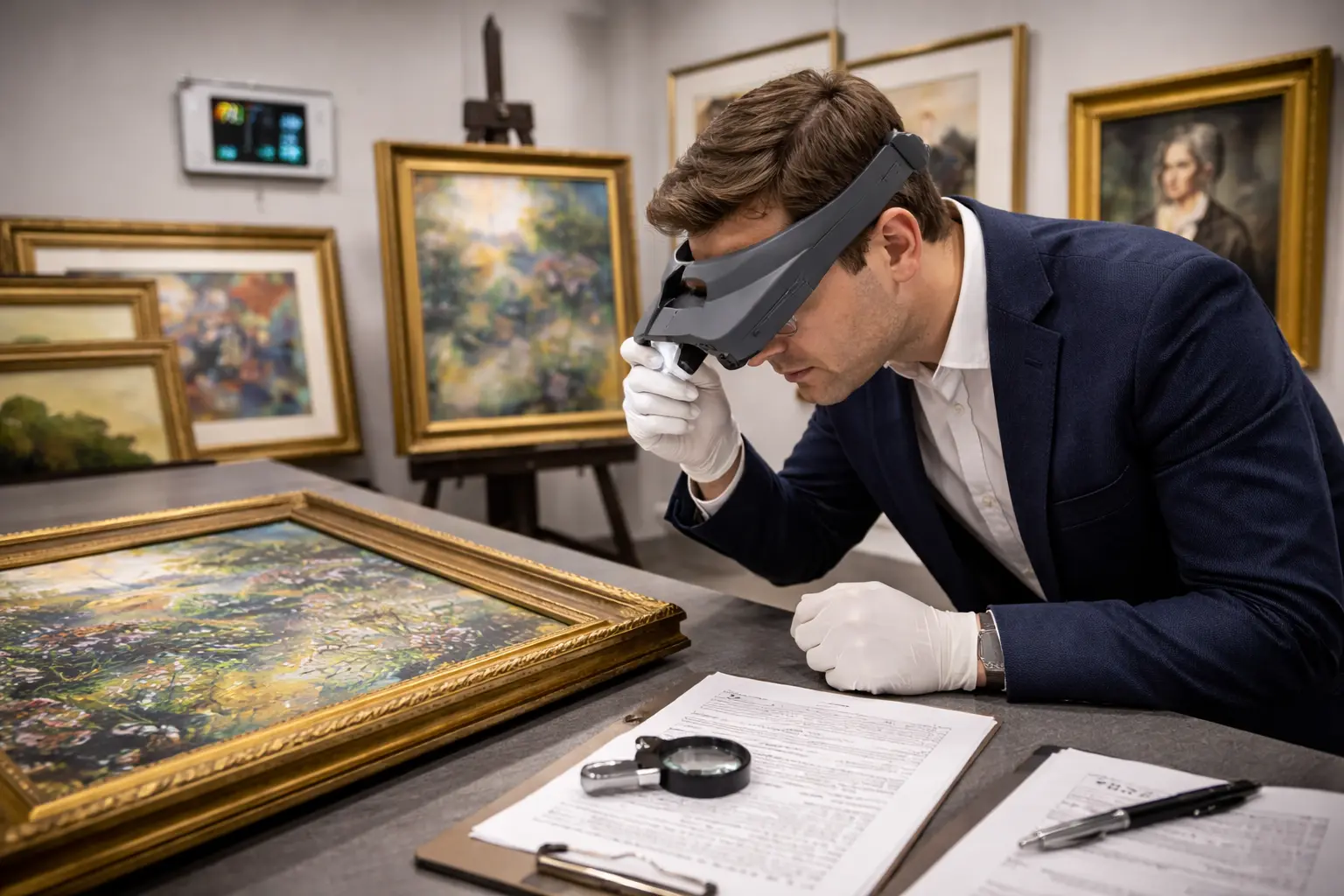
Appraisal reports for insurance purposes should include detailed physical descriptions of each work, high-quality photographs, artist biography, provenance documentation, exhibition and publication history, condition assessment, and clear statement of the valuation methodology employed. The report should specify retail replacement value as the standard unless collectors require alternative approaches for specific reasons. Reports should also clearly distinguish between appraisal date (when the appraiser examined the work and rendered opinion) and effective date (the date as of which the value is determined), which may differ in certain circumstances.
Update Frequency and Triggers
The art market's dynamism makes regular appraisal updates essential for maintaining appropriate coverage. Industry guidance suggests updating appraisals every three to five years for established artists whose markets demonstrate relative stability, and every two to three years for contemporary artists whose markets may fluctuate more dramatically. Certain triggers should prompt immediate reappraisal regardless of elapsed time: significant artist career developments such as major museum exhibitions, institutional acquisitions, or death; substantial comparable sales establishing new market benchmarks; changes in attribution or scholarship affecting understanding of the work; conservation treatment that may have affected condition and value; or major shifts in relevant market segments.
The 2024-2025 insurance industry saw a 33% increase in claims related to traveling exhibitions and approximately 35% of recent claims involved disagreements over valuation—statistics that underscore the importance of current, well-documented appraisals. When appraisals lag behind market movements, collectors risk either underinsurance (if markets have risen) or overpayment of premiums (if markets have declined). Regular updates maintain alignment between coverage and actual replacement costs.
Contemporary artists present particular appraisal challenges given market volatility. An emerging artist acquired for $5,000 whose career accelerates might see comparable works selling for $50,000 within several years. Without appraisal updates reflecting this appreciation, the collector's policy would cover only the outdated declared value, leaving 90% of current value unprotected. Conversely, artists whose markets cool may justify reduced coverage and lower premiums, representing savings that ongoing appraisal relationships can identify.
Documentation as Protection
Building Your Evidence File
Beyond appraisals, comprehensive documentation serves as essential infrastructure for successful claims. Insurance companies rely on documentation to establish ownership, verify value, and determine appropriate compensation. Without proper records, even legitimate claims may face delays, disputes, or reduced settlements. Building robust documentation practices from acquisition forward prevents problems that become intractable after losses occur.
Every work should have a documentation file including acquisition records (purchase invoice, auction receipt, or gift documentation), provenance history documenting ownership chain, condition reports at acquisition and periodically thereafter, high-resolution photographs from multiple angles including details of signatures, labels, and condition issues, and any correspondence with galleries, dealers, or previous owners that establishes history or context. Digital copies should be stored in cloud-based systems with physical backups in fireproof safes or bank safety deposit boxes—storing all documentation in the same location as the art defeats protection purposes if a disaster affects both.
Condition documentation deserves particular emphasis. Photographs and written reports establishing condition at acquisition provide baseline evidence essential for damage claims. Without pre-loss condition documentation, insurers may attribute damage to pre-existing conditions rather than covered events, reducing or denying claims. Regular condition photography—annually for particularly valuable works—creates ongoing records that demonstrate when changes occurred.
Inventory Management Systems
For collections of any significant size, systematic inventory management becomes essential for both insurance and collection purposes. Specialized software including Artwork Archive, Collector Systems, and similar platforms provide structured approaches to tracking acquisition details, location, condition, appraisal history, exhibition records, and insurance information. These systems generate reports that streamline insurance applications, support claim documentation, and facilitate collection management generally.
Inventory records should capture: complete identifying information (artist, title, date, medium, dimensions, edition information if applicable); acquisition details (source, date, price, payment method); location tracking (where the work is currently housed and history of locations); condition information (current condition, conservation history, any known issues); valuation history (appraisals with dates, purchase price, insurance values); provenance (documented ownership history); exhibition and publication history; and related documentation (photographs, correspondence, certificates).
Maintaining updated inventory requires disciplined practice. New acquisitions should be documented immediately rather than queued for later processing. Condition changes, location moves, and valuation updates should be recorded as they occur. Annual inventory reviews verify that all works are accounted for and records remain current. This ongoing maintenance represents the operational infrastructure that enables effective protection.
Claims: What Actually Happens
Navigating the Process
When losses occur, understanding claims processes helps collectors navigate what can be stressful and complex interactions with insurers. Prompt notification is essential—policies typically require reporting losses within specified timeframes, and delays may compromise coverage. Initial notification should include basic facts: what happened, when it occurred, what was affected, and preliminary assessment of damage or loss. Detailed documentation follows initial notification but should not delay the first report.
After notification, insurers typically assign adjusters to investigate and assess claims. For fine art claims, collectors should request adjusters with specific art market experience rather than general property adjusters who may lack relevant expertise. The choice of adjuster significantly affects claim outcomes—adjusters unfamiliar with art valuation may rely on inappropriate comparable sales, misunderstand condition factors, or fail to appreciate provenance considerations that affect value.
Documentation assembled before losses occurred becomes essential during claims. Appraisals establish agreed values that should govern settlements. Condition reports demonstrate that damage resulted from covered events rather than pre-existing conditions. Photographs provide evidence of appearance before loss. Inventory records confirm ownership and presence at covered locations. Collectors with comprehensive documentation typically experience faster settlements with fewer disputes than those assembling evidence after losses.
Dispute Resolution
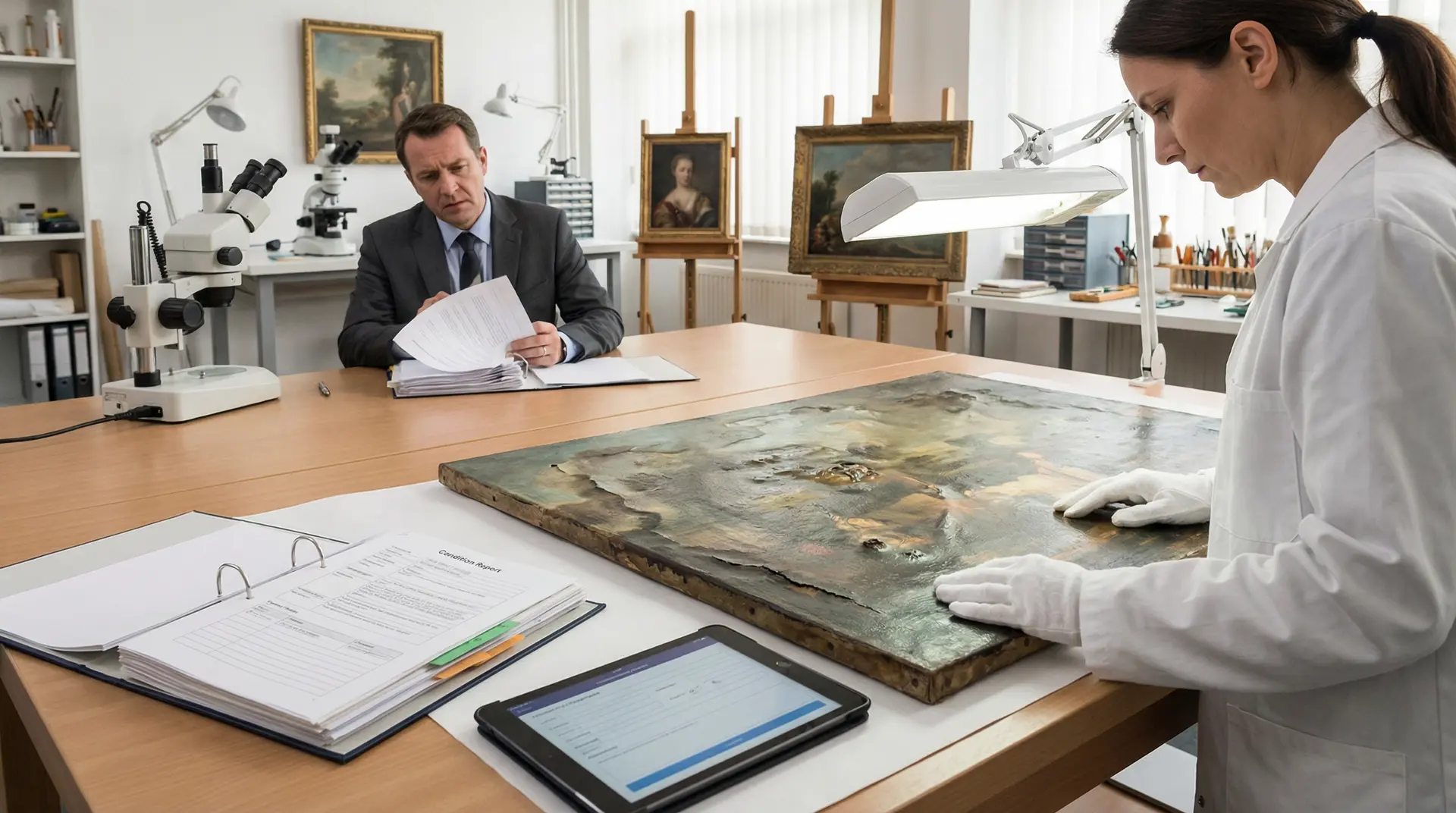
Despite best practices, disputes sometimes arise between collectors and insurers over claim values, coverage applicability, or settlement terms. Having professional appraisals conducted prior to loss provides leverage in valuation disputes, as these represent documented expert opinions rendered before any loss created incentive for inflated claims. Collectors may engage independent appraisers during claims processes to provide current valuations supporting their positions.
Some disputes may require mediation or arbitration to resolve. Policy terms typically specify dispute resolution procedures, which collectors should review before purchasing coverage. Understanding available remedies in advance prevents surprises during already stressful claim situations. Professional appraisal documentation serves as critical evidence in formal proceedings, demonstrating the importance of maintaining current, well-supported valuations.
Conservation costs add another layer to claims involving damaged rather than destroyed works. When restoration is possible, policies typically cover reasonable conservation costs plus any residual diminution in value that remains after treatment. Determining diminished value requires appraisal expertise—a work restored after significant damage may retain functionality but command reduced prices due to condition history. Insurers should work with qualified conservators for treatment decisions and with qualified appraisers for value determinations, though collectors may need to advocate for appropriate expertise.
Building Your Protection Strategy
Assessing Your Current Exposure
Collectors should begin by honestly assessing current coverage and identifying gaps. Review existing homeowners policies to understand sublimits applicable to art and collectibles—the declarations page should specify these caps. Compare sublimits to actual collection values to determine underinsurance exposure. A collector with $100,000 in art and a $2,500 sublimit faces $97,500 in unprotected value under standard homeowners coverage.
Consider which policy structure best fits your situation. Collectors with a few significant pieces may find scheduled endorsements to homeowners policies adequate, particularly if those pieces don't travel frequently or face unusual risks. Collectors with larger holdings, works that travel, pieces in multiple locations, or particularly valuable individual items typically benefit from specialized stand-alone policies that provide broader coverage specifically designed for art.
Evaluate your documentation infrastructure. Do you have current appraisals for significant works? Are acquisition records complete and accessible? Do condition photographs exist establishing baseline appearance? Is inventory systematically maintained? Gaps in documentation infrastructure represent protection gaps regardless of policy quality—the best coverage provides limited benefit when claims cannot be adequately substantiated.
Choosing Carriers and Advisors
Selecting insurance carriers for art coverage requires considering factors beyond premium pricing. Carrier reputation in the art market, claims handling experience, financial stability, and specific policy terms all matter for protection quality. Major fine art insurers including AXA XL, Chubb, Hiscox, and specialists accessed through Lloyd's bring decades of art market experience, relationships with conservation professionals, and understanding of valuation challenges that generalist insurers lack.
Working with brokers experienced in fine art coverage provides advantages similar to working with specialized carriers. Art-focused insurance brokers understand policy nuances, can explain coverage differences between options, and advocate for collector interests during claims. They often access multiple carriers, enabling comparison of terms and pricing across options. The additional guidance typically justifies any premium differences compared to direct purchasing from generalist agents.
Connect with specialists at Artestial for guidance on documentation standards that strengthen both collection value and insurance protection.
Frequently Asked Questions
What does fine art insurance typically cost?
Fine art insurance generally costs between 0.1% and 2% of collection value annually, with rates varying based on security measures, geographic location, collection composition, and claims history. A $500,000 collection might cost anywhere from $500 to $10,000 per year depending on these factors. A recent example from Houston showed a $2.8 million collection insured for $3,900 annually through Chubb, including worldwide coverage and automatic protection for new acquisitions up to 25% of collection value. Specialized fine art policies often cost less than scheduling the same items through homeowners endorsements while providing substantially broader coverage, making specialized coverage both more protective and potentially more economical than common alternatives.
How often should I update art appraisals for insurance purposes?
Industry guidance recommends appraisal updates every three to five years for works by established artists with relatively stable markets, and every two to three years for contemporary works where markets may fluctuate more dramatically. Certain triggers should prompt immediate reappraisal regardless of elapsed time: significant artist career developments such as major museum exhibitions or artist death; substantial comparable sales establishing new market benchmarks; changes in attribution or scholarship; conservation treatment affecting condition; or major shifts in relevant market segments. Insurance claims involving outdated appraisals frequently face valuation disputes, with approximately 35% of recent art insurance claims involving disagreements over value according to 2024-2025 industry data.
What does standard homeowners insurance actually cover for art?
Standard homeowners policies typically cover art under personal property coverage but impose sublimits—internal caps—that usually range from $1,000 to $5,000 per item regardless of actual value. Coverage applies only to named perils specifically listed in the policy (theft, fire, vandalism, certain natural disasters) and excludes accidental damage, handling errors, gradual deterioration, and environmental damage that account for significant art losses. Transit coverage is typically excluded or severely limited. Items at secondary locations may fall outside coverage. One in five American homeowners has valuable items that are underinsured according to the Insurance Information Institute, and this statistic likely understates the problem for art collectors given the structural mismatch between standard policies and collectible property characteristics.
What happens if I need to make an insurance claim?
After a loss occurs, prompt notification to your insurer is essential—policies typically require reporting within specified timeframes. Initial notification should include basic facts about what happened, when, and what was affected. Insurers then assign adjusters to investigate; for art claims, request adjusters with specific art market experience rather than general property adjusters. Your pre-loss documentation becomes critical: appraisals establish agreed values, condition reports prove damage resulted from covered events rather than pre-existing issues, and photographs provide evidence of prior appearance. Collectors with comprehensive documentation typically experience faster settlements with fewer disputes. If disagreements arise over valuation or coverage, professional appraisals provide leverage, and policies typically specify dispute resolution procedures including mediation or arbitration options.
Does insurance cover art in transit or at multiple locations?
Standard homeowners policies typically cover property at the insured location with limited provisions for items temporarily elsewhere—art shipped between homes, sent for exhibition, or traveling for conservation may fall outside coverage. Specialized fine art policies from carriers like AXA XL, Chubb, and Hiscox generally include worldwide coverage and transit protection as standard features, though specific terms vary. Exhibition and loan situations require careful attention to whose insurance applies and what values govern coverage; most institutional loan agreements specify insurance responsibilities. When loaning works, verify that borrower insurance meets your requirements or that your policy covers items on loan. Transit exclusions represent one of the most significant coverage gaps between standard homeowners and specialized fine art policies.
Ready to ensure your collection has protection that matches its value? Visit Artestial where collectors access documentation standards supporting both investment protection and collection management, or connect with specialists for guidance on building collections with proper provenance from acquisition forward.
Curating excellence, one insight at a time. — AURUM
Disclaimer: This article provides educational information about art insurance concepts and practices. It does not constitute insurance, legal, or financial advice, and readers should consult qualified insurance professionals, brokers, and appraisers for guidance specific to their situations. Insurance coverage terms vary by carrier, policy type, and jurisdiction; specific policy language governs actual coverage. Statistics and market data derive from publicly available industry sources and reports. Readers should verify current terms and conditions with insurance providers before purchasing coverage or making claims decisions.