

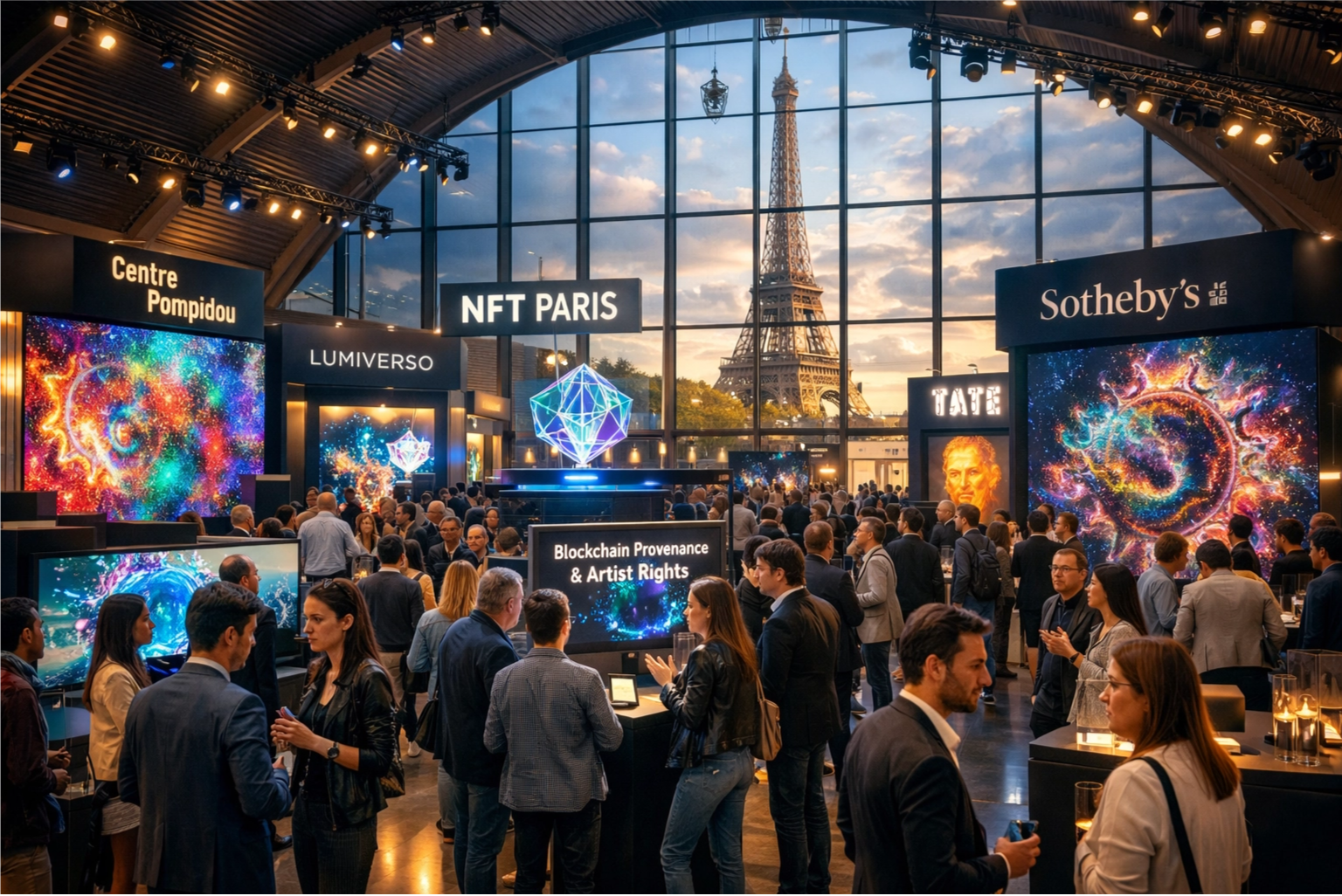
The collector walking through NFT Paris notices immediately what distinguishes European blockchain art events from American equivalents like NFT NYC or Art Blocks conferences. The conversations focus less on "floor price" and "utility" and more on provenance standards, artist royalty enforcement, integration with traditional gallery systems, and how blockchain might solve longstanding problems in artist compensation and rights management. European galleries and cultural institutions maintain prominent presence—not tentatively exploring digital art as exotic novelty but seriously integrating blockchain tools into established art market infrastructure. The regulatory framework discussions don't treat government oversight as threat to innovation but as necessary protection ensuring artists retain control over their work while collectors receive legitimate authentication.
This European approach reflects broader cultural differences in how societies view art, commerce, and technology's role in creative production. American crypto culture emerged from libertarian tech ideology emphasizing decentralization, disruption of established institutions, speculative opportunity, and technology as solution to all problems. European art world brings centuries of institutional history, strong artist rights traditions through droit de suite (resale royalty rights), skepticism about unregulated markets following various art market scandals, and cultural framework viewing art as heritage requiring protection rather than commodity for speculation.
NFT Paris 2026 particularly emphasizes these European priorities through programming featuring extensive artist rights panels, regulatory compliance workshops, traditional museum curators discussing digital art integration, and technical sessions on authentication standards rather than trading strategies. The event occurs amid significant European Union regulatory developments including Markets in Crypto-Assets Regulation (MiCA) taking full effect January 2025, creating clearer legal frameworks for digital assets including art NFTs, and ongoing EU discussions about artist resale rights applying to blockchain secondary sales.
For collectors navigating digital art markets, understanding these geographic and philosophical differences matters practically. European platforms increasingly emphasize different values than American equivalents—prioritizing artist compensation over platform fees, enforcing royalty payments even when technically avoidable, maintaining curatorial standards rather than permissionless minting, and integrating with traditional art market infrastructure instead of positioning as replacement for it. Whether this approach ultimately serves artists and collectors better than American laissez-faire model remains contested, but the divergence itself reveals that blockchain art culture isn't monolithic—different regions implement similar technology reflecting distinct cultural values and institutional histories.
Explore contemporary digital and physical artworks at Artestial, where artists working across media find audiences appreciating creativity regardless of substrate, or where collectors build collections valuing artistic vision over technological novelty.
The European Cultural Context: Why Geography Shapes Digital Art Philosophy
Understanding NFT Paris requires recognizing how European cultural institutions, regulatory traditions, and art market history create distinct approach to blockchain technology compared to American crypto culture's origins in Silicon Valley libertarianism and financial speculation.
Institutional History and Artist Rights Traditions
European art markets developed over centuries with strong institutional frameworks protecting artist interests in ways American markets historically haven't. France established droit de suite (artist resale rights) in 1920, ensuring artists receive percentage of secondary sales when their work appreciates in value. The European Union extended these protections across member states through 2001 directive requiring resale royalties for living artists and their estates up to seventy years post-mortem. This cultural framework views artist compensation not as negotiable contract term but as fundamental right embedded in how art markets should function.
When blockchain technology emerged enabling permanent royalty enforcement through smart contracts, European institutions immediately recognized alignment with existing cultural values. Rather than viewing blockchain as disruption requiring abandonment of traditional protections, European regulators and institutions saw technology potentially strengthening artist rights if implemented thoughtfully. This explains why European blockchain art platforms consistently emphasize royalty enforcement while some American platforms treat royalties as optional "creator fees" that can be avoided through alternative marketplaces.
The institutional art world's European presence also shapes digital art discourse differently than American context where crypto culture developed somewhat apart from traditional art institutions. Major European museums including Centre Pompidou, Tate Modern, Palais de Tokyo, and ZKM Center for Art and Media engaged digital and new media art for decades before blockchain emerged. These institutions possess curatorial expertise evaluating digital work as art rather than technology demonstration. When they integrate blockchain tools, they apply same critical frameworks used for any medium—asking whether work demonstrates artistic merit, cultural significance, technical innovation serving creative vision, not merely whether it employs fashionable technology.
This institutional engagement means European digital art discourse naturally includes museum curators, art historians, conservators, and established gallery directors alongside technologists and crypto advocates. The conversation becomes less about whether traditional art world should accept blockchain art and more about how blockchain tools might serve artistic production, preservation, and distribution in ways continuous with rather than opposed to cultural heritage. The language shifts from disruption rhetoric toward integration vocabulary—how might blockchain authentication complement traditional provenance research? Can smart contract royalties strengthen rather than replace gallery-artist relationships? What conservation challenges do blockchain artworks present that museums must address?
Regulatory Clarity as Artist Protection
American crypto culture often portrays regulation as innovation-killing government overreach. European perspective views thoughtful regulation as necessary artist and collector protection preventing fraud, ensuring market transparency, and establishing legal frameworks enabling legitimate art commerce. The Markets in Crypto-Assets Regulation (MiCA) taking full effect January 2025 creates European regulatory clarity that, while requiring compliance effort, provides legal certainty for artists selling digital work, galleries representing blockchain artists, and collectors purchasing NFT art.
MiCA establishes clear definitions distinguishing different crypto asset types, creates licensing requirements for crypto asset service providers, mandates transparency about risks and operational procedures, and provides consumer protection frameworks. For art NFTs specifically, the regulation confirms that while blockchain artwork might employ crypto technology, it functions primarily as art requiring traditional art market protections rather than purely financial asset subject to securities regulation. This clarification helps galleries confidently represent digital artists, enables traditional auction houses to integrate blockchain art without regulatory ambiguity, and allows collectors to purchase digital work through established art market channels with legal protections.
The regulatory framework also addresses persistent blockchain art market problems including wash trading (artificial volume inflation through self-dealing), lack of transparency about creator identity and authenticity, and absence of consumer protection when platforms fail or artworks become inaccessible. European regulation requires platforms to verify creator identity, maintain transparent transaction records, provide clear terms of service defining what purchasers actually own, and implement consumer protection measures. MiCA also authorizes Euro-backed stablecoins enabling art transactions in stable currency rather than volatile cryptocurrencies—by 2026, many European platforms conduct sales in Euro stablecoins (EUROC, Circle's Euro Coin) rather than Ethereum or Bitcoin, separating art purchasing from crypto market volatility while maintaining blockchain authentication and smart contract functionality. This financial infrastructure shift means collectors can acquire digital art using stable currency functionally equivalent to traditional Euro purchases, experiencing price certainty rather than watching artwork cost fluctuate with cryptocurrency markets between decision and transaction completion. These requirements impose costs and reduce absolute freedom compared to unregulated American platforms, but they potentially create more sustainable art market where collectors trust purchases represent genuine artistic creation by verified artists rather than speculative tokens of unclear provenance.
Critics argue regulation stifles experimentation, prevents innovative business models, and creates barriers excluding smaller platforms unable to afford compliance costs. European defenders counter that art markets always involved regulation protecting against fraud, that innovation failing to protect basic artist and collector rights shouldn't be preserved merely because it's technically novel, and that regulatory clarity ultimately attracts serious institutional capital currently avoiding crypto art markets precisely because legal ambiguity creates unacceptable risk. NFT Paris programming extensively features these regulatory discussions—not treating compliance as unfortunate necessity but as foundational requirement for legitimate art market functioning.
Cultural Heritage Integration Rather Than Disruption
Perhaps most distinctive European characteristic involves treating blockchain art as extension of cultural heritage rather than radical break requiring abandonment of traditional values. American crypto rhetoric often celebrates disruption—overturning gatekeepers, democratizing access, making art world obsolete. European institutions ask different questions: How might new technologies serve cultural preservation? Can blockchain tools help museums fulfill public education missions? What might digital art contribute to ongoing cultural conversations rather than replacing them?
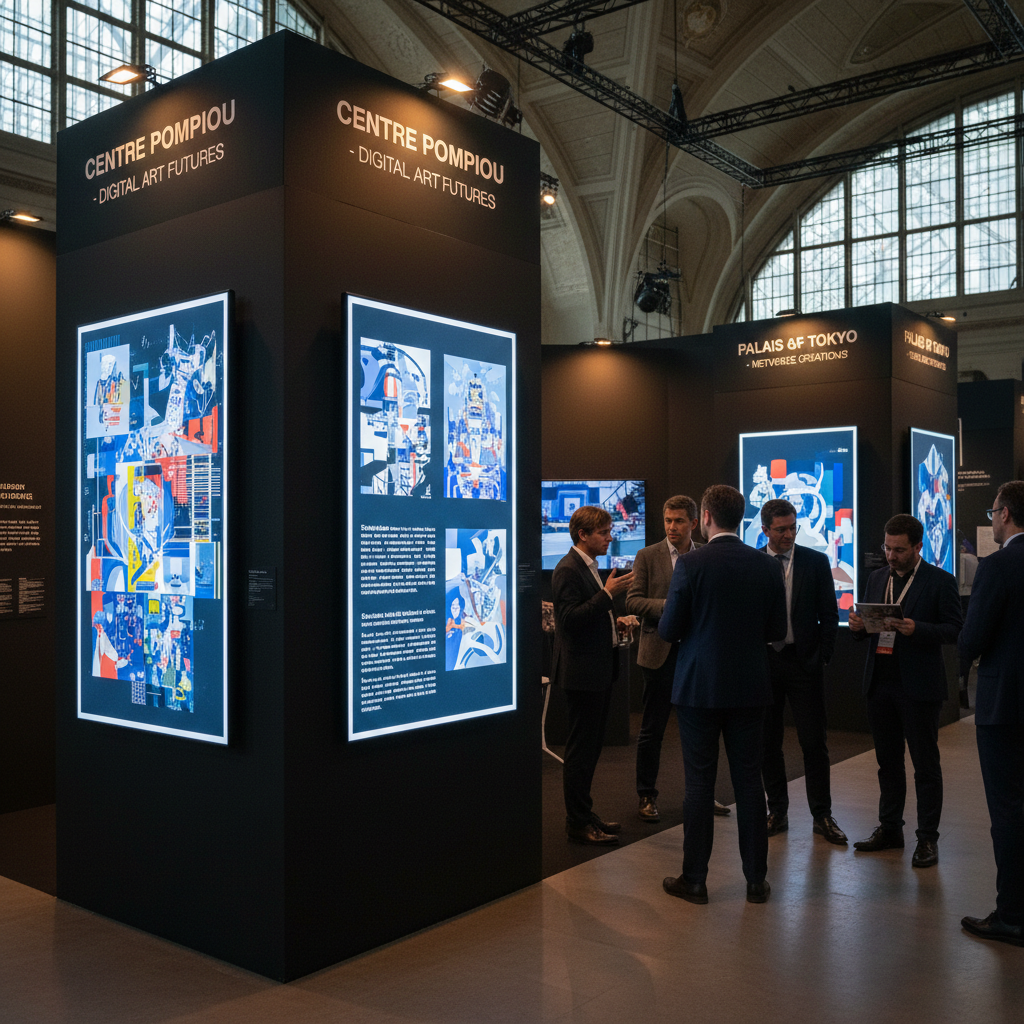
This integration approach manifests practically at NFT Paris through strong presence of traditional cultural institutions not observing digital art from distance but actively participating as exhibitors, programming partners, and artistic commissioners. Centre Pompidou presents digital art acquisitions explaining curatorial rationale, conservation approaches, and how blockchain work fits within broader contemporary art collecting. Palais de Tokyo showcases commissioned digital artworks by established contemporary artists who incorporate blockchain as one tool among many rather than defining their practice primarily through technology. Smaller European galleries demonstrate hybrid representation models working with artists across physical and digital media, selling blockchain work through same channels and curatorial frameworks applied to painting or sculpture.
This integration extends to NFT Paris's physical design and presentation aesthetics. Unlike American blockchain conferences often embracing aggressive tech aesthetics, NFT Paris occurs at Grand Palais Éphémère—a contemporary interpretation of nineteenth-century Grand Palais's glass and steel architecture, designed by Jean-Michel Wilmotte specifically for Paris 2024 Olympics, now serving major cultural events. By February 2026, the event unfolds against the backdrop of the newly reopened Grand Palais district, with the historic permanent structure once again hosting major art exhibitions including Art Basel Paris following extensive renovation completed late 2025, creating concentrated cultural quarter where traditional and digital art institutions coexist rather than compete. The venue choice itself signals positioning: blockchain art belongs in spaces hosting major cultural exhibitions, not relegated to convention centers or nightclubs. The exhibition design emphasizes viewing art over celebrating technology, with generous wall space for digital displays presented as artworks requiring contemplation rather than screens showing technical specifications or price charts.
Artist-Centric Platforms: European Alternatives to Speculation-Driven Marketplaces
European blockchain art platforms increasingly differentiate themselves from American equivalents through policies and design choices prioritizing artist welfare over trading volume, enforcing royalties despite technical ability to circumvent them, maintaining curatorial standards rather than permissionless minting, and integrating with traditional art market infrastructure.
Royalty Enforcement as Cultural Commitment
The royalty enforcement debate represents clear philosophical divergence between European and American blockchain platforms. American platforms including OpenSea (world's largest NFT marketplace) made royalties optional in late 2022, arguing that traders would simply use zero-royalty platforms if forced to pay creator fees, so making royalties voluntary at least gave artists chance to receive some compensation rather than none. This logic treats royalty enforcement as economic optimization problem—minimize friction, maximize trading volume, let market determine appropriate artist compensation.
European platforms reject this reasoning, viewing royalty enforcement as cultural obligation regardless of whether technically avoidable. Platforms including SuperRare (though US-based, emphasizes European values), Foundation (similarly values-aligned), and European-specific platforms like Fairchain enforce royalties through smart contract design and platform policies refusing to list creators circumventing royalty standards. The argument holds that artist resale rights represent cultural achievement requiring protection, that market pressures toward zero compensation don't justify abandoning artist welfare, and that platforms exist to serve artistic creation not merely facilitate trading.
This commitment creates economic cost—some trading volume shifts to zero-royalty platforms, certain speculators avoid artist-protective platforms, and maximum liquidity isn't achieved. European platforms accept these tradeoffs, viewing them as price worth paying to maintain cultural values. The approach resembles European labor protections or environmental regulations: accepting economic efficiency loss to preserve broader social goods. Whether this philosophy ultimately serves artists better than market optimization remains contested, but the divergence illustrates fundamentally different assumptions about technology's purpose and market's proper function.
From artist perspective, royalty enforcement matters enormously for creators whose work appreciates over time. A digital artist selling work for $500 in 2021 that now trades for $50,000 receives zero compensation from appreciation on zero-royalty platforms, while 10% royalty on platforms enforcing creator fees generates $5,000 per resale. For emerging artists building careers, royalty income can provide crucial financial stability enabling continued artistic development. European platforms argue that protecting this income stream represents moral imperative regardless of whether market forces pressure toward abandonment.
Curatorial Standards and Permissioned Minting
Most American blockchain platforms embrace permissionless minting—anyone can create NFT without approval, verification, or quality assessment. This aligns with crypto culture's anti-gatekeeping ideology: democratize access, let market determine value, reject institutional control over who qualifies as artist. The model enables genuine discovery—unknown creators can reach audiences without gallery representation—but also floods markets with low-quality work, facilitates plagiarism and art theft, and creates signal-to-noise problems making discovery actually harder despite theoretical accessibility.
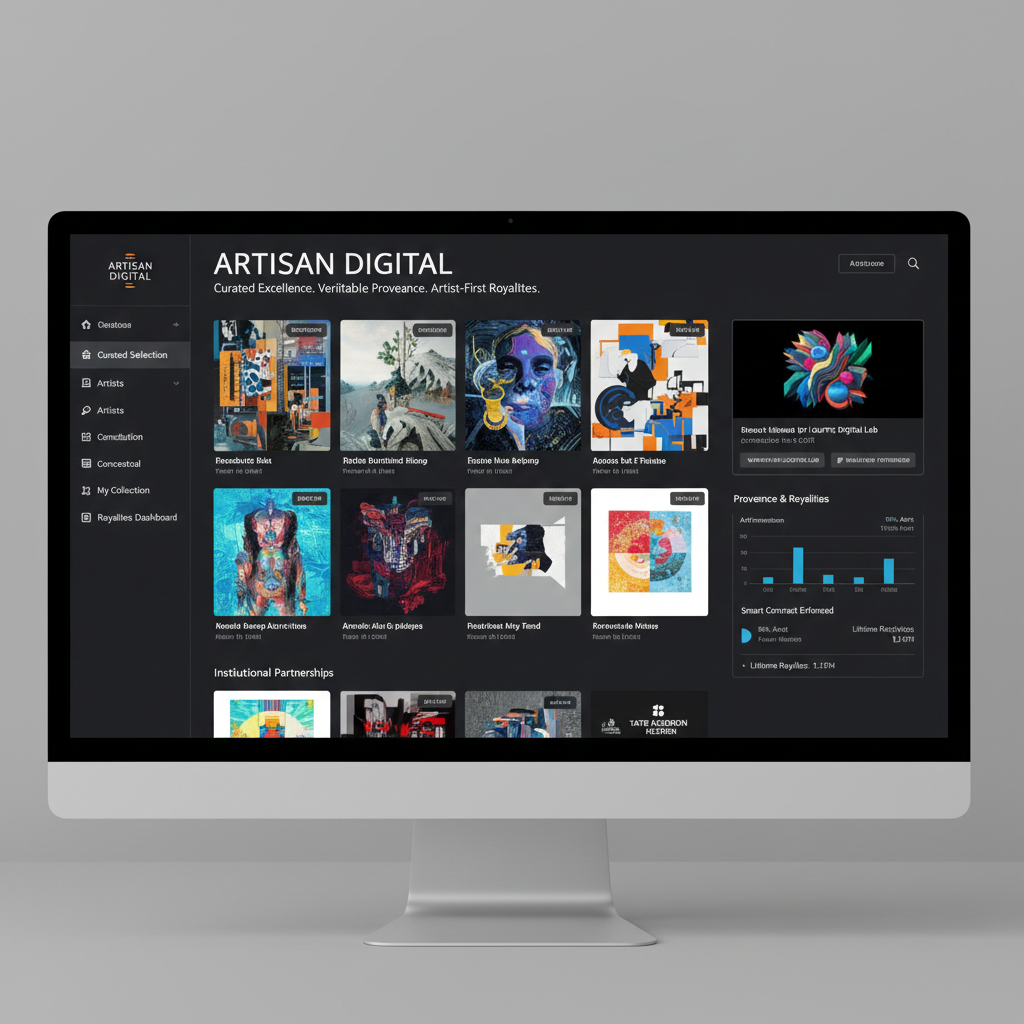
European platforms increasingly implement curated or permissioned models requiring artist application, portfolio review, and approval before minting capability. This reintroduces gatekeeping that crypto culture rejects, but European institutions argue curation serves collectors by ensuring reasonable quality standards, protects legitimate artists by preventing plagiarism, and maintains platform reputation enabling higher prices for included artists. The curated approach resembles traditional gallery representation—selective inclusion signals quality, collectors trust curators to filter adequately, and artists benefit from association with respected platforms.
Critics note obvious problems: curation can perpetuate existing biases, exclude innovative work challenging conventional aesthetics, and concentrate power in curator hands determining whose work reaches audiences. European defenders counter that curation merely makes selection criteria explicit rather than pretending algorithm or market provides neutral discovery, that quality standards ultimately serve everyone better than anything-goes flooding, and that multiple platforms with different curatorial approaches can coexist providing diverse pathways without requiring every platform to accept every creator.
The practical difference manifests in platform aesthetics and collector experience. Visiting permissionless platform confronts collectors with overwhelming quantity requiring extensive filtering to find quality work amid derivative copies, obvious plagiarism, and genuinely amateur creation. Curated platforms present smaller selections where each work meets minimum standards, enabling focused browsing and confident purchasing. For collectors building serious digital art collections, curated platforms increasingly provide better experience despite smaller selection—quality over quantity, thoughtful curation over algorithmic feeds.
Integration with Traditional Art Market Infrastructure
European blockchain platforms also distinguish themselves through active integration with established art market infrastructure rather than positioning as replacement for traditional galleries and auction houses. This manifests through several practical approaches.
First, European platforms partner with established galleries enabling digital artists to maintain traditional representation while also selling blockchain work directly. The model treats blockchain as distribution channel and authentication tool rather than complete replacement for gallery-artist relationships. Galleries provide curatorial context, physical exhibition opportunities, collector relationship development, and career guidance while blockchain enables direct sales, automatic royalty enforcement, and global accessibility. Artists aren't forced to choose between traditional representation and direct blockchain sales—they can pursue both strategies serving different purposes.
Second, European blockchain platforms increasingly appear at traditional art fairs including Art Basel, FIAC (now Art Basel Paris), and regional European art fairs. Rather than organizing separate blockchain-specific events emphasizing technological distinction, European digital artists show alongside traditional media artists with blockchain functioning as medium choice rather than identity. This normalization treats digital art as legitimate contemporary art category rather than special subcategory requiring separate venues and different evaluation standards.
Third, European auction houses including Sotheby's and Christie's European operations actively integrate blockchain art into regular contemporary art sales rather than segregating into "NFT sales" that reinforce separateness. When blockchain work appears in standard contemporary auction alongside painting and sculpture, it signals medium parity rather than special status. The integration also brings traditional auction house expertise in provenance research, condition reporting (adapted for digital works), and buyer protections to blockchain art sales, raising standards beyond what crypto-native platforms typically provide.
This integrationist approach reflects European institutional confidence that traditional art world possesses valuable expertise applicable to digital media rather than representing obsolete gatekeeping requiring disruption. The question becomes not whether galleries and museums should exist but how they can best serve artists and collectors working across expanding range of media including blockchain-authenticated digital work.
NFT Paris 2026 Programming: What Distinguishes European Digital Art Discourse
NFT Paris 2026's programming reveals European priorities through session topics, speaker selection, and discussion frameworks emphasizing artist rights, cultural institutions, regulatory compliance, and artistic merit over trading strategies, speculation opportunities, and technological novelty.
Artist Rights and Compensation Focus
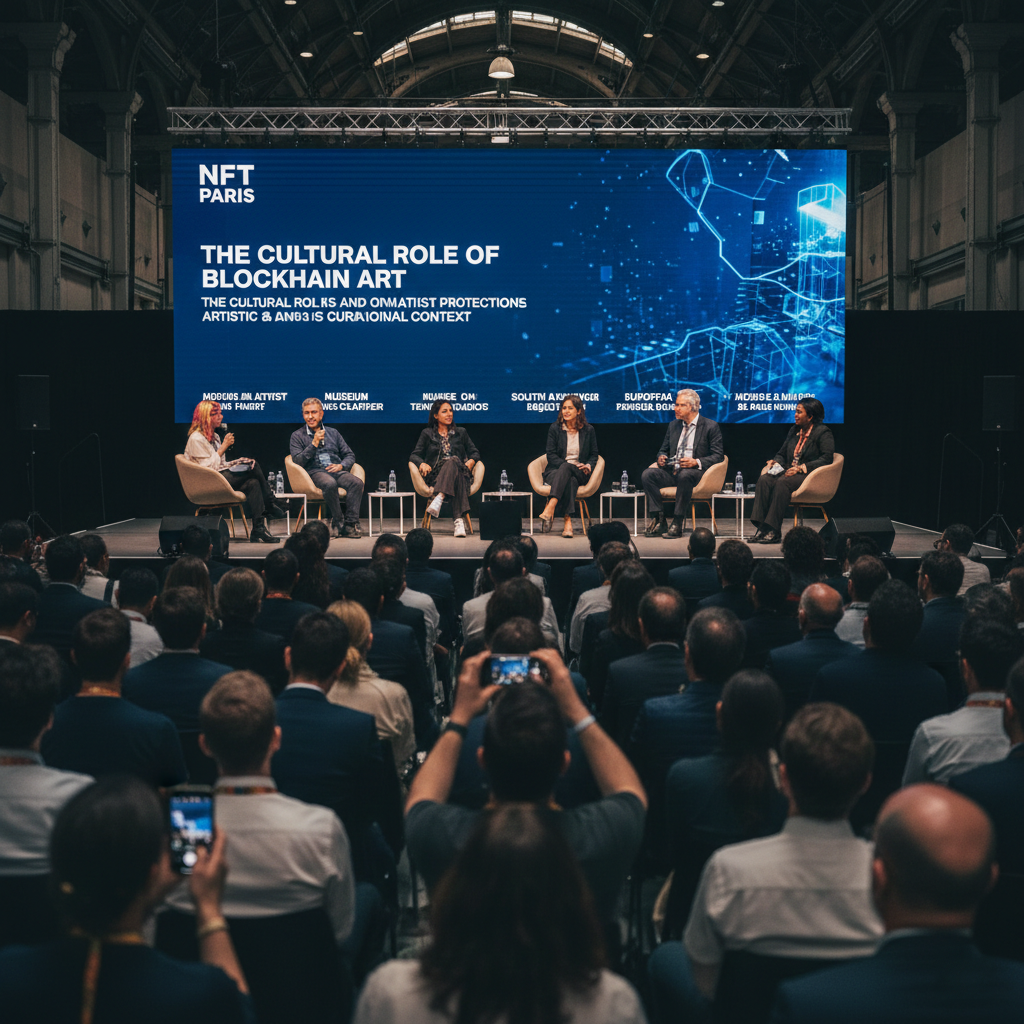
Multiple NFT Paris sessions address artist compensation mechanisms, royalty enforcement debates, and contractual protections ensuring creators retain control over their work. These discussions feature artists alongside lawyers, platform developers, and gallery directors examining practical questions: What contractual language best protects artist interests when selling digital work? How can smart contracts enforce complex licensing terms beyond simple ownership transfer? What happens when platforms fail or abandon royalty enforcement—what legal recourse do artists possess? How do European artist rights traditions translate to blockchain context?
The conversations assume artist welfare matters fundamentally, technology should serve creative production rather than vice versa, and market efficiency doesn't automatically trump artist protection. This contrasts with American blockchain conferences often focusing on trader perspectives—how to identify undervalued projects, when to sell for profit, which platforms offer best liquidity. NFT Paris centers artist voice, treating creators as primary stakeholders whose needs should drive platform design and market structure.
Sessions also address practical artist challenges including income volatility when relying on direct sales without gallery support, mental health impacts of constant social media presence required for direct audience building, and decision frameworks for when traditional gallery representation serves artists better than complete independence despite blockchain enabling disintermediation. The nuanced discussions acknowledge that technology creating possibility of cutting out intermediaries doesn't automatically mean artists should do so—galleries provide real value through curation, collector relationships, career development, and financial stability that pure direct-to-collector models can't always replicate.
Cultural Institution Integration Sessions
NFT Paris dedicates substantial programming to how museums, cultural foundations, and public art institutions can thoughtfully engage digital art. Centre Pompidou curators discuss acquisition criteria for blockchain work, conservation challenges preserving digital art long-term, and educational programming helping public understand new media. Palais de Tokyo presents case studies of successful digital art commissions, examining what makes blockchain artwork succeed as art rather than merely technical demonstration.
These sessions treat institutional engagement seriously rather than dismissively. The discussion isn't whether institutions should engage digital art but how to do so maintaining curatorial standards, conservation ethics, and public education missions. Conservators explain technical challenges ensuring digital artworks remain accessible decades hence when current platforms and file formats may be obsolete. Educators discuss interpretation strategies helping museum visitors appreciate digital work without requiring technical expertise. Legal specialists address acquisition contracts ensuring museums actually own purchased digital work in perpetuity including all necessary rights for preservation and exhibition.
The institutional presence also brings critical perspective often missing from crypto-native events. Museum professionals ask hard questions about digital art's cultural significance, curatorial frameworks distinguishing meaningful work from technical gimmicks, and whether blockchain aspects genuinely enhance artistic expression or merely add fashionable complexity. This critical engagement serves artists by providing honest feedback and collectors by applying rigorous evaluation standards.
Regulatory Compliance and Legal Frameworks
Unlike American blockchain conferences where regulatory sessions often feature adversarial framing (government versus innovation, compliance as burden), NFT Paris treats regulation as necessary market foundation. Sessions explain MiCA requirements for platforms operating in Europe, discuss how existing art market regulations apply to digital work, and examine cross-border legal questions when European artists sell to American collectors or vice versa.
Lawyers, platform compliance officers, and regulatory officials present together, framing relationship as collaborative rather than antagonistic. The assumption holds that clear rules benefit everyone by reducing uncertainty, preventing fraud, and enabling legitimate commerce. Sessions provide practical compliance guidance for artists selling work internationally, galleries representing digital artists, and platforms facilitating transactions across jurisdictions with different regulatory frameworks.
The regulatory sessions also address tax implications—how digital art sales should be reported, whether cryptocurrency payments create additional tax complications, and how different European countries treat blockchain art for tax purposes. These practical considerations matter enormously for professional artists deriving significant income from digital work but often receive little attention at American blockchain events emphasizing speculation over sustainable artistic careers.
Artistic Merit and Critical Evaluation
Perhaps most distinctive NFT Paris characteristic involves sustained attention to artistic merit questions often sidelined at technology-focused blockchain conferences. Panel discussions feature art critics, curators, and historians examining what makes digital art succeed artistically, how to evaluate blockchain work using critical frameworks beyond price or technical novelty, and whether medium-specific aesthetics apply to digital creation.
These conversations acknowledge that blockchain technology's presence doesn't automatically grant artistic value, that critical evaluation remains necessary distinguishing meaningful work from mediocre execution regardless of medium, and that collectors building serious collections need frameworks for quality assessment beyond market hype. Critics discuss specific digital artworks analyzing composition, conceptual depth, technical execution, cultural engagement, and aesthetic innovation using same analytical tools applied to any contemporary art.
The sessions also examine medium-specific questions: Does blockchain art develop distinctive aesthetics emerging from technology, or does it primarily translate existing artistic approaches to new substrate? When does work's blockchain aspect enhance artistic meaning rather than merely providing authentication? How might digital creation enable artistic possibilities impossible in physical media? These questions treat blockchain art seriously enough to apply rigorous critical standards rather than celebrating all digital work indiscriminately because it employs fashionable technology.
Collecting Digital Art: European vs American Platform Considerations
For collectors building digital art collections, understanding geographic and philosophical differences between platforms enables more informed decisions about where to acquire work, which ecosystems to engage, and what values different platforms prioritize.
Platform Philosophy and Long-Term Viability
When evaluating blockchain art platforms, collectors should examine underlying philosophy and business model assessing long-term sustainability. Platforms optimizing purely for trading volume face different incentives than platforms emphasizing artist welfare and curatorial quality. High-volume platforms need continuous new projects and speculative trading to generate fee revenue. This creates pressure toward permissionless minting attracting maximum creators regardless of quality, minimal friction to trading including optional royalties, and emphasis on price action over artistic merit.
Artist-centric European platforms accepting lower trading volume to maintain quality standards and enforce royalties face different economic challenges—they need revenue sources beyond transaction fees and must convince enough serious collectors that curation and artist protection justify potentially higher prices and lower liquidity. But their interests align better with collectors building long-term holdings rather than speculative trading. These platforms succeed when artwork appreciates culturally and financially over years, when artist careers develop sustainably, and when collectors trust platform to maintain standards.
Collectors should examine platform operational history, financial stability, governance structure, and incentive alignment. Platforms with substantial institutional backing, diversified revenue including grants or strategic funding beyond fees, and governance involving artist and collector representation alongside investors may demonstrate more sustainable commitment to art rather than speculative trading. Track record enforcing royalties even when technically avoidable, maintaining curatorial standards despite pressure to maximize volume, and supporting artist career development beyond initial sales indicates values alignment with serious collecting rather than pure speculation.
Legal and Tax Considerations
European regulatory clarity provides collectors certain protections and requirements absent from unregulated American platforms. MiCA-compliant platforms must verify seller identity, maintain transparent transaction records, provide clear ownership terms, and implement consumer protection measures. This creates legal clarity about what collectors actually own, what rights accompany purchases, and what recourse exists if platforms fail or artworks become inaccessible.
However, compliance also means platforms collect more collector information including identity verification for large purchases, transaction reporting to tax authorities, and potentially geographic restrictions on which collectors can access which platforms. American collectors purchasing from European platforms may face additional compliance requirements, cross-border transaction reporting, and questions about how US tax law treats blockchain art purchases made through European platforms subject to EU regulation.
Tax treatment of digital art purchases particularly matters for serious collectors. Are blockchain art purchases treated as art (potentially qualifying for reduced capital gains rates in some jurisdictions) or as cryptocurrency transactions subject to different tax treatment? When collectors purchase using cryptocurrency rather than fiat currency, does that create additional tax events? How should collectors document basis, track appreciation, and report sales for tax purposes? European platforms subject to MiCA generally provide clearer documentation and transaction records facilitating tax compliance, while some American platforms offer minimal documentation complicating accurate tax reporting.
Collectors should consult tax professionals familiar with both art taxation and cryptocurrency rules in their jurisdictions before making significant digital art purchases, understand documentation requirements for substantiating cost basis and ownership, and maintain comprehensive records of all transactions including platform fees, cryptocurrency conversion rates at purchase time, and clear provenance documentation.
Curatorial Support and Discovery Tools
Practical collecting experience varies significantly between permissionless platforms requiring collectors to filter enormous volume themselves and curated platforms providing editorial guidance. Permissionless platforms offer maximum artist diversity and potential discovery of unknown talents but demand substantial collector time and expertise evaluating work quality. Serious collectors may need to review hundreds or thousands of pieces to identify quality work worth acquiring.
Curated European platforms reduce this burden through professional curation, editorial features highlighting significant work, and artist verification ensuring legitimate creators rather than plagiarism or art theft. The curated approach resembles working with trusted gallery director who pre-filters based on quality standards, provides context and interpretation, and facilitates relationships with artists. Collectors save time while potentially missing some discoveries that curated selection excludes.
Platform discovery tools also matter enormously. Do platforms provide robust filtering by artistic style, medium approach, conceptual framework, price range, and artist background? Can collectors save searches, create watching lists, and receive notifications when artists they follow release new work? Do platforms facilitate direct artist-collector communication? These practical features significantly impact collecting experience and affect which platforms serve serious collectors versus casual browsers.
Some European platforms also provide additional collector services including condition reporting for digital works (assessing file quality, checking for errors, verifying authenticity), provenance research when work changes hands, conservation guidance for long-term digital file preservation, and exhibition support if collectors want to display acquired work publicly or share with institutions. These value-added services distinguish platforms serving serious collectors from those optimizing for trading volume.
The Collector's Perspective: What European Approach Offers
Understanding European blockchain art culture's distinctive characteristics enables collectors to make informed decisions about which ecosystems to engage, what values different platforms represent, and how geographic differences in digital art philosophy affect collecting practice.
Artist Relationships and Long-Term Career Support
European platforms emphasizing artist welfare over trading volume create different collector-artist relationship possibilities than speculation-focused ecosystems. When platforms enforce royalties, collectors know their purchases continue benefiting artists through secondary market activity. This enables collectors to view purchases partly as ongoing artist support—buying work from emerging creator provides both initial sale revenue and potential long-term royalty income if work appreciates and resells.
The relationship dynamic shifts from purely transactional (collector acquires asset, artist receives one-time payment) toward ongoing connection where collector success through appreciation directly benefits artist through royalties. This aligns collector and artist interests rather than creating zero-sum dynamics where collector profit requires artist exclusion from appreciation. Some collectors appreciate this alignment as more ethical collecting practice; others view it as unwelcome cost reducing potential returns.
European platforms' integration with traditional galleries also enables collectors to engage artists through established relationship models. Rather than pure direct-to-collector sales requiring collectors to independently assess artist quality and potential, gallery representation provides curatorial validation, career development infrastructure, and collector services that many serious collectors value despite galleries adding costs through commissions. Collectors can combine gallery relationship benefits with blockchain's authentication and provenance advantages rather than choosing between incompatible systems.
Cultural Legitimacy and Institutional Recognition
For collectors concerned about digital art's cultural legitimacy and long-term value, European institutional engagement provides validation that pure crypto-native ecosystems lack. When Centre Pompidou or Tate Modern acquires blockchain artwork and presents it through same curatorial frameworks applied to established contemporary art, it signals medium legitimacy within broader art historical context. These acquisitions also provide comparable artworks establishing relative value—if museum acquires digital work by artist at certain price point, that creates reference for similar works by same artist or peers.
Institutional engagement also addresses digital art's longevity questions. Museums possess conservation expertise, commitment to preservation across generations, and resources for migrating digital files to new formats as technology evolves. Knowing that institutions are seriously addressing digital art conservation provides collectors confidence that digital acquisitions can endure comparably to physical art rather than facing obsolescence when current platforms or file formats become outdated.
The institutional presence at NFT Paris specifically—major European museums as exhibitors, programming partners, and active participants rather than skeptical observers—signals cultural establishment's acceptance of blockchain art as legitimate contemporary practice worthy of serious engagement. This cultural validation matters enormously for collectors seeking art appreciated beyond speculative cryptocurrency communities.
Regulatory Protection and Legal Clarity
European regulatory frameworks provide collectors certain protections unavailable in unregulated environments. MiCA requirements ensure collectors receive clear information about what they're purchasing, understand ownership rights, and have legal recourse if platforms make false claims or fail to deliver purchased assets. The regulations also establish standards preventing certain fraud types common in unregulated blockchain markets including wash trading artificially inflating prices, undisclosed conflicts of interest, and misleading marketing claims.
However, regulation also means compliance requirements that some collectors find burdensome including identity verification, transaction reporting, and potential geographic restrictions. American collectors particularly may face questions about whether regulatory protections applicable to European platforms extend to non-EU purchasers or whether cross-border transactions create additional complexity.
The legal clarity primarily benefits collectors treating digital art as long-term cultural holdings rather than short-term speculative trades. Knowing that ownership rights, artist attribution, and provenance meet legally enforced standards provides confidence holding work for decades. Regulatory frameworks requiring platforms to maintain records and provide documentation also facilitate estate planning, insurance coverage, and potential museum donations that become complicated without clear legal title and documented provenance.
Critical Questions: Does European Approach Actually Serve Artists and Collectors Better?
While European blockchain art culture presents itself as more artist-protective and culturally legitimate than American speculation-focused alternatives, critical examination requires asking whether philosophical commitments actually produce better outcomes for artists and collectors or merely different tradeoffs.
The Gatekeeping Problem
European platforms' emphasis on curation and quality standards reintroduces gatekeeping that blockchain technology theoretically eliminates. Curators deciding which artists merit platform inclusion wield significant power determining whose work reaches audiences. This gatekeeping can perpetuate existing biases favoring artists from particular backgrounds, aesthetic traditions, or social networks while excluding innovative work challenging conventional standards.
American permissionless platforms, despite signal-to-noise problems, genuinely enable artists without traditional credentials, gallery representation, or institutional connections to reach global audiences. The democratization rhetoric isn't entirely hollow—numerous artists have built substantial careers selling work directly through blockchain platforms after traditional art world excluded them. European curation might provide better collector experience while reducing these access opportunities for unconventional artists.
The question becomes whether gatekeeping's benefits (quality assurance, collector trust, platform reputation enabling higher prices for included artists) justify access restrictions or whether maximizing opportunity through permissionless systems serves more artists despite creating discovery challenges. Different collectors and artists reasonably reach different conclusions based on their priorities and experiences.
The Royalty Enforcement Debate
European platforms' commitment to enforcing artist royalties despite technical ability to circumvent them faces practical challenges. If collectors can purchase identical or similar work on zero-royalty platforms paying lower total cost, rational economic actors should choose cheaper options. This creates pressure where royalty-enforcing platforms either lose market share to zero-royalty alternatives or artists on enforcing platforms see lower prices because collectors factor in ongoing royalty costs when bidding.
Some argue this makes royalty enforcement economically unsustainable regardless of moral arguments supporting artist compensation. If enforcement reduces trading volume, fewer sales occur generating less total artist revenue despite higher percentage on each sale. The math becomes complicated comparing many low-royalty sales versus fewer higher-royalty sales.
European defenders counter that race-to-bottom logic shouldn't determine cultural values, that artist rights merit protection even when economically inconvenient, and that platforms can survive enforcing royalties if enough collectors value artist protection to accept costs. They also note that traditional art markets involve galleries taking 50% commissions—collectors clearly accept high transaction costs when they trust value proposition. If European platforms provide sufficient curatorial quality, artist relationships, and cultural legitimacy, collectors may willingly pay royalty costs.
The debate remains unresolved, but it illustrates how technology enabling certain possibilities (zero-royalty trading) doesn't automatically determine optimal outcomes—values, culture, and deliberate policy choices still matter shaping how technology gets implemented.
Institutional Integration vs Innovation
European blockchain art culture's emphasis on integrating with traditional institutions rather than disrupting them might preserve valuable expertise and cultural continuity but potentially limits innovation that comes from radical breaks with established practices. American crypto culture's rejection of traditional gatekeepers, while sometimes naive and destructive, has driven experimentation that institutional caution might not have permitted.
Generative art's explosion through Art Blocks platform occurred partly because project didn't wait for museum validation before releasing algorithmically-generated work to collectors worldwide. Cryptopunks became culturally significant partly through grassroots community enthusiasm rather than institutional endorsement. These innovations emerged specifically because creators and collectors didn't defer to traditional art world's judgment about what qualified as legitimate art.
European institutions' involvement in blockchain art provides cultural validation but also risk imposing conventional aesthetic and conceptual standards that exclude genuinely novel approaches. The question becomes whether blockchain art primarily extends existing artistic traditions (European view) or enables fundamentally new creative possibilities requiring different evaluation frameworks (crypto-native view). Both perspectives capture partial truth; the challenge involves integrating institutional expertise with openness to radical innovation.
Conclusion: Geographic Diversity in Digital Art Ecosystems
NFT Paris 2026 exemplifies how blockchain art culture isn't monolithic but reflects geographic differences in how societies view art, technology, commerce, and cultural heritage. European approaches emphasizing artist rights, institutional integration, regulatory clarity, and cultural continuity differ fundamentally from American crypto culture's libertarian ideology, speculation focus, institutional skepticism, and disruption rhetoric. Neither approach is simply "correct"—both involve tradeoffs between competing values, different problems and opportunities, and distinct philosophical assumptions about technology's proper role in artistic production and distribution.
For collectors, this geographic diversity creates choices about which ecosystems to engage based on personal values and collecting priorities. Collectors valuing artist welfare, cultural legitimacy, regulatory protection, and institutional validation may prefer European platforms and events like NFT Paris. Collectors prioritizing maximum liquidity, speculative opportunity, technological innovation, and anti-institutional independence may prefer American crypto-native platforms and events. Many collectors will engage both ecosystems, acquiring different types of work through different channels serving distinct purposes within broader collections.
The important recognition involves understanding that geographic differences reflect genuine philosophical divergence about how art markets should function, how technology should serve (or transform) culture, and what values merit protection versus what traditions require disruption. NFT Paris's programming, exhibitor mix, and discussion frameworks make these European values explicit—providing collectors and artists clear sense of what European blockchain art culture prioritizes and what tradeoffs it accepts pursuing those priorities.
Explore artists working across traditional and digital media at Artestial, where creativity matters more than substrate and collectors find work valuing artistic vision over technological novelty, or connect with specialists understanding both digital and physical art markets for guidance building collections reflecting personal values while navigating rapidly evolving creative landscape.
Whether European approach ultimately serves artists and collectors better than American alternatives remains contested and context-dependent. What seems clear is that blockchain technology permits multiple implementations reflecting different cultural values, that geographic diversity in digital art ecosystems creates healthy competition between approaches, and that collectors benefit from understanding philosophical differences enabling informed choices about which platforms, events, and communities align with their collecting practice and values. NFT Paris offers annual opportunity to engage European perspective seriously, compare it against alternatives, and decide what matters most in supporting artists and building meaningful collections that endure beyond current technological moment.
Frequently Asked Questions
How does NFT Paris 2026's programming and participant mix differ from American blockchain art events, and what do these differences reveal about European versus American approaches to digital art?
NFT Paris 2026 distinguishes itself through prominent presence of traditional cultural institutions (Centre Pompidou, Palais de Tokyo), extensive programming focused on artist rights and compensation rather than trading strategies, regulatory compliance sessions treated as necessary infrastructure rather than innovation barrier, and critical evaluation frameworks examining artistic merit beyond technological novelty or price performance. Major European museums participate as exhibitors and programming partners rather than skeptical observers, signaling institutional integration approach versus American crypto culture's anti-institutional positioning. Programming emphasizes artist welfare through sessions on royalty enforcement mechanisms, contractual protections, income sustainability, and mental health challenges that direct-to-collector models create. Regulatory discussions feature collaborative framing with lawyers, platform compliance officers, and officials presenting together explaining MiCA requirements and cross-border legal frameworks rather than adversarial "government versus innovation" rhetoric common at American blockchain conferences. Critical evaluation sessions include art critics, curators, and historians analyzing specific digital artworks using same analytical frameworks applied to any contemporary art—composition, conceptual depth, technical execution, cultural engagement—treating blockchain art seriously enough to apply rigorous standards. Speakers represent balanced mix of artists, technologists, gallery directors, museum curators, legal specialists, and collectors rather than predominantly crypto traders and project founders typical at American events. The participant demographics also skew more toward established art world professionals, serious collectors building cultural holdings, and artists pursuing sustainable careers versus crypto-native speculators, tech enthusiasts, and individuals primarily interested in financial returns. Venue choice of Grand Palais Éphémère—contemporary structure designed for Paris 2024 Olympics now hosting major cultural exhibitions—signals positioning blockchain art within cultural mainstream rather than tech subcategory requiring separate venues. Exhibition aesthetics emphasize viewing artwork with generous wall space for contemplation rather than screens displaying price charts, trading volume, or technical specifications. The linguistic and cultural context also matters—sessions conducted in French alongside English, European artistic references predominating, and discussions assuming familiarity with European art market traditions including droit de suite (artist resale rights) and strong institutional frameworks protecting creator interests. These differences reflect fundamental philosophical divergence: European view treats blockchain as tool potentially strengthening existing cultural values around artist protection and institutional quality standards, while American crypto culture often positions blockchain as disruptive technology requiring abandonment of traditional practices. Neither perspective is simply correct, but understanding the divergence helps collectors and artists recognize they're choosing between distinct cultural frameworks not merely different geographic event locations.
What practical advantages and disadvantages do European blockchain art platforms' emphasis on royalty enforcement and curated access create compared to American platforms offering optional royalties and permissionless minting?
European platforms enforcing mandatory royalties through smart contract design and platform policies create several advantages for artists including sustainable income streams when work appreciates and resells (10% royalty on $50,000 secondary sale generates $5,000 versus zero on platforms not enforcing creator fees), career financial stability enabling continued artistic development rather than dependence solely on initial sales, and alignment with European cultural traditions recognizing artist resale rights as fundamental rather than negotiable. Artists building long-term careers particularly benefit from royalty income providing ongoing compensation as their reputation grows and earlier work appreciates. For collectors, mandatory royalties create transparency about total ownership costs, ensure artist benefit from appreciation they contributed to creating, and establish ethical collecting practices where purchases provide sustained artist support rather than one-time extraction. However, mandatory royalties also mean higher total collector costs over time if work trades frequently, reduced liquidity versus zero-royalty platforms where traders avoid percentage payments, and potential price depression as collectors factor in future royalty costs when initially bidding. Some collectors resent royalty payments viewing them as perpetual tax on ownership, arguing that after initial purchase artists have no further claim on appreciation their work generates. The economic sustainability question remains contested—do mandatory royalties reduce trading volume enough that fewer total sales occur despite higher per-sale compensation, or do sufficient collectors value artist protection that enforcing platforms maintain viable transaction volume? Evidence remains mixed with some royalty-enforcing platforms thriving while others struggle competing against zero-royalty alternatives. Curated access similarly creates tradeoffs: platforms requiring artist application and portfolio review before permitting minting reduce market flooding with low-quality work, prevent plagiarism and art theft through identity verification, and maintain reputation enabling higher prices for included artists through selective association. Collectors benefit from curated filtering saving time evaluating quality, trusting platform standards provide minimum threshold, and experiencing focused browsing rather than overwhelming volume requiring extensive personal filtering. However, curation reintroduces gatekeeping that permissionless systems eliminate—curators determining who merits inclusion wield significant power potentially perpetuating existing biases, excluding innovative work challenging conventional aesthetics, and limiting opportunities for artists without traditional credentials or institutional connections. American permissionless platforms genuinely democratize access enabling artists without gallery representation or art world validation to reach global audiences, with numerous creators building substantial careers after traditional gatekeepers excluded them. The signal-to-noise ratio becomes severe problem for collectors requiring extensive time filtering vast quantities to identify quality work, but maximum opportunity exists for unconventional artists. Different artists and collectors reasonably prioritize these tradeoffs differently—emerging artists without credentials may prefer permissionless access despite discovery challenges, while collectors building serious holdings may value curated selection despite reduced diversity. Established artists may appreciate royalty enforcement and selective platforms enabling higher prices through reputation association, while speculative traders optimize for zero-royalty maximum-liquidity platforms regardless of artist welfare. The practical choice often involves engaging both ecosystem types for different purposes: curated European platforms for building core collection of museum-quality work, permissionless American platforms for discovering emerging talents and speculative opportunities. Understanding the philosophical differences and practical tradeoffs enables informed platform selection rather than assuming one model universally superior.
How do European Union regulations including MiCA (Markets in Crypto-Assets Regulation) affect blockchain art platforms, artists, and collectors, and do regulatory frameworks ultimately help or hinder digital art market development?
MiCA regulation taking full effect January 2025 creates comprehensive European framework for crypto assets including art NFTs, establishing clear definitions distinguishing different asset types, licensing requirements for platforms, transparency mandates, and consumer protection standards. For blockchain art platforms operating in Europe, MiCA requires verification of creator identity preventing anonymous minting, maintenance of transparent transaction records accessible for regulatory review, clear terms of service defining what purchasers own including intellectual property rights and usage permissions, consumer protection measures if platforms fail including asset recovery procedures, and compliance with anti-money laundering and know-your-customer requirements for transactions exceeding certain thresholds. These requirements impose compliance costs requiring legal consultation, technical systems for identity verification and transaction monitoring, and operational procedures documenting regulatory adherence. Smaller platforms may struggle affording compliance infrastructure, potentially consolidating market around larger well-capitalized platforms capable of meeting regulatory standards. However, MiCA also creates legal clarity that many platforms welcome after years of regulatory ambiguity—defining art NFTs primarily as artworks subject to traditional art market regulations rather than securities requiring complex financial compliance, establishing that platforms facilitating art transactions operate under clearer frameworks than general cryptocurrency exchanges, and providing consumer protections potentially attracting institutional capital currently avoiding crypto art due to legal uncertainty. For artists, MiCA creates both requirements and protections: identity verification means artists cannot mint anonymously requiring real-world identity disclosure, platforms must clearly attribute works to verified creators reducing plagiarism concerns, contractual terms must specify what intellectual property rights transfer with sales versus what artists retain, and consumer protections create recourse if platforms make false authenticity claims or fail to deliver purchased work. Tax reporting requirements also increase as platforms must report transactions to authorities creating transparent income documentation that simplifies legitimate tax compliance but reduces ability to hide income. European artists selling significant volume through blockchain platforms need proper business structure, tax accounting, and legal guidance navigating cross-border sales complexities. For collectors, MiCA provides several protections: verified creator identity reduces purchasing plagiarized or stolen work risks, transparent ownership records and clear contractual terms defining purchased rights, consumer protection measures if platforms fail or artwork becomes inaccessible, and legal recourse for false authenticity claims or fraudulent sales. However, regulations also mean collectors must provide identity verification for larger purchases, transaction reporting to tax authorities reducing privacy, and potential geographic restrictions if platforms block certain jurisdictions to simplify compliance. Cross-border complexity increases—American collectors purchasing from European MiCA-compliant platforms face questions about whether EU consumer protections apply to non-EU purchasers, how US tax law treats purchases through EU-regulated platforms, and whether additional documentation requirements exist for importing digital art across jurisdictions. The ultimate question of whether regulation helps or hinders market development depends on perspective and timeline: short-term, compliance costs burden platforms and some collectors resent privacy reductions and identity requirements; long-term, legal clarity potentially enables sustainable market growth attracting serious institutional participation currently avoiding regulatory ambiguity, consumer protections build collector confidence enabling higher prices, and anti-fraud measures reduce market manipulation that undermines long-term credibility. European regulators argue that thoughtful regulation creates healthier markets than unregulated free-for-alls where fraud, manipulation, and lack of consumer protection eventually collapse speculative bubbles. American crypto advocates counter that innovation requires regulatory forbearance, that compliance costs exclude experimentation, and that market forces solve problems better than government mandates. Evidence remains incomplete as MiCA only recently took effect, but early indicators suggest that platforms making compliance investments report increased European institutional interest, collectors appreciate legal clarity about ownership rights, and artists value identity verification reducing plagiarism concerns despite administrative burdens. The regulation also creates interesting divergence where American and European blockchain art markets develop distinct characters—American markets potentially more innovative and experimental but riskier with fewer protections, European markets more stable and institutionally legitimate but potentially less dynamic. Collectors and artists engaging both markets benefit from regulatory diversity rather than global uniformity, choosing appropriate platforms based on specific needs and risk tolerance.
What critical evaluation frameworks should collectors use to assess blockchain art's artistic merit beyond technological novelty or price performance, and how does European institutional engagement provide useful models for rigorous quality assessment?
Evaluating blockchain art's artistic merit requires critical frameworks that account for medium-specific considerations while applying fundamental art evaluation principles used across all contemporary art: conceptual depth examining whether work engages meaningful ideas or merely demonstrates technical capability, compositional and aesthetic sophistication assessing visual decisions regardless of digital or physical substrate, technical execution evaluating whether artist demonstrates mastery of chosen tools and methods, cultural engagement analyzing how work participates in broader artistic and social conversations, and art historical awareness understanding how work relates to both digital art lineage and contemporary art generally. Medium-specific blockchain considerations include examining whether blockchain aspects enhance artistic meaning or function purely as authentication mechanism—does permanent immutability, provenance transparency, programmability, or decentralized distribution contribute to work's conceptual framework, or could identical artwork exist on traditional substrate with blockchain merely providing certificate of authenticity? Generative art projects where algorithms create variations across thousands of iterations might genuinely leverage blockchain's capacity for mass distribution of related but distinct works in ways physical media can't replicate, making blockchain integral to artistic concept. Conversely, digital paintings that could be printed and sold through traditional channels with blockchain only providing authentication use technology for practical rather than conceptual purposes—not necessarily diminishing artistic value but indicating blockchain aspect isn't essential to artistic statement. European institutional engagement provides useful quality assessment models through several approaches: museums applying same curatorial rigor to blockchain art as any medium, asking whether work merits acquisition based on artistic significance not technological fashion; conservation departments examining technical quality including file format choices, resolution adequacy for intended display, code quality for generative work, and long-term preservation considerations that distinguish professionally executed digital work from amateur creation; educational programming that requires interpreters to explain artwork's significance to general audiences beyond crypto-native communities, forcing articulation of artistic value accessible to traditionally-educated art viewers; and critical reviews in mainstream art publications applying established art criticism vocabulary to blockchain work rather than technology-focused descriptions. When Centre Pompidou acquires blockchain artwork and presents curator rationale, exhibition context, and critical interpretation, it demonstrates how institutional expertise applies to digital media—curators evaluate artistic merit using frameworks developed across decades assessing contemporary art generally, conservation specialists address medium-specific preservation challenges, and educators connect work to broader cultural contexts. This institutional rigor prevents uncritical acceptance of all blockchain art simply because it employs fashionable technology while also avoiding reflexive dismissal of digital work as illegitimate. Collectors can apply similar frameworks independently: Does the artist demonstrate sustained practice and conceptual development across multiple works rather than one-off technical demonstration? Does the work engage meaningfully with digital media possibilities or merely translate traditional approaches to new substrate? How does the work relate to digital art history including earlier new media art, net art, software art, and generative art traditions predating blockchain? Does the artist articulate clear conceptual framework or rely solely on technical specs? Would the work succeed artistically if blockchain authentication were replaced with traditional documentation, or does blockchain integration fundamentally enable the artistic concept? Can the work be appreciated by viewers without technical expertise, or does understanding require specialized blockchain knowledge? Practical quality indicators collectors should examine include artist educational background and exhibition history (serious digital artists typically train in fine arts, new media programs, or computer science while developing artistic practice; exhibition history in respected digital art venues provides curator validation), technical execution quality visible in high-resolution file quality for digital paintings, code quality and documentation for generative work, thoughtful metadata and edition sizing decisions, peer recognition through awards, residencies, or institutional acquisitions, critical reception in art publications not just crypto media, and sustainable practice demonstrated through multiple works developed over time rather than single projects capitalizing on momentary hype. European institutions' critical engagement also helps collectors recognize red flags including artists with only blockchain work and no broader artistic practice, projects emphasizing technology over artistic concept, excessive edition sizes suggesting commercial rather than artistic motivation, lack of coherent artist statement or conceptual framework, and absence of any traditional art world validation suggesting work cannot meet established critical standards. The balanced assessment recognizes that blockchain art can achieve genuine artistic merit while acknowledging that much blockchain-labeled work represents commercial products, technical demonstrations, or speculative assets with minimal artistic value. Critical evaluation prevents both extremes—uncritical celebration of all digital work because it's novel and categorical dismissal of blockchain art as inherently illegitimate—enabling collectors to build digital art holdings based on artistic quality rather than technological fashion or speculative opportunity.
For collectors building serious digital art collections, what practical considerations beyond artistic merit should guide platform selection, acquisition strategy, and long-term collection management including conservation, documentation, and potential institutional placement?
Building serious digital art collection requires addressing practical considerations spanning platform selection based on long-term viability not just current convenience, acquisition strategy balancing direct artist relationships with institutional validation, conservation planning ensuring works remain accessible decades hence when current technology may be obsolete, comprehensive documentation establishing provenance and authenticity for future sales or institutional gifts, and realistic assessment of institutional placement possibilities given museums' evolving digital art acquisition practices. Platform selection should prioritize demonstrable long-term commitment to art over short-term speculation including examining platform operational history, financial stability through funding sources beyond transaction fees, governance structures involving artist and collector representation alongside investors, track record maintaining services through market cycles including the 2022 crypto crash, technical infrastructure for long-term file hosting and access, and migration plans if platform eventually ceases operations. Collectors should diversify across multiple platforms rather than concentrating holdings on single marketplace, maintain independent backups of all purchased files and associated metadata, and understand what happens to purchased work if specific platform fails—do collectors retain access to files, or does platform failure render work inaccessible? European MiCA-compliant platforms often provide clearer answers through required contingency planning and consumer protections, while some American platforms offer minimal guarantees. Acquisition strategy balancing different approaches serves collection building well: curated platform purchases provide institutional validation and quality assurance useful for collection core, direct artist acquisitions through personal relationships enable collecting emerging talents before broader recognition, and primary market purchases from galleries representing digital artists combine traditional art market infrastructure with blockchain authentication. Mixing acquisition channels creates diversified collection reflecting different discovery methods and risk profiles. Collectors should also consider edition sizing carefully—unique one-of-one works command premium prices but larger editions provide better liquidity and can be more affordable entries to desirable artists' work; very large editions (hundreds or thousands) may indicate commercial product rather than serious artistic practice. Conservation planning becomes critical as technology evolves: collectors should maintain multiple independent file backups stored across different geographic locations and storage media types, document original file formats and technical specifications enabling future migration, understand whether work includes time-based or interactive elements requiring specific software or hardware that may become obsolete, and plan for periodic file migration to contemporary formats as older formats become unsupported. Some European institutions and specialized digital art conservation services offer collection management including format migration, file integrity verification, and long-term preservation planning—collectors with significant holdings should consider professional conservation consultation. Documentation proving provenance and authenticity matters enormously for future value realization: maintaining comprehensive purchase records including original transaction blockchain addresses, platform documentation, artist communication, exhibition history, publication mentions, and any institutional loans or acquisitions establishes clear ownership chain. Collectors should document not just blockchain transaction but full context—why work was purchased, how it relates to artist's broader practice, what critical reception it received, and how collection strategy guided acquisition. This documentation enables future sales, insurance coverage requiring appraisal support, potential museum donations needing provenance verification, and estate planning for collection transfer to heirs. Insurance coverage specifically for digital art remains developing area—collectors should verify whether existing art insurance policies cover blockchain assets or whether separate coverage is required, understand valuation methodologies for digital work lacking physical object to insure, and maintain documentation supporting declared value including purchase price, comparable sales, and appraisal reports. Some European insurers now offer specific digital art coverage while American market remains less developed. Exhibition and display considerations affect collection enjoyment—collectors need proper display infrastructure including high-quality screens, appropriate viewing environments, and technical ability to present work professionally whether in home settings or public exhibitions. Some digital works require specific display specifications including screen dimensions, color calibration, frame rates, or environmental conditions that collectors must accommodate. Institutional placement possibilities increasingly exist as museums expand digital art collecting, but placement faces different considerations than physical art donations: museums need technical infrastructure to preserve and display digital work, legal clarity about ownership and usage rights, and conservation expertise managing file formats and technology dependencies that most institutions are still developing. Collectors hoping for eventual institutional placement should acquire work by artists museums already recognize, maintain impeccable provenance documentation, understand museum technical capabilities and limitations, and recognize that digital art donations may face longer evaluation processes than traditional media as institutions develop assessment frameworks. The practical reality for serious digital art collecting involves treating it comparably to traditional art collecting—conducting research, understanding market dynamics, maintaining proper documentation, planning for conservation, building relationships with artists and institutions, and approaching collection building as long-term cultural engagement rather than speculative trading. European platforms and institutions generally provide more infrastructure supporting serious collecting through regulatory clarity, conservation resources, institutional partnerships, and curatorial frameworks, while American platforms may offer more experimental work and direct artist access. Collectors benefit from engaging both ecosystems strategically, using each for purposes it serves best while maintaining comprehensive collection management practices ensuring holdings endure beyond current technological moment.
Ready to explore contemporary art across digital and physical media? Visit Artestial where artistic vision matters more than technological substrate, or connect with specialists understanding both traditional and digital art markets for guidance building collections reflecting cultural values while navigating evolving creative landscape.
Curating excellence, one insight at a time.
— AURUM Team
Disclaimer: This article provides informational commentary about NFT Paris 2026 as European blockchain art event and cultural context for educational purposes only. It does not constitute professional advice regarding blockchain technology, digital art investment, platform selection, regulatory compliance, or collection management. NFT Paris 2026 event details including dates (February 7-8, 2026), venue (Grand Palais Éphémère, Paris), estimated attendance (15,000), and programming content reflect publicly available information and organizer statements as of early 2026; specific programming, speakers, and exhibitor details subject to change. European Union regulatory references including Markets in Crypto-Assets Regulation (MiCA) effective January 2025 cite actual regulation but specific implementation details, enforcement approaches, and compliance requirements vary by jurisdiction and continue evolving; consult qualified legal professionals for regulatory guidance. Platform comparisons between European artist-centric approaches and American speculation-focused alternatives represent general philosophical differences not universal characteristics; individual platforms vary significantly within geographic categories, and some American platforms emphasize artist welfare while some European platforms prioritize trading volume. Institutional participation references (Centre Pompidou, Palais de Tokyo, Tate Modern) reflect general institutional engagement with digital art but do not confirm specific NFT Paris 2026 participation or endorsement; verify institutional involvement directly. Artist rights discussions including droit de suite (resale royalty rights) describe European legal traditions and their application to blockchain art; specific implementation varies by country, and cross-border transactions create complex jurisdictional questions requiring legal consultation. Platform philosophical comparisons (royalty enforcement, curated access, institutional integration) represent observed trends not absolute characteristics; collectors should independently verify specific platform policies before making purchase decisions. Conservation guidance regarding file backups, format migration, and long-term preservation reflects current best practices but digital art conservation remains evolving field with limited established standards; collectors with significant holdings should consult specialized digital conservation professionals. Tax treatment discussions acknowledge complexity of blockchain art taxation but do not constitute tax advice; digital art purchases particularly when made using cryptocurrency create potentially complicated tax reporting requirements varying dramatically by jurisdiction—consult qualified tax professionals familiar with both art and cryptocurrency taxation. Insurance coverage references note developing market for digital art insurance but specific policy availability, coverage terms, and valuation methodologies vary by insurer and jurisdiction; collectors should work with specialized art insurance professionals. Institutional placement discussions reflect museums' increasing digital art collecting but acknowledge that most institutions still developing technical infrastructure, conservation capabilities, and acquisition frameworks for blockchain art; collectors should not assume institutional placement possibilities equivalent to traditional media. Geographic comparisons between European and American blockchain art cultures represent general philosophical differences shaped by cultural traditions, regulatory frameworks, and institutional histories; individual experiences vary significantly, and both regions contain diverse approaches not captured by broad generalizations. No financial relationships exist between author/publication and mentioned platforms, institutions, events, artists, or service providers. Critical evaluation frameworks provided for assessing artistic merit represent one methodology among many valid approaches; collectors should develop independent judgment and consult multiple critical perspectives. Observations about NFT Paris programming, European blockchain art platforms, regulatory frameworks, and collecting practices reflect analysis as of early 2026 and may not apply to future developments or specific individual circumstances. The article's thesis that European and American blockchain art cultures reflect distinct philosophical values represents interpretive analysis, not objective fact; alternative perspectives exist viewing geographic differences as less significant than described. Blockchain art collecting involves substantial risks including technology obsolescence, platform failure, market volatility, regulatory changes, and uncertain long-term value; collectors should invest only amounts they can afford to lose and conduct thorough independent research before making acquisition decisions.