

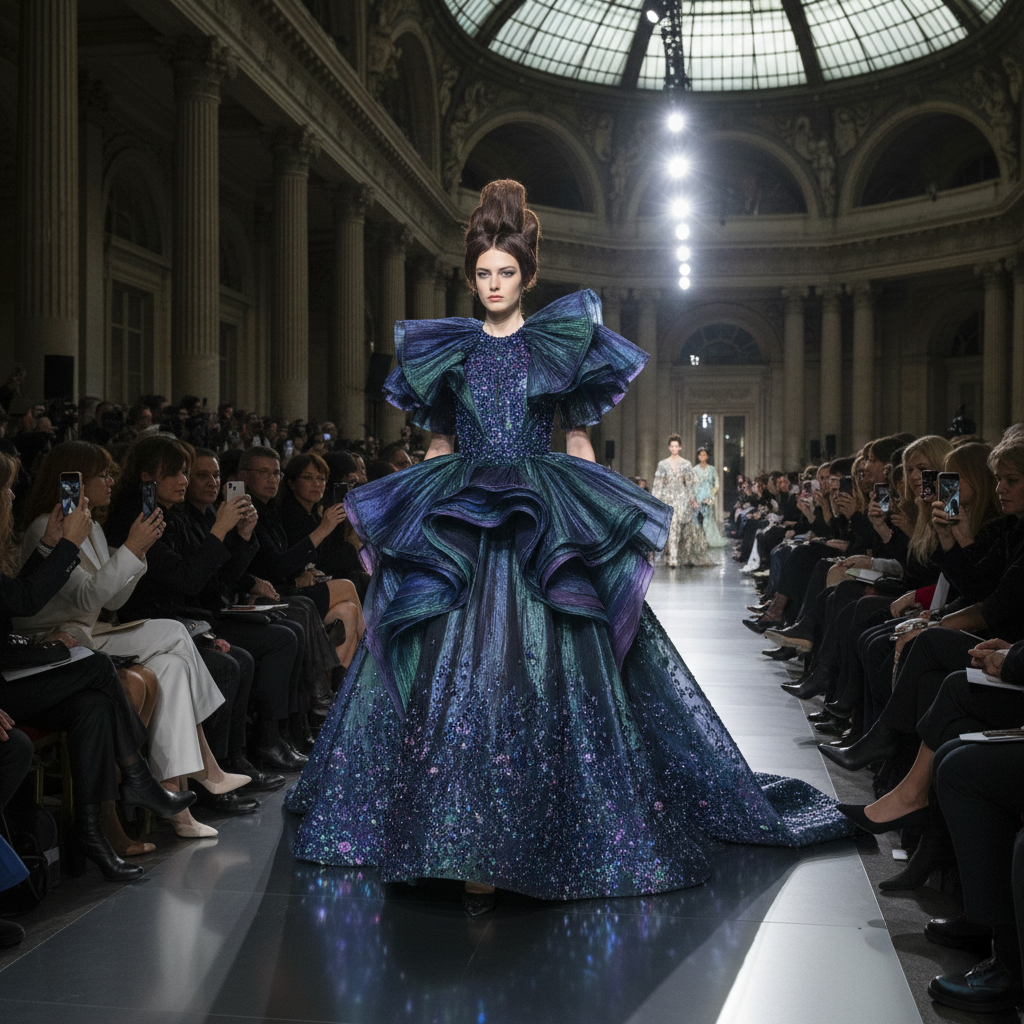
The Chanel atelier required 600 hours to complete the gown—embroidered by hand with 18,000 individual sequins, each positioned according to century-old techniques maintained by Lesage, the legendary embroidery house. The dress appeared on the runway for ninety seconds during Paris Haute Couture Week, photographed by hundreds of cameras, then disappeared backstage. Three days later, a Middle Eastern collector acquired it for €250,000, placing it alongside her contemporary art collection in climate-controlled storage. She has no intention of wearing it. "It's sculpture," she explained. "Would you wear a Giacometti?"
This collector's perspective captures haute couture's evolution from exclusive fashion into collectible art commanding investment-grade attention. Paris Haute Couture Week, scheduled for January 20-23, 2026, represents more than seasonal fashion—it's the intersection where traditional craftsmanship, contemporary artistic vision, and luxury investment converge. For sophisticated collectors who understand that exceptional artistry transcends medium, couture offers opportunities comparable to acquiring works by established contemporary artists, with similar appreciation potential and cultural significance.
Understanding haute couture's position within broader luxury collecting requires recognizing fundamental differences between couture and ready-to-wear fashion. Haute couture represents peak craftsmanship protected by strict regulations, created by approximately twenty officially designated maisons, and purchased by fewer than 4,000 clients worldwide. This exclusivity, combined with extraordinary artistry and documented provenance, creates conditions supporting secondary market appreciation similar to fine art.
What Defines Haute Couture: Beyond Fashion into Art
Haute couture maintains legal definition enforced by the Chambre Syndicale de la Haute Couture, distinguishing it from luxury ready-to-wear or designer fashion.
The Official Requirements
To claim "haute couture" designation, fashion houses must meet specific criteria: maintain Paris atelier employing minimum fifteen full-time staff, present collections of at least fifty original designs to Paris press twice annually (January and July), and create pieces custom-fitted to individual clients through multiple fittings. These requirements ensure couture remains handcrafted, custom, and exclusive rather than mass-produced luxury goods.
Currently, approximately twenty houses hold official haute couture designation—Chanel, Dior, Givenchy, Schiaparelli, Valentino, and others representing fashion's highest tier. Guest members including Iris van Herpen and Maison Margiela bring contemporary perspectives while maintaining traditional standards. This small, controlled group ensures quality consistency and maintains couture's exclusivity.
The craft requirements distinguish couture from all other fashion. Pieces involve hundreds or thousands of hours of hand work—embroidery, beading, pleating, draping, and finishing executed by specialized artisans. A single Lesage-embroidered jacket might require 400-600 hours; an elaborately beaded gown can exceed 1,000 hours. At labor rates reflecting master craftspeople's expertise, material costs for luxury fabrics, and overhead for maintaining Paris ateliers, production costs often reach €50,000-€150,000+ per piece before any profit margin.
Craftsmanship as Artistic Practice
Haute couture preserves traditional craft techniques that would otherwise disappear. Embroidery houses like Lesage (owned by Chanel), feather specialists like Lemarié, and pleating ateliers like Lognon maintain methods dating to the 18th and 19th centuries. These artisans apprentice for years, mastering techniques requiring extraordinary manual dexterity and aesthetic judgment.
The creative process mirrors fine art more than commercial fashion. Designers sketch initial concepts, create toiles (muslin prototypes) to perfect silhouettes, source exceptional materials (rare fabrics, vintage buttons, custom-dyed threads), and oversee weeks or months of construction by specialized artisans. The collaboration between designer's vision and artisan execution parallels contemporary artists working with fabricators—the concept originates with designer but realization depends on craftspeople's mastery.
Collectors increasingly recognize this artistry as comparable to sculpture or installation art. A Iris van Herpen 3D-printed dress employs technology and artistic vision similar to contemporary sculpture. A Schiaparelli surrealist-inspired piece references art history explicitly, creating fashion-as-commentary deserving serious critical attention.

Paris Couture Week: The Event and Its Economics
Paris Haute Couture Week operates on entirely different economics than ready-to-wear fashion weeks, creating unique market dynamics that sophisticated collectors understand.
The January 2026 Schedule
Paris Haute Couture Week Spring/Summer 2026 presentations occur January 20-23, featuring approximately twenty official couture houses plus guest members. Unlike ready-to-wear shows with hundreds of attendees, couture presentations remain intimate—typically 200-400 guests including private clients, fashion editors, museum curators, and select celebrities.
Shows occur at historic Paris venues emphasizing artistic rather than commercial context. Chanel presents at Grand Palais, Dior at Musée Rodin gardens (weather permitting) or dedicated Dior headquarters, smaller houses at architectural landmarks reinforcing couture's cultural positioning. These settings consciously reference art world rather than commercial fashion, establishing couture as cultural production deserving museum-level attention.
The week includes not just runway presentations but atelier visits where clients view pieces closely, examine construction details, and discuss custom commissions. These private viewings function like gallery studio visits—opportunities for collectors to engage directly with creative process and secure pieces before public awareness.
The Client Base: Who Buys Couture
Haute couture's approximately 4,000 active clients worldwide represent extraordinary wealth concentration—individuals for whom €100,000-€500,000 for single garment constitutes reasonable expenditure. Middle Eastern royalty and wealthy families comprise significant percentage, alongside Asian billionaires, American tech fortunes, and European industrial dynasties.
However, client motivations increasingly split between wearing couture and collecting it. Traditional clients purchase for actual wear at high-profile events—royal weddings, state dinners, major galas. Emerging collector-clients acquire pieces as art objects, displaying them as sculpture or archiving them as investment holdings. This collector segment treats couture identically to contemporary art—proper storage, conservation, documentation, and eventual resale through specialized channels.
The house business model reflects this reality. While couture operations typically lose money operationally (production costs exceed prices charged), they serve multiple functions: generating prestige that drives profitable ready-to-wear and accessories sales, maintaining craft traditions that inform all house production, and creating spectacular pieces that attract museum exhibitions and editorial coverage worth millions in equivalent advertising.
Investment Economics and Secondary Markets
Couture's secondary market remains less developed than fine art but shows increasing sophistication. Vintage couture by deceased designers (Yves Saint Laurent, Givenchy, Balenciaga) achieves strong auction results when provenance is excellent and condition pristine. A 1950s Dior gown with documented original client and museum-quality preservation might sell for $20,000-$80,000 at auction; exceptional pieces exceed $100,000.
Contemporary couture's investment thesis remains emerging but compelling. Limited production (each piece is unique or exists in tiny quantities), documented provenance (houses maintain detailed archives), and increasing museum interest (the Met, V&A, and major institutions actively acquire contemporary couture) create conditions supporting appreciation. Collectors acquiring significant pieces directly from houses at €150,000-€300,000 may see values reach €300,000-€600,000+ over 20-30 years if designers achieve legendary status and pieces enter museum collections.
The risk involves predicting which designers achieve art-historical importance warranting museum retrospectives and sustained collector interest. Not all contemporary couturiers become tomorrow's Balenciaga or McQueen. However, acquiring work by established masters (Karl Lagerfeld's final Chanel collections, Maria Grazia Chiuri's feminist Dior, Pierpaolo Piccioli's Valentino before his 2024 departure) offers reasonable probability of appreciation given institutional validation these designers already enjoy.
Discover contemporary art intersecting with fashion at Artestial, where collectors building comprehensive luxury portfolios find museum-quality works complementing couture, design objects, and cultural artifacts creating cohesive collections spanning artistic mediums.
The Fashion-Art Intersection: Why Collectors Care
Haute couture's increasing recognition as collectible art reflects broader trend toward medium-agnostic collecting where quality and cultural significance matter more than traditional category boundaries.
Museums Legitimize Fashion as Art
Major museums have embraced fashion through blockbuster exhibitions that attract millions of visitors—more than most contemporary art shows. The Metropolitan Museum's Costume Institute exhibitions (Alexander McQueen: Savage Beauty drew 661,000 visitors, making it the Met's eighth most visited exhibition ever) demonstrate public appetite for fashion-as-art.
This institutional validation creates collecting opportunities similar to contemporary art's institutional endorsement accelerating artist careers. When the Met acquires designer's work for permanent collection, that validation supports secondary market appreciation just as MoMA acquisition benefits artists. Collectors who acquire museum-quality couture before institutional recognition can position ahead of price increases following major exhibitions or retrospectives.
European institutions—the V&A in London, Musée des Arts Décoratifs in Paris, Fashion Museum Bath—have collected fashion seriously for decades. American institutions increasingly follow, with dedicated fashion and textile departments actively acquiring contemporary work. This institutional infrastructure supports couture collecting by providing authentication expertise, conservation services, and eventual exhibition opportunities lending prestige to private collections.
Designers as Artists: The Auteur Theory
Contemporary couture increasingly positions designers as artistic auteurs whose work deserves critical analysis comparable to contemporary artists. Iris van Herpen explicitly references sculpture, architecture, and biological forms in collections that push material boundaries through technology. Demna's Balenciaga couture revival (after decades of absence) brought conceptual art sensibility to traditional craft.
This auteur positioning matters for collecting. When designer's work exhibits consistent artistic vision, explores meaningful themes, and demonstrates formal innovation, it merits consideration alongside contemporary art. Collectors who appreciate conceptual rigor in artists like Olafur Eliasson or Anish Kapoor can find comparable intellectual engagement in van Herpen's biomimetic dresses or Schiaparelli's surrealist homages.
The market increasingly recognizes this equivalence. Christie's and Sotheby's dedicated fashion sales achieve results comparable to contemporary art—major pieces by collectible designers reach six figures, and rare historic items exceed $1 million. This auction infrastructure provides liquidity and price discovery that supports serious collecting.
Wearable Versus Display: The Collector's Dilemma
Couture collectors face unique consideration: wearability versus preservation. Wearing couture risks damage that destroys investment value and cultural significance. Museum conservators universally recommend against wearing textiles intended for collection—each wear event introduces oils, perspiration, stress to seams, and potential catastrophic damage from spills or tears.
Sophisticated collectors increasingly treat couture as display-only art. They commission custom mannequins matching their dimensions, display pieces in climate-controlled spaces with proper lighting (UV-filtered, low intensity), and document pieces photographically before storage in acid-free materials. This approach maintains museum-quality condition supporting long-term value and potential institutional loans or sales.
Some collectors compromise—commission duplicate pieces in less precious materials for actual wear while preserving runway or exhibition version as art object. Houses accommodate this for additional fees, creating wearable interpretation of museum piece. This strategy satisfies desire for couture experience while protecting investment.

Collecting Strategies: How to Approach Couture
For collectors considering haute couture as investment alongside contemporary art, several strategies optimize returns while providing cultural engagement.
Focus on Established Houses with Archival Infrastructure
Houses with strong archival departments, detailed records, and institutional relationships provide best foundation for collecting. Chanel maintains extraordinary archives documenting every piece; Dior's heritage department catalogs all couture meticulously. This documentation proves essential for authentication and provenance when selling or donating pieces.
Emerging designers or guest couture members may create spectacular work but lack institutional infrastructure supporting long-term value. Without proper documentation, authentication becomes difficult and institutional acquisition unlikely. Established houses' bureaucratic systems feel constraining during purchase but protect value over decades.
Target Pieces with Exhibition or Editorial Significance
Not all couture pieces merit collecting—houses produce fifty+ designs per season, many derivative or less significant. Focus on pieces that appeared in major editorial features, received extensive coverage, or represent significant departures or innovations within designer's work. These pieces have documented cultural impact supporting future museum interest.
Runway finale pieces often prove most collectible—designers save most spectacular creations for show finale, ensuring maximum editorial impact. These pieces typically require greatest craftsmanship investment and best represent designer's vision for that collection. They also photograph most extensively, creating documentation that supports future authentication.
Pieces worn by major celebrities at significant events (Met Gala, Oscars, royal occasions) gain provenance premium similar to art with prestigious exhibition history. However, celebrity wear creates preservation challenges—ensure thorough condition assessment if acquiring previously worn pieces.
Budget Appropriately for Acquisition and Ownership
Couture acquisition costs start around €30,000-€50,000 for simpler pieces from guest members, reaching €100,000-€300,000+ for elaborate creations from major houses. Budget for total cost including fittings (if purchasing for actual wear), shipping from Paris, import duties (can be substantial), and initial conservation assessment.
Ongoing ownership costs mirror art collecting. Climate-controlled storage (60-65°F, 50% humidity, dark) costs $100-300 monthly for space accommodating several pieces. Conservation monitoring every 2-3 years costs $200-500 per piece. Insurance runs 1-2% of value annually. Custom mannequins for display cost $500-2,000 each. Budget these costs alongside acquisition prices.
Resale requires specialized auction houses (Kerry Taylor Auctions, William Doyle, Christie's/Sotheby's fashion departments) charging 20-25% commission. Private sales through fashion dealers or advisors charge 10-15%. Factor these costs into return calculations—unlike art's standard 10-15% gallery commission, fashion's sales costs run higher.
Consider Fashion Photography as Accessible Alternative
For collectors unable or unwilling to invest €100,000+ in couture, fashion photography offers accessible entry to fashion-art intersection. Prints by major fashion photographers (Irving Penn, Richard Avedon, Helmut Newton, contemporary masters like Steven Meisel or Tim Walker) cost $5,000-$50,000 for limited editions while offering similar cultural engagement with fashion's artistic dimension.
Photography provides easier storage (standard art storage rather than specialized textile conservation), simpler authentication (prints carry clear edition numbers and gallery documentation), more liquid secondary markets (established photography auction infrastructure), and museum acquisition possibilities (photography departments actively collect fashion work).
Many sophisticated collectors build comprehensive fashion-art collections combining couture pieces, fashion photography, designer sketches, and textile samples—creating museum-style documentation of fashion's artistic evolution across mediums.

Paris Couture Week 2026: What to Watch
January 2026 presentations offer specific collecting opportunities worth noting.
Designers Reaching Career Milestones
Several designers present collections marking significant career moments potentially elevating collectibility. Maria Grazia Chiuri's eighth year at Dior solidifies her tenure and artistic vision—pieces from this period may gain importance as definitive examples of her interpretation. Valentino's Alessandro Michele (if confirmed in role following Pierpaolo Piccioli's departure) debuts his vision, creating potential historic significance similar to first collections by legendary creative directors.
Technology and Traditional Craft Fusion
Iris van Herpen continues pushing boundaries between traditional craft and cutting-edge technology—3D-printed textiles, laser-cut fabrics, biomimetic structures. Her work represents clearest intersection between fashion and contemporary art, attracting museum interest and collector attention from both fashion and art worlds. Pieces from her couture presentations often become museum acquisitions within years.
Sustainability and Ethical Luxury Narratives
Increasing emphasis on sustainable luxury and ethical production creates new collecting criteria. Houses demonstrating genuine commitment to preserving traditional craft, supporting artisan communities, and using responsibly sourced materials may gain preference from collectors whose values align with environmental consciousness. This narrative dimension adds cultural significance beyond pure aesthetics.
Conclusion: Fashion's Place in Luxury Portfolios
Paris Haute Couture Week 2026 represents far more than seasonal fashion—it showcases artistic production deserving serious collecting consideration. For sophisticated collectors building comprehensive luxury portfolios spanning contemporary art, design, and cultural artifacts, haute couture offers unique combination of extraordinary craftsmanship, limited availability, institutional recognition, and appreciation potential.
The Middle Eastern collector who treats her €250,000 Chanel gown as sculpture rather than clothing understands fundamental truth: exceptional artistry merits recognition regardless of medium. Whether displayed on gallery walls or custom mannequins, whether created with paint or embroidery thread, whether authored by contemporary artists or couture designers, museum-quality work deserves museum-quality collecting treatment.
Explore Artestial's collections where fashion-art intersection meets contemporary practice, or connect with our specialists for guidance building collections that span traditional boundaries between art, fashion, design, and cultural production.
As collecting evolves beyond rigid category definitions toward comprehensive appreciation of excellence, haute couture's position as collectible art becomes increasingly clear. The pieces debuting during Paris Couture Week 2026 aren't merely expensive clothing—they're cultural artifacts documenting our era's artistic production, craft traditions, and aesthetic values for future generations. Collecting them offers both cultural engagement and investment opportunity for those willing to approach fashion with the same seriousness they apply to contemporary art.
Frequently Asked Questions
Is haute couture actually a good investment compared to contemporary art?
Haute couture offers different risk-return profile than contemporary art. Advantages include: extreme scarcity (each piece unique or near-unique), documented provenance (houses maintain detailed archives), increasing museum interest (major institutions actively acquire), and entry points from €30,000-€300,000 accessible versus blue-chip art requiring millions. Disadvantages include: less developed secondary market (fewer auction houses, smaller buyer pool), conservation challenges (textiles deteriorate faster than canvas/sculpture), uncertainty about which designers achieve lasting importance, and higher transaction costs (20-25% auction commissions versus 10-15% for art). Best approach: treat couture as portfolio diversification within broader luxury collecting rather than core investment. Allocate 5-10% of art budget to exceptional couture pieces by established designers with strong institutional validation. Focus on runway finale pieces, celebrity-worn items, or works with exhibition history. Expect 10-20 year holding periods and appreciation of 50-150% for well-selected pieces.
How do I authenticate and verify the value of haute couture pieces?
Authentication for couture from official houses is relatively straightforward compared to art. Houses maintain detailed archives documenting every piece created, including photos, technical drawings, and client records. Request authentication letter from house's heritage or archive department—they'll verify piece against records and provide documentation including collection season, runway appearance, materials used, and artisan credits. For vintage couture, work with specialized dealers (1stDibs Fashion, Kerry Taylor Auctions) who examine construction details, labels, and historical records. Red flags include: houses claiming they "don't authenticate" (all major houses have archive departments), pieces with removed or altered labels, suspiciously low prices (real couture costs €30,000-€300,000+ new), and sellers unable to provide acquisition documentation. For valuation, consult auction house specialists (Christie's/Sotheby's fashion departments) who provide free estimates for potential consignments. Insurance appraisals cost $300-800 per piece from qualified fashion appraisers.
Can I actually wear haute couture pieces or must they stay in storage?
You legally own couture and can wear it, but wearing significantly impacts value and preservation. Each wear introduces oils, perspiration, stress to delicate fabrics and construction, and risk of catastrophic damage from spills or tears. Museum conservation standards recommend against wearing textiles intended for collection. If you must wear pieces, follow conservation protocols: professional cleaning immediately after each wear (never standard dry cleaning—only textile conservators experienced with couture), climate-controlled storage between wears, documentation of each wear event (for future sale disclosure), and comprehensive insurance covering wear-related damage. Better approach: commission duplicate pieces in less precious materials for actual wear while preserving original as display-only art object. Many houses accommodate this for additional fees (typically 40-60% of original price). This strategy satisfies desire for couture experience while protecting investment value. If collecting purely for appreciation, never wear pieces—treat them identically to museum textiles with professional conservation and climate-controlled storage.
What are ongoing costs of maintaining a haute couture collection?
Budget approximately 3-5% of collection value annually for proper maintenance. Specific costs: climate-controlled storage (60-65°F, 50% humidity, dark, pest-controlled) runs $100-300 monthly for space accommodating 5-10 pieces; professional conservation monitoring every 2-3 years costs $200-500 per piece for condition assessment and minor treatment; insurance (specialized fine art/textile policies, not homeowners coverage) costs 1-2% of value annually; custom mannequins for display run $500-2,000 each; museum-quality storage materials (acid-free tissue, archival boxes) cost $50-150 per piece; and periodic professional photography for documentation costs $300-500 per session. For a collection valued at $500,000 (roughly 3-5 significant pieces), budget $15,000-$25,000 annually. These costs seem high but protect value—improper storage can destroy pieces worth hundreds of thousands through textile degradation, pest damage, or environmental exposure. Consider maintenance costs before acquiring expensive pieces you cannot properly preserve.
Which designers or houses offer best collecting opportunities for 2026?
Focus on established houses with strong institutional validation and archive departments: Chanel (Karl Lagerfeld's final seasons and current creative direction maintain collectibility), Dior (Maria Grazia Chiuri's feminist vision attracts museum interest), Schiaparelli (Daniel Roseberry's surrealist revival generates critical attention), and Valentino (transition period following Piccioli departure may create collectible milestones). For contemporary innovation: Iris van Herpen (technology-craft fusion most clearly bridges fashion-art divide, strong museum acquisition track record), Maison Margiela (conceptual approach appeals to art collectors), and established guest members with consistent artistic vision. Avoid: houses with frequent creative director changes (inconsistent artistic vision), new designers without institutional validation, and pieces from houses with weak archival infrastructure. Prioritize finale runway pieces, celebrity-worn items for major events, pieces receiving significant editorial coverage, and works representing clear departures or innovations within designer's oeuvre. Budget minimum €50,000-€100,000 for pieces likely to appreciate meaningfully over 10-20 year timeframe.
Ready to explore fashion-art intersection? Visit Artestial's curated collections where contemporary art meets design excellence, or connect with our luxury collecting specialists for guidance building comprehensive portfolios spanning art, fashion, and cultural production.
Curating excellence, one insight at a time.
— AURUM Team
Disclaimer: This article is for informational purposes only and does not constitute financial, investment, or fashion collecting advice. Haute couture investment carries significant risks including illiquidity, conservation challenges, authentication difficulties, uncertain appreciation, and high transaction costs. Fashion markets are less established than fine art markets with fewer institutional buyers and more volatile pricing. Designer reputations fluctuate unpredictably affecting values. Textile conservation requires specialized expertise and improper storage destroys value. Wearing pieces diminishes investment value significantly. Cost estimates vary based on houses, designers, and specific pieces. Museum acquisition possibilities depend on institutional priorities, curatorial judgment, and donation opportunities that cannot be predicted. Secondary market infrastructure remains developing with limited auction houses and dealer networks. Consult qualified fashion advisors, textile conservators, appraisers, and financial professionals before making significant couture acquisitions. Observations reflect conditions as of 2026 and may not apply to specific situations or future circumstances.