

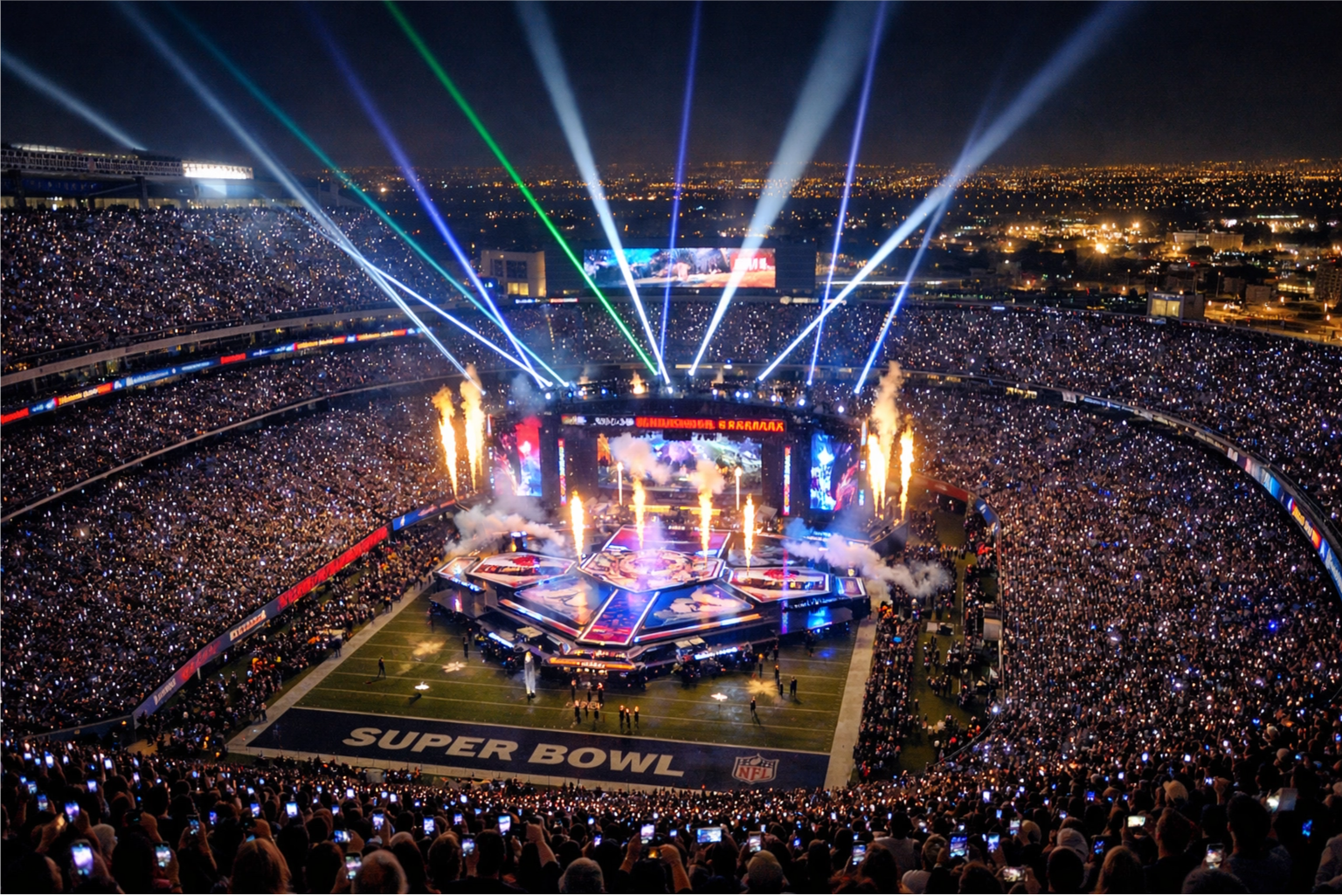
The collector watching Super Bowl LIX unfold at New Orleans' Caesars Superdome on February 9, 2025 (airing on Fox with broadcast beginning 6:30 PM EST) understood what casual viewers celebrating touchdowns and eating buffalo wings might miss: the Super Bowl represents American culture's most elaborate annual fusion of sports competition, performance art, commercial advertising as creative expression, architectural spectacle, and luxury brand positioning. For three and a half hours, more people focus simultaneously on a single curated experience than any other planned event in contemporary culture. That concentrated attention creates unique opportunities for artistic statements, brand narratives, and cultural moments that ripple through society for weeks afterward.
This isn't merely sports entertainment or advertising excess (though both elements certainly exist). The most sophisticated luxury brands approach Super Bowl presence as brand building rather than direct sales—establishing associations, crafting narratives, creating cultural capital that pays dividends for years. Rolex doesn't expect viewers to immediately purchase $15,000 Submariners after seeing thirty-second spots; they're reinforcing positioning as timepiece of champions, instrument of excellence, symbol of achievement. Louis Vuitton's Super Bowl advertising (when they choose to participate) never shows handbags directly; instead, they present cinematic mini-films about craft, journey, legacy—messages resonating with collectors who understand luxury as cultural participation rather than mere consumption.
The halftime show particularly exemplifies performance art at massive scale. When an artist—typically a globally recognized musician at career peak—accepts the NFL's invitation to perform, they're not paid performance fees (NFL covers production costs but artist performs free). Why? The platform itself constitutes compensation. Halftime shows routinely generate 20-30% streaming increases for featured artists' catalogs, establish cultural narratives defining careers, and create visual moments that become permanent parts of popular memory. Prince's 2007 halftime performance in pouring rain ("Purple Rain" performed during actual downpour became instant legend), Beyoncé's 2013 Destiny's Child reunion, or Lady Gaga's 2017 rooftop entrance and athletic choreography represent more than entertainment—they're cultural production operating at intersection of visual spectacle, musical performance, athletic choreography, technological innovation, and mass audience participation that traditional art spaces simply cannot replicate.
As we examine Super Bowl LIX through collector's lens, understanding requires moving beyond surface spectacle to analyze how cultural moments get constructed, how luxury brands position themselves within those moments, what makes certain performances transcend entertainment to become art, and whether commercial context fundamentally compromises artistic merit or whether mass accessibility might actually expand art's cultural function. The Super Bowl offers annual case study in questions that perplex contemporary art discourse: can work created for mass consumption achieve genuine artistic value? When commerce and culture merge completely, can authentic expression survive? And what happens when the most expensive, elaborately produced performances of the year aren't in concert halls or galleries but in football stadiums?
Explore contemporary works capturing spectacle, performance, and cultural moments at Artestial, where collectors find artists engaging with mass culture, commercial aesthetics, and the blurred boundaries between entertainment and art.
The Halftime Show as Performance Art: When Twelve Minutes Define Careers
Super Bowl halftime performances occupy peculiar position in contemporary culture—neither traditional concert nor theatrical production, but hybrid form combining elements of both while adding stadium-scale logistics, broadcast television constraints, and cultural weight that makes every creative decision consequential.
The Evolution from Marching Bands to Cultural Statements
Understanding halftime show's current status requires recognizing how dramatically the format evolved. Through the 1980s, Super Bowl halftime featured college marching bands, drill teams, and variety performers—spectacle certainly, but aimed primarily at in-stadium audiences with television broadcasts treating halftime as bathroom break opportunity. The 1993 Michael Jackson performance changed everything. Jackson's appearance drew higher television ratings than the game itself, demonstrating that halftime could compete with football for audience attention. Networks and NFL recognized untapped potential.
By 2000s, halftime transformed into carefully curated cultural events pairing musical performance with visual production values rivaling major concert tours, but compressed into twelve minutes dictated by broadcast schedules. This compression creates unique artistic challenge: performers must communicate complete narrative arc, deliver multiple emotional beats, showcase artistic range, include signature hits audiences expect, potentially incorporate surprise guests, all while navigating costume changes, stage movements, and production cues with split-second precision. The resulting performances often feel more like installation art with musical soundtrack than traditional concerts—choreographed movement through space, visual compositions designed for aerial cameras, symbolic imagery referencing cultural moments or artistic movements.
Beyoncé's 2016 halftime exemplifies this artistic complexity. Her "Formation" performance occurred one day after the song's surprise release, with lyrics and imagery explicitly engaging Black Lives Matter movement, Black Panther Party imagery, and contemporary racial justice conversations. The performance included backing dancers in Black Panther-inspired berets and afros, raised fists evoking 1968 Olympics protest, and choreography referencing both Michael Jackson's precision and African dance traditions. This wasn't entertainment avoiding politics—it was cultural commentary delivered to 115 million viewers using football's biggest stage as platform for artistic and political statement. The backlash and praise both proved the point: Beyoncé transformed halftime from entertainment into discourse.
Similarly, Shakira and Jennifer Lopez's 2020 halftime—first co-headliner performance by two women, both Latinas, performing in Miami during politically charged immigration debates—became statement about American identity, bilingual culture, and female artistic power. The performance wove between languages, incorporated Puerto Rican flags during J.Lo's segment, featured Shakira's Lebanese-Colombian fusion, and included children in cages behind chain-link fence singing "Let's Get Loud" in imagery evoking border detention. Whether viewers interpreted these as artistic choices or political statements (or both), the performance demonstrated halftime's evolution into space where culture, politics, identity, and artistry converge with stakes extending far beyond entertainment.
Production as Collaborative Art Form
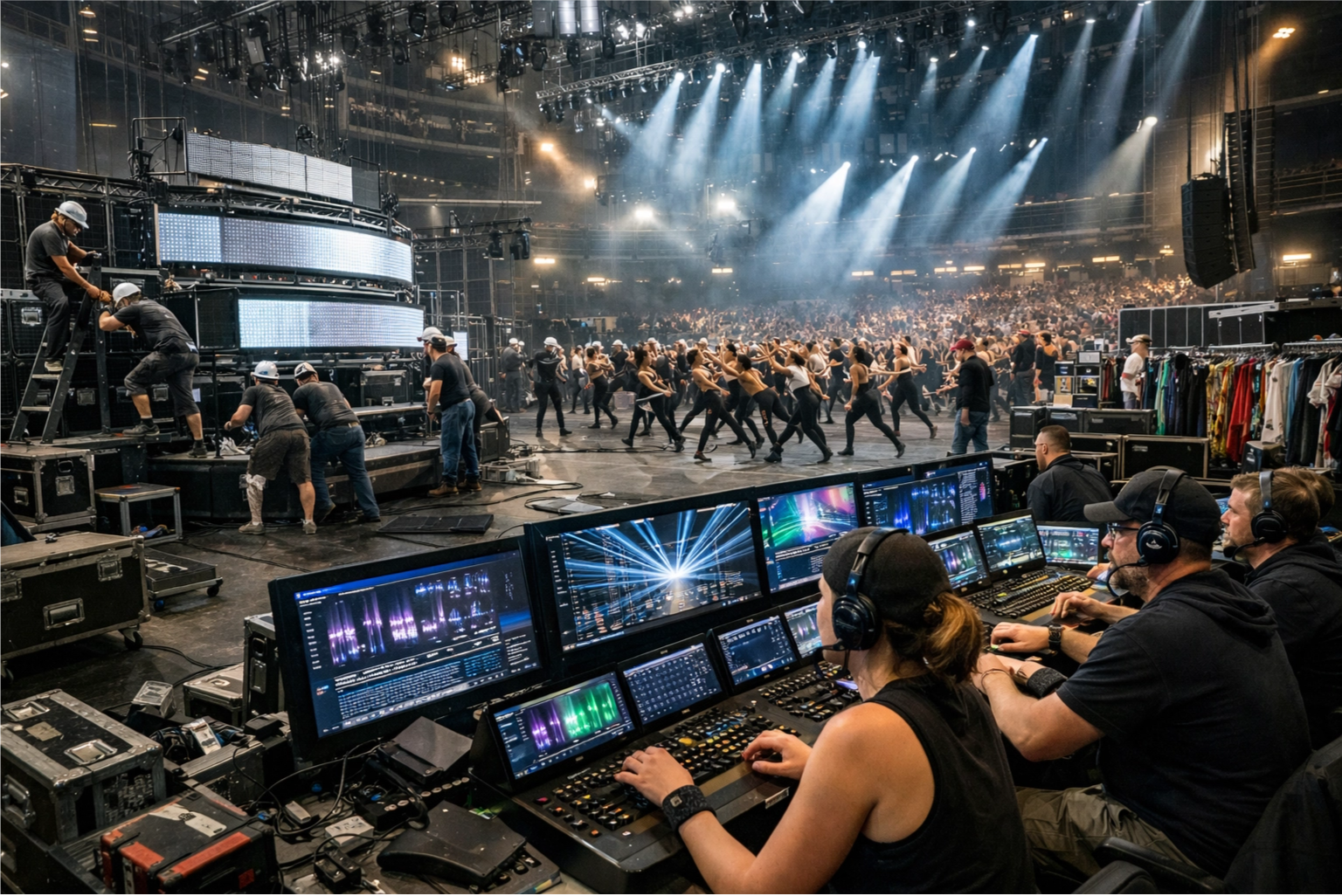
Creating halftime shows requires collaboration between artists, production designers, choreographers, lighting designers, sound engineers, broadcast directors, and dozens of other specialists—process resembling large-scale installation art more than typical music performance. Artists like Es Devlin (who designed Beyoncé's Formation stage and numerous other major productions) bring theatrical design sensibility to stadium scale. The challenge involves creating visually coherent experience that works both for 70,000 in-stadium viewers and 120 million broadcast viewers watching from living rooms.
This dual audience requirement creates interesting artistic constraints. In-stadium experience emphasizes physical spectacle—massive stages, pyrotechnics, crowd choreography, spatial arrangements that make audience part of performance. Television broadcast prioritizes close-ups, symbolic imagery, narrative flow that camera cuts can enhance. The best halftime shows satisfy both constituencies simultaneously, functioning as traditional performance for those present and cinematic experience for broadcast audience. When Lady Gaga opened her 2017 performance diving from Superdome roof, in-stadium crowd saw tiny figure descending via cables while broadcast viewers experienced intimate close-ups of her face intercut with aerial shots establishing scale—two completely different visual experiences of identical moment.
The twelve-minute constraint also forces creative editing normally foreign to music performance. Artists cannot play full songs; they perform condensed medleys hitting hooks, choruses, signature movements audiences expect while excising verses and bridges. This compression creates something closer to music video than concert—heightened, condensed, symbolic rather than complete. Some artists resist this format (Radiohead declined Super Bowl invitation multiple times, reportedly viewing twelve-minute medley format as artistically incompatible with their work), while others embrace the challenge of radical condensation.
Commercial Context: Does Advertising Contaminate Art?
The fundamental question haunting Super Bowl halftime performances involves commercial context. The show exists to keep television audiences engaged between advertising blocks. The NFL doesn't pay performers specifically because broadcast exposure provides compensation. Luxury brands sponsor productions. Corporate interests pervade every aspect. Can genuine artistry emerge from such commercially compromised circumstances?
Two perspectives merit consideration. The purist view holds that commercial context fundamentally corrupts artistic expression—that performances existing primarily to sell advertising space cannot achieve authentic creative vision regardless of individual artist intentions. By this logic, halftime shows represent commercial entertainment masquerading as art, skillful execution of commercial imperatives rather than genuine creative expression.
The alternative perspective suggests that commercial context doesn't automatically negate artistic merit, that artists working within commercial constraints can still create meaningful work, and that mass accessibility might actually fulfill art's social function better than gallery exclusivity. Beyoncé's Formation performance reached 115 million people in twelve minutes; a gallery installation might reach few thousand over months. If part of art's purpose involves cultural commentary, engaging audiences, provoking thought, then mass platform's accessibility could be viewed as feature rather than bug.
Perhaps most accurate understanding recognizes halftime shows as hybrid form—neither pure commercial product nor autonomous art, but something occupying middle ground. Individual performances lean more commercial (predictable crowd-pleasers with minimal artistic risk) or more artistic (challenging, symbolic, culturally engaged) depending on artist choices within commercial framework. The format doesn't determine outcome; artist vision, execution, and willingness to use platform for statement beyond entertainment determine whether specific halftime crosses threshold into genuine artistic territory.
Stadium Architecture: The Caesars Superdome as Performance Venue
Super Bowl LIX takes place at Caesars Superdome in New Orleans, venue with architectural and cultural significance extending beyond sports functionality. Originally Louisiana Superdome when completed in 1975, the stadium represents distinctive moment in American architectural history—the world's largest steel-constructed fixed-domed structure when built, featuring a diameter of 680 feet and rising 273 feet tall, designed by Curtis and Davis with Sverdrup & Parcel.
The Superdome's cultural weight stems partly from its Hurricane Katrina role. In August 2005, the stadium served as emergency shelter for tens of thousands of New Orleans residents, facility intended for sports forced to function as humanitarian crisis response center. Photographs of people seeking refuge in the Superdome became some of Katrina's most enduring images—architectural space transformed by disaster from entertainment venue into symbol of government failure, human resilience, and American inequality. The building literally bore storm damage; the roof partially failed, water poured in, and conditions inside became desperate.
The stadium's post-Katrina renovation (completed 2011) and rebranding (Caesars Superdome name adopted 2021) represent New Orleans' broader recovery narrative. But the building carries those memories—space where entertainment and tragedy intersected, where architectural space witnessed human crisis, where structure designed for controlled spectacle became stage for chaos. This history adds layers to Super Bowl LIX's presence there. The same stadium that sheltered disaster survivors now hosts American culture's most expensive commercial spectacle. This contrast—catastrophe and celebration occupying identical space—creates uneasy resonance reflecting American contradictions that art often engages but sports typically ignores.
Architecturally, domed stadiums present unique opportunities and challenges for large-scale performance. Unlike outdoor stadiums where weather creates variables, domes offer complete production control. Lighting designers work without competing with sunlight. Sound engineers can tune acoustics precisely. Stage designers build without rain contingencies. But domes also feel more contained, less expansive than open-air venues. The ceiling creates literal barrier absent in outdoor spaces, visual weight that can feel either intimate or claustrophobic depending on production approach.
For collectors interested in contemporary architecture, stadium design represents fascinating intersection of engineering, aesthetics, economics, and social function. Modern stadiums often feature dramatic architectural statements—SoFi Stadium in Los Angeles with its sweeping canopy and massive digital screens, AT&T Stadium in Dallas with retractable roof and monumental scale, Allegiant Stadium in Las Vegas with translucent ETFE roof panels creating distinctive black exterior. These structures represent some of contemporary architecture's most ambitious projects, billion-dollar buildings pushing engineering limits to create memorable experiences for tens of thousands simultaneously. Whether these constitute architecture in art-historical sense or merely functional megastructures remains debated, but their cultural impact seems undeniable.
The Superdome specifically exemplifies 1970s architectural modernism—bold structural forms, emphasis on engineering innovation, monumental scale serving civic pride. The building's survival and transformation after Katrina adds narrative that architectural significance alone couldn't provide. Space becomes palimpsest, with layers of meaning accumulating across decades of different uses, different disasters, different celebrations.
Luxury Brand Strategy: Why Rolex and Louis Vuitton Pay Millions for Super Bowl Presence
Super Bowl advertising represents unique luxury brand challenge. The audience skews mass-market, the context involves sports rather than culture or fashion, the cost per commercial spot reaches $7 million for thirty seconds, and direct sales impact remains difficult to measure. Yet luxury brands continue participating. Understanding why requires recognizing that sophisticated luxury strategy focuses on cultural positioning rather than transactional selling.
Brand Building Versus Direct Response
Traditional advertising often aims for direct consumer response—see ad, want product, purchase product. Luxury brand advertising, especially at Super Bowl scale, operates differently. Rolex advertisements during Super Bowl never show prices, rarely mention specific features, and almost never include calls to purchase. Instead, they present carefully constructed brand narratives about achievement, precision, legacy, excellence. A typical Rolex Super Bowl spot might show athletic champions, artistic innovators, or explorers wearing the brand while pursuing extraordinary endeavors. The message isn't "buy this watch"—it's "Rolex belongs on the wrists of people who achieve remarkable things."
This brand-building approach makes sense for products where purchase decisions involve months of consideration, significant financial investment, and identity construction rather than impulse buying. Nobody watches Super Bowl ad and immediately purchases $15,000 Submariner. But viewers absorb association between brand and excellence, connection between Rolex and championship, link between timepiece and achievement. Over time, repeated exposure to these associations shapes perception. When someone eventually enters financial position to consider luxury watch purchase, Rolex occupies mental space shaped by years of careful brand building—including Super Bowl moments associating brand with American sports excellence.
Similarly, Louis Vuitton's Super Bowl presence (when they choose to participate) emphasizes journey, craftsmanship, heritage through cinematic storytelling that aestheticizes products within broader narratives. Their ads often resemble short films—beautifully shot vignettes about travel, exploration, artisan craft, human connection where products appear as elegant elements of larger stories rather than isolated objects for purchase. The goal involves reinforcing brand narrative that Louis Vuitton represents more than accessories; it embodies approach to life valuing experience, craft, tradition, journey over destination. For collectors who understand luxury as cultural participation rather than consumption, this resonates more than product showcase.
Cultural Capital and Audience Reach
Part of luxury brand Super Bowl calculus involves cultural capital gained from associating with major cultural event. Super Bowl represents rare moment when 120+ million people focus on shared experience simultaneously. Being present at that cultural moment, contributing to that shared experience, creates brand relevance beyond traditional luxury audience. This matters because luxury brands increasingly recognize that cultural influence requires broader engagement than luxury-market-only messaging provides.
Young consumers who cannot currently afford luxury goods nonetheless shape brand perceptions, influence social conversations, create cultural currency through social media engagement. Super Bowl provides opportunity to reach these audiences, plant brand awareness that may only convert to purchases years later when financial circumstances change. But the exposure creates association between brand and major cultural moments that traditional luxury advertising channels cannot replicate.
There's also consideration of business partners, corporate clients, and wholesale relationships. Major luxury brands operate complex global businesses involving licensing, partnerships, wholesale distribution, corporate sales. Super Bowl advertising sends signals to these stakeholders about brand vitality, cultural relevance, marketing ambition. A Rolex or Louis Vuitton Super Bowl presence tells authorized dealers, corporate clients, and business partners that brand invests in building cultural presence, not merely maintaining existing customer base.
Artistic Advertising: When Commercials Become Short Films
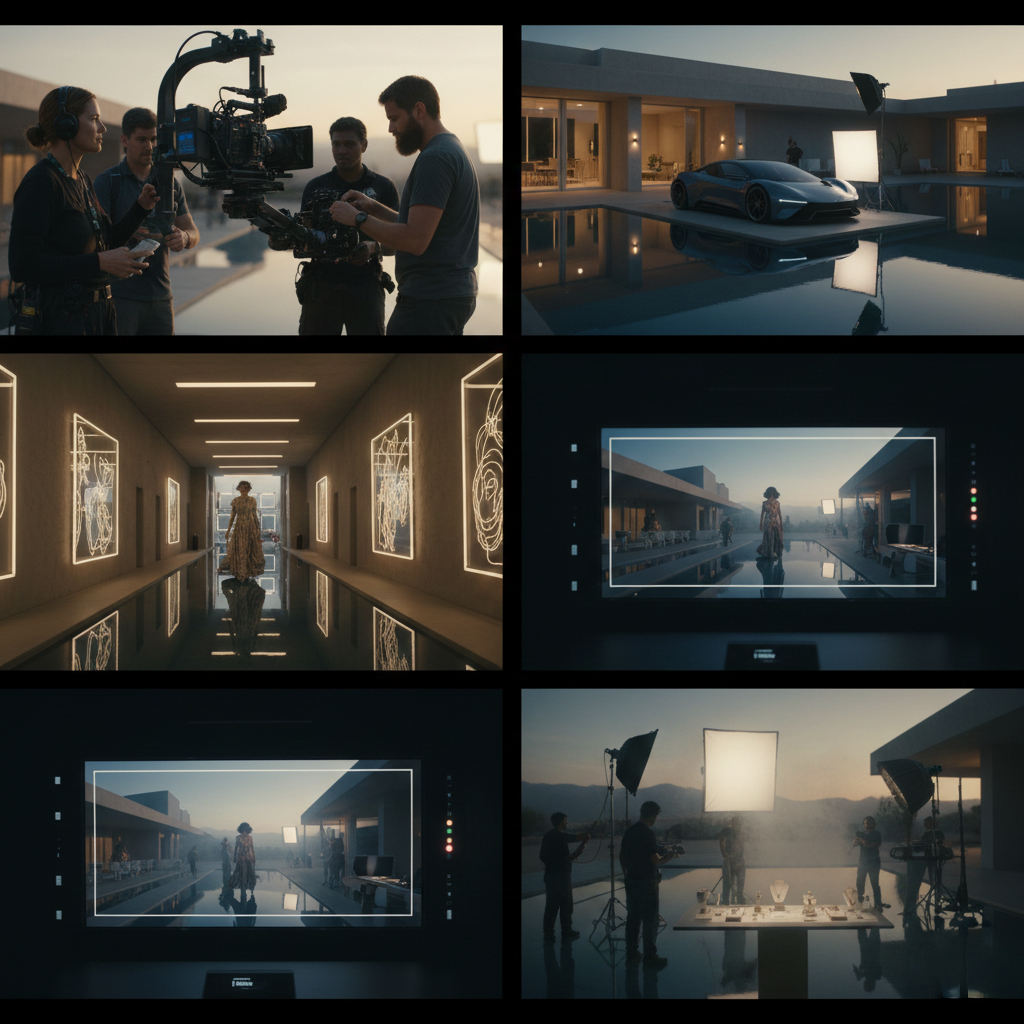
Super Bowl advertising particularly interesting to collectors involves spots functioning as short films—artistic productions costing millions to produce, employing talented directors, cinematographers, and production designers to create narrative experiences in thirty or sixty seconds. Some luxury brands treat Super Bowl advertising as artistic commission, hiring film directors known for distinctive visual styles to create mini-masterpieces.
Past examples include Ridley Scott's iconic 1984 Apple Macintosh commercial (directed by filmmaker behind Blade Runner and Alien, aired only once during Super Bowl but became advertising legend), Wes Anderson-directed short films with his characteristic symmetrical framing and color palettes, or dramatic narrative spots employing cinematographic techniques indistinguishable from feature films. These commercials often generate post-Super Bowl discussion less about products advertised and more about artistic merit, directorial vision, cultural commentary embedded in thirty-second narratives.
The blurred line between advertising and art provokes familiar questions. When commercial purpose drives creation—when art exists to sell product or build brand—can it achieve artistic merit? Or does commercial imperative compromise creative vision regardless of execution quality? These same questions appear in discussions of Renaissance patronage (did Medici commissions compromise artistic autonomy?), contemporary museum sponsorship (does corporate funding influence curatorial decisions?), or any situation where art and commerce intersect. Super Bowl advertising simply makes the relationship completely transparent—this art exists to sell, and everyone knows it. That honesty might actually create more artistic freedom than situations where commercial relationships remain hidden while claiming creative autonomy.
The Economics of Spectacle: What $7 Million Buys
Super Bowl advertising economics reveal fascinating insights about media value, attention scarcity, and cultural influence in contemporary society. The 2025 rate for thirty-second commercial spot during Super Bowl LIX reaches approximately $7 million, with some premium positioning (opening game spot, first commercial after halftime) commanding even higher rates. This astronomical cost reflects simple supply and demand—only about fifty commercial slots exist during broadcast, while hundreds of brands compete for those positions.
What justifies this expense? Networks point to guaranteed audience delivery—Super Bowl remains one of few television events where viewers actively watch rather than fast-forward through commercials, where ad breaks become part of cultural experience rather than interruption. The certainty of reaching 120+ million viewers simultaneously, in engaged state, with commercial content they might actually discuss afterward, creates unique value proposition. Traditional television advertising increasingly struggles with audience fragmentation, DVR skipping, streaming migration, declining linear viewership. Super Bowl represents exceptional case where traditional advertising still delivers massive guaranteed reach.
For luxury brands, the calculation differs from mass-market advertisers selling beer, cars, or chips expecting direct sales impact. Luxury brands measure success through brand awareness scores, perception shifts, social media engagement, cultural conversation participation. They're purchasing presence at major cultural moment, association with American sports excellence, and platform to tell brand stories to audiences they might not otherwise reach. Seven million dollars represents tiny fraction of major luxury house's annual marketing budget—Rolex reportedly spends hundreds of millions annually on brand building globally. Super Bowl spot represents less than single percent of annual expenditure, but reaches American audience in focused way no other media buy can replicate.
The halftime show production economics present different calculations. NFL spends $25-30 million producing halftime show—stage construction, lighting, sound, visual effects, logistics of building/striking massive production in minutes. But NFL pays no performance fees to headlining artist. Artists accept this arrangement because halftime exposure drives streaming increases (Rihanna's 2023 halftime performance generated 211% streaming increase for her catalog in following week), album sales, concert ticket demand, and cultural positioning worth far more than single performance fee. The platform itself constitutes compensation—access to 120 million viewers, creative control over twelve-minute cultural moment, production budget enabling artistic vision at scale most tours cannot support.
This exchange—platform for performance, exposure for free labor—raises interesting questions about value in attention economy. Traditional performance model involves artist getting paid to perform for audience. Super Bowl inverts this: artist pays (through foregone performance fees) for access to audience. The inversion reveals how attention itself became primary currency. In traditional model, audience paid (via ticket prices) to access artist performance. In Super Bowl model, artist "pays" (via free performance) to access audience attention. The flip illustrates how audience attention became more valuable than artist performance when that attention reaches sufficient scale.
For collectors examining contemporary art markets, similar dynamics appear. Emerging artists sometimes pay gallery fees for exposure rather than galleries paying artists for work—transaction that inverts traditional gallery-artist relationship. Artists perform free at museum openings, create commissioned pieces for luxury brand events, produce content for social media platforms without compensation because exposure provides value exceeding payment. These arrangements mirror Super Bowl's platform-for-performance exchange, reflecting broader shift toward attention economics where access to audiences becomes valuable enough to justify uncompensated creative labor.
Cultural Impact: When Sports Transcend Games
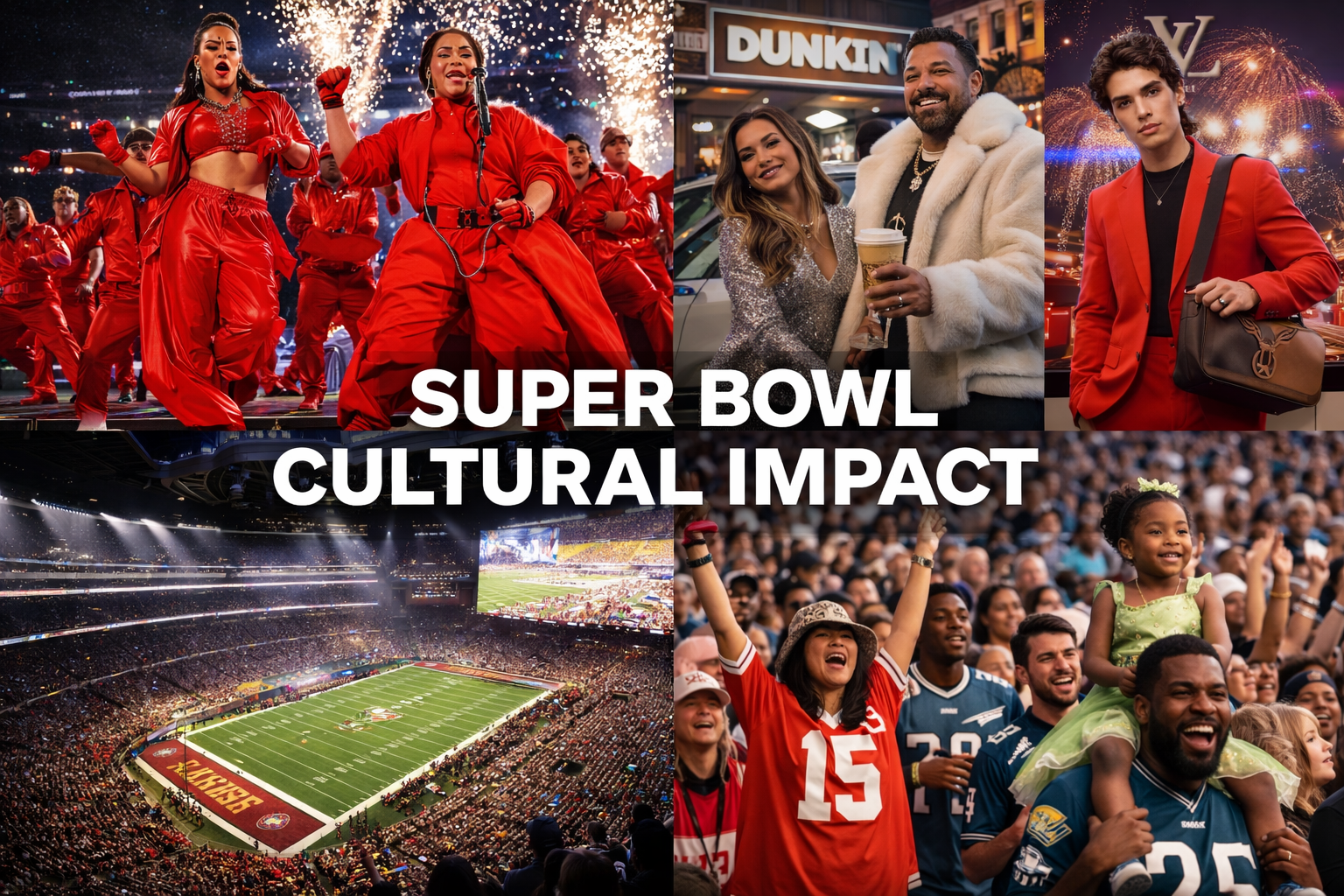
Super Bowl's cultural significance extends far beyond football. The game serves as contemporary American ritual—annual gathering point where diverse populations temporarily share focus, where cultural conversations happen on massive scale, where artistic, commercial, and athletic elements combine creating experiences that resonate through society for weeks afterward.
The Performative Anthology and Cultural Memory
Each Super Bowl creates cultural moments that enter collective memory. Certain performances, commercials, or game moments become permanent references—Michael Jackson's 1993 halftime show standing motionless for over a minute building tension, Janet Jackson and Justin Timberlake's 2004 "wardrobe malfunction" generating FCC controversy and television policy changes, David Tyree's helmet catch in 2008 becoming symbol of improbable athletic achievement, Lady Gaga's 2017 rooftop entrance combining athleticism with theater. These moments transcend sports to become cultural touchstones—events people reference, analyze, remember across decades.
The concentrated attention Super Bowl receives enables this cultural memory formation. When 120 million people watch identical moment simultaneously, that shared experience creates cultural common ground. References to these moments function as social shorthand—mention "wardrobe malfunction" and people immediately understand reference, recall controversy, connect to broader cultural conversations about censorship, propriety, race, gender that moment catalyzed. Few contemporary events create these shared cultural reference points anymore. Media fragmentation means people rarely watch same content simultaneously in mass quantities. Super Bowl remains exception—rare opportunity for actual mass culture in increasingly personalized media landscape.
From collector perspective interested in contemporary culture, Super Bowl offers annual case study in how cultural moments get constructed, how meaning gets assigned to events, how commerce and culture intersect to create experiences that transcend original context. Understanding contemporary visual culture requires engaging with mass media, commercial culture, entertainment industries—spaces where most people actually encounter visual experiences. Super Bowl concentrates these elements into single event, making visible processes usually distributed across culture.
The Controversy Engine and Social Commentary
Super Bowl's mass platform inevitably attracts controversy—artists making political statements, commercials addressing social issues, performances challenging norms. These controversies themselves become part of cultural conversation, extending Super Bowl's influence beyond game day. Colin Kaepernick's anthem protests (starting 2016, continuing through 2017) transformed NFL into site of national debate about race, patriotism, protest, military respect, police violence. When Beyoncé's 2016 halftime show engaged these themes, it wasn't artistic choice in vacuum—it positioned performance within already-contested cultural space.
The NFL's relationship with controversy reveals tensions between commercial interests and cultural engagement. League generally prefers halftime shows avoid political controversy (entertainment without discomfort), but artistic performers often resist pure entertainment framing. The negotiation between these positions—artist wanting platform for cultural statement, league wanting universally appealing entertainment—shapes what appears on Super Bowl stage. Sometimes artist vision wins (Beyoncé's Formation performance), sometimes controversy erupts unexpectedly (Janet Jackson), sometimes artists self-censor to maintain platform access. These negotiations mirror broader cultural questions about art, commerce, and speech—who gets to say what in commercial spaces, what topics remain acceptable in mass entertainment, whether challenging audiences serves artistic purpose or commercial liability.
For luxury brands advertising during Super Bowl, controversy presents risk and opportunity. Brands taking positions on social issues risk alienating customers holding opposite views but gain cultural relevance, demonstrate values, attract consumers seeking brands aligning with their beliefs. Brands avoiding controversial topics maintain broad appeal but risk seeming culturally detached or cowardly. The calculation involves brand identity—does our brand stand for something beyond products, or do we remain neutral to maximize market size? Luxury brands increasingly choose former approach, recognizing that younger consumers especially expect brands to demonstrate values, engage cultural conversations, stand for something beyond sales.
What Collectors Can Learn from Sports Spectacle
Super Bowl offers several insights relevant to contemporary art collecting and cultural understanding that transcend obvious sports-art divides.
Mass Culture and Artistic Merit Are Not Mutually Exclusive
The persistent assumption that mass appeal necessarily indicates diminished artistic value deserves questioning. Some art's purpose involves reaching audiences, provoking thought, generating conversation, engaging culture. Super Bowl halftime shows achieve this at scale traditional art spaces cannot approach. Beyoncé's Formation performance provoked more cultural conversation about race, identity, and representation than most gallery exhibitions manage. That reach doesn't automatically grant artistic merit, but it doesn't automatically negate it either. The challenge involves evaluating work on its own terms rather than dismissing based on context or audience size.
Collectors engaging contemporary culture need frameworks for evaluating mass culture productions—not to determine whether they belong in galleries (different question), but to understand their cultural function, artistic strategies, and impact on visual culture broadly. Super Bowl halftime shows, like music videos, Instagram aesthetics, or TikTok trends, shape how millions experience visual culture. Ignoring these forms while focusing exclusively on gallery art creates incomplete cultural understanding.
Collaboration Can Enhance Rather Than Compromise Vision
Halftime show production requires massive collaboration—artists, designers, choreographers, engineers, hundreds of specialists contributing to single twelve-minute performance. This collaborative process often produces results exceeding what individual artist could achieve alone. The production design, technical capabilities, logistical coordination enable artistic visions at scales otherwise impossible.
Contemporary art increasingly involves collaboration—artists working with fabricators, technicians, specialists to realize complex installations, technological pieces, or large-scale works. The romantic notion of solitary artist creating autonomous works doesn't reflect much contemporary practice. Super Bowl halftime shows make collaboration visible, demonstrating how collective effort can serve artistic vision when coordination succeeds. This offers model relevant beyond entertainment—understanding how to assemble teams, integrate specializations, maintain artistic coherence across collaborative production represents valuable skill in contemporary art production.
Context Shapes Meaning but Doesn't Determine It
Commercial context frames Super Bowl halftime shows, influencing but not absolutely determining artistic possibilities within that frame. Artists working within commercial constraints can still make meaningful statements, challenge audiences, produce powerful work—but context shapes reception, interpretation, and possibility space. This relationship between context and meaning appears throughout art history. Renaissance religious commissions worked within Catholic Church constraints but produced masterpieces. Contemporary artists accepting corporate commissions or institutional funding navigate commercial relationships while maintaining creative vision (or compromising it—case-by-case assessment required).
The lesson for collectors involves recognizing context's importance without allowing it to completely override individual artwork assessment. Evaluate work considering its context, understand constraints and influences shaping creation, but still engage with what artist achieved within those parameters. Super Bowl halftime shows represent extreme case—highly commercial context, massive audience pressure, significant constraints—but artists still find space for vision, statement, artistic risk. Understanding how they navigate those tensions offers insights applicable to less extreme situations throughout contemporary art.
Cultural Capital Requires Cultural Engagement
Luxury brands' Super Bowl presence demonstrates that cultural influence requires engaging broader culture, not remaining isolated in luxury spheres. Brands like Rolex or Louis Vuitton participating in mass cultural event recognize that cultural capital comes from active participation in cultural conversations, not just maintaining exclusivity. This lesson translates to collecting: engaging contemporary culture requires looking beyond traditional art spaces to understand where culture actually happens, what visual experiences most people encounter, how meaning gets constructed in contemporary society.
This doesn't mean collectors must watch every Super Bowl or engage all mass culture. It means recognizing that understanding contemporary visual culture requires engaging with forms, platforms, and contexts beyond galleries—Instagram, TikTok, video games, music videos, advertising, sports broadcasts, streaming series. These spaces shape visual culture, influence artistic production, reflect (and sometimes lead) cultural shifts. Collectors wanting to understand contemporary moment need frameworks for engaging these forms seriously while maintaining critical perspective distinguishing between genuine innovation and commercial formula, artistic risk and safe entertainment, cultural commentary and empty spectacle.
Super Bowl LIX Specifically: What to Watch
Super Bowl LIX takes place Sunday, February 9, 2025 at Caesars Superdome in New Orleans with Fox broadcasting beginning at 6:30 PM EST. While specific game matchup won't be determined until conference championships (January 26, 2025), several elements merit attention from cultural perspective regardless of which teams compete.
The halftime performer has not been officially announced as of early 2026, but NFL typically selects artists at career peaks with catalog depth supporting twelve-minute medley, production vision matching massive scale, and cultural relevance generating broad interest. Given New Orleans location, speculation includes artists with Louisiana connections (Lil Wayne, Juvenile, regional bounce or hip-hop artists), major pop stars continuing recent halftime tradition (Usher performed 2024, Rihanna 2023), or unexpected choices generating controversy and conversation. The announcement itself becomes news event, generating weeks of speculation, social media analysis, and cultural commentary before performance happens.
From cultural analysis standpoint, watch for how performer balances entertainment accessibility with artistic statement. Does artist play entirely to mass audience expectations or risk moments challenging, surprising, or provoking? Do visual elements reference current cultural moments, make political statements, or remain safely apolitical? How does production design approach stadium scale—does it embrace monumental spectacle or attempt intimacy? These choices reveal performer's artistic ambitions, cultural positioning, and relationship with massive platform.
The advertising lineup similarly merits attention. Which luxury brands participate, what narratives do they present, how do they position themselves culturally? Do commercials engage social issues or stick to safe brand building? Which employ artistic directors or distinctive visual approaches versus formulaic emotional manipulation? Super Bowl advertising often premieres new brand campaigns, reveals strategic directions, and showcases creative boundaries of thirty-second storytelling.
The in-stadium experience versus television broadcast also offers interesting comparison for those able to observe both. What works live that television misses? How do broadcast cameras construct narrative that in-person viewers experience differently? Where do production decisions prioritize one audience over another? These questions reveal how media shapes experience, how same event becomes different cultural text depending on how it's consumed.
New Orleans as host city adds specific cultural resonance given Superdome's Katrina history. Does broadcast or halftime show acknowledge that context? Do visiting teams, media coverage, or NFL events engage New Orleans culture respectfully or exploit it superficially? How does city's musical heritage, architectural character, and cultural complexity appear (or fail to appear) in Super Bowl's commercial spectacle? These questions connect to broader issues about how mass events engage local culture versus impose standardized entertainment regardless of location.
Conclusion: Spectacle, Commerce, and Contemporary Culture
Super Bowl LIX represents contemporary American culture's most elaborate annual demonstration of how spectacle, commerce, and artistry intersect to create shared cultural experiences. Whether that intersection produces genuine art or merely skillful entertainment varies performance to performance, commercial to commercial, moment to moment. Some halftime shows achieve artistic transcendence despite commercial context; others exemplify commercial entertainment masquerading as cultural importance. The same variability appears in advertising—some spots function as short films with artistic merit, others deploy emotional manipulation in service of sales.
The event's value for collectors and cultural observers lies not in determining whether Super Bowl qualifies as art (reductive question yielding unsatisfying binary answer) but in understanding how culture gets produced, consumed, and interpreted in contemporary society. Super Bowl concentrates processes usually distributed across cultural landscape—commercial influence on creative production, negotiation between artist vision and audience expectations, relationship between mass accessibility and critical quality, cultural capital derived from participating in shared experiences.
Luxury brands advertising during Super Bowl demonstrate sophisticated understanding of cultural positioning over transactional selling. They recognize that influence requires engaging broad culture, that brand building happens over years through accumulated associations, and that presence at major cultural moments creates value exceeding direct sales impact. This long-term, positioning-focused approach to cultural participation offers model relevant to collecting—understanding that engaging art involves participating in cultural conversations, that value accrues through sustained engagement over time, and that commercial relationships need not automatically corrupt artistic merit if approached thoughtfully.
The halftime show format particularly exemplifies performance art operating under unique constraints that challenge conventional definitions. Twelve-minute duration, stadium scale, broadcast television distribution, mass audience expectations, zero artist payment, NFL oversight—these parameters create something different from traditional concert, theater, or gallery performance. But difference doesn't equal artistic invalidity. Some artists use these constraints productively, creating work that couldn't exist elsewhere. Whether specific performance achieves artistic merit requires case-by-case evaluation considering what artist attempted, what context enabled or prevented, and what cultural resonance resulted.
Explore contemporary works engaging with spectacle, mass culture, and commercial aesthetics at Artestial, where collectors find artists seriously grappling with how culture operates in contemporary society, or connect with specialists for guidance building collections that engage cultural production across traditional boundaries, recognizing that understanding contemporary moment requires frameworks flexible enough to evaluate both gallery installations and stadium performances, both autonomous artworks and commercially commissioned pieces.
The collector who dismisses Super Bowl as mere sports entertainment misses opportunity to understand how contemporary culture actually operates—messily, commercially, collaboratively, at massive scale, producing moments of genuine artistic achievement alongside competent entertainment and cynical manipulation, all existing simultaneously in spaces where millions gather attention. That's not art world as traditionally conceived, but it is cultural landscape as currently constituted. Engaging it critically, maintaining standards while remaining open to where artistic moments appear, distinguishes sophisticated cultural participation from reflexive dismissal or uncritical acceptance. Super Bowl LIX offers annual opportunity to practice that engagement, recognize where spectacle transcends entertainment, and understand what mass culture reveals about contemporary society's values, anxieties, aspirations, and contradictions.
Frequently Asked Questions
How does Super Bowl halftime show production compare to major concert tours or gallery installations in terms of artistic collaboration and scale?
Super Bowl halftime productions operate at intersection of concert production, theater, and large-scale installation art, requiring collaboration across disciplines in ways exceeding most individual art forms. The twelve-minute format compresses creative decisions while expanding logistical complexity. Unlike concert tours that develop over weeks or months of performances, allowing refinement and adjustment, halftime shows represent single unrepeatable live performance with zero margin for error. Production teams of 200-300 specialists work for months planning every detail—stage construction timed to occur during thirty-minute halftime window, choreography accounting for camera angles and broadcast composition, lighting designed for both in-stadium audience and television viewers, audio engineering balancing 70,000-person stadium acoustics with broadcast sound requirements, and costume changes coordinated with stage movements down to split-second precision. The NFL typically budgets $25-30 million for halftime production (excluding artist performance fees, which aren't paid), comparable to major Broadway production or elaborate gallery installation but compressed into twelve minutes rather than weeks-long run or months-long exhibition. Unlike traditional performance venues where artists control environment, halftime performers work within NFL parameters—no profanity in lyrics, approval required for all visual content, production must build/strike within tight timeframes, and performance must fit broadcast schedule exactly. This creates unique collaborative challenge where artist vision negotiates with broadcast requirements, stadium logistics, and league oversight. Production designers like Es Devlin (who designed Beyoncé's 2016 Formation stage, The Weeknd's 2021 funhouse-mirror set, and numerous concert tours) approach halftime as installation art problem—creating three-dimensional space functioning as sculpture for stadium viewers while providing visual frames for broadcast cameras. Choreographers like Parris Goebel (who directed Rihanna's 2023 performance) must conceive movement readable from football field level (where most in-stadium viewers sit elevated above performers) while also composing for aerial camera perspectives and close-up shots. This spatial complexity exceeds typical concert staging, which optimizes for frontal viewing plane. The single-performance constraint also differs from gallery installations or concert tours allowing iteration. Halftime shows require absolute certainty in technical execution—if lighting cue fails or stage mechanism malfunctions during actual broadcast, there's no second take, no following performance to correct issues. This drives exhaustive rehearsal processes where every movement, every cue, every contingency gets planned. Compare this to contemporary art installations where technical problems can be addressed during exhibition run, or concert tours where artists learn what works through multiple performances and adjust accordingly. Halftime's unforgiving single-performance requirement pushes production planning to extremes. The broadcast distribution also changes artistic calculation—120+ million viewers watching simultaneously creates cultural impact most gallery installations or concert tours cannot approach. Beyoncé's Formation performance reached more viewers in twelve minutes than most gallery exhibitions reach across entire runs. This mass platform enables cultural statements landing with immediate force rather than gradually building through critical response and word-of-mouth. However, broadcast context constrains artistic risk—performers know anything controversial will reach 120 million people immediately, generating responses they cannot control. This tension between massive platform and consequent scrutiny shapes what artists attempt. Some embrace controversy (Beyoncé's Formation explicitly engaged Black Lives Matter movement); others play safer (keeping performances universally appealing rather than culturally challenging). This negotiation between artistic vision and mass audience expectations defines halftime performances in ways that gallery installations (where artists generally have more autonomy) or concert tours (where fans self-select) do not face to same degree.
What makes Super Bowl advertising effective for luxury brands when their target customers represent tiny fraction of the 120 million viewers, and how does this relate to broader luxury brand cultural positioning strategies?
Luxury brand Super Bowl advertising operates on completely different strategic model than mass-market advertising, making conventional metrics like cost-per-impression or direct response rates misleading for evaluating effectiveness. When Rolex spends $7 million for thirty-second spot reaching 120 million viewers but only targets perhaps 500,000-1,000,000 potential luxury watch customers globally, the economics seem absurd from direct marketing perspective. But luxury brands aren't buying immediate sales conversion—they're purchasing cultural positioning, brand awareness across broader society, and association with major cultural moments that build long-term brand equity rather than short-term sales. Several strategic considerations justify luxury Super Bowl presence despite audience mismatch. First, cultural influence requires broader engagement than luxury-market-only messaging provides. Rolex or Louis Vuitton want general population aware of their brands, associating them with excellence and achievement, even if most people will never purchase their products. This broad awareness creates cultural capital—brands become reference points for quality, symbols of success, markers of achievement in broader culture regardless of whether specific individuals can afford products. When luxury brand appears in films, television, music videos, or social media content, that appearance communicates certain character attributes precisely because brand has broader cultural recognition. Super Bowl advertising contributes to maintaining that cultural presence beyond luxury consumer segment. Second, luxury brand awareness among non-luxury consumers still creates value through what marketers call "aspiration". Young professionals, students, mid-career individuals who cannot currently afford $15,000 Rolex but might eventually reach income levels enabling such purchases absorb brand associations long before purchase capability materializes. Super Bowl provides opportunity to plant brand awareness with audiences whose purchasing power may increase over years or decades. Someone watching Super Bowl in their twenties while earning $50,000 annually might buy first Rolex in their forties earning $200,000 annually—but the brand associations shaping that eventual purchase decision were established during non-purchasing years through exposure including Super Bowl advertising. Third, luxury brands recognize that influence extends beyond direct purchasers to include people who influence purchases—spouses, friends, family, colleagues whose brand perceptions matter even if they personally won't buy product. Super Bowl advertising reaches these influencers, shaping broader cultural conversation about brands that affects purchasing environments even for luxury consumers. When someone considers $15,000 watch purchase, their decision often involves discussing with spouse, asking friends' opinions, seeking family input. If those surrounding people have positive brand associations from years of Super Bowl advertising and other brand building, that influences purchase decision despite those influencers never being target customers themselves. Fourth, Super Bowl presence signals brand vitality and cultural relevance to business stakeholders beyond consumers. Luxury brands operate complex global businesses involving authorized dealers, wholesale partners, corporate sales, licensing agreements, and institutional relationships. Super Bowl advertising tells these stakeholders brand invests seriously in maintaining cultural presence, not resting on legacy reputation. This stakeholder signaling justifies expense even without direct consumer impact. Authorized Rolex dealers see brand advertising during Super Bowl and feel confident in brand's commitment to marketing support. Corporate clients considering luxury gifts for executives note brands advertising during major cultural events and perceive them as culturally relevant rather than stagnant heritage brands. Fifth, luxury brands treat Super Bowl advertising as creative commission enabling artistic productions at budget levels that justify employment of renowned directors, cinematographers, and production designers to create mini-films showcasing brand values. These advertisements often get shared, discussed, and analyzed beyond actual Super Bowl broadcast, generating extended cultural conversation about brand that exceeds thirty-second airtime value. A particularly compelling Super Bowl spot can generate millions of social media impressions, news coverage, advertising industry analysis—all extending brand presence far beyond initial broadcast. When luxury brand produces truly artistic or culturally resonant Super Bowl commercial, that single thirty seconds becomes cultural moment referenced for years, delivering brand value dramatically exceeding direct viewership. Sixth, luxury Super Bowl advertising specifically targets UHNW segment actually watching game. While Super Bowl audience overall skews mass-market, certain subsets (luxury suite attendees, affluent viewers hosting expensive parties, high-net-worth sports fans) represent precisely the ultra-luxury consumer segment. For these viewers, Super Bowl advertising from brands they actually purchase reinforces brand choice, validates their purchasing decisions, and creates brand affinity through association with event they're enjoying. So while 120 million total viewers might include only one million actual luxury watch prospects, those one million prospects see luxury brand advertising during event they've actively chosen to watch, creating favorable context that targeted advertising alone cannot replicate. Finally, luxury brands recognize that cultural positioning requires participating in culture as it actually exists, not as they wish it existed. Contemporary culture happens at mass scale through events like Super Bowl, social media platforms, entertainment industries, streaming services—not exclusively in rarefied galleries or luxury publications. Brands refusing to engage mass cultural platforms risk seeming out of touch, irrelevant to contemporary life, disconnected from cultural conversations. Super Bowl provides opportunity to demonstrate cultural engagement, show brand relevance beyond luxury bubble, and participate in shared cultural experiences that define contemporary society. This strategic approach applies beyond advertising to broader luxury brand cultural positioning. Major luxury houses increasingly sponsor contemporary art exhibitions, music festivals, film productions, sports teams, cultural institutions not expecting direct sales impact but recognizing that cultural influence requires active participation in cultural production across society. They understand brand building as decades-long process of accumulated associations, cultural positioning, narrative construction rather than quarter-to-quarter sales optimization.
Can performance art created explicitly for commercial broadcast and mass entertainment purposes achieve genuine artistic merit, or does commercial context fundamentally compromise creative vision regardless of execution quality?
This question has plagued art criticism since patronage systems began—whether commercial imperatives, audience expectations, or institutional constraints necessarily corrupt artistic expression or whether artists can create meaningful work within (or even because of) those parameters. The answer isn't binary; instead, it requires case-by-case evaluation considering artist intentions, execution quality, cultural context, and what compromises occur in service of commercial requirements versus what artistic achievements emerge despite or through those constraints. Several frameworks help think through this complexity. First, recognize that essentially all art creation involves constraints—financial, material, social, institutional, technological. Renaissance religious commissions worked within Catholic Church constraints determining acceptable subjects, required theological accuracy, and prescribed iconographic conventions. Yet these constraints didn't prevent Michelangelo, Leonardo, or Raphael from producing masterpieces precisely because constraints can focus creative vision rather than merely limiting it. The question becomes whether specific constraints enable or foreclose artistic achievement in particular cases rather than whether constraints generally preclude art. Super Bowl halftime shows face multiple constraints that could enable or foreclose art depending on how artists engage them. The twelve-minute duration forces ruthless editing, eliminating excess and compelling distillation of vision down to essential elements—similar to sonnet form in poetry or three-minute pop song structure. Some artists find creative possibility in compression, using constraints productively to sharpen expression. Others feel twelve minutes insufficient for what they want to communicate, making constraint limiting rather than productive. The mass audience expectation creates similar ambiguity—does need to appeal broadly push artists toward lowest common denominator, or does challenge of communicating to diverse audience inspire accessible yet sophisticated expression? Again, case-dependent. Some artists (like Beyoncé in 2016) use mass platform to deliver culturally challenging performances to audiences who might not seek challenging content elsewhere, exploiting unexpected context to maximize impact. Others retreat to safe entertainment avoiding artistic risk that might alienate portions of mass audience. The commercial context question merits particular attention. Yes, Super Bowl exists to sell advertising, halftime show exists to maintain viewership between commercial blocks, performers accept platform knowing it serves commercial purposes. But this transparent commercialism might actually enable more honesty than situations where commercial relationships remain hidden. When Beyoncé performed Formation at Super Bowl, everyone understood she used commercial platform for artistic statement—no pretense that performance existed independent of commercial context. That transparency allows audiences to evaluate performance knowing its context, accounting for compromises or commercial influences rather than being misled. Compare this to gallery art where commercial relationships (galleries taking 50% commission, collectors viewing work as investment, museums courting donor preferences) exist but get euphemized through art world language claiming autonomous creativity. Perhaps Super Bowl's honest commercialism enables more straightforward assessment than systems pretending commerce doesn't influence art creation. Additionally, commercial platforms sometimes enable artistic visions impossible elsewhere. The $15-20 million NFL budgets for halftime production allow performers access to production designers, technical capabilities, visual effects, and collaborative specialists they couldn't afford independently. Lady Gaga's 2017 rooftop entrance required significant engineering, The Weeknd's 2021 funhouse-mirror set involved complex fabrication, Beyoncé's 2016 Formation visual effects and choreographic precision demanded substantial resources. Commercial platform providing those resources enabled artistic visions that couldn't exist in non-commercial contexts. This raises questions about whether purism regarding commercial contexts sometimes forecloses artistic possibilities that commercial resources enable. The artist's intention and execution matter enormously in evaluating whether commercial context compromises or enables artistic merit. When artist accepts commercial platform primarily for exposure/career advancement and delivers performance designed to offend nobody while checking boxes for broad appeal, commercial imperatives clearly shape creative decisions toward safety. When artist accepts commercial platform precisely because it enables statements otherwise impossible—using massive audience to deliver cultural commentary, employing production resources for visual ideas requiring such scale, or leveraging unexpected context to surprise audiences—commercial platform becomes tool serving artistic vision rather than constraint limiting it. Specific performances demonstrate this range. Some Super Bowl halftime shows represent purely professional entertainment—skillfully executed, crowd-pleasing, visually impressive but making no attempt at artistic statement beyond entertainment. Others like Beyoncé's Formation, Prince's Purple Rain in rain, or Bruce Springsteen's 2009 working-class populism clearly involve artists using platform for visions extending beyond entertainment into cultural commentary, personal expression, or artistic experimentation. The commercial context existed identically for both types, suggesting context enables rather than determines artistic possibility. Critical evaluation must also account for what alternative platforms offer. If artist rejects Super Bowl on artistic purity grounds, where do they perform that enables better artistic expression? Traditional concert venues reach smaller audiences, lack production budgets for elaborate visions, and involve their own commercial constraints (ticket sales, merchandise, sponsor relationships). Gallery or museum performances might offer more artistic autonomy but reach tiny audiences, lack production resources, and operate within institutional constraints that can be equally limiting. Every platform involves tradeoffs; dismissing commercial platforms entirely because they're commercial forecloses possibilities while pretending other contexts offer pure artistic autonomy they rarely actually provide. Ultimately, commercial context should inform critical evaluation without predetermining conclusions. When evaluating Super Bowl halftime performance, acknowledge commercial pressures shaping what appears, recognize compromises made for mass appeal, understand NFL oversight limiting certain creative choices—but still assess what artist achieved within those parameters. Did performance communicate something culturally meaningful? Did it employ visual, sonic, or choreographic innovation? Did it take risks despite commercial context? Did it provoke thought, emotion, or cultural conversation? These questions matter more than abstract determination whether commercial platforms can host genuine art. The evidence suggests they can—sometimes, when artists bring sufficient vision and execute with enough skill and courage to transcend commercial imperatives without ignoring them. But possibility doesn't equal guarantee; commercial platforms host plenty of skilled entertainment making no artistic claims alongside rare performances achieving transcendence.
How does Super Bowl's cultural significance compare to traditional art institutions like museums or major exhibitions in terms of shaping contemporary visual culture and influencing how people engage with visual experiences?
Super Bowl's cultural influence on contemporary visual culture operates differently but no less significantly than traditional art institutions, reaching vastly larger audiences while offering less curatorial mediation, critical analysis, or educational context that museums provide. Both institutions shape visual culture, but through distinct mechanisms serving different functions within broader cultural ecosystem. Museums and major art institutions influence relatively small but culturally influential audiences—curators, critics, collectors, artists, educators, design professionals, culturally engaged upper-middle class. These audiences possess cultural capital enabling them to influence broader trends, set critical standards, determine what gets valued historically, and shape discourse about visual culture even if they represent tiny population fraction. When MoMA or Tate or Guggenheim mounts major exhibition, it reaches perhaps 200,000-800,000 visitors over months-long run—far fewer than Super Bowl's 120 million in single evening. But those museum visitors include critics writing reviews, curators planning future exhibitions, collectors making purchasing decisions, designers absorbing influences, and educators teaching students—cultural intermediaries whose influence multiplies museum's direct audience reach. Museum exhibitions also receive sustained critical attention—reviews, essays, academic analysis, educational programs—that contextualizes work, explains significance, provides frameworks for understanding. This critical apparatus creates lasting cultural impact beyond immediate viewership. Major exhibition can shift critical consensus about artist or movement, rehabilitate forgotten work, introduce new perspectives that influence subsequent decades of art making and criticism. Super Bowl operates completely differently—massive immediate audience, minimal critical mediation, almost zero educational contextualization, no sustained analysis beyond initial commentary. But that massive scale creates its own cultural influence mechanisms. When 120 million people watch Beyoncé's Formation halftime performance simultaneously, that shared experience becomes cultural common ground—moment people reference, discuss, remember collectively. The performance enters popular consciousness directly without requiring critical intermediaries to explain significance. This creates different kind of cultural influence—more immediate, more visceral, more widely distributed but perhaps less historically durable than museum exhibitions that get studied and referenced for decades or centuries. Contemporary visual culture gets shaped as much by mass media experiences as museum exhibitions—perhaps more so for majority of population. Most people's visual experiences come primarily from television, film, social media, advertising, video games, streaming platforms rather than museums or galleries. These mass media forms establish visual vocabularies, compositional strategies, color palettes, rhythms, and aesthetic frameworks that influence how people see and interpret visual information. Super Bowl halftime shows, along with music videos, Instagram feeds, TikTok trends, and Netflix series, shape visual culture for audiences who rarely if ever visit art museums. Dismissing these influences as irrelevant to "serious" visual culture creates incomplete understanding of how visual meaning gets constructed in contemporary society. The production designers, cinematographers, choreographers, and visual artists working on Super Bowl halftime shows often train in fine arts, work across commercial and gallery contexts, and bring sophisticated visual thinking to mass platforms. Someone like Es Devlin designs both Super Bowl stages and major museum installations, Opera productions and luxury brand events, art gallery exhibitions and major concert tours. The visual intelligence she brings operates across these contexts—not creating separate "commercial" and "artistic" work but applying same design thinking to different platforms and constraints. This crossover between high art and mass culture has always existed (Renaissance artists designed festival decorations and civic celebrations alongside religious commissions; Impressionists' work influenced commercial illustration and advertising design) but contemporary art world sometimes pretends purer division than actually exists. Furthermore, Super Bowl halftime shows specifically influence visual culture in areas museums struggle to address effectively—performance, popular music, spectacle, mass choreography, stadium-scale production, broadcast television aesthetics, commercial integration with culture. Museums excel at presenting static visual objects with historical context; they're less equipped for temporal, performative, or mass-scale visual experiences that Super Bowl represents. Both institutions serve cultural functions neither can replace. Museums provide critical distance, historical perspective, curatorial selection, educational context enabling deeper engagement with visual culture. They preserve work, establish standards, create dialogue across periods and cultures, and offer space for sustained attention rather than fleeting experience. Super Bowl provides mass shared experience, demonstrates how visual culture operates at commercial scale, shows how majority of population actually encounters visual material, and creates cultural moments entering collective consciousness directly. Contemporary visual culture education should engage both—understanding why MoMA exhibitions matter while also analyzing why Super Bowl halftime show visual strategies influence millions of people's aesthetic preferences. The cultural conversation benefits from recognizing that different institutions serve different functions, that influence operates through multiple channels, and that mass culture and museum culture mutually influence rather than exist separately. Many contemporary artists actually embrace this multiplicity—creating gallery work while also working in commercial contexts, acknowledging both museum exhibitions and pop culture references as influences, and refusing binary division between high art and mass culture. The integration reflects contemporary reality where cultural influence flows across these supposedly separate spheres constantly. Someone might encounter minimal installation aesthetics first through Apple product design rather than museum exhibition, experience dramatic color saturation through Instagram filters before seeing Color Field painting, or learn visual rhythm through TikTok editing before studying film theory. These aren't inferior paths to visual literacy—just different ones reflecting how culture actually operates. For collectors and cultural observers, the implication involves maintaining dual perspective—engaging traditional art institutions while also seriously analyzing mass cultural forms, recognizing different functions each serves, and understanding contemporary visual culture requires examining both high and low, museum and stadium, critically mediated and direct mass experience. Super Bowl doesn't replace museums; museums don't make Super Bowl irrelevant. Both shape visual culture through distinct but interconnected mechanisms that together constitute contemporary cultural landscape's full complexity.
What strategies do luxury brands use to measure effectiveness of Super Bowl advertising investments when traditional metrics like direct sales correlation or cost per impression seem economically unjustifiable given the audience mismatch with actual target customers?
Luxury brands measuring Super Bowl advertising effectiveness employ completely different metric frameworks than mass-market brands, focusing on long-term brand equity indicators rather than short-term sales conversion. The measurement challenge reflects broader luxury marketing reality that brand building operates across years or decades through accumulated cultural presence rather than monthly sales optimization, making attribution of specific outcomes to individual advertising expenditures difficult or impossible. Leading luxury houses approach measurement through several complementary methodologies. Brand awareness tracking represents primary metric—measuring whether target audiences (defined much more broadly than just current luxury customers) recognize brand, hold positive associations, place brand in appropriate competitive context. These studies involve periodic large-sample surveys asking respondents about brand recognition, brand attributes (is Rolex associated with precision? achievement? sports excellence?), consideration set inclusion (would you consider Rolex when purchasing luxury watch?), and brand preference relative to competitors. By conducting studies before and after major advertising events including Super Bowl, brands can measure awareness shifts, attribute changes, consideration increases specifically following major advertising push. These awareness metrics matter particularly for luxury brands because purchase consideration often occurs years before actual transaction—someone becomes aware of Rolex during non-purchasing years, forms positive associations over time, then eventually makes purchase when financial circumstances permit. Measuring that delayed conversion directly proves nearly impossible, but tracking awareness and association changes provides leading indicators of future purchase potential. Media value calculation represents second measurement approach—estimating total media exposure generated by Super Bowl presence extending far beyond thirty-second broadcast. When luxury brand creates compelling Super Bowl commercial, that spot typically gets shared millions of times on social media, covered by news outlets discussing Super Bowl advertising, analyzed in advertising trade publications, and referenced in subsequent months as example of effective or innovative advertising. Some Super Bowl ads generate sustained cultural conversation extending months or even years beyond initial broadcast (Apple's 1984 Macintosh spot still gets referenced forty years later). Brands employ media monitoring services tracking every mention, share, discussion, or reference to Super Bowl advertising across news media, social platforms, blogs, industry publications, generating estimated "earned media value"—what equivalent exposure would cost if purchased directly. This earned media often exceeds actual Super Bowl spot cost by significant multiples. A particularly viral or culturally resonant $7 million Super Bowl commercial might generate $50-100 million in earned media value through extended coverage, social sharing, and cultural conversation. Obviously these valuations involve significant estimation and methodology questions, but directionally they indicate advertising's cultural impact beyond direct broadcast. Social media engagement metrics provide more granular real-time measurement—tracking mentions of brand or Super Bowl campaign across Twitter, Instagram, TikTok, Facebook, YouTube, counting impressions, shares, comments, positive versus negative sentiment, influencer pickup, and viral spread patterns. Sophisticated social listening tools can attribute conversation to specific Super Bowl spots, measure engagement levels relative to competitors' Super Bowl advertising, and track how brand conversations shift following major advertising events. These metrics matter particularly for luxury brands targeting younger consumers who primarily consume media through social platforms rather than traditional broadcast television. A successful Super Bowl campaign should generate not just broadcast viewership but sustained social conversation, organic content creation, and viral spread that extends brand message through channels where younger audiences actually engage with content. Website traffic analysis measures immediate response—comparing site visits, page views, specific product page traffic, and purchase behavior in days and weeks following Super Bowl versus baseline patterns. While luxury brands don't expect Super Bowl commercial to generate immediate $15,000 watch purchases, they do expect increased site traffic from viewers curious about brand, seeking more information, browsing product ranges, or engaging with brand content. These visitors represent potential future customers beginning research process, and increased research activity following major advertising indicates advertising successfully sparked interest worth measuring. Some luxury brands can track this through more sophisticated attribution—noting which eventual purchasers visited site following Super Bowl advertising even if actual purchase occurred months later, identifying whether Super Bowl exposure appeared in customer journey that ultimately led to purchase. Sales data following Super Bowl provides directional insight despite attribution challenges. If Rolex sees notable increase in authorized dealer traffic, consultation requests, or actual sales in weeks following Super Bowl, that suggests advertising resonated even if proving direct causation remains impossible. More importantly, luxury brands track whether Super Bowl advertising correlates with broader sales trends—not expecting immediate spike but looking whether sustained awareness building through major advertising events contributes to gradual sales growth over quarters or years. This long-term correlation analysis accepts that individual advertising events contribute to broader brand health driving eventual sales rather than triggering immediate transactions. Competitive benchmarking against other luxury brands provides another measurement framework—comparing luxury brand's Super Bowl performance (across awareness, social engagement, earned media, website traffic metrics) to competitors' Super Bowl advertising efforts or to luxury brands that chose not to advertise during Super Bowl. This reveals relative effectiveness even if absolute return on investment remains uncertain. If brand outperforms luxury competitors on awareness gains and social engagement metrics following Super Bowl, that justifies continued Super Bowl presence regardless of whether clear sales attribution exists. Qualitative research provides essential complementary measurement—conducting focus groups, depth interviews, and ethnographic studies with luxury consumers to understand how they experienced Super Bowl advertising, what associations they formed, whether brand perceptions shifted, and how advertising influenced consideration. These qualitative insights explain quantitative patterns and reveal subtle perception changes that surveys might miss. Luxury brands particularly value qualitative feedback from existing customers validating their purchasing decisions and from aspirational consumers beginning to include brand in future consideration set. Business stakeholder impact represents harder-to-measure but strategically important outcome—how Super Bowl presence influences authorized dealers, wholesale partners, corporate clients, institutional relationships, and employees. Major advertising event signals brand vitality to business ecosystem beyond consumers, with effects appearing in dealer confidence, partnership negotiations, corporate bulk purchases, and employee pride that don't directly show in consumer metrics but materially impact business performance. Some luxury houses survey dealers and business partners specifically asking whether major advertising initiatives influence their perception of brand commitment and support. Finally, luxury brands employ econometric modeling attempting to isolate advertising effects from other variables influencing brand performance—economic conditions, new product launches, competitor actions, celebrity endorsements, retail distribution changes, global events. These statistical models estimate what portion of brand performance changes can be attributed to advertising generally and major events like Super Bowl specifically, even if perfect attribution remains impossible. The models provide directional guidance about advertising effectiveness sufficient for strategy decisions even without definitive proof of exact return on investment. Importantly, luxury brands generally don't demand precise ROI calculation for Super Bowl advertising that mass-market brands might require. They recognize brand building as inherently long-term investment where specific outcomes can't be cleanly attributed to individual tactics, accepting measurement uncertainty as inevitable given strategy's nature. The decision to advertise during Super Bowl comes from strategic conviction that cultural presence, broad awareness, and association with major cultural moments builds brand equity worth more than measurable short-term impact, with various metrics simply confirming that strategy isn't failing rather than proving precise return exceeding cost.
Ready to explore contemporary works engaging cultural spectacle and mass media? Visit Artestial where artists seriously examine how culture operates in contemporary society, or connect with specialists for guidance building collections that engage artistic production across traditional boundaries, recognizing that understanding contemporary visual culture requires frameworks flexible enough to evaluate both museum exhibitions and stadium performances.
Curating excellence, one insight at a time.
— AURUM Team
Disclaimer: This article provides cultural commentary and analysis about Super Bowl LIX as entertainment spectacle and brand positioning case study for informational and educational purposes only. It does not constitute professional advice regarding marketing strategies, brand positioning, event attendance, or investment decisions related to sports entertainment, advertising, or luxury goods. Super Bowl details including date (February 9, 2025, Caesars Superdome, New Orleans), broadcast information (Fox network, 6:30 PM EST start), and general event structure reflect publicly available information as of early 2026, though specific game participants, halftime performer, commercial lineup, and other details may change. Advertising costs cited ($7 million for thirty-second spot) and halftime production budgets ($25-30 million NFL expenditure) represent industry estimates for 2025 Super Bowl that vary year to year based on negotiation, positioning, and market conditions. Specific brand advertising strategies discussed (Rolex, Louis Vuitton) represent general luxury marketing principles rather than confirmed 2025 Super Bowl participation or specific brand strategies. Historical halftime performance references (Beyoncé 2016, Lady Gaga 2017, Shakira/J.Lo 2020, Prince 2007, Michael Jackson 1993) cite documented past events but analysis of artistic merit represents author's interpretive framework, not objective facts. Caesars Superdome history including Hurricane Katrina context (August 2005 shelter role, subsequent damage, renovation through 2011) reflects documented historical events; characterization of cultural significance represents interpretive analysis. Viewership statistics (120+ million Super Bowl viewers typically, halftime show streaming increases following performances) cite industry-reported figures that may vary by measurement methodology and source. The article's thesis that commercial context doesn't automatically preclude artistic merit represents one philosophical position within ongoing aesthetic and cultural theory debates; alternative perspectives hold that commercial imperatives necessarily compromise creative vision. Brand effectiveness measurement strategies described (awareness tracking, earned media valuation, social engagement metrics, econometric modeling) reflect actual luxury marketing practices but specific attribution methodologies and ROI calculations vary dramatically by brand, agency, and measurement partner. Economic analysis of Super Bowl advertising ($7 million cost seeming unjustifiable via direct ROI but making sense through brand equity building) represents marketing strategy framework; individual brand calculations may differ substantially based on specific market positioning, target audiences, and strategic objectives. No financial relationships exist between author/publication and mentioned brands, NFL, broadcast networks, production companies, advertising agencies, or luxury houses. Cultural commentary about performance art value, mass culture versus fine art distinctions, and commercial context effects on artistic merit represents ongoing theoretical discussion, not settled consensus. Readers seeking to understand contemporary visual culture should consult multiple sources, engage diverse critical perspectives, and form independent judgments about cultural value and artistic merit. Observations about Super Bowl's cultural function, luxury brand positioning, and mass spectacle's relationship to contemporary art reflect analysis as of early 2026 and may not apply to future developments or specific individual circumstances. The recommendation to engage mass cultural forms seriously while maintaining critical perspective represents educational framework, not prescriptive methodology determining how collectors should approach culture.