

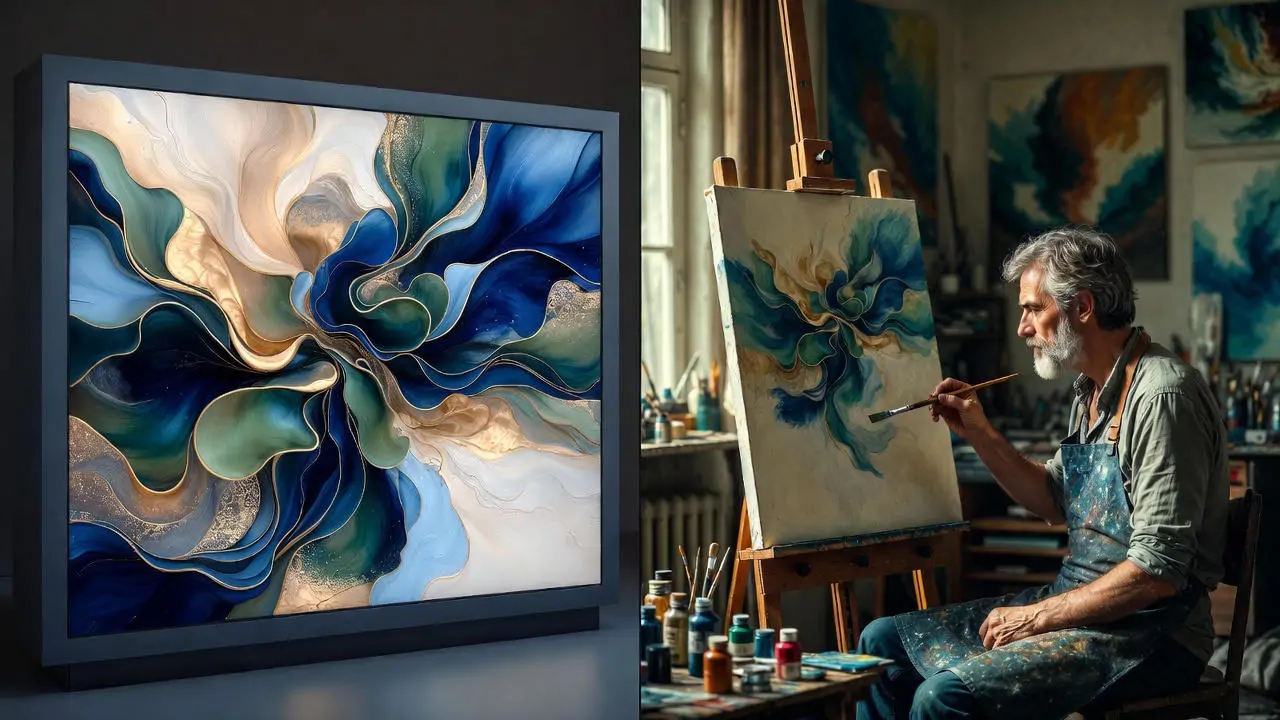
The Christie's auctioneer's hammer fell at $432,500. October 2018. The work—"Edmond de Belamy," created by the Paris-based collective Obvious using Generative Adversarial Networks—had carried a pre-sale estimate of $7,000-$10,000. Art world observers dismissed it as novelty. Yet six years later, AI-generated art has evolved from curiosity into legitimate category commanding serious collector attention, raising fundamental questions about creativity, authorship, and value in an age when algorithms can produce museum-quality imagery in seconds.
By 2026, the debate has matured beyond simple "threat or opportunity" framing. Sophisticated collectors recognize that AI represents neither art's doom nor its salvation—rather, it's the latest technological disruption in a continuum including photography (dismissed as mechanical reproduction), digital art (rejected as lacking physicality), and NFTs (criticized as speculative bubble). Each innovation initially faced skepticism before revealing new possibilities that expanded rather than replaced traditional practices.
For collectors navigating AI art's emergence, the relevant questions concern authentication protocols, value attribution, market dynamics, and how human creativity adapts to tools that democratize image generation while raising unprecedented challenges regarding originality, copyright, and the nature of artistic labor. Understanding AI art requires moving beyond reactive dismissal or uncritical enthusiasm toward nuanced assessment of a technology reshaping creative production across all visual disciplines.
The Technology: Understanding How AI Creates Art
AI art generation has evolved dramatically from early experiments to sophisticated systems producing imagery indistinguishable from human-created works. Understanding the technology clarifies both capabilities and limitations that inform collecting decisions.
Generative Adversarial Networks: The Foundation
GANs, developed in 2014, established AI art's conceptual foundation. Two neural networks compete: a generator creates images, a discriminator evaluates them against training data. Through millions of iterations, the generator learns to produce increasingly convincing outputs. The Obvious collective's "Edmond de Belamy" used GANs trained on 15,000 portraits from the 14th to 20th centuries, producing works that mimicked historical painting styles while introducing algorithmic artifacts.
GANs demonstrated that machines could generate novel imagery rather than merely manipulating existing pictures. However, they required extensive technical expertise, limiting accessibility to computer scientists and programmers. Early GAN art remained curiosities—technically impressive but aesthetically primitive compared to skilled human artists.
The 2022-2026 Revolution: Midjourney, DALL-E, Stable Diffusion
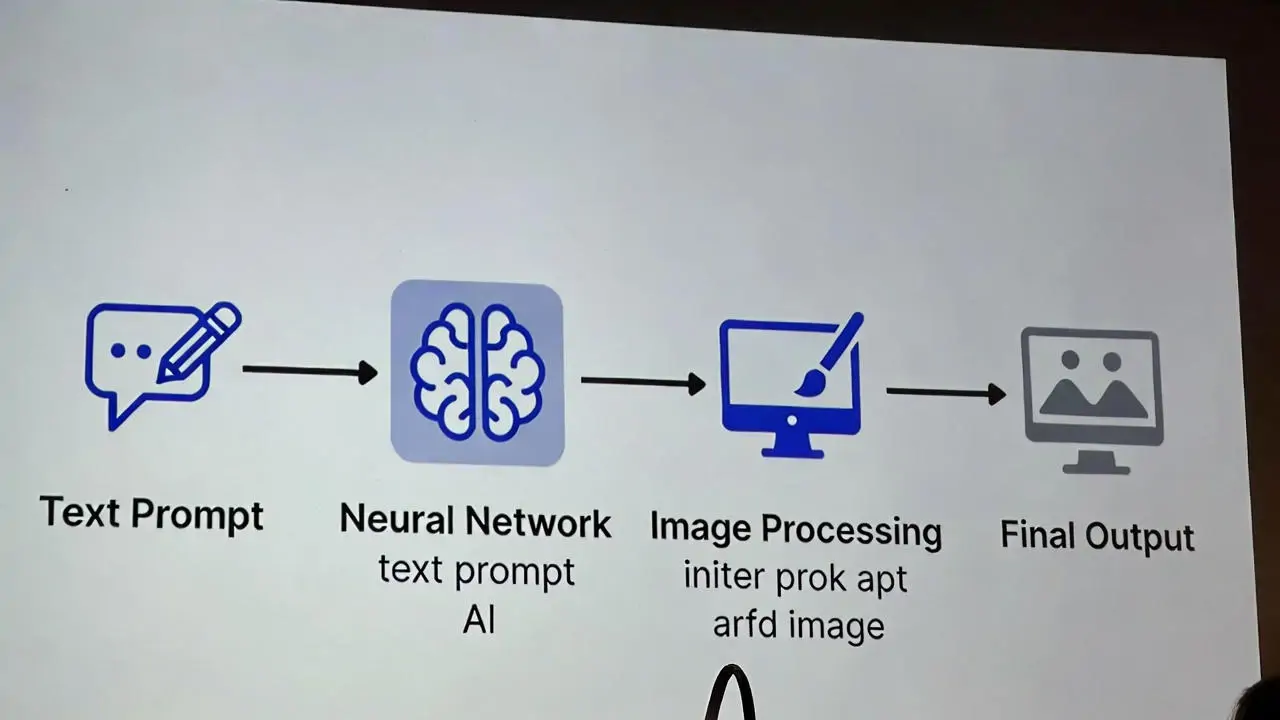
The true inflection arrived between 2022-2024 when consumer-accessible platforms democratized AI art creation. Midjourney, DALL-E 2, Stable Diffusion, and successors eliminated technical barriers—users simply describe desired images in natural language, and algorithms generate high-resolution results within seconds.
These systems train on billions of images scraped from the internet, learning relationships between visual elements and textual descriptions. When prompted with "impressionist landscape with golden light," they synthesize training data into novel compositions exhibiting impressionist characteristics without directly copying source material. The outputs can be remarkably sophisticated—detailed, coherent, exhibiting stylistic consistency that earlier systems lacked.
By 2025, AI systems generated images at professional illustration quality. Artists began using them as conceptual tools, generating dozens of variations rapidly to explore compositional possibilities. Commercial applications exploded—advertising agencies, game developers, book publishers adopted AI art for projects where traditional illustration costs prove prohibitive. The technology matured from novelty to industry standard in under three years.
Human-AI Collaboration: The Emerging Standard
The most sophisticated artistic applications involve human-AI collaboration rather than pure AI generation. Artists like Refik Anadol create installations where AI processes massive datasets—oceanic movements, architectural history, astronomical observations—producing generative visualizations that evolve in real-time. These works require human conceptualization, dataset curation, algorithmic customization, and exhibition design—AI provides the engine, but human creativity directs the output.
Other artists use AI as sketch tool, generating initial concepts they refine through traditional techniques. Or they train custom models on their own work, creating AI assistants that suggest possibilities within their established aesthetic. This collaborative model—AI as powerful tool rather than autonomous creator—represents the middle ground between pure traditional practice and completely algorithmic generation.
Market Development: AI Art at Auction and in Galleries
The art market's response to AI has evolved from skepticism toward cautious acceptance, with clear differentiation emerging between novelty works and serious artistic practice.
Early Sales and Market Testing (2018-2023)
Following the Obvious sale, auction houses experimented with AI art. Sotheby's sold an AI-generated work by Mario Klingemann for $51,000 in 2019. Heritage Auctions offered AI portraits in 2020-2021, achieving modest results. These sales established baseline valuations while testing collector appetite.
Gallery representation developed slowly. A few forward-thinking spaces including Pace, bitforms, and Unit London exhibited AI works, but most major galleries avoided the category. The hesitation reflected uncertainty about longevity—would AI art maintain value or prove a passing trend? Without established market history, galleries risked reputation by endorsing unproven category.
The breakthrough came around 2023-2024 when established artists incorporated AI into their practice. When Refik Anadol—already respected for data visualization—debuted AI installations at major museums, it provided institutional validation. MoMA's acquisition of Anadol's "Unsupervised" for its permanent collection signaled that serious institutions viewed AI art as legitimate medium deserving preservation.
Current Market Dynamics (2025-2026)
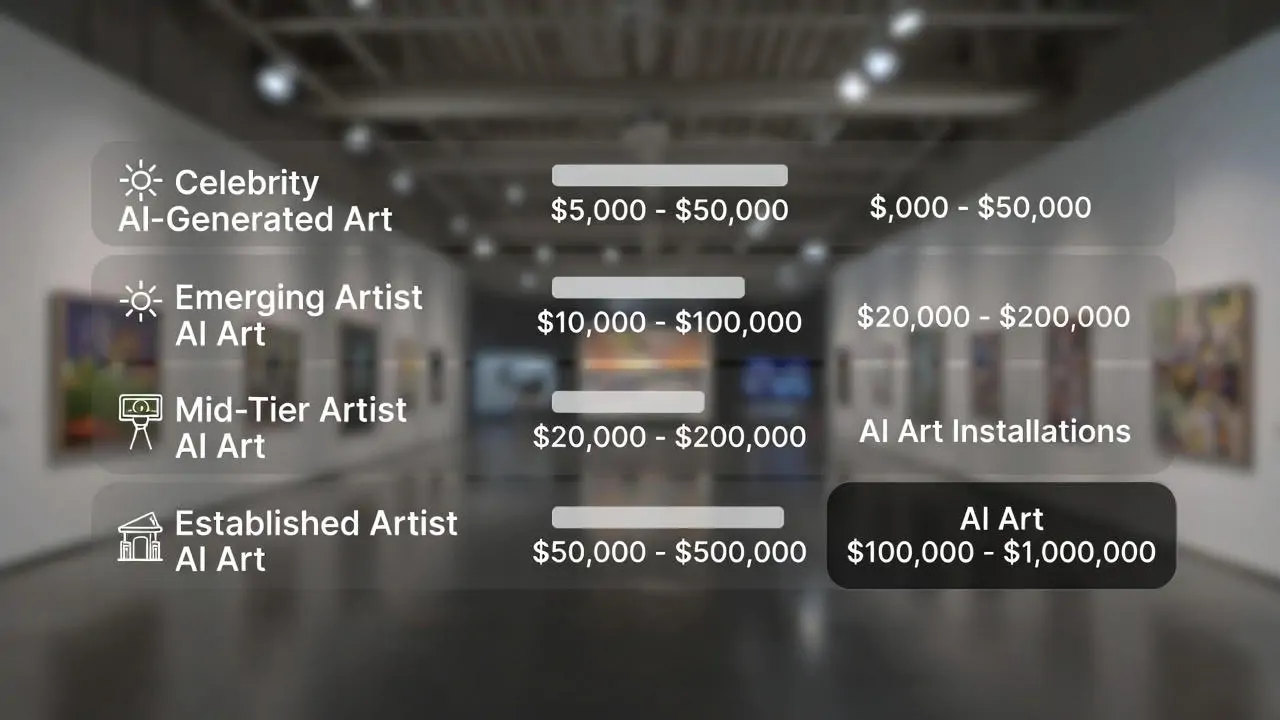
By 2026, the AI art market has stratified into distinct categories with different value propositions and collector bases:
Celebrity AI art—works by musicians, athletes, or social media influencers using consumer AI tools—trades at $5,000-$50,000, driven by fan interest rather than aesthetic merit. These pieces function more like memorabilia than fine art, appealing to collectors seeking celebrity connection rather than artistic excellence.
Technical demonstrations—early GANs and experimental algorithms—appreciate modestly as historical artifacts documenting technology's evolution. The Obvious "Edmond de Belamy," now valued around $600,000-$800,000, gains worth as the first AI artwork to achieve mainstream recognition, regardless of its aesthetic limitations.
Collaborative practice by established artists—works by Refik Anadol, Anna Ridler, Sougwen Chung, and others who use AI as tool within broader artistic practice—command $50,000-$500,000 depending on scale and provenance. These artists benefit from pre-existing reputations, gallery representation, and museum validation that position their AI work within established contemporary art contexts.
Emerging AI-native artists—creators who built practices primarily using AI tools—face challenges establishing market presence without traditional credentials. A few have broken through with gallery representation and five-figure sales, but most struggle to differentiate their work in markets flooded with AI-generated imagery.
Explore contemporary art intersecting with technology at Artestial, where traditional and digital practices converge through rigorous curation emphasizing artistic vision over mere technical novelty.
Auction results show growing acceptance but persistent uncertainty. Heritage Auctions' AI art sales now reliably achieve estimates, with works by recognized artists commanding premiums. However, resale market remains thin—most AI art purchased at auction doesn't reappear for years, preventing the transaction history that establishes robust secondary markets.
The Copyright Crisis: Authentication and Ownership Challenges
AI art raises unprecedented legal and ethical questions that collectors must navigate carefully, as copyright status significantly impacts long-term value and resale rights.
Training Data and Derivative Works
Most AI systems train on copyrighted images without creator permission—Stable Diffusion, for instance, trained on LAION-5B, a dataset containing billions of copyrighted photographs and artworks. Artists including Karla Ortiz, Kelly McKernan, and Sarah Andersen filed class-action lawsuits in 2023 alleging copyright infringement, arguing that AI models constitute unauthorized derivative works of training data.
Courts have yet to establish definitive precedent. Some argue that training constitutes fair use—transformative processing that doesn't reproduce source material. Others contend that AI models essentially store compressed versions of copyrighted works, making generation a form of unauthorized copying. The legal uncertainty creates risk for collectors—if courts rule against AI companies, artworks generated by those systems might face copyright claims that complicate resale or exhibition.
Sophisticated collectors now request documentation regarding training data sources. Works generated by models trained exclusively on public domain or properly licensed images carry less legal risk than those using scraped internet data. Some artists train custom models solely on their own work, eliminating third-party copyright concerns—these "clean" AI works command premiums among risk-averse collectors.
Authorship Attribution and Artist Intent
Traditional art markets rely on clear authorship—collectors buy works by specific artists whose reputations support valuations. AI art complicates this framework. Who deserves attribution: the person who wrote the prompt, the programmers who developed the algorithm, the artists whose work comprised training data, or all parties collectively?
Current market practice typically attributes works to prompt creators—the individuals who conceived ideas and refined outputs through iterative prompting. However, this attribution feels unsatisfying when considering that algorithms do the actual creation based on synthesizing millions of copyrighted works without compensation to original creators.
Some artists address this by explicitly collaborating with AI systems, presenting works as human-AI partnerships. Sougwen Chung creates paintings alongside a robotic arm controlled by AI trained on her drawing style—these works credit both human and AI contributions. This transparency regarding creative process provides stronger authenticity claims than works where AI contribution remains obscured.
Authentication Protocols for Digital Outputs
Unlike paintings with physical uniqueness, AI-generated images exist as digital files that can be perfectly replicated. This raises authentication challenges similar to those facing digital art and NFTs—how do collectors verify they own "the" authentic version rather than one of infinite potential copies?
Blockchain registration emerged as the primary authentication method. Artists mint AI works as NFTs on Ethereum or other chains, establishing verifiable ownership records. The NFT doesn't prevent copying the underlying image, but it establishes provenance and scarcity in ways that traditional digital files cannot.
However, NFT minting involves costs and technical complexity that many AI artists avoid. For non-blockchain works, authentication relies on artist certification—signed documents attesting that specific digital files or physical prints represent official editions. These certificates function similarly to photography edition documentation but remain vulnerable to fraud without blockchain's cryptographic guarantees.
The Democratization Debate: Access Versus Value
AI art's accessibility—anyone can generate museum-quality imagery in seconds—raises fundamental questions about artistic value and whether democratizing creation devalues the output.
The Optimistic Case: Expanding Creative Participation
Proponents argue that AI tools democratize artistic creation the way photography, digital art, and music production software did previously. Individuals without drawing skills or formal training can now realize creative visions, expanding the population able to create visual art from millions to billions.
This democratization could reveal untapped creative talent—people with extraordinary aesthetic sensibilities but limited technical skills can now express ideas visually. The accessibility might produce genuinely innovative work from unexpected sources, enriching cultural production beyond traditional art world gatekeepers.
For commercial applications, AI art provides affordable illustration, expanding visual communication possibilities for small businesses, independent publishers, and creators who couldn't previously afford professional artwork. This practical utility generates economic value even if fine art markets remain skeptical.
The Pessimistic Case: Flooding Markets with Mediocrity
Critics counter that democratization without standards produces mediocrity. When everyone can generate "art" instantly, markets flood with superficially attractive but conceptually shallow imagery. The ease of production creates quantity that overwhelms quality, making discovery of genuinely innovative work increasingly difficult.
Professional illustrators and commercial artists face displacement as AI systems produce adequate work at near-zero marginal cost. While AI lacks the conceptual sophistication that fine artists provide, it suffices for many commercial applications—book covers, advertising imagery, website graphics. This displacement affects livelihoods without necessarily improving visual culture.
The counterargument emphasizes that new technologies always displace existing practices initially, then create new opportunities as fields adapt. Photography displaced portrait painters but created entirely new artistic practices. Digital production eliminated typesetting jobs but enabled desktop publishing. AI might similarly disrupt current illustration work while enabling artistic practices we haven't yet imagined.
The Collector's Perspective: Curation Becomes Critical
For collectors, AI's democratization makes curatorial discernment more valuable, not less. When billions of images flood circulation, the ability to identify genuinely significant work becomes crucial advantage. Collectors who develop sophisticated understanding of what distinguishes thoughtful AI art from algorithmic mediocrity position themselves to acquire important works before consensus emerges.
This mirrors earlier technological transitions. Early photography collectors who recognized masters like Ansel Adams, Diane Arbus, or Irving Penn before market consensus built extraordinary holdings. Digital art pioneers who supported artists like Beeple, Pak, or XCOPY before NFT mania achieved spectacular returns. The pattern suggests that discerning collectors can navigate AI art successfully by focusing on artistic vision rather than technical novelty.
Investment Considerations: Collecting AI Art Intelligently
Sophisticated collectors approach AI art with frameworks balancing opportunity against unprecedented challenges that traditional art markets don't present.
Artist Reputation and Institutional Validation
The safest AI art investments involve established artists incorporating AI into broader practices. When blue-chip artists like Refik Anadol, whose works already command six figures, create AI installations that museums acquire, those pieces benefit from existing market infrastructure supporting the artist's overall career.
Anadol's "Machine Hallucinations" series, shown at major museums worldwide and featured at Art Basel, demonstrates how institutional validation transfers to AI works. His NFT sales generated $60+ million in 2022-2023, with individual works trading at $500,000-$1 million. This success reflects his decade-long reputation as much as AI novelty—collectors buy Anadol's vision and execution, not merely algorithmic output.
Emerging AI-native artists present higher risk and potentially higher reward. Artists like Claire Silver, whose anonymous AI-generated portraits gained significant social media following, or Robbie Barrat, whose GAN experiments predate consumer AI tools, represent speculative investments. Their long-term value depends on whether they maintain relevance as AI capabilities evolve and whether art history recognizes their contributions as significant.
Physical Versus Digital: The Tangibility Premium
Physical AI art—prints, installations, sculptural objects—commands premium pricing over purely digital files. Collectors purchasing Anadol installations pay $200,000-$500,000 for physical LED displays presenting AI-generated imagery. These objects provide tangibility and display permanence that digital files lack, while limiting edition sizes in ways that digital reproduction cannot.
However, physical presentation adds costs. Large-scale LED installations require maintenance, consume power, and may become technologically obsolete within years. Collectors must budget for ongoing technical support and potential hardware replacement—considerations absent from traditional art acquisition.
Purely digital AI art typically sells as NFTs, with markets following broader NFT patterns—explosive interest followed by dramatic correction. AI NFTs that sold for $50,000-$100,000 in 2021-2022 now trade at $5,000-$10,000, reflecting both NFT market correction and AI art's novelty wearing off. Long-term digital AI art value likely depends on whether specific works achieve historical significance as early examples or artistic milestones.
Edition Size and Scarcity
AI's ability to generate infinite variations creates artificial scarcity challenges. An artist could produce thousands of similar works by adjusting prompts slightly—what prevents flooding markets with nearly identical pieces?
Reputable AI artists self-impose edition limits, treating outputs like photography or printmaking editions. They mint specific quantities as NFTs or produce limited physical editions, destroying source files or committing not to generate additional copies. These voluntary scarcity mechanisms depend entirely on artist honor—there's no physical constraint preventing additional production.
Collectors should verify edition terms clearly before purchasing. Inquire whether artists commit to production limits, what prevents future editions, and how uniqueness gets enforced. Artists who maintain transparent edition practices build reputations supporting long-term value; those who flood markets undermine their own work's worth.
The Human Factor: Why AI Won't Replace Artists
Despite apocalyptic predictions, AI enhances rather than replaces human creativity. Understanding why clarifies AI art's long-term trajectory and collecting implications.
Conceptual Direction and Aesthetic Judgment
AI generates imagery based on prompts and training data, but lacks intentionality—the conceptual framework distinguishing art from decoration. Humans determine what images to generate, how to refine outputs, which results merit preservation, and how works communicate meaning beyond surface aesthetics.
Refik Anadol's "Machine Hallucinations" doesn't derive value from the AI processing MoMA's collection data—thousands of people could run identical algorithms. Value comes from Anadol's decision to process that specific dataset, his aesthetic judgment selecting compelling outputs from millions of possibilities, his installation design creating immersive experiences, and his conceptual framework positioning the work within contemporary art discourse.
This curatorial role—selecting, refining, contextualizing algorithmic outputs—constitutes the artistic labor that AI cannot replicate. As long as aesthetic judgment and conceptual sophistication matter, humans remain central to artistic practice even when algorithms generate imagery.
Emotional Resonance and Cultural Context
Great art communicates human experience, cultural memory, and emotional truth that transcends technical execution. AI can generate technically perfect portraits but cannot infuse them with psychological depth arising from the artist's understanding of human nature, cultural context, or historical moment.
When Kehinde Wiley paints portraits of young Black men in poses referencing Old Master paintings, the work's power derives from commentary on art history, representation, and identity. An AI trained on similar imagery might produce visually comparable paintings, but they'd lack the intentionality and cultural critique that makes Wiley's work meaningful.
Collectors valuing emotional resonance and cultural significance will continue favoring human artists whose work engages seriously with these dimensions. AI might augment their practice—generating preliminary compositions, exploring color relationships, testing variations—but the conceptual heavy lifting remains human.
The Market's Conservatism and Status Signaling
Art markets inherently value provenance, authenticity, and artist narrative—factors favoring human creators over algorithms. Collectors don't just buy aesthetic objects; they acquire pieces of artist's lives, historical moments, cultural movements. The story surrounding art's creation contributes substantially to value.
"I acquired a painting by struggling artist who later achieved recognition" provides satisfaction that "I bought an image generated by algorithm" cannot match. The human narrative—artistic journey, creative breakthrough, personal sacrifice—supports emotional investment in artwork that purely algorithmic creation lacks.
This market psychology ensures continued premium for human-created art. Blue-chip collectors will likely treat AI as supplementary category rather than replacement, similar to how photography expanded collecting without displacing painting. Different categories serve different collector motivations—some seek pure aesthetics, others prioritize artist connection and narrative.
The Future: Predictions for AI Art's Evolution
Understanding likely trajectories helps collectors position intelligently for AI art's next phase.
Integration as Standard Tool
AI will likely become standard artistic tool, comparable to Photoshop or digital cameras—initially controversial, eventually ubiquitous. Artists will routinely use AI for sketching, composition exploration, and technical execution while maintaining human direction and aesthetic control. This normalization will reduce novelty premium while increasing AI's practical utility.
The division won't be "AI art versus traditional art" but rather "thoughtful work using various tools including AI versus mediocre work regardless of technique." Quality and conceptual rigor will matter more than whether artists employed algorithms—just as photography markets now value artistic vision over whether photographers used film or digital capture.
Regulatory Frameworks and Copyright Resolution
Legal frameworks will eventually clarify copyright status, likely through compromise balancing creator rights against technology innovation. Potential solutions include mandatory licensing for training data (compensating original artists whose work trains models), disclosure requirements (transparency regarding AI involvement), and derivative work exceptions for transformative AI generation.
These frameworks will stabilize markets by reducing legal uncertainty. Works created under compliant systems will trade more freely; those with murky copyright status will face discounts or become unmarketable. Collectors should monitor legal developments and favor AI art with clear provenance and copyright documentation.
Specialized AI Art Platforms and Markets
Dedicated platforms for AI art will likely emerge, providing authentication, edition verification, and market infrastructure specifically designed for algorithmic creation. These platforms might integrate directly with AI tools, automatically minting works as NFTs when generated, maintaining edition records, and facilitating secondary trading.
Such infrastructure would professionalize AI art markets, providing collectors the security and transparency that traditional auction houses and galleries offer for conventional art. Until this infrastructure matures, AI art will likely remain speculative investment requiring higher risk tolerance.
Human-AI Collaboration as Norm
The most significant trajectory involves human-AI collaboration becoming standard practice across creative fields. Artists will train custom models on their work, developing AI assistants that suggest possibilities within their aesthetic. This personalized AI—essentially digital studio assistants—will enable artists to execute more ambitious projects while maintaining distinctive visions.
Collectors will likely value these collaborative works similarly to traditional art, recognizing that human direction and aesthetic judgment remain central even when AI assists execution. The distinction between "AI art" and "art" may eventually disappear, with tools becoming invisible behind artistic vision.
Discover contemporary art embracing technology at Artestial, where we curate works that demonstrate how AI and traditional practices converge through authentic artistic vision rather than mere technological novelty.
Conclusion: Evolution, Not Revolution
AI art represents evolution in artistic practice's ongoing dialogue with technology, not revolution displacing human creativity. History demonstrates that new tools expand possibilities rather than eliminating established practices—oil painting didn't end fresco, photography didn't kill painting, digital art didn't replace physical objects.
For collectors, AI art offers opportunities requiring discernment absent from more established categories. The flood of easily generated imagery demands curation identifying works with genuine artistic merit versus algorithmic novelty. Those who develop sophisticated understanding of what distinguishes thoughtful AI practice from mere technical demonstration position themselves advantageously.
The key insight: collect artistic vision, not technology. Whether artists use brushes, cameras, code, or AI matters less than whether their work demonstrates conceptual rigor, aesthetic sophistication, and cultural relevance that sustains interest beyond initial novelty. Refik Anadol's success derives from artistic vision that happened to employ AI, not from AI employment itself.
As markets mature and legal frameworks clarify, AI art will likely occupy a distinct but integrated position within contemporary art—comparable to photography's trajectory from controversial upstart to respected medium. Early collectors who recognized photography masters achieved spectacular returns; those who simply bought "photography" indiscriminately did not. The same principle will likely govern AI art.
The threat AI poses isn't to art itself—human creativity will continue expressing ideas, emotions, and cultural meaning through whatever tools prove most effective. Rather, AI threatens artistic complacency. Artists who merely execute technical skill without conceptual innovation will face algorithmic competition; those who bring irreplaceable vision, cultural insight, and emotional depth will remain indispensable.
For collectors navigating this landscape, the opportunity lies in supporting artists who use AI thoughtfully while developing expertise to distinguish artistic substance from technological flash. The winners in AI art collecting won't be those who bought earliest or most extensively, but those who identified works and artists that history recognizes as having advanced artistic practice meaningfully—the same dynamic that governs traditional art collecting.
Frequently Asked Questions
How can I verify that AI-generated art won't be replicated endlessly, destroying scarcity?
Verification requires multiple layers. Request blockchain certification—NFTs provide cryptographically verifiable edition limits that artists cannot exceed without detection. For physical AI art, obtain signed certificates limiting editions with artist commitments not to produce additional copies. Research artist reputation—those who maintain edition integrity build reputations supporting long-term value; those who flood markets destroy it. Consider physical uniqueness—LED installations or works incorporating physical elements possess inherent scarcity even if underlying digital files could theoretically be reproduced. Some collectors also negotiate contractual provisions granting legal recourse if artists violate edition terms. While no system provides absolute guarantees, these combined approaches significantly reduce replication risk.
Should I focus on AI-native artists or established artists incorporating AI?
Both present valid strategies with different risk profiles. Established artists like Refik Anadol offer lower risk—their pre-existing reputations, gallery representation, and museum validation provide market infrastructure supporting AI work. These pieces typically command $50,000-$500,000+ but offer relative safety and liquidity. AI-native emerging artists present higher risk and potentially higher reward—acquiring early works by artists who might become next generation's blue-chip names. However, most emerging AI artists will not achieve lasting recognition; identifying future stars requires exceptional discernment. Diversification makes sense: establish portfolio foundation with established artist AI work, allocate smaller amounts to promising emerging talents whose vision transcends technological novelty.
How do copyright issues affect AI art's resale value and exhibition rights?
Copyright uncertainty creates significant risk until courts establish clear precedent. If rulings favor artists whose work trained AI models, collectors might face claims when attempting resale or public exhibition. This risk particularly affects works created by models trained on scraped internet data without license. Mitigate by acquiring works with clean provenance—AI trained on public domain images, properly licensed datasets, or artists' own work exclusively. Document everything: training data sources, licensing agreements, artist certifications. Consider legal consultation for six-figure+ acquisitions, ensuring purchase agreements include seller warranties regarding intellectual property rights. Insurance becomes critical—obtain policies specifically covering copyright claim risks, which standard art insurance may not address.
Can AI art appreciate like traditional art, or is it inherently less valuable?
Long-term appreciation depends on factors transcending medium. Photography initially faced similar skepticism—dismissed as mechanical reproduction lacking artistic merit. Today, vintage prints by masters command millions at auction. AI art will likely follow comparable trajectory: most AI-generated imagery remains worthless, but works by recognized artists with institutional validation, clear provenance, and limited editions appreciate substantially. Refik Anadol's pieces that sold for $50,000-$100,000 in 2020-2021 now trade at $200,000-$500,000+, demonstrating appreciation potential. However, the flooded market and edition verification challenges create headwinds traditional art doesn't face. Focus on acquiring museum-quality work by serious artists rather than speculating on AI novelty, and hold long-term rather than trading short-term.
What percentage of my art collection should I allocate to AI art in 2026?
Conservative allocation suggests 5-10% maximum for most collectors, treating AI art as emerging category with unproven long-term trajectory. This allows meaningful exposure without excessive risk if markets disappoint. More aggressive collectors comfortable with technology and familiar with artists might allocate 10-20%. However, no collector should concentrate portfolios primarily in AI art given market immaturity, legal uncertainties, and limited resale history. The exception: collectors specifically passionate about technology and digital culture might justify higher allocation as lifestyle choice rather than pure investment strategy. Whatever allocation you choose, emphasize quality over quantity—better to own single museum-quality Anadol installation than dozens of speculative AI NFTs. Consider AI art supplemental to traditional holdings rather than replacement, providing technology exposure while maintaining blue-chip foundation.
Ready to explore contemporary art embracing technology? Visit Artestial's curated collections featuring works where human creativity and technological innovation converge through authentic artistic vision, or connect with our specialists for guidance navigating AI art's opportunities and challenges with sophistication.
Curating excellence, one insight at a time.
— AURUM Team
Disclaimer: This article is for informational purposes only and does not constitute financial, investment, or legal advice. AI-generated art markets remain highly speculative with limited transaction history and uncertain legal frameworks. Copyright issues surrounding AI training data may affect artwork ownership, exhibition rights, and resale possibilities. Technology evolution may rapidly obsolete current AI art, and market valuations remain volatile. Edition integrity depends on artist honor without physical constraints enforcing scarcity. Past appreciation of specific works does not predict future performance. Regulatory changes could significantly impact AI art markets. Consult qualified legal counsel, art advisors, and financial professionals before making AI art acquisitions. Observations reflect market conditions as of early 2026 and may not apply to future situations.