

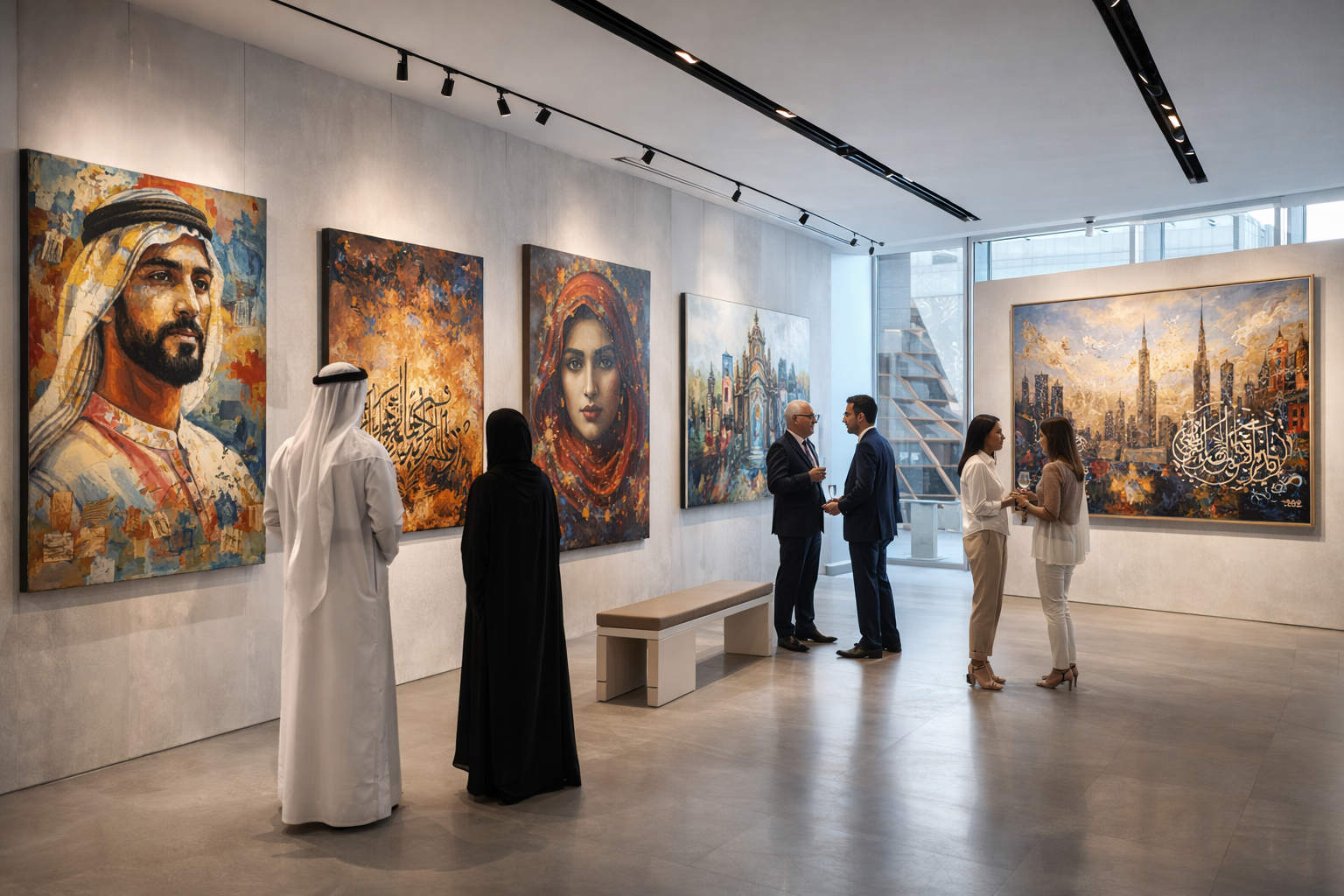
The London collector had flown to Dubai primarily for meetings but allocated Friday afternoon to gallery visits based on advisor recommendations. By 6 PM, she'd acquired three works totaling $85,000—two by emerging Emirati artists and one by an Egyptian painter whose Cairo gallery prices were 40% higher than Dubai's. "I came for business," she told the gallery director while arranging shipping. "I'm leaving with art I couldn't access in London at these prices." Her experience captures the UAE's evolution into essential destination for collectors seeking Middle Eastern and international contemporary art at market-advantageous terms.
The United Arab Emirates—particularly Dubai and Abu Dhabi—has developed sophisticated gallery infrastructure that rivals established art capitals while offering unique advantages: access to regional artists before international price corrections, curated selections bridging Eastern and Western contemporary practice, and tax-advantageous acquisitions that translate to 5-20% savings versus European or American purchases. For collectors building international portfolios or seeking exposure to Middle Eastern contemporary art, the UAE's galleries provide unmatched concentration of quality, accessibility, and opportunity.
Understanding where to invest limited gallery-visiting time requires distinguishing between Dubai's commercial art clusters and Abu Dhabi's museum-centric cultural district, recognizing which galleries represent investment-grade artists versus decorative work, and timing visits to coincide with Art Dubai (March) or Abu Dhabi Art (November) when galleries present strongest programming and international collectors concentrate.
Dubai: Alserkal Avenue and the Contemporary Art Hub
Dubai's contemporary art scene centers on Alserkal Avenue, a former industrial area in Al Quoz transformed into the Middle East's premier gallery district.
Alserkal Avenue: The Essential Destination
Alserkal Avenue houses over forty galleries, creative studios, and cultural spaces within converted warehouses, creating concentrated art destination comparable to London's Shoreditch or New York's Chelsea. The district's walkability—unusual in car-dependent Dubai—enables efficient gallery hopping, while its industrial aesthetic provides appropriate context for contemporary art.
Leading galleries include Carbon 12, representing both regional and international contemporary artists with particular strength in Middle Eastern voices. Their program balances established names (providing market confidence) with emerging talents (offering discovery opportunities). Exhibitions typically feature 8-12 works priced $8,000-$80,000, targeting serious collectors rather than casual buyers. Gallery director Nadine Knotzer maintains relationships with major international institutions, ensuring represented artists achieve museum validation supporting long-term appreciation.
The Third Line focuses on Middle Eastern and South Asian contemporary artists, filling crucial gap in Western gallery representation. Co-founders Sunny Rahbar and Claudia Cellini have built roster including Pakistani, Iranian, Lebanese, and Emirati artists whose work addresses regional political and cultural themes while maintaining formal sophistication appealing to international collectors. Pricing ranges $5,000-$60,000 for works by mid-career artists with museum acquisitions and biennial participation. The gallery participates in Art Basel, Frieze, and other international fairs, providing liquidity and price discovery for represented artists.
Lawrie Shabibi emphasizes rigorous contemporary practice by Middle Eastern artists, particularly focusing on conceptual work and new media that might find limited commercial support in more conservative regional markets. Director William Lawrie's curatorial vision attracts collectors seeking intellectually ambitious work rather than decorative pieces. The gallery represents artists like Hayv Kahraman (Iraqi-American painter commanding $40,000-$120,000 for significant works) and Sara Naim (Emirati photographer whose practice explores identity and representation).
Gallery Isabelle van den Eynde showcases both emerging and established artists from the MENASA region (Middle East, North Africa, South Asia), with particular strength in emerging Emirati and Iranian artists. Founder Isabelle van den Eynde actively cultivates relationships with regional collectors and institutions, ensuring robust local market for represented artists alongside international exposure. Works range $3,000-$50,000, providing accessible entry points to regional contemporary art.
Beyond Alserkal: Dubai's Scattered Galleries
While Alserkal concentrates galleries, several important spaces operate elsewhere in Dubai. Opera Gallery in DIFC (Dubai International Financial Centre) focuses on blue-chip contemporary and modern art—Warhol, Haring, Basquiat, Hirst—alongside select Middle Eastern artists. Pricing reflects international market rates ($100,000-$1,000,000+ for major works), appealing to established collectors seeking recognized names rather than emerging talents. The DIFC location attracts financial sector professionals and visiting executives with art-buying budgets.
Ayyam Gallery, with Dubai location alongside Beirut and London spaces, emphasizes contemporary artists from Arab world and Iran. The gallery played significant role introducing Syrian contemporary artists to international markets, maintaining strong representation despite Syria's ongoing conflict. Artists like Safwan Dahoul (Syrian painter) command $60,000-$180,000 for major works, reflecting sustained international interest and institutional validation.
XVA Gallery in Dubai's heritage district (Bastakiya) occupies restored traditional buildings, creating atmospheric contrast to Alserkal's industrial spaces. The gallery focuses on contemporary Middle Eastern and South Asian artists working in traditional mediums—painting, sculpture, works on paper—rather than new media. This traditional medium emphasis appeals to collectors seeking conventional formats while exploring non-Western content.
Discover Middle Eastern contemporary art at Artestial, where regional voices meet international collecting standards through curated selections emphasizing both cultural specificity and universal appeal.

Abu Dhabi: Museums and Saadiyat Cultural District
Abu Dhabi's art infrastructure emphasizes museums and institutional spaces rather than commercial galleries, creating different collecting opportunities.
Saadiyat Cultural District: Museum Capital
Saadiyat Island's ambitious cultural development includes Louvre Abu Dhabi (opened 2017), under-construction Guggenheim Abu Dhabi, and planned Zayed National Museum, positioning Abu Dhabi as museum-centric cultural hub. While these institutions don't sell works, their presence creates ecosystem supporting commercial galleries and influencing regional collecting taste.
Manarat Al Saadiyat, the cultural district's community arts center, hosts rotating exhibitions by regional artists and provides programming introducing collectors to emerging voices. While not primarily commercial, exhibitions often lead to private sales and gallery representation for featured artists. The space functions as discovery zone where collectors can identify talents before gallery representation drives prices upward.
Abu Dhabi's Commercial Galleries
Warehouse421 in Mina Zayed operates as residency program and exhibition space supporting Emirati artists and designers. Though not traditional commercial gallery, Warehouse421 facilitates purchases and commissions, providing access to work by Emirati creators at pre-gallery-representation prices ($2,000-$15,000 typically). For collectors interested in supporting local talent and acquiring works before market recognition, Warehouse421 offers exceptional opportunities.
Gallery One at Emirates Palace operates in luxury hotel context, showing contemporary Middle Eastern artists alongside photography and limited edition prints. The tourist-friendly location attracts international visitors, while programming maintains sufficient quality to interest serious collectors. Pricing tends toward accessible range ($3,000-$25,000), making it good entry point for beginning collectors exploring Middle Eastern contemporary art.
Ghaf Gallery focuses on Emirati and regional artists with particular emphasis on works addressing UAE's cultural heritage and rapid modernization. The gallery's mission includes cultural preservation alongside commercial success, attracting collectors whose values align with supporting regional artistic development. Works range $5,000-$40,000, with regular selling exhibitions and rotating programs.
Collecting Strategies: Navigating UAE Galleries
Understanding how to approach UAE galleries maximizes discovery opportunities while avoiding common pitfalls.
Timing Visits Around Art Fairs
The UAE gallery scene intensifies around major art fairs. Art Dubai (March) brings international collectors to Dubai, prompting galleries to present strongest programming and bring in significant works by represented artists. Galleries surrounding Art Dubai often hold vernissages and special exhibitions, creating concentrated opportunity to see exceptional work. Similarly, Abu Dhabi Art (November) activates Abu Dhabi galleries with enhanced programming.
Visiting during fair week provides efficiency—see multiple gallery exhibitions plus fair itself in 3-4 days. However, competition for works intensifies during fairs as collectors converge. For less competitive acquisition environment, visit weeks after fairs when galleries refresh exhibitions with new inventory but tourist/collector crowds have dispersed.
Building Gallery Relationships
UAE galleries, like galleries globally, prioritize established relationships over one-time visitors. Introduce yourself to directors, express genuine interest in represented artists, ask thoughtful questions demonstrating research and engagement. UAE's relatively small art community means gallery directors often know each other—positive reputation at one gallery translates to warm receptions elsewhere.
Request to be added to gallery mailing lists for exhibition announcements and private views. VIP previews (typically evening before public opening) provide first selection of works and opportunities to meet artists. As relationship develops, gallery directors offer price considerations for multiple purchases or commit to securing specific works by artists you collect.
Price Comparisons and Market Intelligence
UAE's tax-advantageous status creates pricing benefits for international collectors. While the UAE introduced 5% VAT in 2018, this remains significantly lower than European rates (20% UK VAT) or US sales taxes (5-10% depending on state). Works selling for $50,000 in Dubai cost approximately $52,500 including UAE VAT, versus $60,000 in London after UK VAT or $52,500-$55,000 in US states with sales tax. International collectors can often reclaim UAE VAT on exported artworks, enhancing savings. However, not all UAE gallery pricing reflects this advantage—some galleries price to international market rates, capturing tax differentials rather than passing savings to collectors.
Compare prices across galleries and against international auction results (use Artprice or Artnet databases). If UAE gallery prices match or exceed international rates, question the value proposition. Best opportunities occur when galleries price for local/regional markets rather than assuming international tourist pricing.
Shipping costs from UAE to Western destinations run $1,000-$3,000 for mid-sized works, import duties vary by destination (typically 0-5% for original art), and insurance during transit costs approximately 1% of value. Factor these costs when comparing UAE versus local gallery pricing.
Emerging Artists and Discovery Opportunities
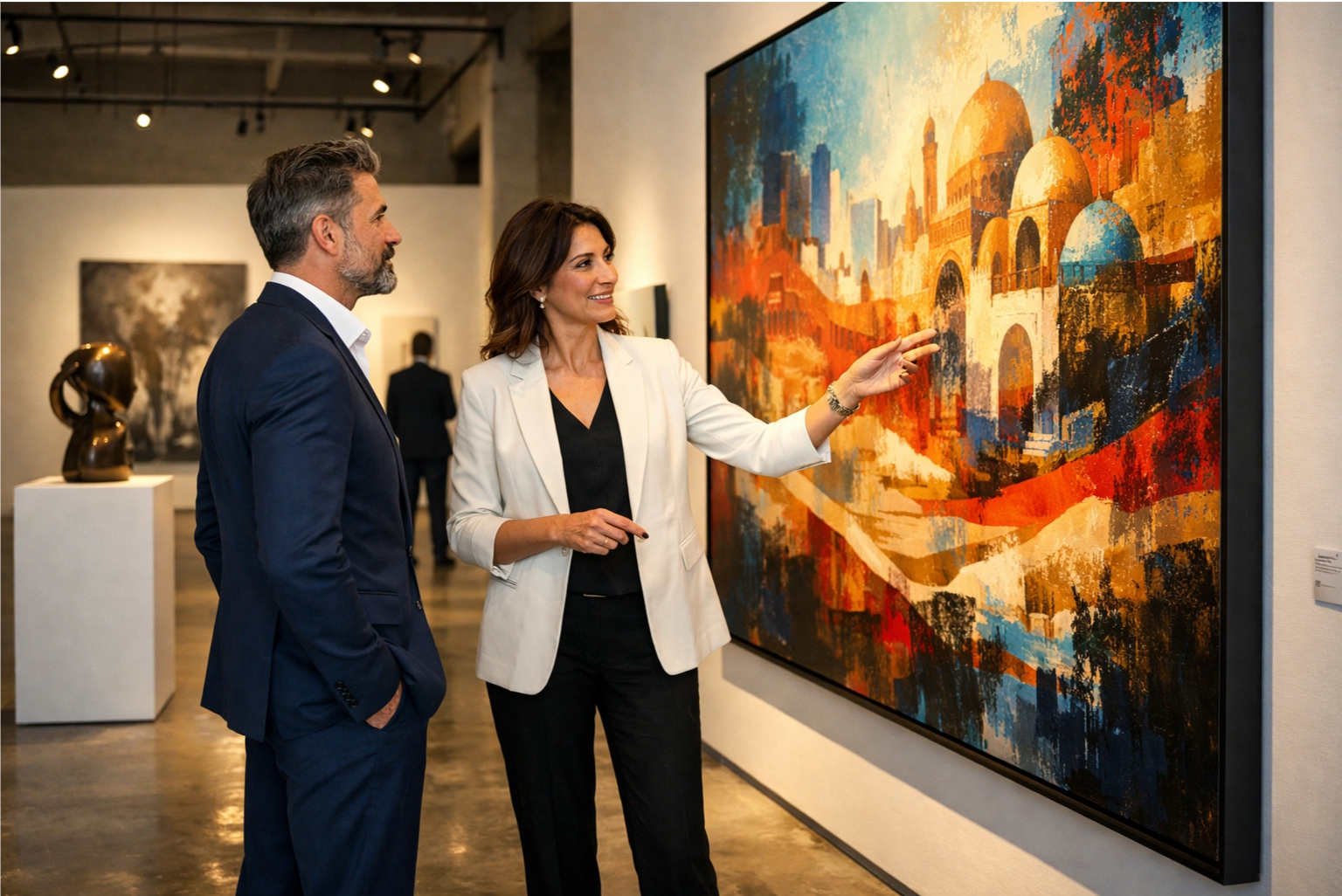
The UAE's galleries provide access to regional emerging artists before Western galleries discover and price them for international markets.
Emirati Artists Gaining Recognition
Maitha Demithan creates large-scale abstract paintings exploring Emirati cultural heritage through contemporary lens. Her work bridges traditional Middle Eastern aesthetic sensibilities with contemporary painting practice, appealing to both regional collectors seeking culturally rooted work and international collectors interested in non-Western abstraction. Gallery prices currently $8,000-$25,000 position her as accessible emerging talent with strong appreciation potential as career develops.
Sara Al Haddad works in mixed media and installation addressing questions of identity, migration, and cultural hybridity relevant to UAE's cosmopolitan context. Her conceptual rigor and formal sophistication suggest trajectory toward international recognition. Current pricing $5,000-$18,000 provides entry point before potential gallery representation in Western markets drives costs upward.
Mohammed Kazem (mid-career, increasingly recognized internationally) creates conceptual photographs and videos exploring memory, place, and documentation. His work appears in major international exhibitions and museum collections, yet remains more affordably priced in Dubai galleries ($15,000-$45,000) than comparable internationally established artists. He represents opportunity to acquire museum-quality work by artist whose market hasn't fully reflected institutional validation.
Regional Artists Accessible Through UAE
UAE galleries provide access to artists from across Middle East and North Africa whose work remains difficult to acquire in Western markets. Syrian artists (Safwan Dahoul, Khaled Takreti) achieve strong prices regionally while remaining undervalued internationally. Iranian contemporary artists face sanctions complications limiting Western gallery representation but show extensively in UAE galleries. Lebanese artists navigate their country's economic collapse by establishing UAE gallery representation, creating acquisition opportunities as financial pressures create motivated sellers.
These geopolitical and economic dynamics create market inefficiencies that sophisticated collectors exploit. Artists whose home countries face instability often price work attractively in UAE markets, yet their cultural significance and artistic quality support long-term value once political/economic situations stabilize or international recognition develops despite challenges.
Art Dubai and Abu Dhabi Art: The Annual Highlights
The UAE's two major art fairs provide concentrated exposure to regional and international contemporary art.
Art Dubai (April)
Art Dubai attracts 90+ galleries from 40+ countries, with strong representation from Middle East, North Africa, South Asia, and Eastern Europe alongside Western galleries. The fair's emphasis on under-represented regions provides discovery opportunities rare at Western-centric fairs like Art Basel or Frieze.
Sections include Galleries (established galleries showing curated booth presentations), Contemporary (cutting-edge practices and emerging galleries), Residents (artist-run initiatives and independent projects), and Bawwaba (curated section focusing on Middle Eastern galleries). Plan to spend full day navigating fair efficiently—arrive at VIP opening if credentials available, otherwise early on public days to see works before selling.
Pricing at Art Dubai generally reflects international market rates rather than local Dubai gallery pricing, but still offers advantage of UAE's favorable tax structure (5% VAT versus 20% European VAT). Look for regional gallery booths showing artists without Western representation—these often provide best value as Western collectors haven't discovered and bid up prices yet.
Abu Dhabi Art (November)
Abu Dhabi Art emphasizes museum-quality contemporary work and institutional collecting, creating more serious, less commercial atmosphere than some fairs. Galleries participating typically represent stronger programs and more established artists, with pricing reflecting this quality emphasis.
The fair's Beyond section focuses on large-scale installations and commissions, providing preview of artists working at institutional scale. These installations, while not typically available for purchase, identify artists museums and major collectors support—useful intelligence for guiding private collection strategy.
Both fairs include talks, panels, and programming with curators, artists, and collectors providing educational value beyond acquisition opportunities. Attend these sessions to build knowledge, identify trends, and network with serious collectors and advisors.

Practical Considerations: Visiting UAE Galleries
Several logistical factors affect UAE gallery visiting efficiency.
Best Times to Visit
Since January 1, 2022, the UAE follows a Monday-Friday work week (with Friday half-day in many sectors), aligning with global business practices. Dubai and Abu Dhabi galleries typically operate Monday through Friday, with many staying open Saturdays to accommodate collectors. Gallery hours run approximately 10 AM-7 PM, with some galleries closing 1-3 PM during extreme summer heat or Ramadan. Winter months (November-March) provide most comfortable weather and coincide with strongest gallery programming around Art Dubai and Abu Dhabi Art.
Transportation and Gallery Districts
Dubai's Alserkal Avenue requires taxi or car—it's not accessible via metro and walking from other areas isn't practical. Budget 1-2 hours minimum for Alserkal visit, ideally 3-4 hours to see multiple galleries thoroughly. Abu Dhabi galleries are more dispersed, requiring car or taxi between locations. Many collectors hire drivers for day ($200-300) enabling efficient gallery circuit without parking/navigation hassles.
Cultural Sensitivity
UAE galleries welcome international visitors and operate according to contemporary art world norms. However, conservative dress (covering shoulders and knees) shows respect and ensures comfortable reception. Gallery owners and staff speak English fluently, and art discourse follows international contemporary art conventions.
Conclusion: The UAE's Essential Role in Contemporary Collecting
The UAE's galleries provide unique value proposition: access to Middle Eastern and regional contemporary artists before Western market discovery, tax-advantageous acquisition environment, concentrated gallery infrastructure enabling efficient visiting, and increasing institutional validation supporting long-term appreciation. For collectors building international portfolios or seeking exposure to non-Western contemporary practices, the UAE represents essential destination deserving regular visits.
The London collector who diverted Friday afternoon to gallery visits and left with $85,000 in acquisitions unavailable at comparable prices in London demonstrates opportunities awaiting engaged collectors. Whether visiting specifically for art or incorporating gallery visits into business travel, approaching UAE galleries strategically yields discoveries, relationships, and acquisitions enhancing collections while providing market advantages.
Explore Artestial's Middle Eastern contemporary art selections, or connect with our regional specialists for guidance navigating UAE galleries, identifying emerging artists, and building collections reflecting the region's vibrant contemporary practice.
Plan your UAE gallery visits around Art Dubai (March) or Abu Dhabi Art (November), allocate sufficient time for Alserkal Avenue, build relationships with gallery directors, and approach regional artists with same seriousness applied to Western contemporary art. The rewards—exceptional works at market-advantageous pricing from culturally significant artistic practices—justify the investment of time and attention.
Frequently Asked Questions
What are the price advantages of buying art in the UAE versus Europe or US?
UAE's lower VAT rate (5% introduced in 2018) compared to European and US tax rates creates measurable savings for international collectors. UK charges 20% VAT on gallery purchases; US states charge 5-10% sales tax. A $50,000 work costs approximately $52,500 including UAE VAT, versus $60,000 in London after UK VAT or $52,500-$55,000 in US after sales tax. International collectors can often reclaim UAE VAT on exported artworks through tourist refund schemes or free-zone procedures, enhancing net savings. However, factor in shipping ($1,000-$3,000 to Western destinations), import duties (0-5% depending on destination and classification), and insurance (1% of value). Total delivered cost savings typically run 3-15% versus Western gallery purchases depending on destination and whether VAT reclaim succeeds. Beyond tax advantages, some regional artists price lower in UAE than international markets—Egyptian artist might charge $30,000 in Cairo/Dubai but $45,000 through London gallery. Best opportunities combine favorable UAE tax structure with regional pricing before Western gallery markup.
Are Emirati and regional artists good long-term investments?
Middle Eastern contemporary art represents emerging market with significant upside potential but higher risk than established Western art markets. Positive factors: growing regional UHNW collector base (8-12% annual growth), increasing institutional infrastructure (Louvre Abu Dhabi, planned Guggenheim, regional museums), Western institutions diversifying collections beyond Euro-American focus, and current undervaluation relative to artistic quality. Risks: less developed secondary markets (fewer auction houses, smaller buyer pools), political instability affecting some source countries, limited Western gallery representation, and uncertainty about which artists achieve lasting recognition. Strategy: treat as portfolio diversification—allocate 10-20% of art budget to regional artists with strong institutional validation (museum acquisitions, biennial participation), gallery representation, and formal sophistication. Focus on mid-career artists ($15,000-$60,000 range) showing consistent development over 5-10+ years rather than hot emerging talents subject to speculation. Expect 5-10 year holding periods minimum before meaningful appreciation becomes likely.
How do I verify authenticity and quality when buying from UAE galleries?
Reputable UAE galleries provide same documentation as Western galleries: certificate of authenticity signed by artist/gallery, invoice showing provenance, condition reports for older works, and often artist CV demonstrating exhibition history and institutional recognition. Verify gallery reputation through: membership in professional organizations (check if they participate in vetted fairs like Art Dubai, Abu Dhabi Art), online presence and reviews, years in operation (established galleries have 5-10+ year track records), and references from other collectors. Red flags include: pressure tactics, reluctance to provide documentation, prices far below market norms (suggesting authenticity issues), and inability to demonstrate institutional relationships. For higher-value purchases ($25,000+), engage independent advisor or conservator to evaluate work before finalizing purchase. Research artist independently—verify gallery-provided CV accuracy, check auction databases for market history, and review critical reception in art publications. Established galleries like Carbon 12, The Third Line, Lawrie Shabibi maintain rigorous standards; unknown galleries or dealer spaces require more skepticism and verification.
Can I visit artists' studios directly or must I go through galleries?
UAE's relatively small, accessible art community makes studio visits more possible than in larger Western cities, but etiquette and practicality favor gallery-mediated contact. For represented artists, always approach through gallery first—requesting studio visit directly insults gallery relationship and may offend artists who maintain professional boundaries. If genuine interest exists after seeing work at gallery, ask director about studio visit possibility. Many galleries facilitate these for serious collectors considering significant purchases or commissions. For unrepresented artists, direct studio contact is acceptable but require research establishing legitimacy—follow artists on social media, attend open studio events, or get introductions through other collectors/advisors. UAE's open studio events (typically coinciding with art fairs or design weeks) provide structured opportunities to visit multiple studios, meet artists, and purchase directly without gallery markup. However, buying directly sacrifices gallery's authentication, documentation, and future support when selling.
Should I focus on Dubai or Abu Dhabi for gallery visits?
Dubai offers far more commercial galleries and greater depth of programming, making it primary destination for serious collecting. Alserkal Avenue alone houses 30+ galleries providing full day of visits, while scattered Dubai galleries (DIFC, Bastakiya) add another half-day. Abu Dhabi has fewer commercial galleries but emphasizes institutional/museum context that informs collecting even without direct purchases. Ideal strategy: spend 2-3 days in Dubai covering Alserkal Avenue thoroughly, visiting DIFC and other scattered galleries, and timing visit around Art Dubai (March). Add 1 day in Abu Dhabi (90-minute drive from Dubai) to see Louvre Abu Dhabi, visit Saadiyat Cultural District, and tour Abu Dhabi's commercial galleries. This combined approach provides comprehensive UAE art scene exposure while maximizing gallery visit efficiency. If time limited to single city, choose Dubai—greater commercial gallery density, stronger representation of regional and international artists, and more sophisticated art market infrastructure. Note: Since 2022, UAE follows Monday-Friday work week, with many galleries also open Saturday for collector convenience.
Ready to explore UAE's contemporary art scene? Visit Artestial's Middle Eastern collections featuring regional artists alongside international voices, or connect with our specialists for guidance planning UAE gallery visits and identifying investment-grade regional contemporary art.
Curating excellence, one insight at a time.
— AURUM Team
Disclaimer: This article is for informational purposes only and does not constitute financial, investment, or art collecting advice. Art markets, particularly emerging markets like Middle Eastern contemporary art, involve significant risks including illiquidity, uncertain appreciation, political instability, limited secondary markets, and authentication challenges. Gallery quality, artist reputation, and market conditions change frequently and unpredictably. Tax implications vary by buyer's residence country and individual circumstances—consult tax advisors regarding import duties and tax treatment. Price comparisons and savings estimates are approximate and vary based on specific works, galleries, destinations, and timing. Gallery recommendations reflect general reputation as of early 2026 but individual experiences and quality vary. Always conduct independent due diligence, obtain proper documentation, work with qualified advisors, and purchase only from reputable galleries. Regional political and economic conditions affect art markets unpredictably. Observations may not apply to specific situations or future conditions.