

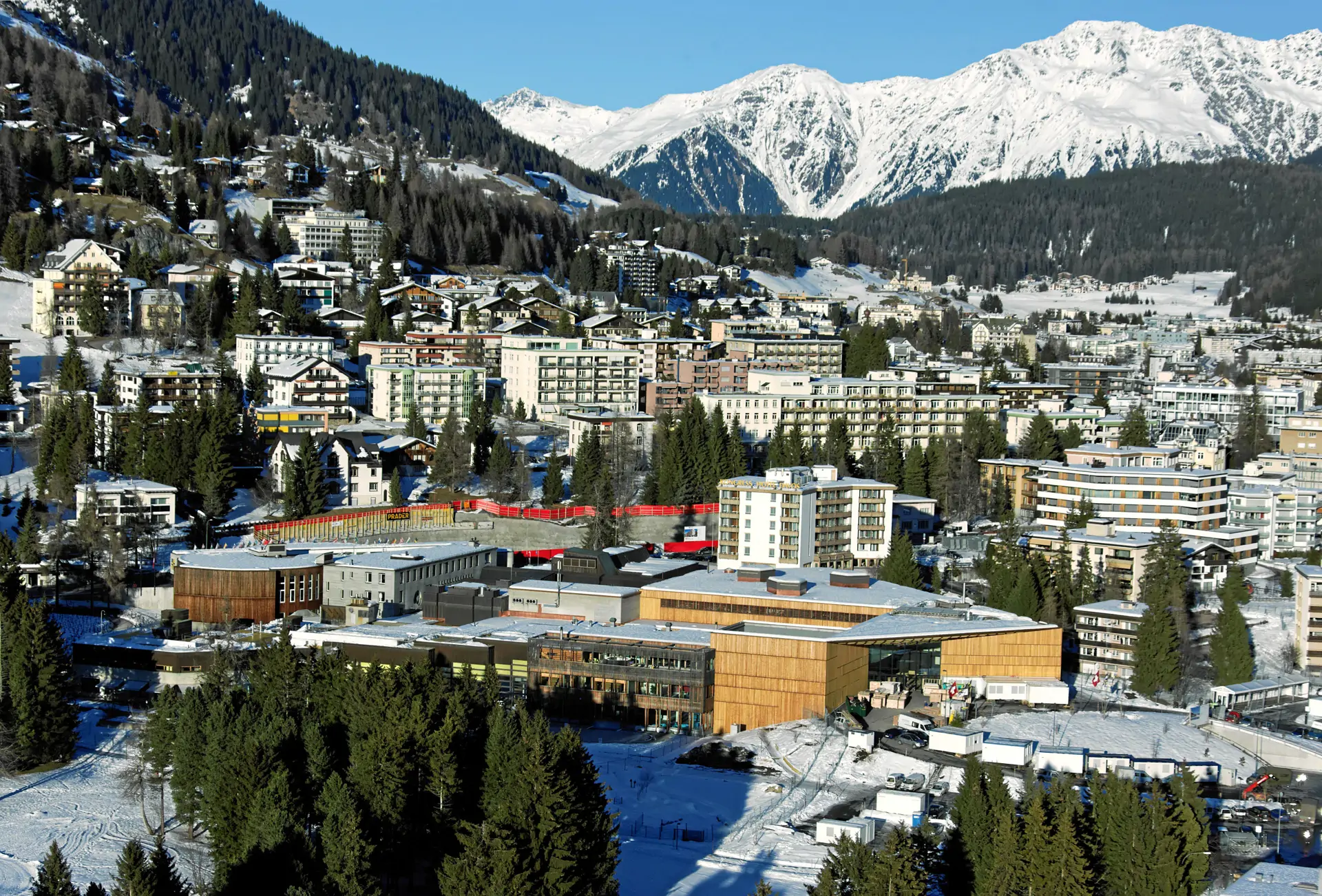
The art advisor texted her client at 11:47 PM from a Davos hotel bar: "Secured introduction to the collector you wanted. Breakfast tomorrow at Belvédère. Bring portfolio images." Her client, a contemporary gallery owner from New York, had spent $15,000 on Davos credentials not to attend panels about global economic policy, but to access thirty minutes with a Middle Eastern collector whose acquisitions could transform an artist's career overnight. By 8:30 AM the next morning, the gallery had commitments for three works totaling $850,000—a transaction that would never have occurred through conventional channels.
This scene captures the World Economic Forum's unspoken parallel economy: while official programming addresses geopolitics, climate change, and technological disruption, the real business of art collecting unfolds in private dinners, hotel suites, and Alpine restaurants where the world's wealthiest and most powerful individuals gather for five days each January. Davos 2026, scheduled for January 20-24, represents more than an economic policy forum—it's the global art market's most concentrated networking opportunity, where relationships worth millions in future transactions begin over champagne and raclette.
For sophisticated collectors, dealers, and advisors who understand that significant art acquisitions depend on relationships rather than gallery visits, Davos offers unparalleled access to decision-makers. The Forum attracts approximately 3,000 participants, including heads of state, billionaire entrepreneurs, institutional investors, and cultural leaders—precisely the demographic driving blue-chip and emerging market art purchases. Understanding Davos's role in shaping art market dynamics provides insight into how power, wealth, and cultural capital intersect at the highest levels.
The Davos Demographic: Who Attends and Why It Matters for Art Markets
The World Economic Forum's invitation-only attendance creates a unique concentration of wealth and influence impossible to replicate elsewhere. Understanding who attends clarifies why art conversations at Davos carry disproportionate market impact.
The UHNW Concentration
Davos participants represent extraordinary wealth concentration. Approximately 2,000+ billionaires and multi-hundred-millionaires attend annually, creating the world's highest per-capita UHNW gathering. These aren't merely wealthy individuals—they're active collectors whose acquisitions move markets. When a technology billionaire mentions discovering an emerging artist at a Davos dinner, galleries receive inquiries from other attendees within days.
The Forum's demographics skew toward precisely the collector profile driving contemporary art appreciation: entrepreneurs who built wealth post-2000 (60-70% of attendees), technology sector leaders (increasingly dominant representation), Middle Eastern sovereign wealth managers, Asian business dynasties, and European industrial families. These groups share characteristics that make them ideal contemporary art collectors—appetite for risk, comfort with intangible assets, desire for cultural capital signaling, and wealth scale requiring diversification beyond traditional investments.
The Cultural Leaders and Institution Heads
Davos also attracts museum directors, foundation presidents, and cultural policy makers whose institutional decisions shape what becomes "important" art. When the director of a major European museum discusses an artist over Davos coffee with a hedge fund manager, that conversation creates pathways for future institutional validation and private acquisition. This intersection of institutional authority and private capital accelerates artists' trajectory from emerging to established status.
The Forum includes approximately 150-200 cultural sector participants—curators, foundation heads, arts organization presidents, and cultural ministers. Their presence alongside collectors creates an environment where institutional collecting priorities and private market dynamics inform each other directly, without the usual intermediary steps. A museum director mentioning a planned retrospective for an artist can trigger immediate private market interest from collectors seeking to acquire before institutional validation drives prices upward.
The Art Advisors and Dealers
Recognizing Davos's collector concentration, sophisticated art advisors and dealers increasingly attend specifically to develop relationships and conduct business. Major galleries sometimes sponsor events or maintain a presence through advisors carrying portfolio images on tablets. These professionals understand that Davos provides access worth far more than the $50,000-$100,000 cost of attendance, accommodations, and related expenses.
The advisory community at Davos operates discreetly—no gallery booths or obvious salesmanship, but carefully orchestrated introductions, private viewings in hotel suites, and strategic positioning at Forum events. Advisors prepare extensively, researching attendee lists, coordinating introduction opportunities, and staging encounters that appear casual but result from meticulous planning.
Art Conversations at Davos: Where and How Business Happens
Unlike art fairs with designated exhibition spaces, the Davos art business occurs through informal channels requiring insider knowledge and strategic positioning.
The Hotel Circuit: Where Deals Develop
Davos's limited hotel capacity (town population: 11,000; Forum attendance: 3,000+) means attendees concentrate in a handful of properties—Belvédère, Steigenberger Grandhotel, InterContinental, Seehof, and several others. These hotels become 24-hour networking venues where lobbies, bars, and restaurants host constant deal-making. Art advisors position themselves strategically, knowing that a collector staying at Belvédère will likely breakfast there before morning sessions.
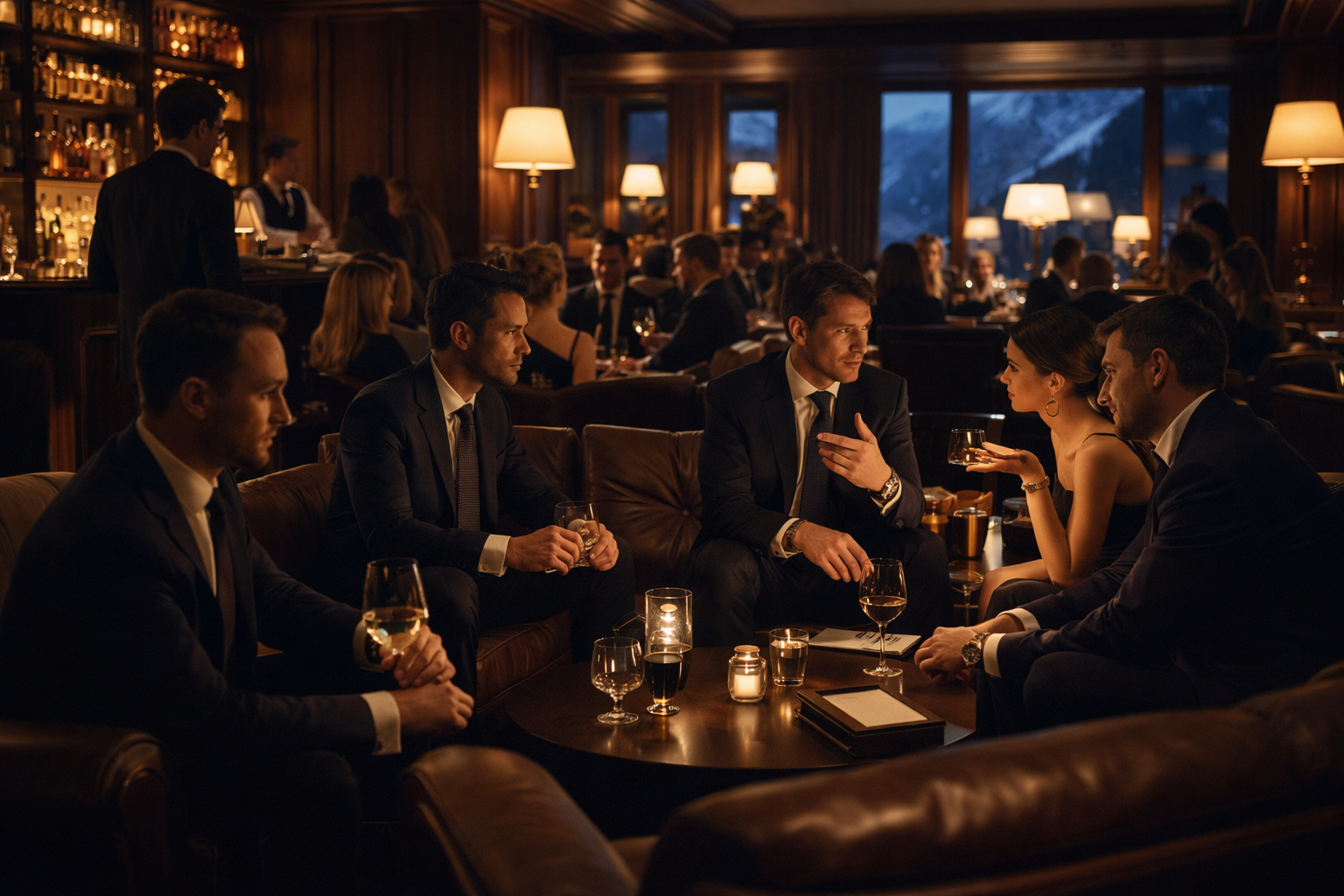
The hotel circuit operates according to unwritten protocols. Breakfast (7:00-8:30 AM) provides prime introduction opportunities—attendees are alert, schedules are less packed than later in the day, and the setting feels more intimate than crowded Forum events. Late evening (9:00 PM-midnight) offers a second window when official programming ends and attendees gather for dinners and drinks. Advisors skilled at Davos navigation maintain presence during these windows, creating "accidental" encounters that lead to substantive conversations.
Private suites in luxury hotels serve as informal galleries. Advisors rent rooms displaying portfolio images, iPads loaded with artist inventories, and documentation for works available for immediate purchase. Collectors visit these suites by appointment, conducting business away from public spaces. A typical suite viewing might last 30-45 minutes, result in $200,000-$2,000,000 in commitments, and never appear in any public record.
The Forum Margins: Between Sessions
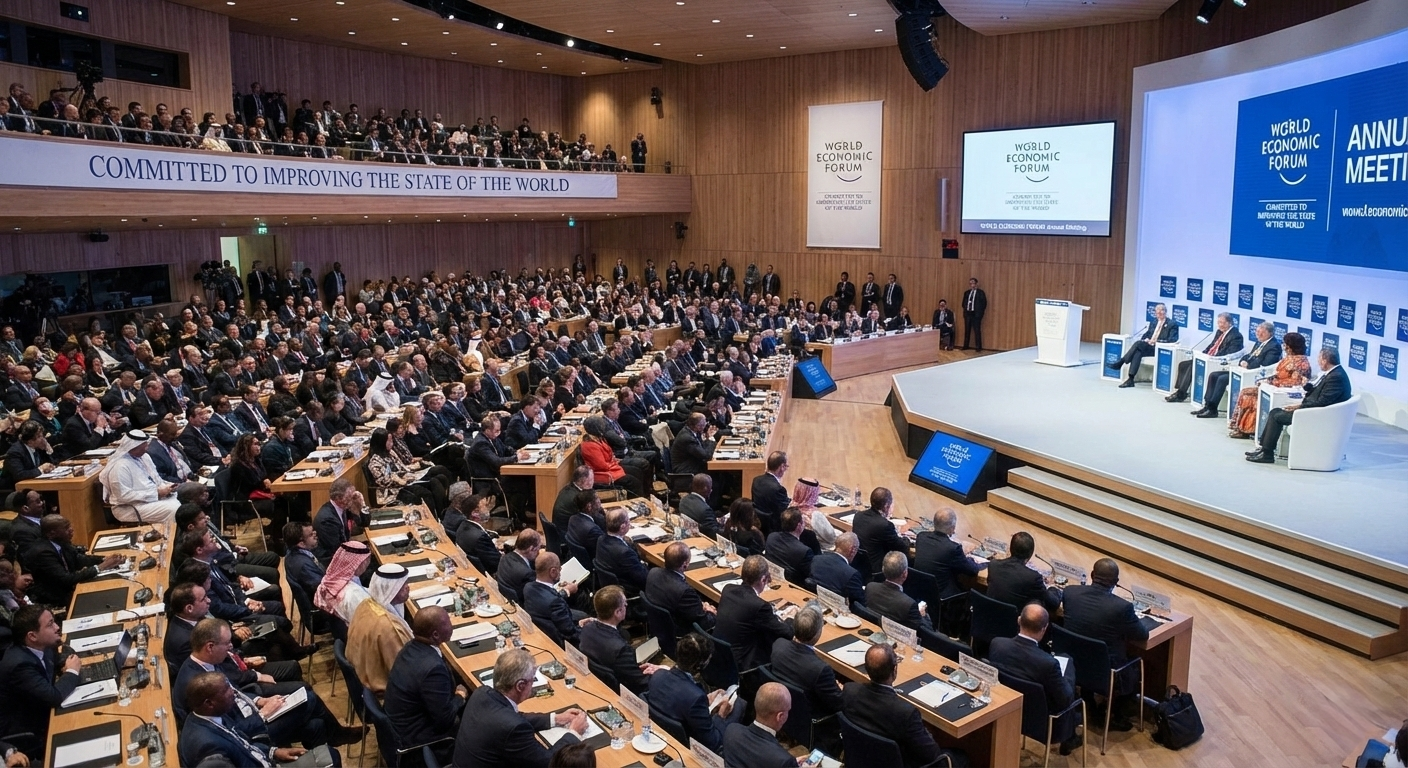
Official WEF programming includes panels, keynotes, and working sessions from 8:00 AM through the evening. However, the real Davos happens in margins—coffee breaks between sessions, lunches, and cocktail receptions. These moments allow targeted conversations that are impossible during formal programming.
Art advisors study Forum schedules to identify optimal interception points. If a target collector attends a 9:00 AM panel on emerging markets, the advisor positions herself at the coffee station afterward, creating a natural encounter opportunity. These margin conversations, lasting 3-5 minutes, serve to plant seeds—mention an artist, reference an upcoming exhibition, suggest a future conversation—that develop into transactions weeks or months later.
The Forum's networking app, allowing participants to schedule meetings, facilitates more formal encounters. Advisors send meeting requests weeks before Davos, competing for 30-minute slots in collector schedules. Securing a meeting requires a compelling value proposition—exclusive access to work by a sought-after artist, an introduction to emerging talent before gallery representation, or market intelligence about an artist whose prices are poised to rise.
The Private Dinners: Where Trust Develops
Beyond Forum programming, Davos features hundreds of private dinners hosted by companies, foundations, and governments. These intimate gatherings (typically 10-30 attendees) create environments where trust develops and substantive art conversations occur. A collector who spends three hours at dinner with an advisor builds a relationship enabling future high-value transactions.
The most effective Davos operators secure invitations to multiple private dinners throughout the week, maximizing exposure to target collectors. Dinner invitations require social capital—connections to hosts, a reputation warranting inclusion, or strategic value to other guests. Established advisors leverage relationships built over years of Davos attendance, while newcomers struggle to access these exclusive gatherings.
Gallery owners and advisors sometimes host their own dinners, inviting collector clients and prospects for evenings combining culinary excellence with strategic relationship building. A dinner costing $20,000-$40,000 to host (Davos restaurant pricing during Forum week multiplies normal rates by 3-5x) can generate introductions leading to millions in future transactions.
Discover investment-grade contemporary art at Artestial, where sophisticated collectors building relationships at events like Davos find museum-quality works backed by authentication and provenance documentation meeting the highest standards.
Market Impact: How Davos Influences Art Prices and Trends
Davos's influence on art markets extends beyond immediate transactions to broader trend-setting and market validation that affects prices globally.
The Davos Conversation Effect
When multiple influential collectors discuss an artist at Davos, that consensus creates market momentum. Unlike isolated gallery exhibitions or single collector acquisitions, Davos conversations involve numerous high-net-worth individuals simultaneously becoming aware of and interested in particular artists. This concentrated attention can trigger price appreciation as multiple collectors subsequently contact galleries seeking work by the discussed artist.
The "Davos bump" manifests weeks or months after the Forum concludes. Galleries notice increased inquiries about specific artists from collectors who attended or heard from contacts who attended. Auction estimates rise as demand signals filter through the market. An artist whose work traded at $30,000-$50,000 pre-Davos might see prices reach $60,000-$80,000 within six months as Davos-generated interest drives competition for limited supply.
This phenomenon particularly affects emerging and mid-career artists. Blue-chip artists (Richter, Koons, Basquiat) maintain market positions largely independent of Davos discussions. However, artists transitioning from emerging to established status—precisely the category generating the highest returns for early collectors—experience a meaningful impact from Davos' attention. When Davos attendees collectively "discover" an artist, that validation accelerates the trajectory toward blue-chip status.
Geographic Market Shifts
Davos also influences geographic collecting patterns by exposing international collectors to regional art scenes they might otherwise overlook. A European collector learning about Southeast Asian contemporary art from a conversation with a Singaporean collector might subsequently explore that market. These cross-pollination effects expand demand for regional artists beyond their home markets.
Middle Eastern collectors at Davos have historically introduced European and American counterparts to Arab contemporary artists, driving international interest and price appreciation for artists who previously sold primarily to regional collectors. Similarly, Latin American art gained a broader collector base after the Davos conversations raised awareness among North American and Asian collectors.
The Forum's global attendance creates a unique environment for these cultural exchanges. Unlike regionally focused art fairs (Art Basel Hong Kong, Art Dubai), Davos brings together collectors from all major markets simultaneously, enabling conversations that reshape geographic collecting patterns and drive capital toward previously undervalued regional scenes.
Institutional Validation Acceleration
When museum directors and foundation heads at Davos hear multiple collectors praising an artist, that consensus influences institutional acquisition priorities. Museums recognize that work by artists attracting significant private collector interest will likely appreciate, making earlier institutional acquisition strategically valuable. This creates a feedback loop—Davos collector interest triggers institutional acquisition, which further validates artists and attracts additional private collectors.
The lag between Davos conversations and institutional acquisitions typically runs 12-24 months due to museum acquisition processes. However, observant collectors recognize patterns—when specific artists dominate Davos art conversations, museum exhibitions and acquisitions often follow. Early positioning ahead of institutional validation generates the strongest returns, as prices rise substantially once major museums announce retrospectives or add works to permanent collections.
Collecting Strategies: How Sophisticated Participants Leverage Davos
Understanding how experienced collectors and advisors approach Davos reveals strategies that maximize the Forum's networking and market intelligence value.
Pre-Davos Preparation
Successful Davos participants begin preparation months ahead. They research attendee lists (published several weeks before the Forum), identify target collectors and advisors, and develop relationship strategies. Preparation includes studying collectors' known acquisitions, understanding their collecting focus (contemporary, photography, emerging markets), and preparing conversation points demonstrating expertise and offering value.
Advisors prepare extensively by curating a portfolio of available works likely to interest specific collectors. They research which artists collectors already own (public auction records, exhibition loans, published collection catalogs) and identify complementary artists or works filling gaps in existing collections. This preparation enables targeted conversations offering genuine value rather than generic sales pitches.
Gallery owners attending Davos coordinate with their advisor networks to schedule meetings, secure dinner invitations, and position themselves strategically. The most sophisticated operators treat Davos as year-round relationship cultivation culminating in five intensive days of face-to-face interaction.
The Long Game: Relationship Over Transaction
Experienced Davos participants recognize that immediate transactions matter less than relationship development, enabling future business. They avoid aggressive salesmanship, instead offering market intelligence, introductions to artists, and access to exclusive opportunities that build trust over time. A collector approached with a hard sell at Davos remembers and avoids that advisor in the future; an advisor who provides a valuable introduction or market insight without immediate expectation creates a foundation for a lasting relationship.
This long-game approach means Davos ROI appears years after specific Forum attendance. An advisor who meets a collector at Davos 2023, maintains occasional contact through 2024-2025, and completes the first transaction in 2026 has achieved a successful outcome—even though the immediate Davos return was zero. Sophisticated participants measure success by relationship quality and network expansion rather than week-of-forum revenue.
Market Intelligence Gathering
Beyond direct business, Davos provides unparalleled market intelligence. Conversations reveal which artists collectors currently seek, which markets attract capital, and what prices collectors consider reasonable. This intelligence informs inventory decisions, acquisition strategies, and market positioning months after the Forum concludes.
Advisors maintain detailed notes from Davos conversations (carefully, respecting confidentiality), cataloging collector interests, price sensitivity, and acquisition timelines. This database enables targeted outreach when appropriate opportunities arise. A collector who mentions interest in emerging African contemporary art receives contact when significant work becomes available at an attractive pricing.
Davos 2026: What to Expect
The 2026 World Economic Forum convenes January 20-24 amid ongoing global economic transition, geopolitical tensions, and technological disruption that shape both Forum programming and art market dynamics.
Thematic Programming and Art Implications
WEF 2026 themes will likely emphasize artificial intelligence governance, climate transition economics, and geopolitical realignment—topics intersecting with contemporary art discourse. Panels discussing AI's societal impact create natural segues to conversations about AI-generated art and technology's role in creative practice. Climate discussions connect to artists addressing environmental themes, potentially driving collector interest toward climate-focused work.
The Forum's increasing attention to technology sector leaders (founders and executives from AI companies, crypto platforms, and technology infrastructure) brings new collectors whose wealth derives from recent technology booms. These collectors often gravitate toward contemporary and digital art, having less attachment to traditional Old Master or Impressionist categories favored by established wealth. Their presence at Davos 2026 suggests continued strong demand for cutting-edge contemporary practice.
Geographic Attendance Shifts
Davos attendance patterns reflect global power shifts. Increased representation from Middle Eastern sovereign wealth funds, Asian technology companies, and emerging market governments brings collectors from these regions. Their participation expands the market for regional artists and creates opportunities for advisors facilitating cross-cultural art transactions.
The Forum's growing emphasis on Global South participation (African business leaders, Latin American entrepreneurs, Southeast Asian technology founders) introduces collectors from markets historically underrepresented at Davos. This expansion suggests potential for "discovery" of artists from these regions by established Western collectors, driving international price appreciation for previously regional markets.
Accessibility and Credentials
Davos attendance remains invitation-only with limited exceptions. WEF membership (annual fee: approximately CHF 50,000-600,000 depending on tier) provides a pathway to credentials, as does affiliation with member companies or strategic partner organizations. Media credentials, government delegations, and NGO participation offer alternative access routes.
For art professionals, the most direct path involves affiliation with member companies—either directly (major galleries or auction houses with WEF membership) or indirectly (art advisory firms affiliated with member financial institutions). Some advisors secure credentials through strategic partnerships, providing art market expertise to member companies in exchange for Forum access.
Beyond Davos: Applying the Principles
For collectors unable to attend Davos, the Forum's dynamics offer lessons applicable to accessible art market navigation.
Relationship-First Approach
Davos succeeds because it prioritizes relationship development over immediate transaction. Collectors can apply this principle by building long-term relationships with advisors, gallery owners, and fellow collectors rather than treating each interaction as an isolated purchase opportunity. Relationships enable access to the best works before public offering, invitation to private viewings, and market intelligence, improving acquisition decisions.
Strategic Networking at Accessible Events
While Davos remains exclusive, numerous accessible events offer networking opportunities—Art Basel VIP days, biennale openings, gallery dinners, and auction house previews. Approaching these events with a Davos-inspired strategy (research attendees, identify targets, prepare meaningful conversations, follow up strategically) improves outcomes.
Information as Currency
Davos participants succeed by offering valuable information rather than merely seeking it. Collectors who share market intelligence, introduce contacts, and provide value to advisors and galleries receive reciprocal treatment. This principle applies broadly—collectors who contribute to the art community through lending to exhibitions, supporting emerging galleries, or sharing expertise build reputations, enabling preferential access and pricing.
Conclusion: Power, Wealth, and Cultural Capital
The World Economic Forum represents a unique intersection of economic power, concentrated wealth, and cultural influence shaping global art markets. While official programming addresses macroeconomic policy, the informal conversations, private dinners, and hotel lobby encounters determine which artists gain institutional validation, which markets attract capital, and which collectors form relationships enabling future transactions.
For sophisticated collectors, Davos offers unmatched access to decision-makers and market intelligence. For the broader art market, the Forum's conversations and consensus-building shape trends that drive prices, influence institutional collecting, and validate emerging artists months and years after the Forum concludes.
Understanding Davos's role in art market dynamics provides insight into how power shapes taste, how concentrated wealth influences cultural production, and how relationships determine access to exceptional art before public awareness drives prices beyond reach. Even for collectors who never attend, recognizing these dynamics improves market navigation and collecting strategy.
Explore Artestial's curated collections where museum-quality works meet the acquisition standards of collectors building portfolios discussed at global gatherings like Davos, or connect with our specialists for guidance in navigating international art markets with sophistication and strategic intelligence.
Whether participating in Davos directly or applying its principles to accessible art market engagement, the lesson remains constant: relationships, timing, and strategic intelligence matter more than capital alone. The most successful collectors build networks, cultivate expertise, and position themselves ahead of consensus—skills as valuable in local galleries as in Swiss Alpine hotel lobbies.
Frequently Asked Questions
How can non-attendees benefit from Davos art market dynamics?
Monitor market trends emerging 3-6 months post-Davos by tracking gallery inquiries, auction estimates, and institutional acquisition announcements. Follow art advisors and galleries active at Davos on social media—their post-Forum content often highlights artists gaining attention. Subscribe to art market intelligence services providing post-Davos analysis of collecting trends and conversations. Build relationships with advisors who attend Davos and can share (appropriately confidential) insights about market direction. Most importantly, develop your own network at accessible events using Davos-inspired strategies—Miami Art Week, Art Basel, Venice Biennale openings provide similar networking opportunities without Davos exclusivity.
What's the typical cost for art professionals to attend Davos, and is it worthwhile?
Direct costs run $50,000-$150,000+ including WEF credentials ($50,000-$100,000 depending on access tier), Davos accommodation during Forum week ($5,000-$15,000 for 5 nights—rates multiply 5-10x normal pricing), meals and incidentals ($3,000-$10,000—restaurant prices triple during Forum), and travel/ground transportation ($2,000-$5,000). Indirect costs include lost productivity and opportunity costs from a week away from the gallery/advisory practice. ROI depends entirely on relationship quality and business development skill—inexperienced attendees often waste money without meaningful connections, while skilled networkers generate relationships leading to millions in future transactions. General rule: First-time attendees should partner with an experienced Davos operator to maximize their limited time and access. Solo attendance only makes sense for established advisors with strong networks.
Do Davos conversations actually influence museum acquisition decisions?
Yes, but indirectly. Museum directors at Davos absorb collector enthusiasm for specific artists, which influences (consciously or unconsciously) future institutional priorities. Directors recognize that work by artists attracting significant private collector interest will likely appreciate, making earlier institutional acquisition strategically valuable. However, museums maintain rigorous acquisition processes—Davos conversations plant seeds but don't override curatorial judgment or collection strategies. The lag between Davos discussion and institutional acquisition typically runs 12-24 months. Observant collectors notice when specific artists dominate Davos art conversations, anticipating museum interest that follows and positioning ahead of institutional validation that drives prices upward.
How do Middle Eastern collectors at Davos influence global art markets?
Middle Eastern collectors (representing sovereign wealth funds, family offices, and individual fortunes) attend Davos in significant numbers, bringing distinctive collecting interests and capital scale. They've historically focused on blue-chip Western art (Impressionists, Modern masters, established contemporary) but increasingly acquire regional Middle Eastern and North African contemporary art. At Davos, they introduce Western collectors to Arab artists, driving international market development for previously regional scenes. Their presence also signals market confidence—when Middle Eastern collectors aggressively acquire particular artists or categories, other Davos attendees notice and often follow. Additionally, they represent "patient capital" willing to hold works long-term rather than flipping for quick returns, which stabilizes markets and supports sustained price appreciation.
What artists or categories typically gain attention at Davos discussions?
Davos conversations favor contemporary art over historical categories—attendees' wealth typically derives from entrepreneurship and technology rather than inherited fortunes, predisposing them toward living artists and cutting-edge practice. Specific trends vary annually, but recent years emphasized artists addressing technology, climate, and geopolitical themes, resonating with Forum programming. NFT and digital art gained significant Davos attention in 2021-2023 (now moderated following crypto market corrections). African and Latin American contemporary art increasingly features in conversations as Davos attendance diversifies geographically. Women artists and artists of color benefit from diversity, equity, and inclusion emphasis at Forum translating to collecting behavior. Generally, Davos attendees gravitate toward artists with institutional validation (museum acquisitions, major exhibitions) and a clear market trajectory rather than pure speculation on unknown emerging artists.
Ready to navigate international art markets with sophistication? Visit Artestial's curated collections where investment-grade contemporary art meets the acquisition standards of global collectors, or connect with our art specialists for guidance in building collections positioned to benefit from market dynamics shaped at gatherings like Davos.
Curating excellence, one insight at a time.
— AURUM Team
Disclaimer: This article is for informational purposes only and does not constitute financial, investment, or professional networking advice. World Economic Forum attendance and credentials are subject to WEF policies, invitation requirements, and fees that change annually. Art market dynamics influenced by Davos discussions are indirect and unpredictable—no guarantee exists that artists discussed at Davos will appreciate in value. Networking success depends on individual relationships, communication skills, and circumstances beyond prediction or control. Cost estimates for Davos attendance are approximate and vary based on accommodation choices, participation level, and market conditions. Museum acquisition decisions involve complex institutional processes not reducible to informal conversations at any single event. Art investment carries risks including illiquidity, price volatility, authentication challenges, and uncertain appreciation. Consult qualified art advisors and financial professionals before making significant collecting decisions. Observations reflect general patterns and may not apply to specific situations or future market conditions.