


The art market celebrates acquisition. Auction records, gallery openings, and fair sales command attention in ways that ongoing stewardship never matches. Yet conservation professionals observe a persistent pattern: collectors who invest hundreds of thousands in acquiring works routinely underinvest in the conditions that determine whether those works retain their value and physical integrity over time.
The disconnect has measurable consequences. Insurance claims for preventable damage represent a significant category of loss. Restoration costs for works damaged by improper storage can reach tens of thousands of dollars for individual pieces. And even professionally conserved works may experience permanent diminution of value, with collectors never recovering their full investment despite spending heavily on treatment.
This reality shapes how sophisticated collectors approach collection management. They understand that acquisition cost represents perhaps 85% of the total investment required over a decade of ownership, with storage, insurance, appraisals, and conservation claiming the remainder. They budget accordingly, treating preservation as ongoing expense rather than optional afterthought.
Discover works by artists whose practices reward careful stewardship at Artestial, where collectors find contemporary pieces that justify the commitment serious preservation requires.
The Science of Deterioration: Why Climate Kills Collections
Temperature and Its Consequences
Temperature directly influences chemical reactions within art materials. Higher temperatures accelerate deterioration across virtually every medium. Heat increases chemical reactivity, causing organic materials including paint, paper, and textiles to break down faster. Pigments yellow, varnishes darken, and adhesives weaken under sustained warmth. A painting stored in a hot attic may age decades in a single summer.
Cold presents different but equally serious risks. Extreme cold introduces brittleness, with paper fibers stiffening, varnishes cracking, and some paints fracturing under stress. Works become fragile to handling in ways that increase risk during any movement or examination.
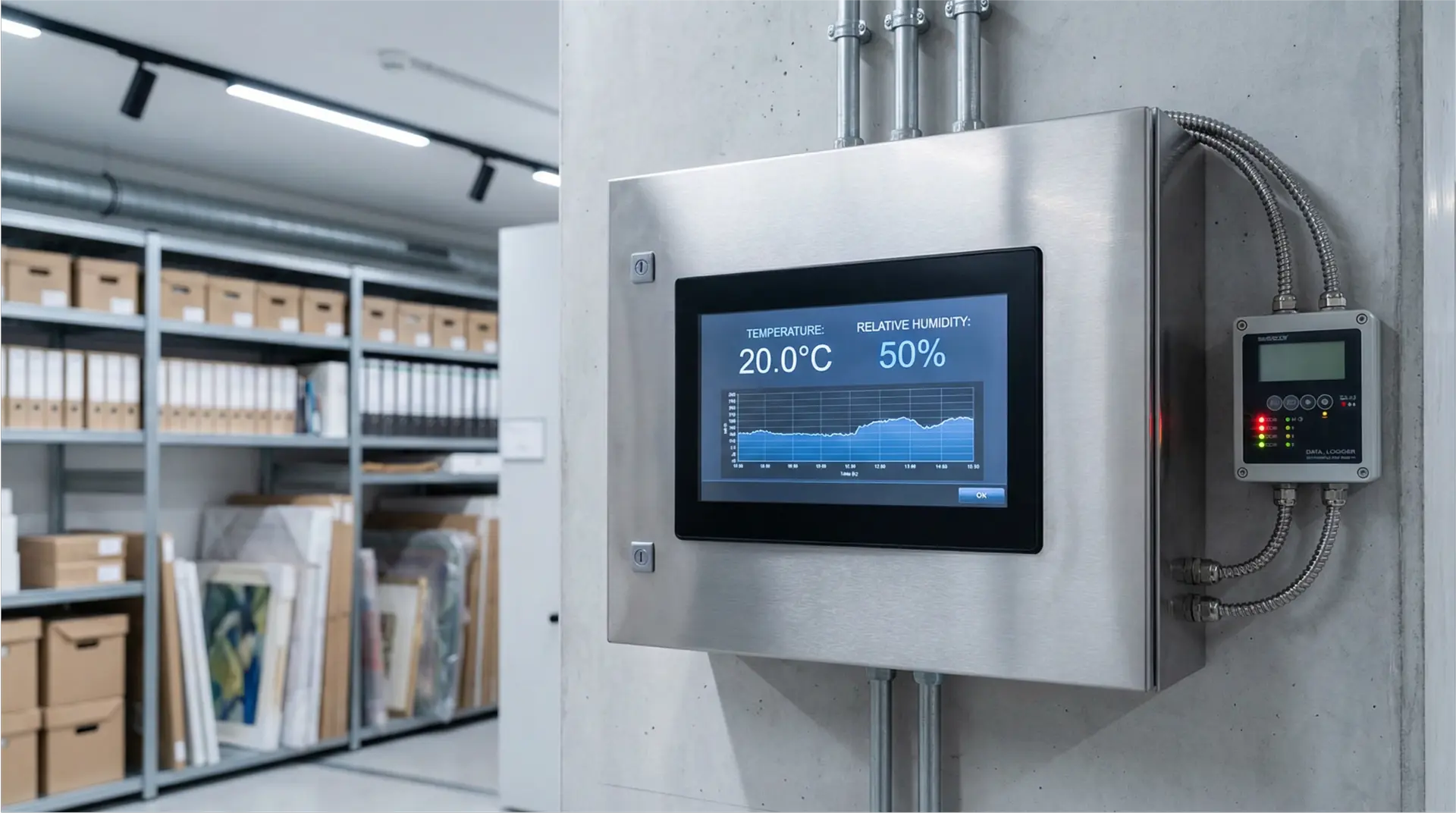
The industry standard for climate-controlled storage maintains year-round temperature between 68 and 72 degrees Fahrenheit, with some facilities targeting a narrower 68-degree constant. This range balances preservation requirements against operational costs, though works with exceptional sensitivity may require tighter controls.
Humidity: The Silent Destroyer
Relative humidity affects art materials in ways that often prove more damaging than temperature alone. Most organic materials in artworks are hygroscopic, meaning they absorb and release moisture as ambient humidity changes. When humidity rises, these materials swell. When it drops, they contract. Each cycle stresses the material, and over time, cumulative damage exceeds what any single extreme would cause.
High humidity encourages mold growth, which can damage organic materials like paper, canvas, and wood in ways that prove expensive or impossible to reverse. Low humidity causes these same materials to become brittle and prone to cracking. Professional facilities maintain relative humidity around 50%, with acceptable ranges typically spanning 40 to 55 percent depending on the specific materials involved.
A key insight from conservation science is that fluctuations matter more than absolute numbers. A painting kept consistently at 60 degrees and 50% relative humidity may fare better than one oscillating between 68 and 75 degrees or 40 and 55% humidity, even if those numbers appear within acceptable ranges. Every shift stresses the material, creating cumulative damage at the microscopic level that eventually becomes visible.
Why Home Storage Fails
Many collectors believe that keeping art indoors provides sufficient protection. In reality, standard residential environments are highly unstable. HVAC systems cycle on and off responding to human comfort rather than preservation requirements. Windows admit UV light and external drafts that fluctuate with weather and season. Basements and attics represent extreme microclimates prone to flooding, temperature swings, and dryness.
A collector stored a series of large paintings in a loft with poor climate control. During fall, relative humidity spiked above 70% during heavy rains, then dropped below 40% during heating cycles. Within two seasons, the canvases showed signs of cracking and the stretchers warped. Conservation was expensive and only partially restored the works. Professional storage would have prevented the damage entirely at a fraction of the restoration cost.
Even display areas present challenges. Works positioned near windows, vents, and exterior walls experience conditions different from the room's general climate. Direct sunlight and harsh artificial lighting cause fading and deterioration that accumulates invisibly until damage becomes apparent.
The Economics of Professional Storage
Understanding Pricing Structures
Art storage pricing varies significantly based on facility type, location, and service level. Basic archival storage may cost as little as $0.50 per cubic foot, while museum-quality climate-controlled vaults can exceed $5 per cubic foot. For most collectors, the relevant range falls between $5 and $15 per square foot monthly for professional facilities.
In Manhattan, specialized fine art storage runs between $10 and $12.50 per square foot monthly for private space. Collectors willing to use shared facilities outside major urban centers may find rates as low as $5 per square foot. Long-term contracts of twelve months or more typically yield 15 to 25 percent discounts compared to month-to-month arrangements.
For a collection valued at $500,000, collectors should expect annual storage and insurance costs between $10,000 and $25,000 depending on facility quality and coverage levels. Industry estimates suggest total maintenance costs, including storage, insurance, appraisals, and periodic conservation, run between 1 and 2 percent of collection value annually for modestly sized holdings, climbing toward 15 to 20 percent for extensive collections requiring sophisticated management.
What Premium Pricing Buys
Museum-quality storage facilities offer features that justify their premium pricing. Environmental controls maintain temperature within a 2-degree range and relative humidity within 5 percent, far tighter than residential systems achieve. Redundant backup systems and generators ensure stability during power outages. Continuous monitoring alerts staff instantly if conditions deviate.
Purpose-built vaults feature insulated, sealed construction resistant to external fluctuations. Security includes 24/7 video surveillance, UL-certified alarms, biometric access controls, and prohibition on unescorted access to shared spaces. Fireproof construction using pillar-and-slab or tilt-up methods provides structural protection against catastrophic loss.
Additional services distinguish premium facilities: private viewing rooms for examination and photography, professional handling during access, integration with logistics services for seamless transport, and inventory management systems that track each item with digital catalogs, photographs, and condition reports.
The Hidden Costs of Inadequate Storage
The apparent savings from suboptimal storage prove illusory when damage occurs. Conservation consultation fees typically range from $85 to $250 per hour, which may include travel time, inspection, photography, research, and preparation of written reports. Some conservators maintain minimum charges that apply regardless of actual time required.
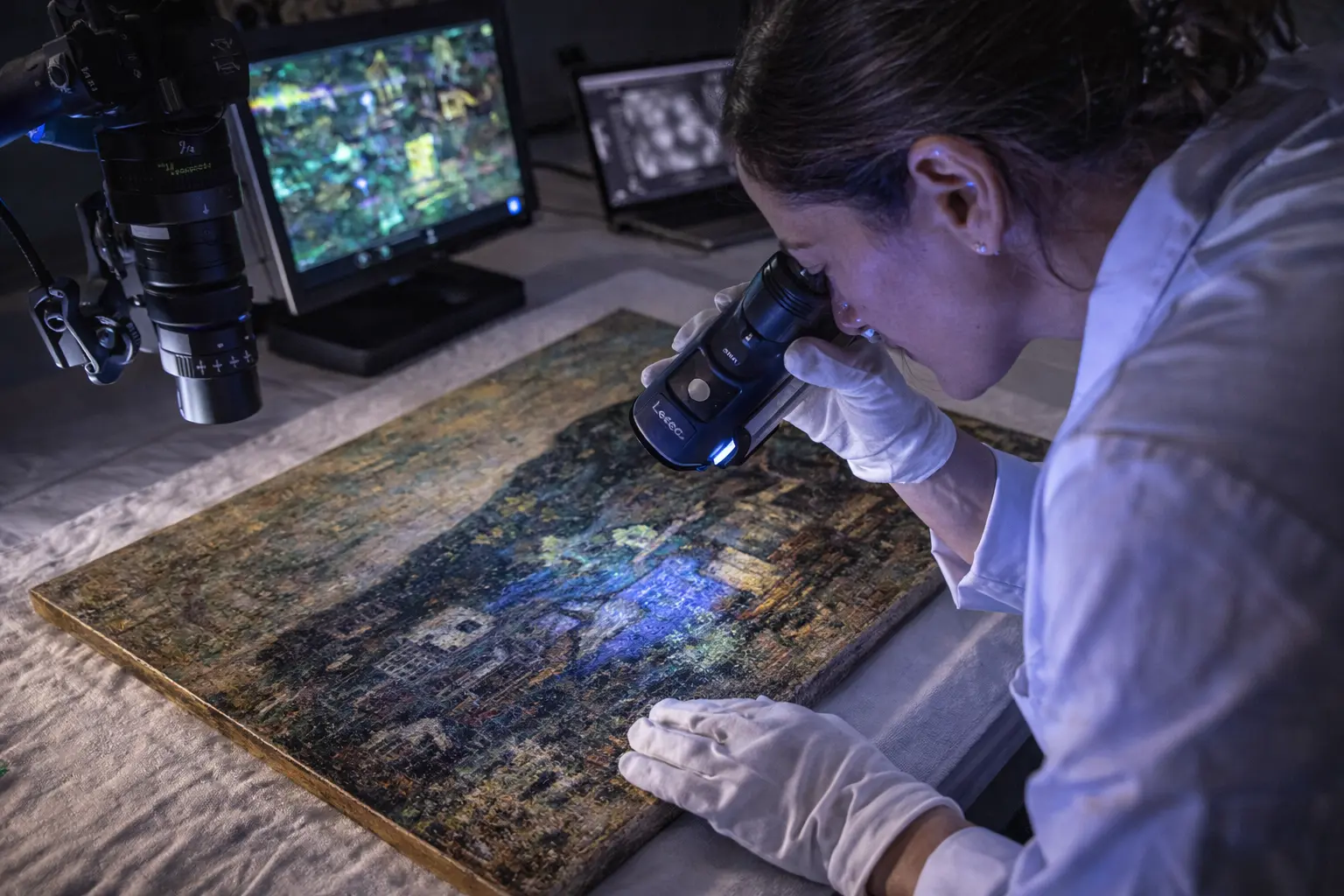
Scientific analysis supporting conservation may include imaging techniques such as ultraviolet fluorescence, infrared reflectography, and transmitted infrared examination. These diagnostic services add to treatment costs but prove essential for understanding damage extent and planning appropriate intervention.
Actual treatment costs vary enormously depending on medium, damage extent, and required expertise. Simple cleaning may cost hundreds of dollars while major structural repair or inpainting can run into tens of thousands. For outdoor sculpture, even routine maintenance like annual oiling of wood elements requires ongoing commitment.
Medium-Specific Vulnerabilities
Paintings: Canvas, Panel, and Paint Layers
Oil, acrylic, watercolor, and mixed-media works on canvas, panel, or board prove highly sensitive to humidity fluctuations. The substrate, whether fabric or wood, responds to moisture changes differently than the paint layers it carries. This differential expansion and contraction causes cracking, paint lifting, and flaking that worsens with each climate cycle.
Old Master paintings and contemporary works with heavy impasto require precise climate controls. Some facilities maintain separate zones for particularly sensitive works, acknowledging that a single environment cannot optimally serve all materials. Works on wood panels demand especially careful humidity management, as wood's dimensional response to moisture exceeds that of canvas.
Varnish layers present additional challenges. Heat darkens varnishes while cold can cause cracking. Light exposure causes yellowing. The protective layer that preserves paint surfaces requires protection itself.
Works on Paper
Drawings, prints, photographs, archival documents, and books are vulnerable to yellowing, brittleness, mold, and ink bleeding without stable climate control. Paper responds dramatically to humidity changes, expanding and contracting in ways that stress fibers and any media applied to the surface.
Photographs present particular challenges. Color photographs fade under virtually any light exposure, with some processes proving more stable than others. Black-and-white prints may be more durable but remain sensitive to humidity and chemical contamination. Professional storage typically includes archival housing using acid-free materials that prevent degradation from contact with incompatible materials.
Works on paper benefit from flat storage preventing creasing or distortion. Acid-free interleaving paper between layers and rigid backing boards supporting larger pieces prevent mechanical damage during access and handling.
Sculpture and Three-Dimensional Works
Sculptural works present storage challenges beyond climate control. Weight, fragility, and scale all influence appropriate facilities and handling protocols. Stone sculptures may not require strict humidity control but demand secure positioning preventing falls or impacts. Bronze develops patina that may be desirable or undesirable depending on the artist's intent.
Contemporary and mixed-media works incorporating plastics, adhesives, found objects, or experimental materials often require strict environmental stability due to unpredictable aging behavior. These materials may deteriorate in ways their creators did not anticipate, making professional assessment particularly important for recent acquisitions.
Furniture and decorative arts including antiques, veneered pieces, and lacquered surfaces can warp, split, or delaminate without climate control. Textiles including furs, wool, and feathers benefit from cold storage and protection from direct light.
Insurance: The Protection Most Collectors Lack
Why Homeowners Insurance Falls Short
Standard homeowners insurance policies provide minimal coverage for fine art, typically capping protection at $1,000 to $2,000 per item regardless of actual value. This leaves collectors dangerously underinsured for any serious holding. Most policies group collectibles under general personal property limits with no mechanism for scheduling, itemizing, or properly appraising valuable pieces.
Homeowners insurance typically reimburses based on depreciated or replacement value rather than agreed or appraised value, which may fall far short of a piece's market worth. Claims adjusters lack experience valuing rare items, leading to delays, disputes, and undervalued settlements. In high-risk areas for natural disasters, homeowners insurance is becoming increasingly difficult to secure at all.
The coverage gaps extend beyond valuation. Homeowners policies may exclude specific damage types or circumstances common in art loss scenarios. Off-premises limitations reduce coverage for items stored elsewhere, precisely where serious collectors often keep significant portions of their holdings.
Specialized Fine Art Insurance
Fine art insurance premiums typically range from 1 to 2 percent of appraised value annually. Insuring a $100,000 piece might cost $1,000 to $2,000 per year. Several factors influence premium costs including the type, value, fragility, and age of artworks. Contemporary art, Old Masters, and sculptures each present different risk profiles.
Scheduled coverage involves itemizing each piece individually with its corresponding agreed-upon value. This approach provides certainty in claim settlements, as the insurer agrees upfront to pay the specified amount if total loss occurs. The trade-off is that scheduled coverage requires regular appraisal updates to avoid underinsurance as market values change.
Blanket coverage provides a total coverage amount for the collection as a whole, with claims settled based on current market value at the time of loss. This approach offers flexibility for growing collections and automatically accounts for market appreciation, though it may require additional documentation during claims.
Partial Loss and Diminution of Value
Fine art insurance typically covers restoration costs and any resulting diminished value following partial damage. Understanding these provisions proves critical when damage occurs. Even with the best conservation efforts, restored artwork may not regain its full pre-damage value.
Loss-of-value compensation addresses the difference in market value before and after damage and conservation. This cannot be fully determined until treatment is complete and the outcome is known. The quality, visibility, and type of repair all influence whether the object has retained or lost value.
Some artworks with significant provenance or collector interest retain value even after conservation. Others, particularly in markets where collector tolerance for condition issues is low, may experience significant diminution despite excellent visual results. Understanding these dynamics before damage occurs helps collectors structure appropriate coverage.
Appraisers working with insurance claims often use mathematical formulas incorporating subjective pre-damage and post-damage values, with the difference representing loss-of-value. This compensation is negotiated between adjusters and owners, with appraisal documentation providing essential support for the owner's position.
Conservators should never render opinions on loss-of-value, as this would violate professional ethics codes. However, the success of conservation treatment directly impacts value after treatment. Untrained adjusters sometimes pressure conservators for success percentages, then interpret these as value statements. Clear communication preventing such misrepresentation protects all parties.
Pairs, Sets, and Series Coverage
Specialized policy clauses address works existing as related groups. The Pairs and Sets clause covers works that are part of a series, like a triptych, or a matched set like paired sculptures or a suite of prints. If one component is damaged or destroyed, the policy may cover the resulting diminution in value to the complete set rather than just the lost piece.
Similarly, Loss Buy Back and Salvage provisions address scenarios following total loss declarations. After an insurer declares a piece of art a total loss due to damage, the owner may be able to buy back the damaged work at reduced price. This salvage art might then be repurposed, displayed as is, or used by artists to create new works. Understanding these options before claims arise helps collectors make informed decisions.
Transit and exhibition coverage extends protection beyond primary storage. Works traveling to exhibitions, conservation treatment, or new locations need continuous coverage. Some collectors maintain separate transit policies while others ensure their primary coverage extends to works in movement. Gaps in coverage during transitions represent significant exposure.
The Appraisal Imperative
Why Regular Valuation Matters
Art values fluctuate based on market conditions, attribution changes, and condition factors. Insurance coverage that accurately reflected a collection's worth five years ago may significantly underinsure or overinsure current holdings. Experts recommend updating appraisals every three to five years for established artists, with more frequent updates for contemporary artists whose markets may fluctuate more dramatically.
While artwork is in storage, appraisals should be carried out every two years according to some insurance requirements. As artworks change value, this affects storage needs according to policy requirements. If an artwork is under or overinsured, this can be held against the collector or reduce the collection's value in settlement calculations.
Significant market events affecting similar artists or works may warrant interim appraisals. Major auction results, museum acquisitions, or shifts in critical reception can materially affect values between scheduled updates.
Choosing Qualified Appraisers
Unlike real estate appraisers, personal property appraisers are not licensed by state or federal government. Anyone can claim the title, making credential verification essential. The Appraisers Association of America advises that qualified appraisers specialize in the area represented by your collection, receive referrals from trusted sources, and comply with Uniform Standards of Professional Appraisal Practice requirements.
USPAP compliance means appraisal reports clearly and accurately set forth findings in a manner that will not be misleading, containing sufficient information to enable intended users to understand the report properly. This standardization provides protection in insurance claims and potential legal disputes.
For conservation-related appraisals, working with appraisers who understand both technical treatment and market reaction proves critical. The goal of conservation is not to make artwork look new but to stabilize work while preserving existing materials. Signs of age may remain even after excellent treatment. That distinction matters for valuation.
Building a Preservation Strategy
Documentation Requirements
Comprehensive documentation supports insurance coverage, claims settlement, and collection management. Essential records include purchase invoices showing provenance transfer, authentication certificates, condition reports at acquisition and periodically thereafter, insurance appraisals updated regularly, and exhibition history.
Digital asset management platforms organize photographs, condition reports, appraisals, and provenance documentation in searchable databases. Cloud-based systems provide secure access while maintaining appropriate privacy protections. Regular backup procedures protect against data loss. Some systems integrate with building environmental monitors, creating comprehensive records of storage conditions over time.
Condition reports should be completed before any move or storage transition. This protects against disputes regarding when damage occurred and supports insurance claims if loss happens during transport or facility change. Professional photography documenting condition from multiple angles and under various lighting conditions provides essential evidence. Some collectors commission ultraviolet and infrared imaging at acquisition to establish baseline records that can reveal hidden damage or previous restoration.
Maintaining provenance documentation through ownership transitions protects both value and authenticity claims. Gallery invoices, auction records, exhibition catalogs, and correspondence between dealers and previous owners all contribute to the documentary chain that supports attribution and valuation.
Selecting Storage Partners
Evaluating potential storage facilities requires attention to multiple factors. Quality of the facility itself matters most, including construction type, environmental systems, and maintenance protocols. Location affects accessibility and may influence insurance requirements. Climate control capabilities must match collection needs.
Security features should include surveillance, access controls, and fire protection appropriate to collection value. Expertise of facility staff determines handling quality and emergency response capability. Level of client service affects day-to-day interactions and problem resolution.
Long-term relationships with storage providers yield benefits beyond pricing. Facilities familiar with a collection can provide better service, identify concerns early, and accommodate special requests more readily. Many collectors develop ongoing partnerships that extend to transportation, installation, and conservation referrals.
Freeports offer specialized advantages for international collectors. These facilities, located in Switzerland, Luxembourg, Singapore, Hong Kong, and similar jurisdictions, allow import and storage without immediate tax liability. Artworks can remain in freeport storage indefinitely without triggering customs duties that would apply upon formal import. While monthly storage fees match standard rates, the tax deferral benefits can be substantial for high-value holdings.
Customs bonded warehouses offer similar tax suspension in more locations, though regulations vary by country. In some jurisdictions, works can remain bonded for limited periods only, requiring eventual import or export. Understanding these distinctions helps international collectors structure holdings efficiently.
Transportation and Handling Risks
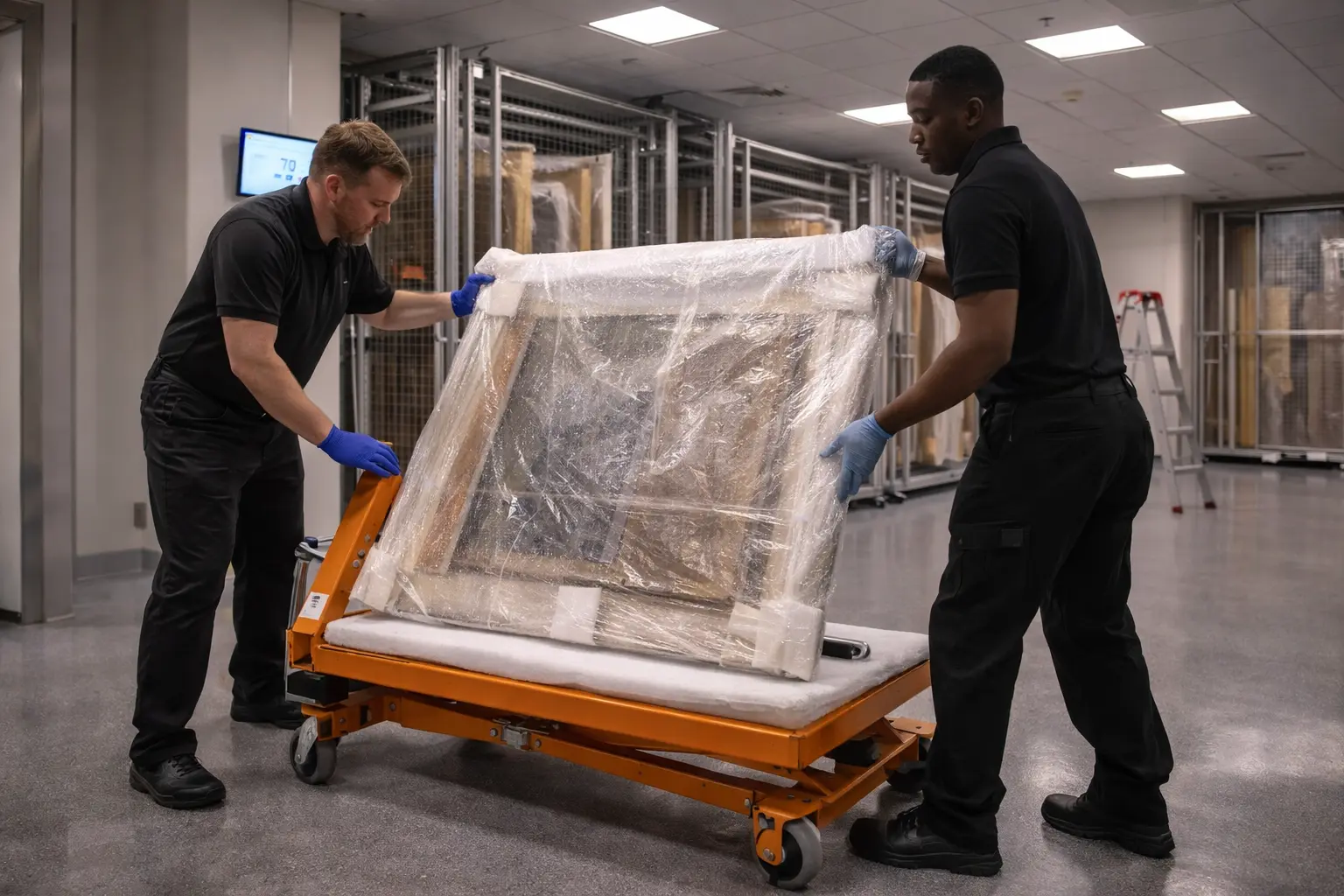
Movement presents the highest-risk moments in any artwork's existence. Underwriters report that transit-related damage represents one of their greatest exposure categories, often exceeding fire or theft in frequency if not severity. Substandard packing and handling cause preventable losses that exceed what proper preparation would cost.
Professional fine art shipping for even modest works involves significant expense. Crating a 12-inch framed painting for museum-quality travel starts around $500 and adds 35 pounds or more to shipment weight. Shipping that crate from Denver to New York might cost $2,500. For collections requiring periodic rotation between display locations and storage, these costs accumulate rapidly.
Collectors with very high-value works may require exclusive shuttle options where only their artworks travel in a given vehicle. Others use shared transport that remains cost-efficient while maintaining safety. Understanding insurance coverage during transit is essential, as some shipping companies provide only minimal coverage relative to artwork value.
Installation and de-installation present additional risk points. Circulating a collection to change displayed works might run $15,000 for de-installation, transport to storage, and installation of replacement pieces. Professional handlers trained in specific media types minimize risk during these transitions.
When to Seek Professional Conservation
Regular inspection identifies issues before they become serious. Periodically examining stored artwork for signs of damage or deterioration allows early intervention when treatment is simpler and less expensive. Many facilities offer condition monitoring as part of storage services.
Conservation should be considered when visible damage appears, when works are being prepared for sale or exhibition, when insurance requirements mandate condition verification, or when preventive treatment might forestall more serious future damage. Early intervention typically costs less and achieves better outcomes than delayed treatment.
Working with conservators who adhere to professional ethics codes ensures treatment decisions prioritize the artwork's long-term interests. Qualified conservators explain risks and limitations, offer reversible solutions where possible, and respect material integrity rather than pursuing aggressive visual improvement.
The American Institute for Conservation provides resources for locating qualified practitioners. Board certification and specialty designations indicate advanced training and peer recognition. Red flags include vague service descriptions, aggressive promises of visual improvement, reluctance to provide documentation, or absence of clear credentials. Reputable conservators always explain risks and limitations rather than guaranteeing results.
Emergency Response Planning
Disasters require immediate, informed action. Fire, flooding, and other emergencies demand protocols that protect both people and collections. Emergency response plans should include contact information for conservators, security specialists, and legal counsel who can provide rapid assistance.
Staff training ensures everyone understands their role during emergency situations. Regular drills test plan effectiveness and identify gaps requiring attention. Plans should address salvage priorities when not everything can be protected, helping responders make difficult decisions under pressure.
Insurance claims following emergencies require extensive documentation. Emergency plans should include procedures for recording damage, securing affected works, and contacting insurers promptly. Delays in notification can complicate claims and extend damage as environmental conditions deteriorate.
Explore contemporary works that reward the collector's commitment to preservation at Artestial, where collectors find artists whose practices justify investment in proper stewardship, or connect with specialists for guidance on collection care.
Frequently Asked Questions
What are the minimum requirements for safe art storage at home? Home storage can be acceptable for some works if collectors implement appropriate controls. Essential requirements include stable temperature between 65 and 75 degrees Fahrenheit year-round without significant daily or seasonal fluctuation. Relative humidity should remain consistently between 40 and 55 percent, which typically requires dehumidification or humidification systems beyond standard HVAC. Works should be positioned away from direct sunlight, exterior walls, windows, and heating or cooling vents. UV-filtering glazing provides additional protection for displayed works. Installing climate monitors with real-time tracking and alert capabilities helps identify problems before damage occurs. However, collectors should recognize that home environments rarely achieve the stability of professional facilities, and valuable or sensitive works benefit from specialized storage.
How much should collectors budget annually for collection maintenance? Industry estimates suggest total maintenance costs run between 1 and 2 percent of collection value annually for modest holdings. This includes storage, insurance, periodic appraisals, and routine conservation. For a $500,000 collection, expect $5,000 to $10,000 annually at minimum. More extensive collections requiring sophisticated management may see costs climb toward 15 to 20 percent of value, particularly when dedicated staff, multiple storage locations, active exhibition programs, and frequent transportation are involved. These figures assume no major conservation interventions, which can add substantially in any given year. Collectors should establish reserve funds for unexpected treatment needs rather than budgeting only for routine expenses.
What damage cannot be reversed through conservation? Some deterioration proves irreversible regardless of treatment quality or expense. Severe paint loss exposes substrate in ways that restoration can only disguise rather than repair, affecting both integrity and value. Structural failure of canvas or panel may be stabilized but not fully corrected. Light damage causing pigment fading is permanent, as the chemical changes in colorants cannot be reversed. Mold damage that has penetrated beyond surface contamination may leave permanent staining or material degradation. Water damage causing tide lines in paper often persists despite treatment. Certain plastics and contemporary materials degrade through inherent vice, meaning their own chemical composition causes deterioration that conservation cannot prevent, only slow.
How does condition affect resale value? Condition significantly influences market pricing, though the relationship varies by category, period, and specific work. In some markets, collector tolerance for condition issues is low even when visual results after conservation are excellent. Contemporary art buyers often expect pristine condition, making any treatment history a concern. Old Master and Modern markets may accommodate documented restoration if the work is otherwise significant. Loss-of-value calculations following damage consider both physical condition and market perception. Even successful conservation may result in 10 to 40 percent diminution depending on damage severity, treatment type, and market conditions. Provenance and rarity can offset condition concerns, but only for exceptional works where buyer demand exceeds available supply.
What questions should collectors ask potential storage facilities? Key inquiries should address environmental specifications including temperature range, humidity control, and monitoring frequency. Ask about backup systems for power outages and environmental failures. Understand security measures including surveillance, access controls, and staff protocols. Request information about fire suppression systems, ensuring they are appropriate for art rather than just property. Clarify insurance arrangements for works in storage, including coverage limits and claim procedures. Ask about handling protocols and staff training. Understand access procedures, viewing room availability, and fees for retrieving or returning works. Request references from other collectors or institutions using the facility. Finally, discuss contract terms including pricing structure, notice requirements for rate changes, and conditions for termination.
Ready to protect your collection with professional guidance? Visit Artestial where collectors find works worth preserving and connect with resources supporting serious stewardship, or connect with specialists for guidance on building collections that justify investment in proper care.
Curating excellence, one insight at a time.
— AURUM Team
Disclaimer: This article provides general information about art storage and conservation for educational purposes only. It does not constitute professional conservation, insurance, or financial advice, and readers should consult qualified conservators, insurance professionals, and appraisers before making decisions about their collections. Storage requirements, insurance coverage, and conservation approaches vary significantly based on specific artworks, materials, and conditions. Cost estimates reflect general industry ranges and may not apply to specific situations. Climate specifications represent common standards but may require adjustment for particular materials or institutional requirements. The author has no financial relationship with any storage facility, conservation practice, or insurance provider mentioned or implied.