

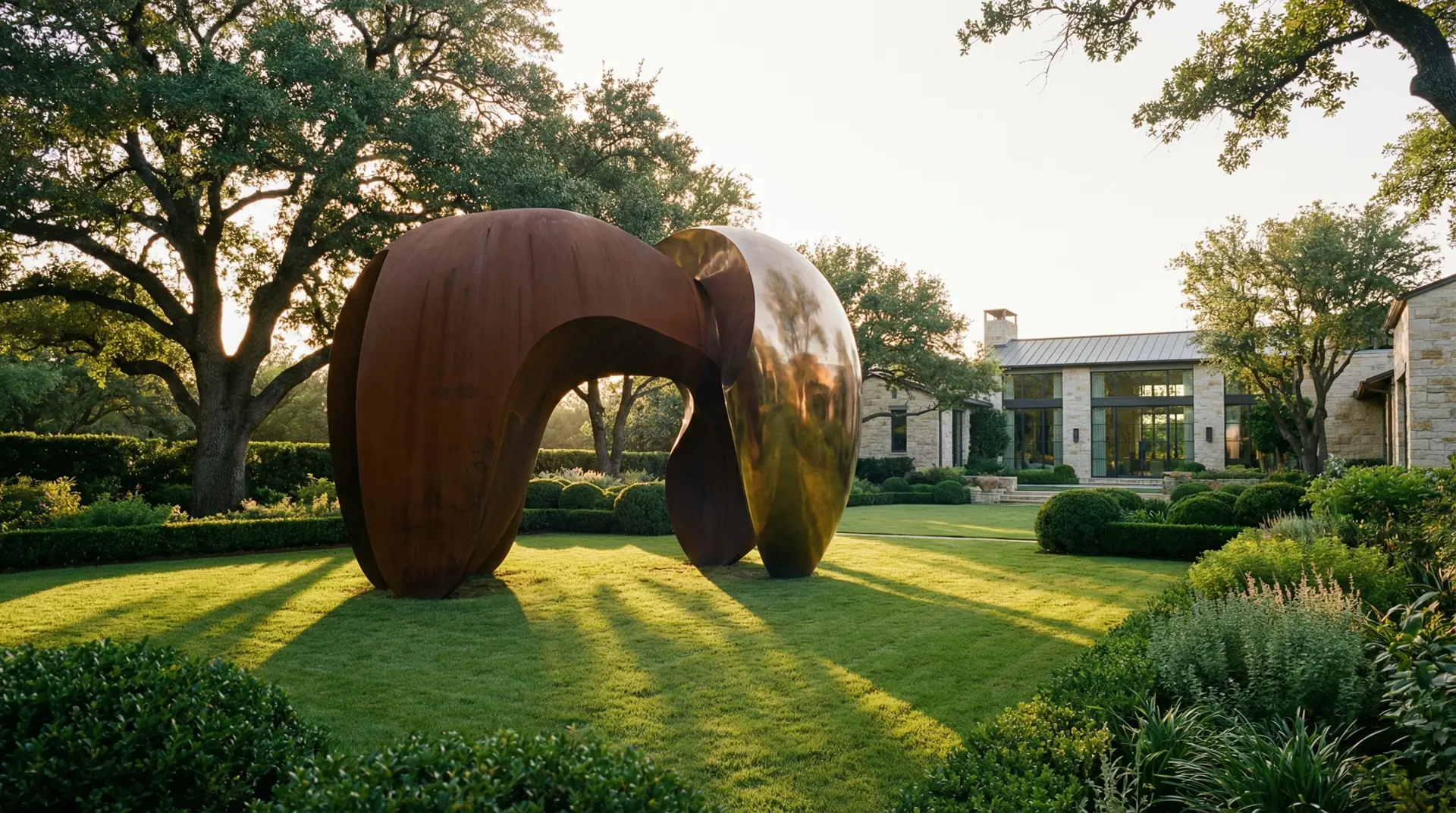
Rosa Lowinger, principal of RLA Conservation and one of the foremost specialists in outdoor sculpture conservation, frames the problem with characteristic directness: "You have a Maserati parked in the driveway and it gets washed and detailed once a week, but then you have a $1 million sculpture that gets looked at maybe once a year." This observation, shared in a conversation with Chubb insurance specialist Maggie Reynolds, captures a blind spot that affects even sophisticated collectors. We understand intuitively that cars deteriorate without maintenance. We apply the same logic to pools, landscaping, and architecture. Yet somehow, sculpture—which spends 365 days a year exposed to rain, atmospheric pollutants, fluctuating temperatures, UV radiation, and corrosive bird droppings—gets categorized in our minds as permanent and self-maintaining.
It is neither. And as outdoor sculpture becomes an increasingly significant component of serious collections, the gap between how we think about these works and what they actually require grows more consequential.
Discover how serious collectors approach sculpture acquisition and placement at Artestial, where the platform connects collectors with works that reward careful stewardship across all installation environments.
The Rise of the Private Sculpture Garden
From Museum to Estate
The outdoor sculpture movement that transformed public spaces over the past century has migrated decisively into private collections. What once required institutional scale and public funding now defines luxury estate design, with bespoke gardens showcasing works by artists like Jaume Plensa, Claude Lalanne, and Jeff Koons alongside traditional pool and fountain installations. This shift reflects both accumulated wealth seeking tangible expression and a genuine evolution in how collectors want to experience significant art.
Storm King Art Center in New York's Hudson Valley established the paradigm that private collectors increasingly emulate. Founded in 1960, Storm King encompasses 500 acres where visitors experience large-scale sculpture and site-specific commissions under open sky. The core collection includes pieces by Alexander Calder, David Smith, Mark di Suvero, Henry Moore, Isamu Noguchi, Richard Serra, and Louise Nevelson. Maya Lin's "Wavefield" (2008) transforms four acres into undulating grassy waves that visitors walk through rather than simply observe. Storm King reopens April 1, 2026, after its seasonal closure—a reminder that even institutions dedicated to outdoor art recognize the relationship between elements and access.
Collector Alan Gibbs cited Storm King as inspiration for Gibbs Farm, his private outdoor sculpture museum and landscape in New Zealand. Tippet Rise in Montana has emerged as another destination where art and landscape merge at scale that rivals institutional holdings. The development at Powder Mountain in Utah is creating what developers describe as an "outdoor, skiable, open-air museum" with works by James Turrell, Jenny Holzer, and Paul McCarthy integrated into terrain accessible via hiking, biking, and skiing. These projects demonstrate that serious outdoor sculpture is no longer exclusively institutional—private vision now drives some of the most ambitious commissions.
The Experiential Turn
Public sculpture in 2026 is no longer simply "look, don't touch." Collectors and institutions alike recognize that visitors want experiences rather than merely objects. This means sculptures you can walk through, sit on, climb around, or activate through sound, light, motion, water, or digital media. The "Instagrammable" quality that once seemed like a concession to popular taste has become recognized as legitimate engagement with art in public space.
The inaugural Bukhara Biennial in Uzbekistan (curated by Diana Campbell under the theme "Recipes for Broken Hearts") demonstrates this experiential orientation at institutional scale. Antony Gormley's "Close" (2025), a collaboration with Uzbekistani artist Temur Jumaev and local brickmakers, comprises 95 tons of unfired sun-dried earth and straw formed into 100 sculptures within the ruins of a 1598 mosque. Visitors navigate the maze-like installation, encountering figures in crouching, reclining, or meditating postures that compel close proximity and bodily engagement.
For private collectors, this experiential orientation means rethinking how outdoor sculpture functions within domestic settings. Works positioned to be encountered while walking dogs, entertaining guests, or simply contemplating the garden create different relationships than those designed purely for visual appreciation from a distance. The question becomes not just what sculpture looks like but how living with it actually feels.
Understanding What Goes Wrong
The Elements as Active Adversary
According to Rachel Rivenc, associate scientist at the Getty Conservation Institute, "the sheer fact of being outdoors, exposed to the environment, rain, snow, or huge amounts of sunshine" makes for unpredictable decay. Unlike museum environments where temperature and relative humidity remain closely monitored, outdoor works face weather fluctuations that accelerate deterioration in ways that vary by material, location, and configuration.
Every climate presents particular challenges. In Southern California, high levels of bright sunlight accelerate deterioration of protective coatings commonly used on outdoor sculpture. Coastal locations introduce salt air that corrodes metal and creates micro-environments of elevated humidity. Northern climates impose freeze-thaw cycles that stress stone, ceramic, and concrete. Even the act of standing in one place causes problems—sculptures positioned on grass accumulate moisture at their bases, while those near mulch encounter constant humidity that accelerates rust on steel components.
The American Institute for Conservation's guidelines for outdoor sculpture emphasize that without constant maintenance, sculptures suffer damage from both environmental interactions and human visitors. The extent of preventive conservation needed for outdoor sculpture far exceeds requirements for traditional museum or indoor works.
Material Vulnerabilities
Traditional materials like bronze, steel, stone, and wood each present distinct conservation challenges. Bronze develops patinas that may be desirable or disfiguring depending on artist intent and environmental context. Steel oxidizes in ways that some artists (like Richard Serra with his COR-TEN steel works) embrace as part of the aesthetic, while for others oxidation represents deterioration requiring intervention. Stone erodes, particularly limestone and marble when exposed to acid rain. Wood weathers, cracks, and becomes hospitable to insects and fungi.
Contemporary materials introduce complications that conservation science is still learning to address. Fiberglass, epoxy resins, plastics, and painted surfaces present vulnerabilities for which treatment options may be limited. Some changes from degradation in plastics are not reversible. Painted sculptures, as conservation specialist Brian Considine notes, are actually multi-layered compositions containing primers, paints, and protective coatings over structural substrates. When the protective coating fails, everything beneath becomes vulnerable to the elements.
Matte coatings on painted outdoor sculptures present particular challenges. Artists from Louise Nevelson and Alexander Calder to Tony Smith and Joel Shapiro have finished work with low-gloss paints that contain fillers decreasing surface resin. When there's less resin protecting pigments, they're prone to chalking, flaking, and fading.
Human Factors
Beyond weather, external sources of deterioration come from both synthetic and natural origins. Sunscreen rubbed off from a curious visitor's hand creates cleaning nightmares that conservators dread. Bird droppings require nonionic cleansers gentler than everyday soaps and must be removed promptly to prevent surface damage. Graffiti, skateboard marks, and simple touching accumulate effects over years of exposure.
Dana Turkovic, curator at Laumeier Sculpture Park in St. Louis, notes that some artists welcome interaction with their work—climbing, touching, walking atop—while others require pristine surfaces to maintain their artistic intent. Claes Oldenburg, according to Joe Rogers, object conservator for Kansas City's Nelson-Atkins Museum, "wants them to look brand new, which is hard to do when people are climbing on them." The museum's four Shuttlecocks (1994) require consistent upkeep using scaffolding and hydraulic lifts to reach their nearly 18-foot heights. George Segal, in contrast, told the museum while he was still alive that he wanted his "Rush Hour" (1983/1995) to look as though it had been "in the ocean for a thousand years."
Understanding artist intent matters enormously for conservation planning. What constitutes damage versus acceptable aging varies not just by material but by the artist's conception of how their work should exist in time.
The Conservation Imperative
What Proper Maintenance Actually Involves
Developing a long-term maintenance program requires a collection survey, research into sculpture materials, research into the artists who created the sculptures, and knowledge of current treatments in the conservation field. Weather and environmental impact is significantly reduced by instituting preventive maintenance programs where regular cleaning and coating prevent the need for future surface removal and re-patination or re-painting.
Cleaning involves removal of dirt through methods appropriate to each material. The most common approach uses pure water—distilled, de-ionized, or reverse-osmosis—rather than tap water, which contains dissolved solids and mineral content that can leave deposits. For most materials, rinsing with a garden hose on gentle settings like shower or mist removes soil, industrial particulates, bird droppings, and other pollutants. Sculptures composed of iron, steel, ceramic, stone, or concrete should be cleaned by rinsing at least annually.
Protective coatings appropriate to each material provide some protection from environmental factors but must periodically be reduced and reapplied. Bronze sculptures typically receive wax coatings that require refreshing every six months to a year. Metal modern sculptures may need additional protective coatings before winter to prevent rust. Wooden sculptures require weatherproofing sealants protecting against moisture and UV rays. The particular protective coating is chosen based on durability, adhesion to the surface, ease of maintenance, and surface appearance on the work.
A maintenance walk-through schedule should be established to routinely check object conditions. This may be weekly at institutional scale. Conservators assess and document any damage caused by visitors or environmental conditions and may rinse and wipe down sculptures during these inspections.

Establishing a Private Collection
Site Selection and Installation
Before choosing sculpture, carefully consider where it will be displayed and seek advice from conservators familiar with outdoor installation requirements. The ideal location varies by medium but usually involves level positioning on either an elevated platform or a site with excellent drainage, avoiding excessive water runoff and bird droppings from overhanging branches.
Landscape adjustment represents a necessary conversation between conservators and landscape companies. Do not landscape right up next to sculpture. Mulch holds moisture and should be kept away from steel. Gravel in hurricane-prone areas can cause surface damage if kicked up in high winds. Keeping tree branches from overhanging sculpture reduces bird droppings while maintaining some nearby trees provides shade that reduces UV exposure.
A licensed arborist should ensure nearby trees are healthy and clear any overhanging branches that could potentially fall on outdoor sculpture. This extends to considerations about root systems that might shift foundations over time and seasonal debris that accumulates around bases.
Foundation and installation engineering require professional attention that matches the scale of investment. Sculptures in cold weather climates should be lifted from the ground and placed on raised platforms to reduce moisture freezing at bases. Water features require pumps that must be removed and brought inside during winter, with fountain features fully drained.
Material Selection for New Commissions
Collectors commissioning new work should discuss materials with artists and conservators before fabrication. Marine-grade stainless steel offers particular durability in coastal areas. Copper, oxidized steel, and bronze work with the elements to age gracefully when that aging aligns with artistic intent. Mirror-polished stainless steel reflects planting in its surface but shows every fingerprint and water spot. Traditional verdigris patina suits many garden settings but requires understanding of how it develops over time.
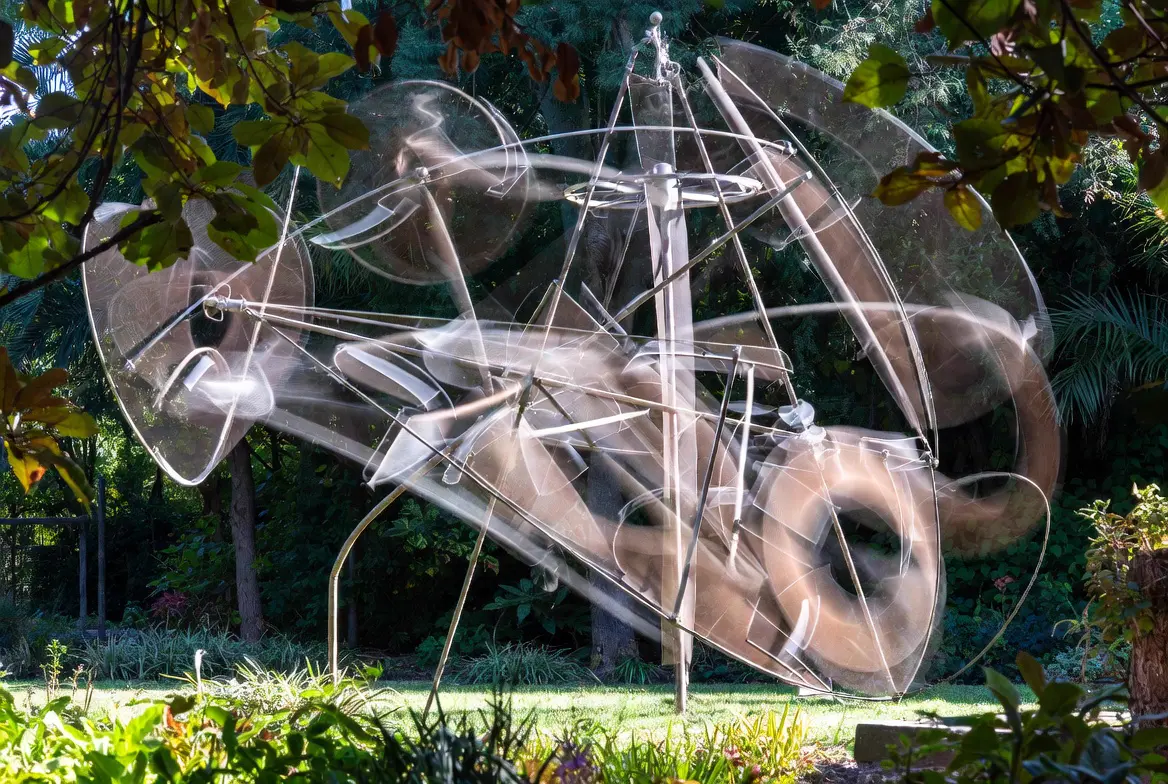
Kinetic sculpture designed to move by wind, motors, or interaction needs solid engineering, weather-resistant materials, and stable foundations. The "always alive" effect of kinetic work delivers compelling garden presence but introduces mechanical complexity that requires specialized maintenance.
For sculptures that will be occasionally relocated, consider weight and fragility alongside aesthetic concerns. Works requiring crane installation for every rotation may not suit programs of seasonal display. Smaller works that can be protected during extreme weather by moving indoors require interior space allocation and handling protocols.
Connect with specialists who understand outdoor sculpture requirements at Artestial, where collectors discover works suited to their specific environments and maintenance capacities.
The Economics of Outdoor Art
True Cost of Ownership
Insurance provides limited protection for outdoor sculpture. As Lowinger notes, the two things never covered by insurance are gradual or natural deterioration and what is called "inherent vice"—weaknesses in materials or fabrication that cause damage over time. A crack from chronic dryness or a fading surface from UV exposure falls outside standard coverage regardless of policy value. This makes prevention not just aesthetically important but financially essential.
Conservation specialists recommend annual maintenance budgets as a percentage of collection value, similar to how collectors approach indoor art but with higher percentages reflecting greater environmental exposure. For significant outdoor holdings, relationships with conservation firms that provide scheduled maintenance remove the cognitive burden of remembering to arrange inspections while ensuring consistent professional attention.
Emergency preparation extends maintenance into disaster planning. Identify any outdoor sculpture that could be brought indoors during extreme weather. When choosing an indoor room for temporary storage, aim for one with as few openings as possible. Have professional shippers available for pieces requiring crane handling. For fire-prone areas, strategic landscaping and irrigation surrounding pieces creates natural barriers that slow fire from reaching sculpture while maintaining a clean yard free of debris.
The Appreciation Question
Outdoor sculpture presents interesting dynamics relative to appreciation and liquidity. Works that have weathered appropriately—developing patinas and surface characteristics consistent with artist intent—may command premiums as evidence of authenticity and appropriate stewardship. Works showing neglect, inappropriate patination, or amateur restoration attempts suffer market consequences beyond their diminished aesthetic appeal.
Provenance for outdoor sculpture includes maintenance history in ways that indoor works rarely require. Documentation of conservation interventions, protective coating schedules, and condition reports over time creates records that support value during sale or estate disposition. Collectors who maintain detailed records of their stewardship demonstrate the kind of care that sophisticated buyers recognize and reward.
The relationship between outdoor display and appreciation varies by artist and market. Some collectors rotate works between outdoor and indoor settings to manage cumulative exposure while maintaining garden presence. Others accept that outdoor display involves different value trajectories than climate-controlled installation. Understanding these dynamics before acquisition allows realistic planning.

Destinations That Demonstrate Excellence
Institutional Models
Storm King Art Center remains the defining example of how outdoor sculpture can be curated, maintained, and experienced at institutional scale. The 500-acre site has been specifically reshaped for each monumental work, with landscape redesigned by teams including William and Joyce Rutherford and later director David Collins. The permanent collection includes over 100 large-scale sculptures positioned throughout the North Woods, Museum Hill, the Meadows, and the South Fields. Visitors can walk, bike, or take trams through terrain that changes with seasons, offering discoveries with every visit.
Glenstone in Virginia represents a more recent institutional achievement where art, architecture, and landscape merge into unified experience. The Walker Art Center's Minneapolis Sculpture Garden and the Nelson-Atkins Museum's Donald J. Hall Sculpture Park demonstrate how urban institutions maintain outdoor collections at the highest standards.
Internationally, the Yorkshire Sculpture Park in the UK maintains works across 500 acres of historic parkland. The Hakone Open-Air Museum in Japan combines Western and Japanese sculpture across mountainous terrain. The Kröller-Müller Museum in the Netherlands houses one of Europe's largest sculpture gardens within Hoge Veluwe National Park.
Private Collections Open to Public
The relationship between private collecting and public access produces some of the most interesting outdoor sculpture destinations. Tippet Rise in Montana combines active cattle ranching with monumental sculpture including Stephen Talasnik's "Pioneer" and Ensamble Studio's "Beartooth Portal." The Geode (2024), designed by Arup, serves as the site's new open-air music venue, demonstrating how sculpture can integrate with performance and programmatic use. As co-founder Pete Halstead notes about their approach to environmental impact: "We essentially have conserved 12,500 acres, and yes, we've installed several large outdoor sculptures on it." This framing—conservation as context for art rather than art as imposition on landscape—reflects evolving thinking about outdoor sculpture's relationship to place.
The Gibbs Farm in New Zealand (inspired by Storm King) and Inhotim in Brazil (combining botanical gardens with contemporary art at extraordinary scale) represent private visions that exceed what many public institutions have achieved. These projects suggest that the future of ambitious outdoor sculpture may increasingly depend on collectors with resources, vision, and willingness to open their holdings to broader audiences.
Powder Mountain in Utah is developing what creators describe as "an outdoor, skiable, open-air museum" with works by James Turrell, Jenny Holzer, Paul McCarthy, and a major piece by late land art pioneer Nancy Holt. The site-specific works will be free and accessible to the public via hiking and biking during summer and fall, and skiable with lift tickets during winter. The integration of art into terrain used for other purposes—ranching at Tippet Rise, skiing at Powder Mountain—suggests models that make ambitious private collecting sustainable through diverse revenue streams.
Building Your Outdoor Program
Curatorial Thinking for Private Collections
The most successful private sculpture gardens reflect curatorial thinking rather than mere accumulation. Consider how works relate to each other across the landscape, how sightlines create sequences of encounter, and how seasonal change affects experience. Storm King's development over decades involved reshaping terrain for each monumental work, treating landscape as medium rather than mere setting.
Scale relationships matter enormously outdoors. Works that command gallery spaces may disappear in garden settings, while pieces too large for interior display may find their proper context under open sky. Before acquiring outdoor sculpture, understand how scale functions in your specific landscape—the relationship to mature trees, architectural elements, horizon lines, and the human body moving through space.
Themed collections versus diverse holdings each offer advantages. Some collectors focus on specific materials (bronze, steel, stone), movements (minimalism, land art), or artists (building monograph collections that trace development over time). Others pursue diversity that creates dialogue between different approaches and sensibilities. Neither approach is correct, but clarity about your curatorial vision prevents acquisitions that don't integrate into coherent wholes.
Working with Living Artists
Commissioning site-specific work from living artists offers opportunities unavailable in secondary market acquisition. Artists can respond to your specific landscape, light conditions, and architectural context in ways that existing works cannot. The collaborative process of developing a commission often produces relationships that continue through the work's life, with artists available to advise on maintenance, appropriate patination, and modifications as conditions change.
Site-specific commissions also present challenges. Works created for your property may have limited secondary market appeal if circumstances require sale. The collaborative process itself requires comfort with artistic autonomy—commissions that become too directive may compromise the artistic vision that makes work significant. Budget for the full creative process, not just fabrication and installation.
Connect with artists whose practices suit outdoor installation at Artestial, where collectors discover works and creators prepared for the particular demands of sculpture in landscape.
Practical Guidance for Collectors
Before Acquisition
Consult with conservators about whether specific works can withstand the elements where you want them installed. Understand maintenance requirements and ongoing costs before committing. Research artist intent regarding aging, patination, and surface evolution. Consider access for conservation equipment—some maintenance requires scaffolding, hydraulic lifts, or crane access that site constraints may complicate.
Verify that existing landscaping supports sculpture placement or identify modifications necessary before installation. Understand drainage patterns, sun exposure throughout seasons, and proximity to trees, irrigation systems, and high-traffic areas. For significant acquisitions, commission site assessments from professionals experienced in outdoor sculpture installation.
After Installation
Establish relationships with conservation professionals before problems develop. Schedule annual inspections at minimum, with more frequent attention for works in challenging environments. Document condition systematically, including photography that captures surface characteristics over time.
Train landscape and household staff on appropriate proximity to sculpture. Redirect irrigation that might create splash patterns. Adjust mowing patterns to avoid debris accumulation at bases. Establish protocols for promptly addressing bird droppings, fallen branches, or other acute situations.
Create emergency plans for extreme weather. Know which works can be protected with coverings and which require relocation. Maintain relationships with professional art handlers capable of emergency response. Review insurance coverage annually with specialists who understand outdoor sculpture's particular vulnerabilities.
Ready to extend your collection into outdoor environments that reward serious stewardship? Visit Artestial where collectors discover sculpture suited to garden settings and installation requirements, or connect with specialists for guidance on building outdoor collections that maintain value while delivering the experiential presence that defines great sculpture in landscape.
Frequently Asked Questions
What does proper outdoor sculpture maintenance actually cost? Annual maintenance costs vary significantly by material, scale, and environment, but collectors should budget 1-2% of artwork value annually for professional attention. This covers inspection, cleaning, protective coating application, and minor treatment. Works in challenging environments—coastal, high-UV, or extreme temperature fluctuation zones—may require higher allocations. Major conservation interventions when neglect has allowed deterioration can cost multiples of ongoing maintenance budgets, making prevention significantly more economical than remediation. Insurance typically does not cover gradual deterioration or inherent vice, so maintenance represents the primary protection for outdoor sculpture value.
How do I choose materials for commissioned outdoor work? Material selection should balance aesthetic intent, environmental conditions, maintenance capacity, and longevity expectations. Marine-grade stainless steel offers excellent durability, particularly in coastal environments, and reflects surroundings dynamically. Bronze develops patinas that many find desirable but requires understanding of how specific finishes evolve. COR-TEN steel is designed to develop protective rust that stabilizes over time. Stone and concrete suit many environments but suffer from freeze-thaw cycles. Discuss with both artist and conservator before committing—the same material performs differently in various climates, and some contemporary materials have limited treatment options if problems develop.
What's the relationship between Storm King and private collecting? Storm King Art Center established paradigms that private collectors increasingly emulate—the integration of monumental sculpture with shaped landscape, attention to sightlines and seasonal change, and commitment to conservation that enables works to maintain integrity over decades. The institution demonstrates what serious outdoor sculpture stewardship requires at scale. Collectors building private sculpture gardens often visit Storm King (reopening April 1, 2026) and similar institutions to understand how curated outdoor experiences function. Several major private collections, including Gibbs Farm in New Zealand, cite Storm King as direct inspiration.
Can any sculpture go outdoors, or do some require indoor installation? Not all sculpture suits outdoor installation regardless of material. Works with electronic components, sensitive surface treatments, or materials vulnerable to moisture may require climate-controlled environments. Even works that could survive outdoors may not fulfill artist intent when displayed outside—some pieces are conceived specifically for gallery relationships with architecture and lighting that outdoor settings cannot replicate. Before installing any work outdoors, research artist statements about exhibition conditions, consult with galleries or estates about appropriate display, and seek conservator assessment of whether the specific work can withstand your specific environment.
How often should outdoor sculpture be professionally inspected? At minimum, annual professional inspection ensures problems are identified before they become serious. More frequent attention benefits works in challenging environments, those made of vulnerable materials, or recently installed pieces whose adjustment to site conditions needs monitoring. Many collectors establish semi-annual inspection schedules—spring after winter stress and fall before winter protection measures. Institutional collections with dedicated conservation staff conduct weekly walk-throughs. Between professional inspections, household staff should understand what to watch for and report, including unusual surface changes, accumulated debris, bird droppings, or physical damage from weather or visitors.
Curating excellence, one insight at a time.
— AURUM Team
Disclaimer: This article provides general information about outdoor sculpture installation, maintenance, and conservation for educational purposes only. It does not constitute professional conservation advice. All outdoor sculpture installations should involve consultation with qualified conservators familiar with specific materials, local environmental conditions, and individual artist requirements. Conservation approaches vary by material, condition, location, and artist intent. The author has no financial relationship with any conservation firm, institution, or artist mentioned. Readers should engage professional conservators before making significant decisions about outdoor sculpture acquisition, installation, or treatment.