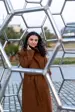
An Azerbaijani visual artist working across installation, painting, and stage design. She graduated from the Azerbaijan State Art Academy with a bachelor’s degree in 2015 and a master’s degree in 2021. Since 2018, she has been researching the “Visual Language of Carpets,” reinterpreting traditional patterns within a contemporary artistic framework.
Her work has been shown internationally in Lithuania, Germany, and Ireland, as well as in numerous exhibitions across Azerbaijan. She is a member of the Azerbaijan State Union of Artists and has received multiple awards, including the 1st Prize from the Union (2018) and the Luxmundi Gallery Prize dedicated to M. Mushviq (2024). In 2024, her kinetic installation Nature was exhibited at the National Qurama Festival in Baku. She has also participated in Erasmus+ artistic projects in Ireland and Germany.
Currently, Guliyeva works with Ritual Theatre, a local independent theatre dedicated to documentary performances. Within this framework, she has created several documentary installations, merging visual art and theatre to explore cultural memory, identity, and space. Her recent public-art installation “Architecture of İnvisibility” (2026) is currently being held at Yarat Contemporary Art Space.
- Likes
- 25113
- Views
- 3545232
- Followers
- 100
- Following
- 5
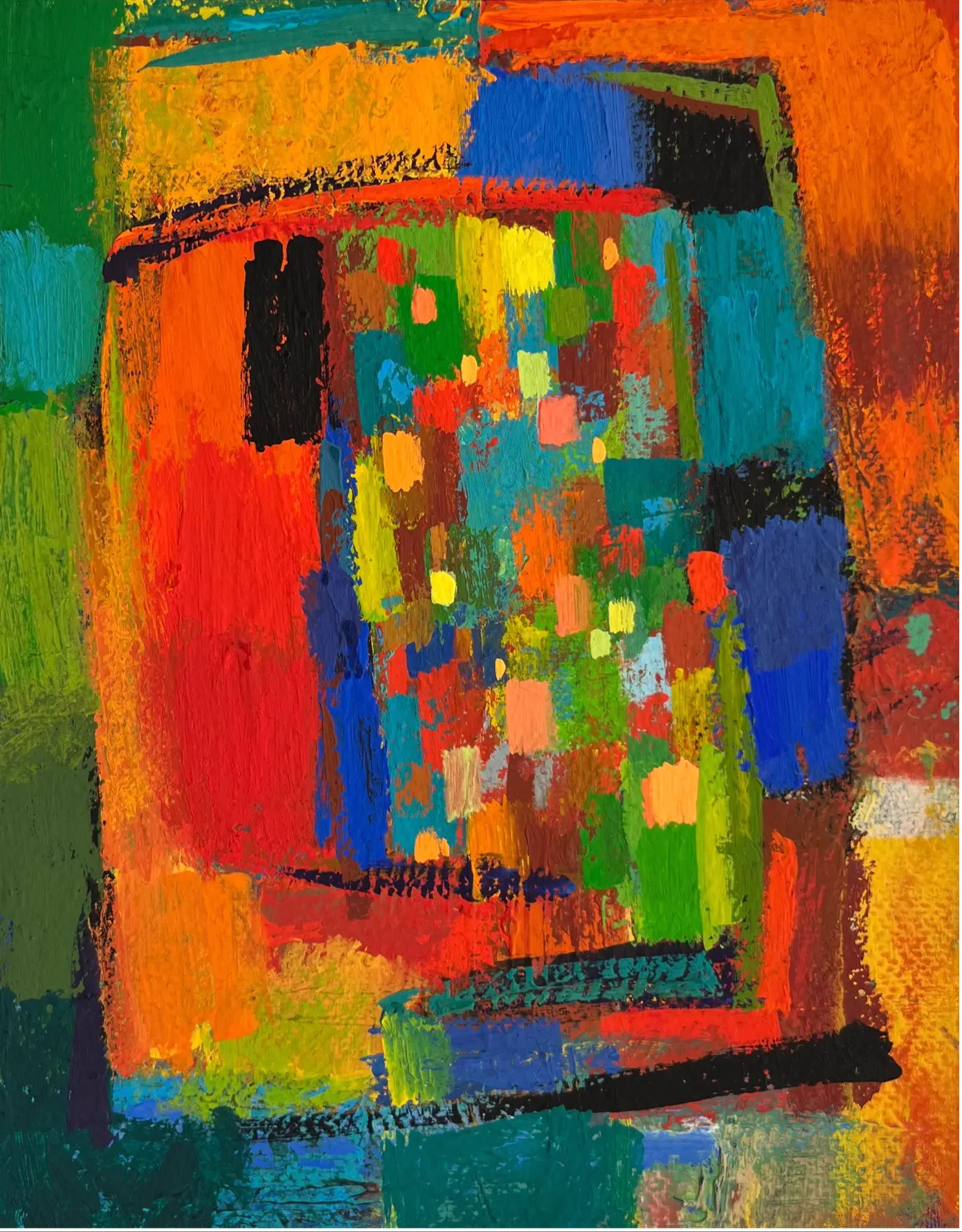
I view this paper not as a flat plane, but as a vessel for pure energy. My process is a conversation with the tempera itself—a medium that demands a certain speed and decisiveness. In this work, I wanted to explore the idea of 'contained light,' where bright yellows and oranges are held in place by the weight of deep greens and indigos.
Each block of color is a physical choice, a building block in a structure that exists only in the mind. I am fascinated by how a single stroke of black can anchor a chaotic sea of red, or how a dab of pale yellow can act as a window. There is no hidden subject here; the subject is the vibration of the pigment and the joy of the mark itself. I have left the edges of my brushstrokes raw and the layers thick because I want the viewer to feel the labor of the application—to see the painting as a living, breathing mosaic of chromatic thought