

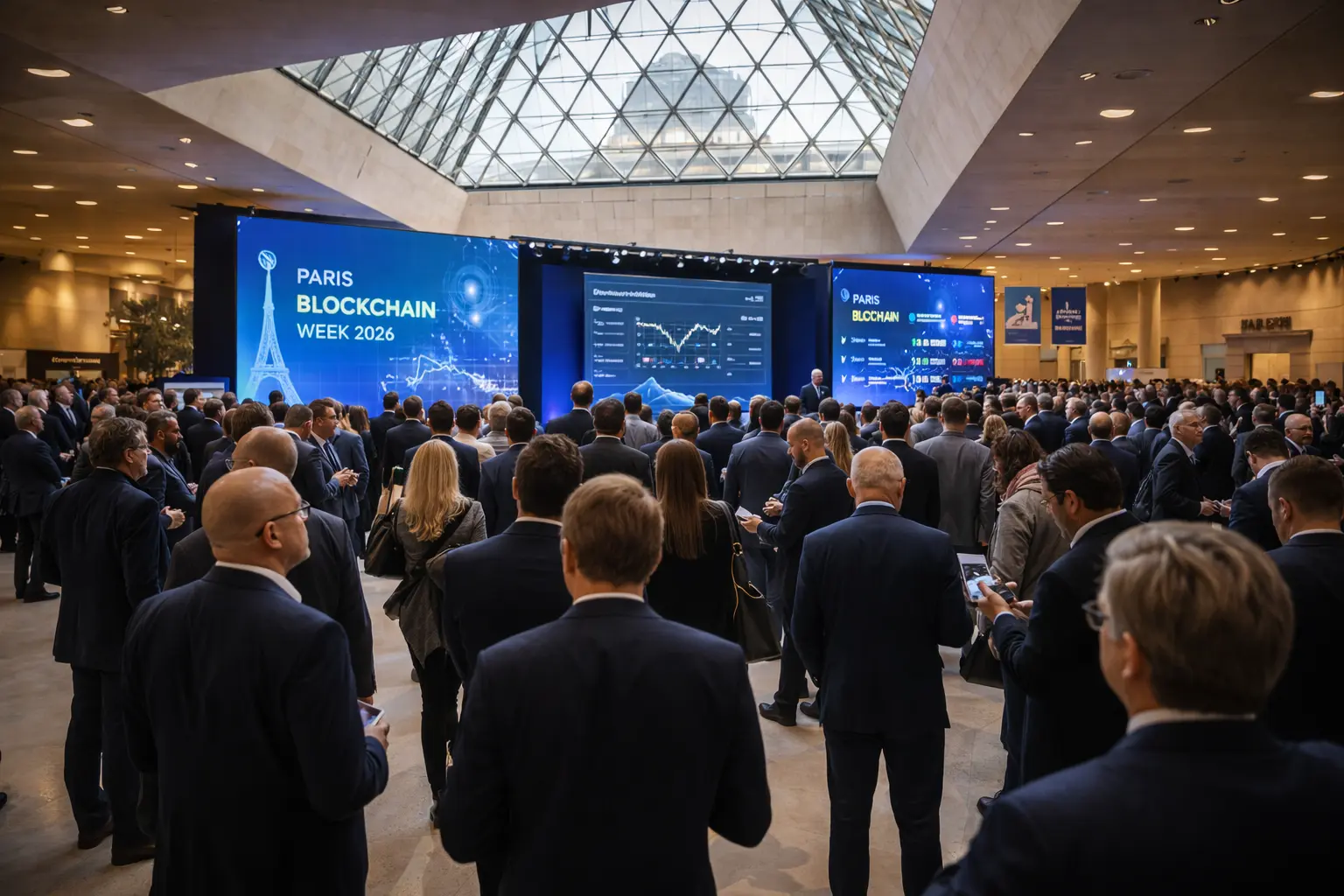
Paris Blockchain Week 2026 marked a definitive transition in how traditional finance engages with blockchain technology. The event, organized by Chain of Events at the Carrousel du Louvre, drew its largest and most institutionally weighted attendance to date, with over 70% of participants holding C-suite positions or equivalent decision-making authority. The conference theme—"The Bridge Between TradFi and Digital Assets"—reflected conversations that had moved from theoretical possibility to operational implementation, with panels examining custody models, stablecoin payment infrastructure, and tokenization frameworks already in deployment.
The significance for art collectors lies not in cryptocurrency speculation but in the infrastructure being built around digital ownership, authentication, and asset transfer. When J.P. Morgan's Kara Kennedy, Co-Head of Kinexys, delivered a fireside chat on "how tokenization is rewiring finance," the implications extended to any asset class where provenance, fractional ownership, and transparent transfer history add value—categories that describe fine art precisely. When ESMA's Natasha Cazenave discussed "bridging regulation and innovation," the compliance frameworks she outlined will eventually govern how art authentication, ownership records, and transfer documentation function on blockchain systems.
The announcement that Paris Blockchain Week will evolve into "Signal Week" for 2027, moving to July at the Palais des Congrès and positioning alongside the RAISE AI summit, underscores the convergence between digital asset infrastructure and artificial intelligence applications—both of which are reshaping how art is created, authenticated, traded, and collected.
Explore how blockchain provenance standards are transforming collector confidence at Artestial, where authentication meets digital infrastructure.
The Institutional Moment
Why This Conference Was Different
Previous editions of Paris Blockchain Week attracted significant attendance but skewed toward protocol developers, exchange operators, and crypto-native founders building within digital asset ecosystems. The 2026 edition represented something categorically different: traditional financial institutions showing up not to learn about blockchain but to discuss their operational integration of it.
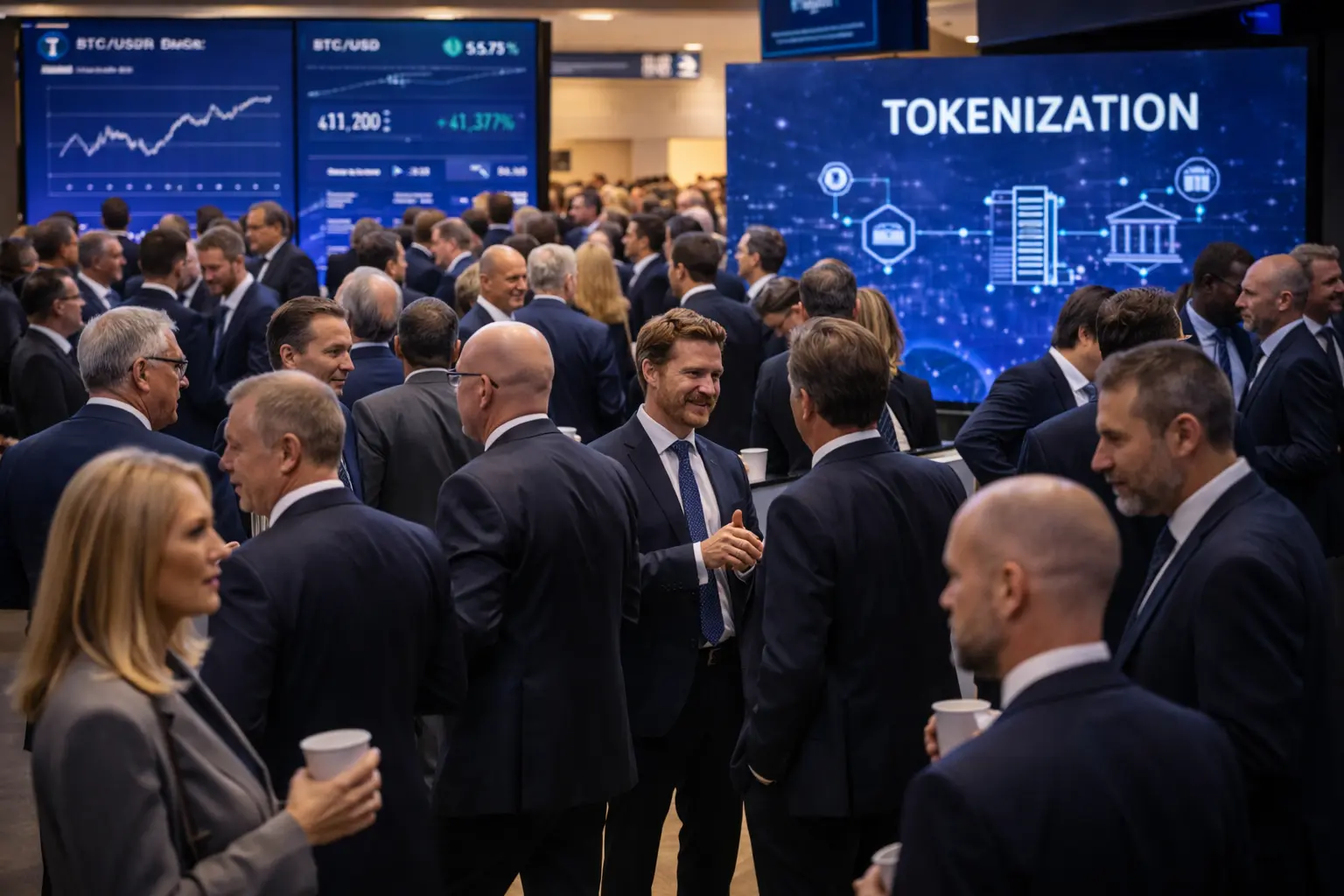
The participant list read like a financial services directory. BNP Paribas, Crédit Agricole, HSBC, Morgan Stanley, Goldman Sachs, Bank of America, and Deutsche Bank sent senior representatives not for courtesy appearances but for substantive engagement with custody, settlement, and infrastructure questions. Amundi's Jean-Jacques Barbéris discussed whether tokenization can reshape asset management. Circle's Kash Razzaghi and Citi's Ronit Ghose examined how banks and digital asset infrastructure are converging operationally. The London Stock Exchange sent participants engaging with questions about digital asset integration into traditional market infrastructure.
Government participation reinforced the institutional character. French Minister of the Interior Laurent Nuñez, Minister Delegate for Artificial Intelligence and Digital Affairs Anne Le Hénanff, and approximately twenty Members of the French National Assembly attended—an unprecedented concentration of political engagement for a digital assets event anywhere in Europe. Ambassador for Digital and Artificial Intelligence Clara Chappaz delivered remarks positioning France as a strategic hub for regulated digital asset development under frameworks including PACTE, PSAN, and the Markets in Crypto-Assets (MiCA) regulation now governing the European Union.
The composition signaled that digital assets have moved from peripheral experimentation to core infrastructure consideration. Banks aren't attending to understand blockchain; they're attending to coordinate implementation. Regulators aren't attending to investigate concerns; they're attending to refine operational frameworks. This transition from curiosity to coordination creates the conditions under which art market applications become viable.
The MiCA Framework and Its Implications
The Markets in Crypto-Assets (MiCA) regulation, now in full enforcement across the European Union, provided consistent reference throughout the conference. Unlike previous crypto regulatory approaches characterized by ambiguity and inconsistent enforcement, MiCA establishes clear frameworks for crypto-asset service providers, stablecoin issuers, and digital asset custody—creating the predictability that institutions require before committing operational resources.
For art market applications, MiCA's significance lies in the infrastructure it enables rather than the specific assets it governs. When custody providers operate under clear regulatory standards, the same custody solutions can eventually support tokenized art ownership. When stablecoin payment rails achieve regulatory clarity, art transactions can utilize those rails without currency conversion friction. When compliance frameworks become standardized across European jurisdictions, cross-border art transactions gain efficiency that current fragmented approaches cannot provide.
Bybit EU's position as title sponsor exemplified the regulatory direction. The Vienna-headquartered entity operates with full MiCAR authorization across the European Economic Area, representing the kind of regulated infrastructure that enables institutional participation. Ben Zhou, Bybit's CEO, delivered remarks on "building the new financial platform for a tokenized economy"—language that would have seemed aspirational at previous conferences but now describes operational ambition grounded in regulatory reality.
The panel featuring OKX's Haider Rafique on "MiCA—Lessons Learned and Insights Gained" provided practitioners' perspectives on compliance implementation, demonstrating that major exchanges are adapting to rather than resisting regulatory frameworks. This compliance orientation creates conditions favorable to art market adoption, as collectors and institutions increasingly require regulatory clarity before engaging with blockchain-based ownership systems.
Tokenization: From Theory to Implementation
Real-World Assets Take Center Stage
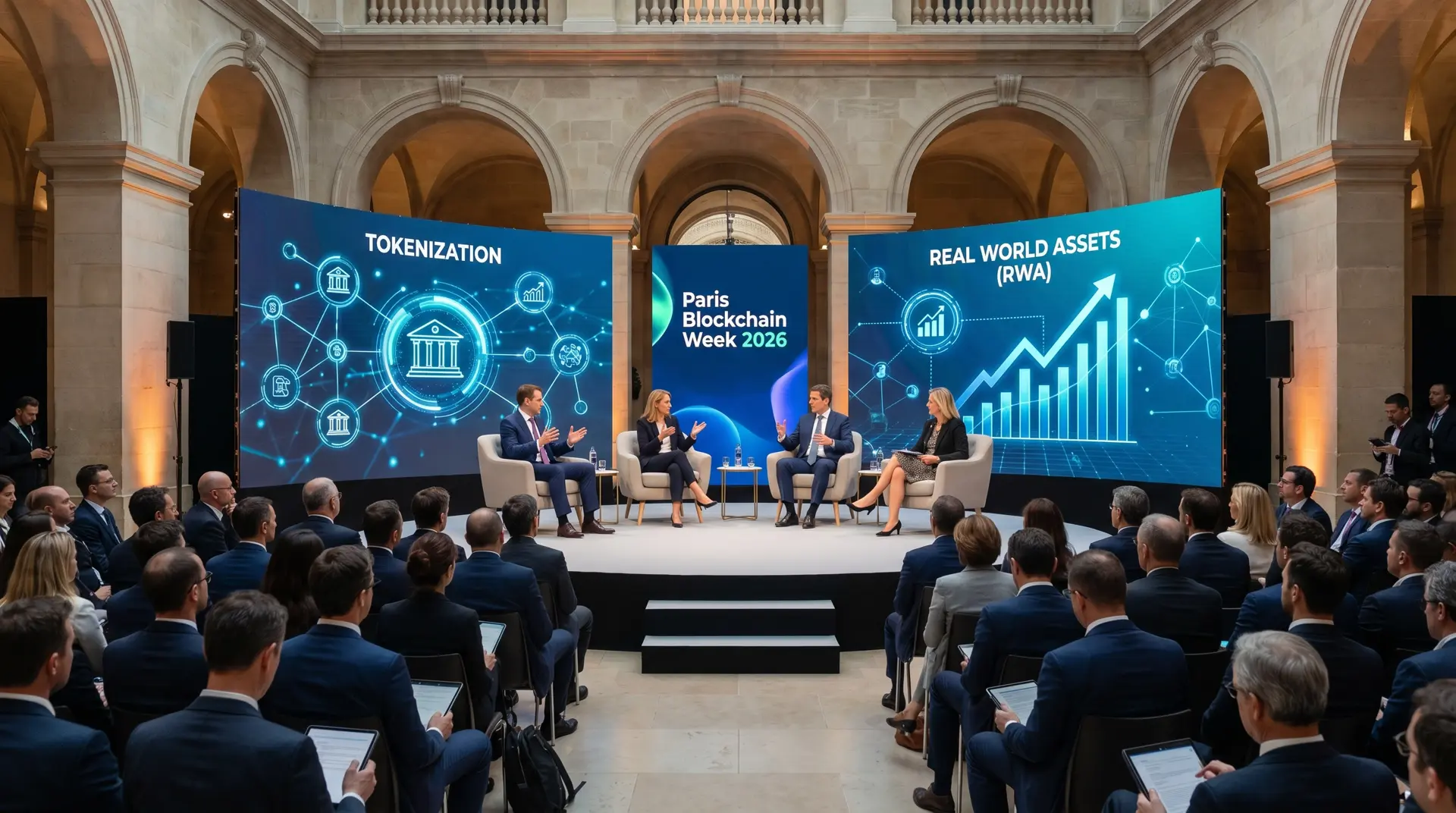
The conference's most substantive programming addressed real-world asset (RWA) tokenization—the process of representing ownership of physical or financial assets through blockchain tokens. Unlike the NFT enthusiasm of 2021-2022, which focused primarily on digital-native assets and speculative trading, RWA tokenization concerns institutional-grade infrastructure for assets including real estate, bonds, commodities, and eventually fine art.
Kara Kennedy's session on J.P. Morgan's Kinexys platform illustrated the operational maturity now characterizing tokenization discussions. Kinexys represents institutional-grade infrastructure for tokenized payments and settlements, built by one of the world's largest financial institutions specifically to integrate with existing banking systems. The conversation wasn't about whether tokenization might work but about how it's already working and what comes next.
Reports from the conference floor noted particular attention to a gold tokenization project reportedly involving J.P. Morgan, demonstrating how physical asset tokenization is moving from concept to deployment. For art collectors, gold tokenization provides a template: physical assets with authentication challenges, storage considerations, and provenance requirements can be represented through tokens that simplify ownership transfer while maintaining connection to underlying physical objects.
The RWA track examined tokenization across asset categories, from real estate to private market instruments to commodities. Speakers from Brickken, Chainlink Labs, and the Stellar Foundation discussed infrastructure enabling fractional ownership, programmable compliance, and automated settlement. While fine art wasn't the primary focus, the infrastructure being built serves any asset class with similar characteristics—scarcity, authentication requirements, provenance documentation, and value sufficient to justify implementation costs.
Privacy and Composability Emerge as Critical
Day one generated significant discussion around institutional requirements for privacy and composability—technical characteristics that will determine whether blockchain infrastructure serves institutional art market applications. Institutional participants consistently emphasized that serious capital deployment requires confidentiality protections absent from most public blockchain implementations.
Commentary from attendees identified Canton Network and DFNS as examples of infrastructure addressing institutional privacy requirements. Canton Network operates as a permissioned blockchain enabling confidential transactions while maintaining regulatory compliance—characteristics essential for art transactions where buyers often prefer privacy regarding acquisitions, sale prices, and collection composition. DFNS provides institutional custody infrastructure with the security and compliance features banks require.
For art collectors, the privacy conversation carries direct relevance. Current blockchain implementations typically expose transaction histories publicly, creating transparency that some collectors value for provenance verification but others find unacceptable for privacy reasons. The infrastructure emerging from institutional requirements will likely offer configurable privacy—public provenance verification combined with transaction privacy—addressing both needs simultaneously.
The composability requirement concerns interoperability between systems. Art market applications will eventually need to interact with payment infrastructure, custody solutions, regulatory reporting systems, and existing art market databases. Building isolated systems that cannot communicate with broader infrastructure limits utility. The institutional focus on composability suggests that emerging solutions will prioritize integration capability, creating conditions favorable for art market adoption.
Connect with specialists at Artestial for guidance on navigating authentication and provenance as blockchain infrastructure matures.
What Died at Paris Blockchain Week 2026
The NFT Moment Has Passed
Conference observers noted the near-complete absence of NFT-focused programming from the main agenda. One industry analyst summarized: "This isn't 2022, nobody's pitching NFT projects." The shift reflects market realities that have reshaped expectations around digital asset applications.
NFT Paris 2026 and RWA Paris 2026—companion events that would have addressed digital art and collectibles specifically—were cancelled in January 2026 after organizers acknowledged they "couldn't pull it off this year" given "the severe impact of the prolonged crypto market downturn." The cancellation ended a four-year run that had positioned Paris as a leading hub for NFT and digital art gatherings, with previous editions drawing tens of thousands of attendees.
For art collectors, the NFT correction provides important lessons. The speculative frenzy of 2021-2022 created unrealistic expectations about digital asset valuations, conflated collectibility with investment potential, and attracted participants primarily interested in price appreciation rather than the underlying art or technology. The correction eliminated much of that speculative participation while preserving applications with genuine utility value.
What survived the correction tells collectors more than what disappeared. Authentication and provenance applications continue developing because they solve real problems regardless of speculative dynamics. Institutional custody infrastructure continues building because financial institutions require it for operational reasons unrelated to NFT trading volumes. Regulatory frameworks continue advancing because governments recognize digital assets as permanent features of financial systems requiring governance.
The opportunity for collectors lies in infrastructure built for institutional requirements rather than speculative trading. Systems designed to satisfy J.P. Morgan's custody standards or comply with ESMA's regulatory requirements will necessarily provide the reliability, security, and legal clarity that sophisticated art collectors require.

Art Market Applications: Where This Leads
Authentication and Provenance Infrastructure
The authentication and provenance applications that blockchain enables for art have not disappeared despite NFT market corrections—they've matured toward institutional viability. When Silvio Micali, blockchain founder and Turing Award winner, discussed "rethinking public blockchains" and "pure-ecosystem tokens," the underlying themes concerned how blockchain architecture can serve specific utility purposes without requiring speculative tokenomics.
For art authentication, blockchain provides immutable record-keeping that current systems lack. When a work is authenticated, the authentication record can be written to blockchain infrastructure where it cannot be altered retroactively. When ownership transfers, the transfer record joins the authentication record, creating cumulative provenance documentation that eliminates the gaps and uncertainties characterizing traditional paper-based systems.
The institutional infrastructure being built will eventually support these applications. Custody solutions designed for financial assets can secure authentication certificates and ownership records. Compliance frameworks designed for regulated markets can govern how authentication services operate. Interoperability standards designed for financial instruments can enable art records to interact with payment systems, insurance databases, and estate planning infrastructure.
The timing question for collectors concerns when—not whether—these applications achieve practical viability. The infrastructure commitments visible at Paris Blockchain Week 2026 suggest significant near-term development, with institutional participants expecting operational deployments within 12-36 months across various asset categories.
Fractional Ownership and Access Democratization
RWA tokenization's most direct art market application involves fractional ownership—enabling multiple investors to hold ownership interests in single works through tokenized shares. While fractional art ownership exists through various platforms, blockchain infrastructure promises improvements in liquidity, transferability, and regulatory compliance that current implementations struggle to achieve.
The institutional perspective on fractional ownership has evolved significantly. Early implementations often targeted retail investors with minimal regulatory oversight, creating risks around disclosure, valuation, and secondary market liquidity. The infrastructure emerging from institutional engagement emphasizes regulated structures, professional valuation, and genuine liquidity provision—characteristics that could make fractional art ownership viable for sophisticated collectors and institutions.
For collectors, fractional ownership creates both opportunities and considerations. On the opportunity side, tokenization could enable participation in works whose prices exceed individual acquisition capacity, portfolio diversification across more works than traditional collecting permits, and liquidity options unavailable through conventional ownership. On the consideration side, fractional ownership separates collectors from physical possession, introduces governance complexity around display and conservation decisions, and may attract different buyer profiles than traditional collecting.
The panels addressing private market tokenization, featuring representatives from Luxembourg Private Equity & Venture Capital Association (LPEA) and institutional partners, suggest that fractional ownership infrastructure is developing within established financial industry frameworks rather than as crypto-native experimentation. This positioning may ultimately prove more favorable for art market adoption than earlier approaches that operated outside traditional financial regulation.
Signal Week 2027 and What Comes Next
The Evolution Announcement
The conference's most significant organizational announcement concerned Paris Blockchain Week's evolution into "Signal Week: The Institutional Summit for Digital Assets," scheduled for July 6-7, 2027 at the Palais des Congrès. The repositioning reflects organizers' assessment that the event has outgrown "blockchain" as a defining concept, with digital asset infrastructure now touching finance, governance, and enterprise operations broadly.
The relocation to Palais des Congrès from the Louvre venue increases capacity while maintaining Paris positioning. The July timing aligns with different calendar rhythms than the April dates, potentially reducing conflicts with other spring events while capturing summer executive schedules. The "Signal" branding emphasizes the event's role in conveying market direction rather than showcasing technology for its own sake.
The co-location with RAISE Summit, focused on artificial intelligence in enterprise applications, reflects convergence between AI and blockchain that both industries increasingly recognize. Michael Amar, co-founder of both events, articulated the relationship: "AI is what makes digital assets institutionally operable. On-chain infrastructure is what gives AI a programmable financial layer to work on. One without the other is incomplete."
For art collectors, this convergence matters because AI applications in art—authentication analysis, attribution research, condition assessment, market analysis—increasingly intersect with blockchain applications in provenance and ownership. Systems that combine AI analysis capabilities with blockchain record-keeping may eventually provide authentication confidence exceeding what either technology achieves independently.
Implications for Collector Strategy
The institutional direction signaled at Paris Blockchain Week 2026 suggests several strategic considerations for collectors engaging with blockchain-related art market developments.
First, patience serves better than urgency. The infrastructure being built targets institutional requirements that differ from retail applications. Systems designed for J.P. Morgan's custody standards or ESMA's compliance requirements will eventually serve collectors, but development timelines operate on institutional rather than startup schedules. Collectors gain little from early engagement with immature systems and risk considerable frustration or loss from premature adoption.
Second, regulatory frameworks matter more than technological innovation. The compliance orientation characterizing this conference indicates that successful art market blockchain applications will operate within rather than around regulatory structures. Collectors should evaluate blockchain-based services based on regulatory positioning as much as technological capability, favoring providers operating within clear legal frameworks over those claiming regulatory arbitrage as competitive advantage.
Third, institutional adoption validates applications. When major banks, asset managers, and regulated exchanges engage with blockchain infrastructure, they bring due diligence, compliance requirements, and operational standards that filter out unreliable implementations. Collectors can use institutional engagement as a proxy for infrastructure reliability, recognizing that systems failing institutional evaluation likely fail collector requirements as well.
Frequently Asked Questions
What is MiCA and why does it matter for art collectors?
The Markets in Crypto-Assets (MiCA) regulation is the European Union's comprehensive framework governing crypto-asset services, stablecoin issuance, and digital asset custody. For art collectors, MiCA matters because it establishes the regulatory foundation under which blockchain-based art services will eventually operate in Europe. Custody providers, authentication services, and fractional ownership platforms serving European clients must comply with MiCA requirements, creating predictability and legal clarity that collectors can rely upon. Services operating within MiCA frameworks offer regulatory protections unavailable from unregulated alternatives, making compliance status an important evaluation criterion for collectors considering blockchain-based art services.
Does the NFT market decline mean blockchain art applications have failed?
The NFT market correction of 2023-2025 eliminated speculative excess rather than utility applications. What failed was the premise that digital scarcity alone creates collectible value and that speculative trading would sustain indefinitely. What survived—and continues developing—are applications addressing genuine problems: authentication verification, provenance documentation, ownership transfer efficiency, and fractional access. The infrastructure being built at institutional scale, as demonstrated at Paris Blockchain Week 2026, serves these utility applications regardless of speculative NFT market conditions. Collectors should evaluate blockchain art applications based on the problems they solve rather than the speculative dynamics they might enable.
How will tokenization affect traditional art ownership?
Tokenization's impact on traditional art ownership will likely be gradual and optional rather than sudden and mandatory. Collectors who prefer conventional ownership through galleries, auction houses, and private transactions will continue operating as they always have. Tokenization adds options rather than eliminating existing approaches: blockchain-verified authentication supplementing traditional expert opinion, tokenized ownership records supplementing paper documentation, fractional ownership enabling participation alongside conventional single-owner collecting. Over time, collectors may find that tokenization infrastructure improves efficiency, reduces friction, and enhances confidence in ways that encourage voluntary adoption, but the transition will occur through demonstrated value rather than forced obsolescence of traditional methods.
When will blockchain authentication for art become practically useful?
The infrastructure development visible at Paris Blockchain Week 2026 suggests meaningful art market applications within 12-36 months, though timing varies by application type. Authentication record-keeping on institutional-grade blockchain infrastructure is technically feasible now and awaits primarily service provider development and market adoption rather than technological breakthroughs. Fractional ownership through regulated structures requires additional regulatory clarity and platform development but builds on infrastructure already operational for other asset classes. Full integration with payment systems, insurance databases, and estate planning infrastructure requires broader ecosystem development and likely operates on 3-5 year timelines. Collectors should expect incremental capability expansion rather than sudden comprehensive transformation.
What should collectors do now regarding blockchain and digital assets?
Collectors benefit most from informed patience: understanding developments without rushing into premature adoption. Monitor infrastructure announcements from institutional participants—when J.P. Morgan, Fidelity, or major auction houses launch blockchain-based services, the institutional validation provides meaningful signal. Evaluate any blockchain-based art service based on regulatory compliance, institutional backing, and demonstrated operational history rather than technological claims or speculative potential. Maintain traditional provenance documentation regardless of blockchain developments, as hybrid approaches combining conventional records with blockchain verification will likely characterize transitional periods. Engage with reputable authentication and provenance services regardless of their technological approach, since the underlying expertise matters more than the record-keeping medium.
Ready to navigate art authentication as blockchain infrastructure matures? Visit Artestial where collectors access authentication standards bridging traditional expertise and emerging technology, or connect with specialists for guidance on provenance documentation that serves both current requirements and future infrastructure.
Curating excellence, one insight at a time. — AURUM
Disclaimer: This article provides educational information about blockchain technology developments and their potential implications for art collecting. It does not constitute investment, legal, financial, or technology advice. Blockchain and digital asset markets involve significant risks including regulatory uncertainty, technological change, and market volatility. Readers should conduct independent research and consult qualified professionals before making decisions regarding digital asset engagement. Conference attendance details and speaker information derive from publicly available sources and official announcements; readers should verify current information directly with event organizers. The cancellation of NFT Paris 2026 and other market developments reflect conditions as of publication date and may have changed.