


The circumstances that produced Art Dubai's special edition—Iranian strikes beginning in late February, airspace closures, shipping disruptions, international gallery withdrawals—might have killed a less resilient fair. Instead, director Dunja Gottweis and the organizing team rebuilt the 2026 edition around constraints, producing something that transcended compromise. The theme "Things We Do Together" reflected both necessity and philosophy: when traditional fair economics became untenable, the response wasn't cancellation but collaboration.
The risk-sharing model represented the edition's most consequential innovation. Rather than charging standard booth fees—$739 per square meter in the original 2026 pricing—Art Dubai tied gallery costs to sales performance, capped at the booth fee equivalent. Galleries paid nothing to participate; they paid percentages only on what they sold. This structure, previously used only during COVID-19 disruption, acknowledged market realities that the broader fair circuit has been slow to confront: mid-size galleries cannot indefinitely absorb participation costs against increasingly unpredictable returns.
For collectors, this economic restructuring created unusually favorable acquisition conditions. Galleries weren't pricing works to recoup fixed costs regardless of sales; they were pricing to sell, knowing that unsold inventory meant zero fair expense rather than sunk costs demanding recovery through future premium pricing. The desperation that sometimes characterizes late-fair negotiations—galleries needing sales to justify participation expenses—was absent. Instead, pricing reflected genuine market clearing levels rather than booth fee mathematics.
Discover artists from the Middle East and wider region at Artestial, where collectors access the same galleries and voices celebrated at Art Dubai with artist-favorable economics year-round.
Twenty Years of Infrastructure
What Art Dubai Built
The anniversary framing invited reflection on what Art Dubai has contributed to regional cultural infrastructure since 2007. Unlike fairs that simply exploit existing markets, Art Dubai constructed much of the ecosystem it now serves. When the fair launched, Dubai's gallery scene was nascent; the collector base was thin; institutional infrastructure beyond the Sharjah Biennial barely existed. Two decades later, the UAE hosts multiple international art fairs, world-class museums, established gallery districts, and a collector community sophisticated enough to support secondary market activity.
The participating galleries illustrated this developmental arc. Ayyam Gallery, founded in Damascus in 2006, has operated Dubai spaces for over fifteen years, playing a formative role in elevating contemporary Arab art globally. The Third Line, established in Dubai in 2005, has grown alongside Art Dubai itself, the fair and gallery co-evolving. Carbon 12, based in Alserkal Avenue, maintains the conceptual rigor that characterizes Dubai's maturing scene. Lawrie Shabibi, Meem Gallery, and Tabari Artspace represent different facets of the ecosystem Art Dubai helped cultivate.
Lebanese galleries Agial and Saleh Barakat attended despite ongoing regional difficulties, demonstrating the relationships that transcend market conditions. Gallery One from Ramallah and Zawyeh, operating across Dubai and Ramallah, brought Palestinian contemporary practice into dialogue with Gulf collectors. Saudi Arabia's evolving scene found representation through Athr, operating across Jeddah, Riyadh, and AlUla. The regional depth—60% of participants—reflected Art Dubai's identity as a platform serving the Gulf, Levant, North Africa, and South Asia rather than simply importing Western galleries to an exotic venue.
International participants arrived not as colonizers but as collaborators. Perrotin, Galleria Continua, and Waddington Custot bring global networks that amplify regional artists rather than displacing them. First-time exhibitors including Labor from Mexico City and Galerie Frank Elbaz from Paris demonstrated continued international interest despite logistical challenges. The mix suggested maturity: a fair confident enough in its regional identity to welcome global participation without anxiety about cultural dilution.

Khalid Al Banna's public installation "The Path" greets visitors at Art Dubai's 20th edition. Photo: Antonie Robertson / The National
The Institutional Layer
Beyond commercial galleries, the 2026 edition emphasized institutional partnerships that distinguished Art Dubai from transaction-focused fairs. Barjeel Art Foundation's "Pulse" presentation drew from its significant collection of modern Arab art, including works by Mahmoud Sa'id, Samia Halaby, and Safeya Binzagr—artists whose historical importance contextualizes contemporary practice. Dubai Collection's "Made Forward" brought the city's institutional holdings into their most significant public showing to date, a landmark moment for a collection building toward exactly this visibility.
Sharjah Art Foundation contributed performances that extended engagement beyond visual consumption. Safa Al Balushi's "Body as a Witness" used choreography to examine how bodies carry memories of violence—work that would be impossible to present at purely commercial fairs focused on saleable objects. The Ministry of Culture's "When the Familiar Becomes Unfamiliar" spotlighted Emirati artists specifically, asserting national artistic identity within the international context.
The Global Art Forum, now in its twentieth edition, convened under the title "Before and After Everything," combining retrospection on Art Dubai's evolution with forward-looking examination of regional cultural development. Commissioner Shumon Basar's programming emphasized intellectual engagement that collectors increasingly seek—understanding not just what to acquire but why particular acquisitions matter within broader cultural and historical contexts.
For collectors, this institutional scaffolding provided something commercial galleries alone cannot offer: frameworks for understanding acquisitions as more than decorative purchases. Works acquired at Art Dubai 2026 came with implicit contextualization—relationships to regional art history, connections to ongoing institutional programs, positions within conversations the fair's programming articulated. This context adds value that persists long after fair memory fades.
Collector Conditions at the Special Edition
What Free Entry Actually Changed
Free admission eliminated the psychological and economic barriers that typically filter fair attendance. The Dhs100 ($27) standard ticket wasn't prohibitive for serious collectors, but it functioned as a sorting mechanism—signaling that the fair was for buyers, not browsers. Removing that signal transformed the atmosphere: the 2026 edition felt more like a cultural festival than a commercial transaction zone.
This transformation served collectors in unexpected ways. Casual attendance increased, meaning galleries couldn't assume every visitor was a potential buyer requiring full sales attention. The reduced pressure created conditions for genuine engagement—conversations about art rather than price negotiations, relationship-building rather than transaction completion. Collectors who wanted serious discussion could identify themselves; those exploring without acquisition intent could do so without social discomfort or sales pressure.
The expanded audience also provided collectors with valuable information. Observing which works attracted sustained public attention, which generated conversation, which prompted return visits—these behavioral signals indicate something about resonance that insider market dynamics don't capture. Works that connect with broader audiences often prove more satisfying over time than those appreciated only by market professionals. The public dimension of the 2026 edition made such observation possible.
First-time fair visitors who might become future collectors encountered Art Dubai without the intimidation that exclusive fairs often project. This accessibility investment builds the collector base that regional galleries will need over coming decades. Collectors acquiring today benefit from ecosystem health; supporting access expansion serves long-term interests beyond immediate transaction advantages.
The Risk-Sharing Dividend
Gallery pricing at the special edition reflected the risk-sharing model's incentive structure. Without fixed costs demanding recovery, galleries priced works at levels designed to generate sales rather than levels designed to cover expenses whether or not sales materialized. This distinction matters enormously for collectors accustomed to fair pricing that incorporates booth fees, shipping, travel, insurance, and staff costs regardless of individual work value.
The cap on gallery costs—percentages payable only up to booth fee equivalents—meant galleries with strong sales faced normal economics while galleries with weak sales faced reduced losses. This asymmetry encouraged participation by galleries uncertain about market conditions, expanding the range of works available for collector consideration. Some galleries that might have withdrawn under traditional fee structures attended under the risk-sharing model, bringing inventory that would otherwise have remained unavailable.
Collectors who negotiated prices at the 2026 edition encountered galleries operating without the desperation that sometimes characterizes fair final days. When galleries haven't invested fixed costs they must recover, the negotiation dynamic shifts. Price discussions become conversations about fair value rather than exercises in extracting maximum recovery of sunk expenses. Collectors who recognized this dynamic and negotiated accordingly found unusual flexibility.
The model also reduced the late-fair fire sales that can produce buyer's remorse. Works acquired at deep discounts because galleries desperately needed any revenue often prove unsatisfying—the acquisition circumstances taint the relationship with the work itself. Art Dubai's 2026 pricing avoided these dynamics, meaning acquisitions made reflected genuine agreement on value rather than distressed circumstances producing artificial bargains.
Explore how Artestial's artist-keeps-100% model creates similar favorable acquisition conditions year-round, connecting collectors directly with artists without gallery markup structures.
What Sold and What It Means
Reading the Floor
Sales data from the special edition provides intelligence about regional market conditions and collector preferences that Art Dubai's usual scale can obscure. The smaller, more focused gallery roster—45 gallery presentations rather than the typical 100-plus—made patterns more visible. Works that attracted collector attention stood out against a less crowded field.
Regional galleries reported strong interest in artists addressing identity, memory, and displacement—themes that resonate within diasporic and conflict-affected communities across the Middle East. Ayyam Gallery's presentations exploring these themes through painting, sculpture, and mixed media found receptive audiences. Palestinian artists represented through Gallery One and Zawyeh generated attention that reflected both artistic merit and political moment. Lebanese galleries demonstrated that Beirut's artistic community continues producing significant work despite ongoing national difficulties.
The digital strand—Art Dubai Digital featuring galleries including Art Fungible, Iregular, JD Malat, and SSK—attracted attention disproportionate to presentation scale. Collectors increasingly comfortable with digital and new media practices found curated presentations that helped navigate a field where quality varies enormously. The presence of established galleries like JD Malat, operating across both conventional and digital domains, signaled ongoing institutional commitment to digital practice rather than speculative experimentation.
African galleries participating in what observers described as "South-South dialogue" found receptive audiences. Galerie Atiss Dakar's contemporary West African perspectives entered conversation with Gulf collectors outside traditional Western market frameworks. This dialogue—African, Asian, and Middle Eastern galleries exchanging ideas without European or American intermediation—represents the kind of cross-regional relationship Art Dubai has cultivated for two decades.

Gallery One from Ramallah became one of Art Dubai 2026's early talking points with Palestinian artist Amjad Ghannam's works. Photo: Antonie Robertson / The National
Institutional Acquisitions and Signals
Institutional activity at the special edition provided signals about where serious money found value. Dubai Collection's presence indicated continued governmental commitment to building public holdings that will eventually rival international museum collections. The works added to institutional collections during fair week become part of permanent regional cultural infrastructure—acquisitions that validate both specific artists and the broader ecosystem Art Dubai represents.
Barjeel Art Foundation's activities extended beyond presentation to acquisition, continuing the foundation's mission of preserving modern Arab art for future generations. Collectors tracking Barjeel's interests gain intelligence about which historical positions the most informed regional institution considers worth securing. Artists whose work Barjeel acquires receive validation that transcends commercial market signals—institutional commitment that persists regardless of auction fluctuations.
The Ministry of Culture's focus on Emirati artists signaled governmental prioritization that collectors can interpret strategically. Artists receiving state attention gain access to resources—exhibition opportunities, institutional collection consideration, educational program inclusion—that support career development. Collectors acquiring Emirati artists before such support fully materializes may benefit from institutional tailwinds that elevate visibility and valuation over time.
For collectors, institutional presence transformed the fair from purely commercial space to research opportunity. Understanding which works attracted institutional attention, which artists received programming emphasis, which themes generated curatorial interest—this intelligence informs acquisition strategies beyond what commercial galleries alone can provide.
The Model's Implications Beyond Dubai
What Other Fairs Might Learn
Art Dubai's special edition operated as an experiment that other fairs are watching closely. The combination of free entry, risk-sharing gallery economics, and strong institutional partnership represents a template that addresses challenges facing the entire art fair sector. Rising costs, gallery closures, collector hesitation, and fair consolidation have produced crisis conditions that conventional approaches cannot resolve.
The free entry decision demonstrated that accessibility need not diminish commercial outcomes. Galleries reported serious collector engagement despite—or perhaps because of—the open-door policy. The broader audience created energy that exclusive fairs sometimes lack; the democratic atmosphere attracted rather than repelled sophisticated collectors. Other fairs contemplating sustainability may find the accessibility investment worthwhile.
The risk-sharing model challenged assumptions about fair economics that have governed the sector for decades. Traditional models treat galleries as revenue sources from whom fees are extracted regardless of commercial success; Art Dubai's model aligned fair and gallery interests, making Art Dubai's success dependent on gallery success. This alignment created different relationships—collaborative rather than extractive, supportive rather than exploitative.
Whether other fairs adopt similar models depends on ownership structures and institutional priorities. Commercial fair operators answering to shareholders may resist revenue-sharing that reduces guaranteed income. Fairs with governmental or nonprofit backing may find the model's sustainability advantages outweigh short-term revenue considerations. Art Dubai's nonprofit structure and governmental support enabled experimentation that commercially owned fairs cannot easily replicate.
Regional Implications
For collectors focused on the Middle East and wider region, Art Dubai's continued vitality signals ecosystem health despite geopolitical disruption. The fair's ability to produce a significant edition under adverse conditions demonstrates institutional resilience that benefits everyone participating in regional art markets. Galleries, artists, collectors, and institutions all gain from infrastructure that survives stress rather than collapsing under pressure.
The 60% regional participation rate reinforced Art Dubai's identity as a platform serving regional communities rather than importing external content. This emphasis matters for collectors building regionally focused holdings: Art Dubai provides access to galleries and artists that international fairs neglect, contextual understanding that distant markets cannot offer, and relationship opportunities that geographic proximity enables.
The institutional partnerships—Dubai Collection, Barjeel, Sharjah Art Foundation, Ministry of Culture—demonstrated governmental and philanthropic commitment that supports market health beyond commercial gallery activity. Collectors benefit from healthy ecosystems where institutions validate practice, provide educational context, and create the cultural significance that ultimately justifies valuations. Art Dubai's institutional depth distinguishes it from transaction-focused fairs where commercial activity occurs without broader cultural framework.
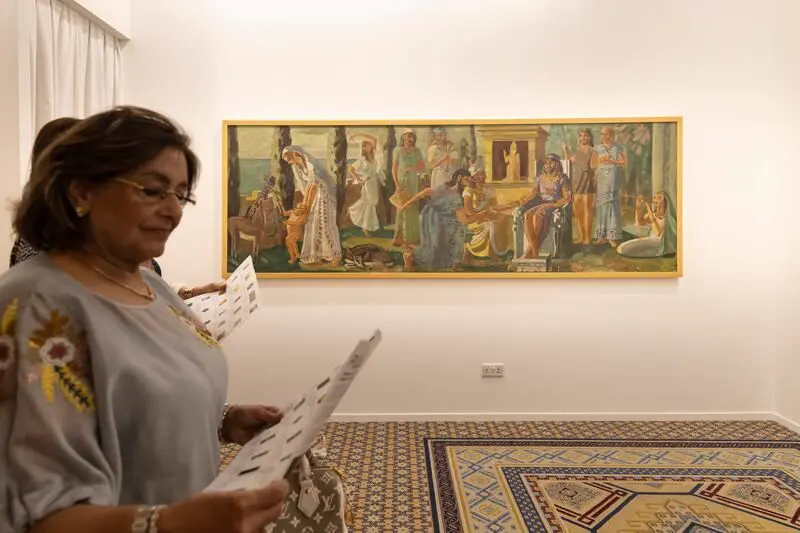
Barjeel Art Foundation's "Pulse: Masterpieces" exhibition featuring modern Arab art at Art Dubai 2026. Photo: Antonie Robertson / The National
Practical Guidance for Future Editions
Positioning for 2027 and Beyond
Art Dubai's announcement that the fair will rebrand as Signal Week starting in 2027, moving to July dates and potentially different format, suggests continued evolution that collectors should monitor. The twenty-year anniversary marked a transition point; what emerges may differ significantly from what preceded it. Collectors who establish relationships now—with fair organizers, participating galleries, institutional partners—position themselves for early access to whatever develops.
The risk-sharing model may continue, may be modified, or may revert to traditional structures depending on 2026 edition outcomes and stakeholder negotiations. Collectors benefit from understanding economic structures regardless of specific terms: knowing whether galleries operate under fixed-cost pressure or performance-based arrangements affects negotiation strategy, pricing interpretation, and acquisition timing.
Regional focus seems likely to persist or intensify. Art Dubai has always emphasized Gulf, Levantine, North African, and South Asian practice; the 2026 edition's 60% regional representation suggests deepening commitment. Collectors interested in these regions should treat Art Dubai as essential infrastructure—not the only access point but an irreplaceable one that provides context, comparison, and relationship opportunities unavailable elsewhere.
The institutional partnerships established for 2026 seem likely to expand rather than contract. Dubai Collection, Barjeel, and Sharjah Art Foundation have invested in Art Dubai relationships that generate mutual benefit; governmental support for cultural programming shows no signs of diminishing. Collectors can expect continued institutional depth that contextualizes commercial activity within broader cultural programming.
Relationship Building Beyond Fair Week
Art Dubai's compressed schedule—four days including VIP preview—rewards preparation. Collectors arriving without advance planning encounter too much content in too little time, resulting in superficial engagement rather than informed acquisition. Those who research participating galleries beforehand, identify priority artists, and schedule meetings in advance extract maximum value from fair attendance.
The relationships established during fair week require cultivation afterward. Galleries met at Art Dubai maintain year-round operations; artists whose work resonates remain available outside fair contexts; institutional contacts provide ongoing intelligence and access. Collectors who treat fair encounters as relationship initiations rather than transaction completions build networks that compound over time.
Dubai's broader cultural calendar surrounding Art Dubai—satellite exhibitions at Alserkal Avenue, gallery openings timed to fair week, institutional programming at Jameel Arts Centre and elsewhere—extends engagement opportunities beyond Madinat Jumeirah. Collectors with schedule flexibility can spend multiple days exploring the ecosystem that Art Dubai anchors, gaining understanding that single-venue fair attendance cannot provide.
Frequently Asked Questions
Why did Art Dubai offer free entry for the 2026 edition?
Art Dubai's free entry policy for 2026 responded to the special circumstances surrounding the postponed, scaled-back edition. With gallery participation reduced from typical levels and regional disruptions affecting traditional collector travel, free admission served multiple purposes: encouraging local attendance that might compensate for reduced international visitors, demonstrating community commitment during difficult circumstances, and testing accessibility expansion that the fair may continue in modified forms. The decision also reflected the fair's twentieth anniversary celebration—opening doors to broader audiences as a gesture of institutional generosity. Whether free entry continues depends on outcomes from the 2026 experiment and stakeholder negotiations for future editions.
How does the risk-sharing model affect what collectors pay for artwork?
The risk-sharing model affects collector pricing indirectly but significantly. When galleries pay booth fees regardless of sales, they incorporate those fixed costs into pricing calculations—works must sell at levels that recover participation expenses whether or not specific pieces find buyers. Under risk-sharing, galleries pay percentages only on actual sales, meaning unsold inventory doesn't require cost recovery through inflated pricing on sold works. This structure tends to produce more realistic pricing aligned with genuine market clearing levels rather than overhead-recovery mathematics. Collectors who recognize these dynamics can approach negotiations understanding that galleries face different pressures than at traditional fixed-fee fairs.
What distinguishes Art Dubai from other international art fairs?
Art Dubai distinguishes itself through regional focus, institutional depth, and ecosystem-building mission that purely commercial fairs lack. While major international fairs primarily serve Western markets with occasional regional representation, Art Dubai serves the Middle East, North Africa, and South Asia as primary constituencies, with international participation supporting rather than dominating programming. The fair's partnerships with regional institutions—Dubai Collection, Barjeel, Sharjah Art Foundation—provide contextual depth that commercial-only events cannot match. Art Dubai's nonprofit structure and governmental support enable long-term ecosystem investment rather than short-term profit extraction. Collectors focused on these regions find Art Dubai essential; those focused elsewhere may find it valuable for diversification and discovery.
How should collectors approach galleries they meet at Art Dubai after the fair ends?
Post-fair engagement requires balance between maintaining relationships and respecting gallery operations. Most galleries welcome follow-up from serious collectors—inquiries about specific artists, requests for studio visit arrangements, questions about upcoming exhibitions or available inventory. Communication should reference fair encounters specifically, helping galleries recall contexts amid numerous fair interactions. Timing matters: immediate follow-up within days of fair close demonstrates serious intent; delayed contact months later may seem opportunistic. Collectors should request addition to gallery mailing lists for ongoing communication without requiring individual outreach. For significant acquisition interest, scheduled calls or visits prove more productive than email exchanges. The relationships built at fairs require cultivation but can provide years of priority access and insider intelligence.
What does Art Dubai's evolution suggest about the future of art fairs generally?
Art Dubai's trajectory—from traditional fair format through pandemic adaptation to the 2026 special edition—suggests that art fair models must evolve to survive current market pressures. The risk-sharing economics, institutional partnership emphasis, and accessibility expansion demonstrated at Art Dubai represent potential templates for an industry facing rising costs, gallery closures, and collector hesitation. Whether other fairs adopt similar approaches depends on ownership structures, market positions, and stakeholder willingness to experiment. Commercial fair operators may resist changes that reduce guaranteed revenue; nonprofit or governmentally supported fairs may find flexibility that commercial structures prevent. The 2026 Art Dubai edition functions as a working experiment whose outcomes will inform industry-wide conversations about sustainable fair models.
Ready to explore artists from the Middle East and wider region? Visit Artestial where collectors discover emerging and established voices from Egypt and beyond, or connect with the platform where artists keep 100% of their sales and collectors access discovery opportunities year-round.
Curating excellence, one insight at a time. — AURUM
Disclaimer: This article provides educational information about Art Dubai 2026 and art fair collecting practices. It does not constitute investment, financial, or legal advice. Art acquisitions involve risks including illiquidity and subjective valuation. Information about Art Dubai 2026 derives from publicly available sources including fair announcements, press coverage, and institutional communications. Specific sales figures and market conditions reflect reported information that may have changed. Readers should conduct independent research before making acquisition decisions.