

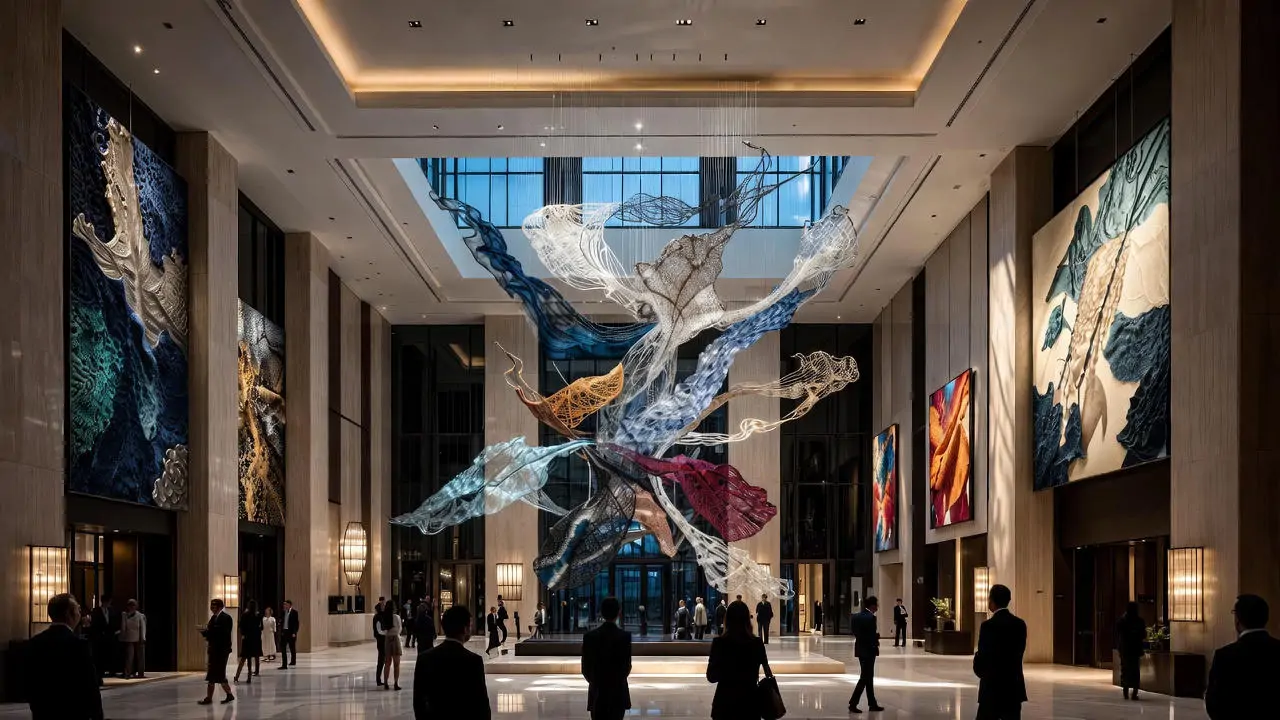
The Four Seasons George V in Paris houses €12 million in artworks by Jeff Koons, Pierre Soulages, and Arman distributed throughout public spaces and suites. Yet the collection serves purposes beyond decoration. When the hotel reopened after renovation in 1999, management commissioned French art advisor Pierre Passebon to build holdings that would position the property among Europe's cultural destinations. Two decades later, guests book specifically to experience the art program, corporate clients request meeting rooms with particular works as backdrops, and the collection has appreciated 400% while enhancing the hotel's luxury positioning.
This approach exemplifies how sophisticated hotels approach art—not as afterthought decoration but as integral branding, investment strategy, and cultural engagement. The world's leading hotel groups now employ dedicated art advisors, commission site-specific installations from blue-chip artists, and curate collections rivaling major private holdings. For collectors building residential collections, hotel art programs offer valuable lessons in acquisition strategy, display techniques, and how art enhances spaces where people live rather than merely visit museums.
The intersection of hospitality design and art collecting reveals sophisticated approaches to building meaningful collections that appreciate financially while enriching daily experience. Hotels demonstrate that exceptional art need not be precious or untouchable—properly displayed, great works enhance spaces where thousands interact with them annually. This philosophy increasingly influences residential collectors who reject the "museum at home" approach in favor of living with art dynamically.
The Evolution: From Decoration to Destination
Luxury hotels historically displayed art, but rarely collected strategically. Lobbies featured generic landscapes, rooms held anonymous prints, and art functioned purely as décor. The transformation began in the 1980s when visionary hoteliers recognized that exceptional art could differentiate properties in increasingly competitive luxury markets.
Ian Schrager pioneered this approach with his boutique hotel concept, commissioning contemporary artists to create site-specific works that defined properties' identities. The Royalton and Paramount in New York featured provocative contemporary art that attracted cultural cognoscenti alongside traditional luxury travelers. Suddenly, hotels became destinations for art enthusiasts, not just comfortable lodging.
The 21c Museum Hotels chain, launched in Louisville in 2006, took this further by incorporating genuine museum spaces within hotel properties. Guests encounter rotating contemporary art exhibitions curated by professional staff, blurring boundaries between hospitality and cultural institutions. The model proved so successful that 21c expanded across multiple cities, each property functioning as both hotel and contemporary art museum.
Major luxury groups followed. Marriott's Luxury Collection initiated Art Connects Us, partnering with emerging and established artists for property-specific commissions. Rosewood Hotels established an art committee evaluating acquisitions across their portfolio. The Langham appointed its first Director of Art in 2016, formalizing what had been ad hoc collecting into systematic cultural programming.
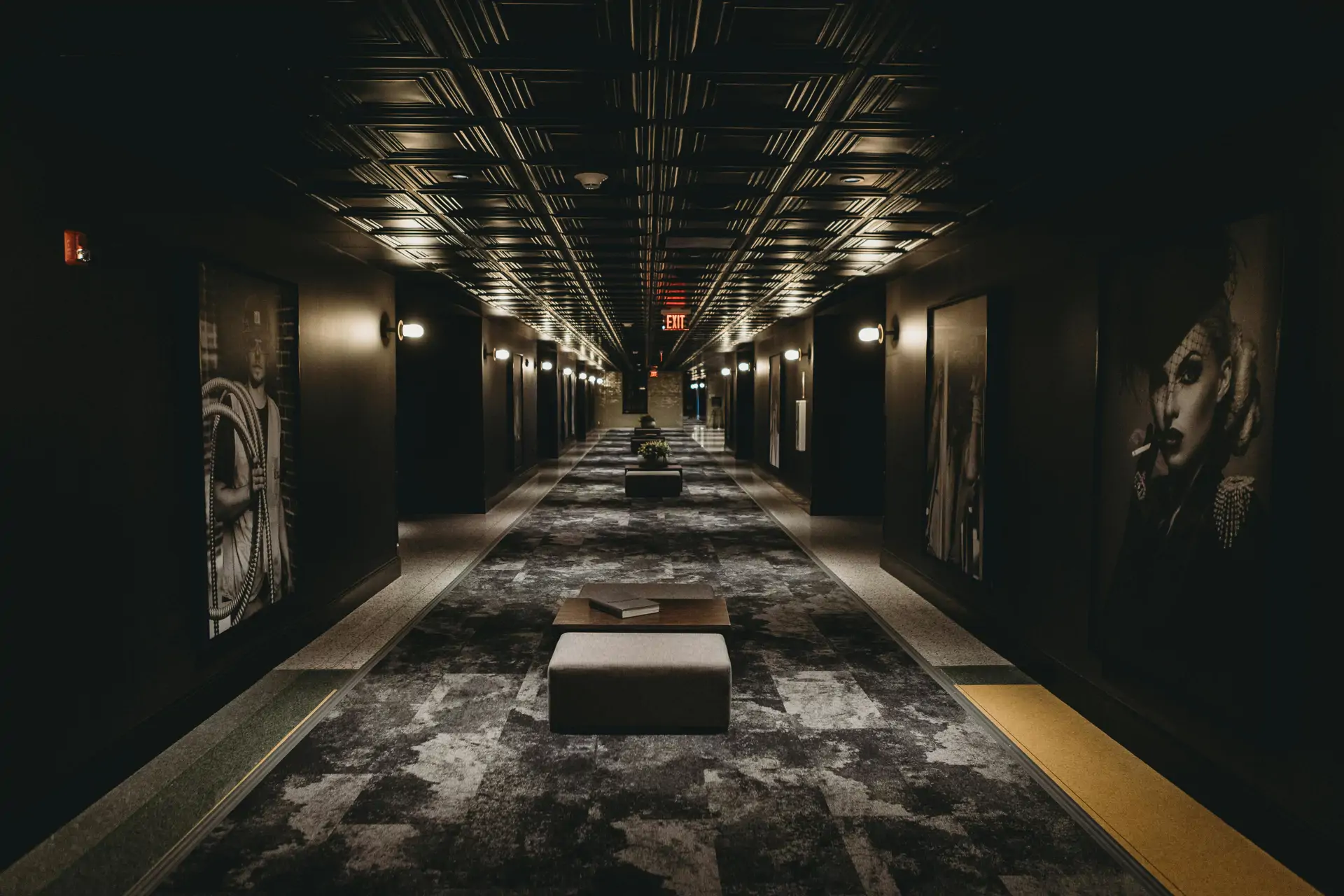
This evolution mirrors broader luxury market shifts. As UHNWI travel more extensively and develop sophisticated aesthetic sensibilities, they demand environments reflecting their cultural sophistication. Hotels responded by transforming lobbies into galleries, commissioning installations rivaling museum shows, and building permanent collections that enhance brand prestige while appreciating as investments.
Museum-Quality Curation: How Hotels Build Collections
The world's leading hotels approach art acquisition with rigor matching serious private collectors. Understanding their strategies provides valuable frameworks for residential collecting.
The Langham, London: Historical Continuity Meets Contemporary Vision
The Langham's collection demonstrates how hotels balance heritage with contemporary relevance. The property houses Victorian-era paintings reflecting its 1865 founding alongside contemporary works by British artists, including Damien Hirst and Tracey Emin. Art Director Rebecca Davies works with external advisors to acquire pieces that dialogue with the building's history while maintaining a contemporary edge.
The strategy emphasizes British artists, creating geographic coherence that resonates with international guests seeking authentic cultural experiences. A Hockney print in the bar references London's artistic heritage while a contemporary photography series documents evolving British identity. This thematic consistency creates collection coherence that random high-quality acquisitions cannot achieve.
Budget allocation mirrors serious collecting: The Langham dedicates approximately 2-3% of renovation budgets to art acquisition, treating collections as capital investments rather than operating expenses. Works undergo condition assessments, appraisals, and conservation—the same protocols private collectors employ for museum-quality holdings.
The Viceroy Hotels: Site-Specific Commissions as Brand Identity
Viceroy properties exemplify commissioning strategies that create unique artistic experiences impossible to replicate elsewhere. Each property partners with local and international artists for large-scale installations, defining the hotel's visual identity.
At Viceroy Los Cabos, artist Anish Kapoor created dramatic sculptures for public spaces, while Mexican artists provided works celebrating regional cultural heritage. The Viceroy Chicago commissioned Tony Tasset's "Eye" sculpture, creating an Instagram-worthy landmark that generates millions in free publicity while functioning as serious contemporary art.
This commission-based approach offers advantages over purchasing existing works. Hotels specify sizes, themes, and locations, ensuring art integrates architecturally rather than competing with spaces. Artists gain exposure to international audiences and substantial budgets for ambitious projects. The resulting works often represent artists' largest or most significant installations, and they appreciate as their reputations grow.
Commissioning also provides acquisition advantages. Hotels typically pay 30-50% below comparable gallery prices for commissioned works since they provide prestigious platforms and cover production costs that artists might not afford independently. These partnerships create win-win scenarios: artists achieve career milestones while hotels acquire important works at favorable economics.
Equinox Hotels: Curating Wellness Through Art
Equinox's entry into luxury hospitality demonstrates how focused collecting strategies create differentiated positioning. Their art program emphasizes works exploring body, movement, and human potential—themes aligned with the brand's wellness positioning.
Collections include contemporary photography documenting athletic achievement, sculptures exploring human form, and abstract works conveying energy and vitality. Every acquisition undergoes evaluation against brand alignment criteria, creating thematic coherence that guests subconsciously register as authentic rather than generic luxury.
Discover curated contemporary art collections at Artestial, where hospitality-grade curation meets residential collecting with works selected for both aesthetic impact and investment potential.
This strategic focus demonstrates an essential collecting principle applicable to residential contexts: coherent collections built around themes prove more satisfying and valuable than random accumulation of "nice pieces." Whether collecting hotel art or building personal holdings, intentionality separates meaningful collections from mere decoration.
Investment Strategy: Art as an Asset on Hotel Balance Sheets
Progressive hotel groups increasingly view art collections as investment assets deserving capital allocation and portfolio management. This approach offers valuable lessons for collectors considering art's financial dimensions.
Rosewood Hotels: Portfolio Management Approach
Rosewood treats art acquisitions like any capital investment, requiring projected returns alongside aesthetic justification. Their Art Committee evaluates potential purchases using criteria including artist market trajectory, comparable sales data, condition reports, and authentication verification—the same due diligence serious collectors employ.
The group maintains detailed collection databases tracking acquisition costs, current valuations, condition status, and insurance coverage. Annual appraisals update values, providing data for balance sheet reporting and strategic decisions about whether to retain, sell, or upgrade holdings.
This discipline yields results. Rosewood's Carlyle in New York acquired contemporary photography when artists were emerging; fifteen years later, those works have appreciated 300-500%. The hotel retains most pieces for brand continuity but has occasionally sold works to fund acquisitions in higher-priority areas—treating the collection as a dynamic portfolio rather than a static holding.
Hotels also leverage art for financing advantages. Lenders increasingly recognize quality collections as balance sheet assets, improving debt capacity and terms. Works insured for eight figures enhance overall property valuations, supporting refinancing and sale transactions at premium multiples.
Faena Hotels: Art as Brand Differentiation and Value Driver
Argentine hotelier Alan Faena built his brand around art integration, demonstrating how collections create competitive advantages, justifying premium pricing. Faena Miami Beach houses $20+ million in contemporary art, including works by Damien Hirst, Jeff Koons, and Juan Gatti—every piece carefully selected to reinforce the property's positioning as a cultural destination.
The investment pays dividends beyond aesthetics. Faena commands room rates 40-60% above comparable Miami Beach properties, with occupancy consistently exceeding 85%. Guests specifically book to experience the art program, corporate clients pay premiums for event spaces featuring blue-chip works as backdrops, and the collection generates media coverage worth millions in advertising equivalents.
When Faena considered selling the Miami Beach property in 2023, appraisers attributed $15-20 million of the property's value directly to art holdings and cultural programming. This demonstrated how exceptional collections translate to tangible real estate value—a principle equally applicable to residential properties.
Influence on Residential Collecting: Lessons from Hotel Curators
Hotel art programs influence residential collecting in multiple dimensions, offering frameworks that sophisticated collectors adapt to private contexts.
Scale and Impact: Go Large or Go Home
Hotels demonstrate that properly scaled art creates a dramatically greater impact than undersized pieces. A 6x8-foot painting in a hotel lobby reads as intentional; the same lobby with 2x3-foot works feels tentative. This principle applies equally to residential spaces.
Residential collectors often underbuy scale, selecting conservatively sized works that disappear in contemporary homes with 12-foot ceilings and open floor plans. Hotel curators show that large-scale contemporary works—which can cost less than smaller blue-chip pieces—create presence, justifying their prominence in architectural spaces.
The Ace Hotel demonstrates this effectively. Their lobbies feature floor-to-ceiling installations and oversized paintings that command attention. When guests encounter these works, they experience genuine impact—the same reaction collectors should seek in residential contexts. A properly scaled Anselm Kiefer painting dominates a living room beneficially; a timid work merely occupies wall space.
Mixing Eras and Mediums: The Eclectic Approach
The best hotel collections mix contemporary works, photography, sculpture, and occasionally antiques—demonstrating that stylistic diversity creates richness that homogeneous collections lack. The Bulgari Hotel London pairs contemporary Italian art with neoclassical sculptures and Art Deco furniture, creating a layered sophistication that single-period collections cannot achieve.
This permission to mix liberates residential collectors from rigid "all contemporary" or "all traditional" approaches. Thoughtful juxtaposition—a Gerhard Richter abstraction above a Louis XVI commode, a Kiki Smith sculpture alongside minimalist furniture—creates visual interest and demonstrates sophisticated collecting beyond simple category following.
Hotels also embrace multiple mediums more readily than many collectors. Photography, works on paper, sculpture, and installation art complement paintings, creating three-dimensional engagement with art throughout spaces. Residential collectors who expand beyond paintings discover richer collecting experiences and often better value—a $50,000 investment in exceptional photography or sculpture may deliver more impact than a $50,000 painting.
Living with Art: Durability and Practicality
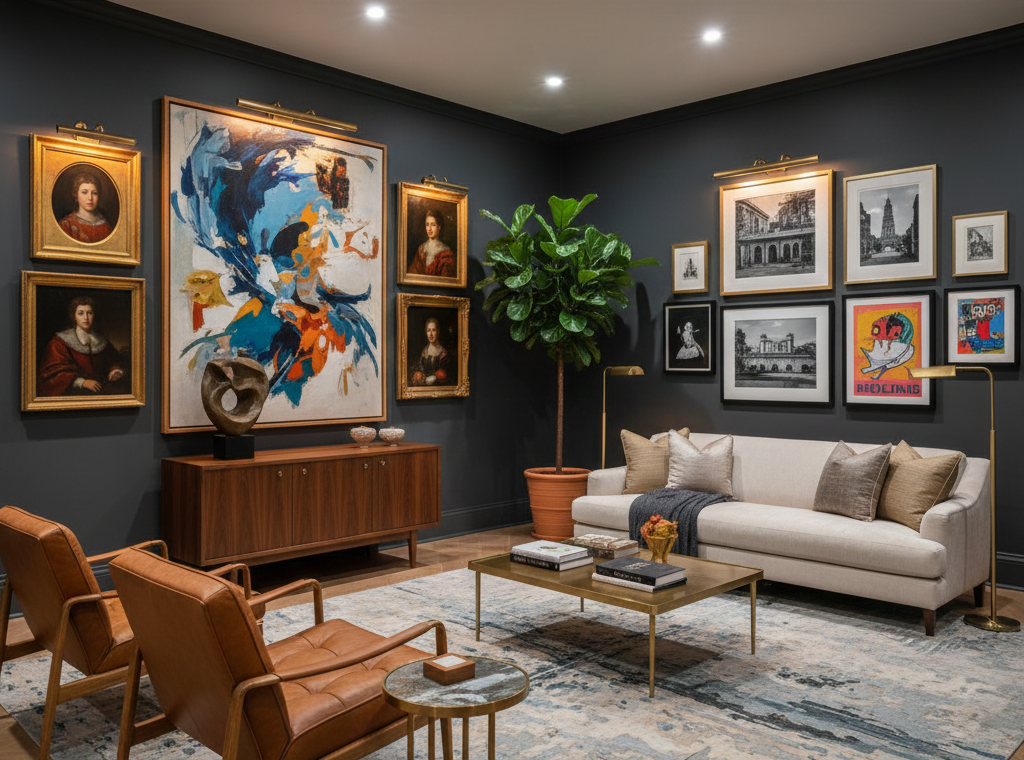
Hotels prove that museum-quality art can exist in active environments without requiring precious handling. Thousands of guests pass artworks annually, yet proper installation, lighting, and occasional conservation keep collections pristine. This practical approach contrasts with collectors who segregate art from daily life, treating homes like museums rather than living spaces.
The W Hotels Art Program specifically selects works that withstand hospitality environments—photography under acrylic rather than glass, canvas paintings properly sealed and varnished, sculptures positioned to avoid contact damage. These same principles allow residential collectors to live actively with art rather than tiptoeing around fragile installations.
Contemporary hotels also demonstrate lighting principles applicable residentially. Track lighting highlighting individual works, picture lights on traditional pieces, and ambient illumination preventing glare—these techniques make art accessible after dark while protecting against UV damage. Residential collectors increasingly adopt museum-grade LED systems that hotel installation teams pioneered.
Site-Specific Commissions: When Hotels Become Patrons
The most ambitious hotel art programs commission site-specific installations that transform properties into venues for significant artistic achievement. Understanding this patronage model reveals opportunities for residential collectors to engage artists directly.
The Cosmopolitan Las Vegas: Art as Entertainment
The Cosmopolitan's art program features commissions from contemporary masters, including KAWS, Henzel Studio, and Kelly Wearstler. The property allocated $40 million for art acquisitions and commissions, treating cultural programming as an essential amenity alongside pools and restaurants.
This scale attracts major artists who might not otherwise work in hospitality contexts. KAWS created a large-scale sculpture specifically for the property, knowing millions would encounter it—exposure exceeding most museum installations. The resulting work represents a significant moment in the artist's career, appreciating substantially since the installation.
Hotels can negotiate favorable terms unavailable to most collectors. They provide prestigious platforms, cover production costs, and accept extended completion timelines, earning artist cooperation that typical transactions cannot command. While residential collectors cannot match these advantages, they can commission emerging and mid-career artists for site-specific works at accessible price points.
The Rubell Family Collection: When Collectors Become Hoteliers
The Rubell family, among America's most significant contemporary art collectors, opened the Rubell Museum DC within a hotel environment, demonstrating convergence between serious collecting and hospitality. Their Rosewood Hotel property features museum-quality exhibitions that change quarterly, with works drawn from their 7,500-piece collection.
This model—collectors opening hotels to share holdings while generating revenue—represents the ultimate synthesis of collecting and hospitality. The arrangement provides tax advantages through property depreciation and potential charitable contributions while introducing art to audiences beyond typical museum visitors.
While few collectors can open hotels, the principle scales: Collectors increasingly loan works to museum exhibitions, corporate lobbies, and hospitality environments, gaining cultural capital while potentially enhancing provenance. A painting exhibited at the Rubell or Four Seasons gains documentation that future buyers value, demonstrating how hospitality contexts add cultural significance beyond private enjoyment.
Art Advisors in Hospitality: Professionalizing Hotel Collecting
The rise of specialized art advisors serving hospitality clients professionalizes hotel collecting while creating career paths for art historians and curators outside traditional museum contexts.
Leading advisors, including Amy Cappellazzo (formerly Sotheby's), Allan Schwartzman (Sotheby's), and boutique firms like Philips & Fox, serve major hotel groups, applying contemporary art market expertise to hospitality contexts. They source works, negotiate acquisitions, manage authentication and due diligence, oversee conservation, and advise on strategic acquisitions and deaccessions.
These professionals earn retainers plus acquisition commissions, typically 10-15% of purchase prices—significant fees justified by expertise, saving clients far more through market knowledge and negotiating power. Their involvement ensures hotels avoid overpaying for works, acquire authentic pieces rather than fraudulent or misattributed examples, and build collections with genuine investment potential rather than expensive decoration.
Residential collectors benefit from similar advisory services. Firms including Artvest Partners, Winston Art Group, and Collecteurs provide acquisition advisory, authentication services, and portfolio management for collectors treating art as investment-grade assets. Like hotels, collectors who engage qualified advisors typically achieve superior returns versus unguided acquisitions—advisor fees prove cheap insurance against expensive mistakes.
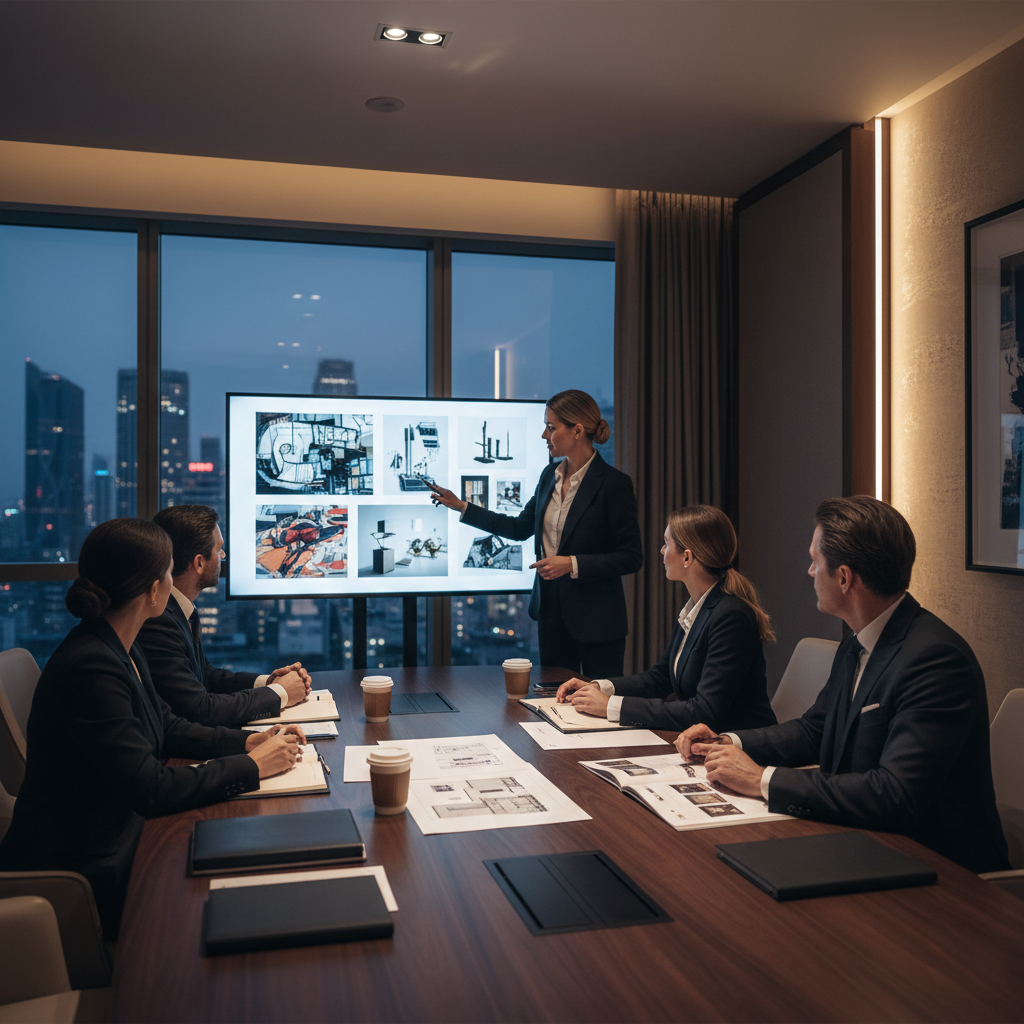
The professionalization of hotel art advising also improves market transparency. Major hotels typically acquire through galleries and auction houses, creating documented provenance and establishing fair market pricing. This contrasts with less scrupulous environments where relationships and opacity allow overpricing. Collectors can follow hotel-grade acquisition practices—working with reputable sources, insisting on authentication, documenting provenance—to achieve similar quality assurance.
The Future: NFTs, Digital Art, and Evolving Hospitality Design
Progressive hotels explore digital art and NFTs, demonstrating how luxury environments integrate emerging mediums.
The CitizenM hotel chain installed digital screens throughout properties displaying rotating digital art collections. Guests access QR codes to learn about artists, purchase editions, or acquire NFTs linked to displayed works. This technology-forward approach attracts younger luxury travelers while positioning hotels as contemporary culture leaders.
W Hotels partnered with digital artists to create NFT collections linked to physical installations. Guests who book specific suites receive complimentary NFTs commemorating their stays—creating collectible digital assets alongside traditional hospitality experiences. This fusion of physical and digital collecting reflects broader market evolution as NFTs mature beyond speculation toward a legitimate collecting category.
These experiments offer residential collectors templates for integrating digital art. Digital displays featuring rotating NFT collections allow displaying far more works than wall space permits. Blockchain provenance provides authentication for digital acquisitions. And NFT communities create social dimensions to collecting that traditional art markets rarely achieve.
However, hotels also demonstrate caution regarding NFTs. Most continue emphasizing physical art with proven appreciation while experimenting modestly with digital. This balanced approach—acknowledge emerging categories without abandoning proven assets—guides residential collectors navigating whether and how to allocate toward NFTs.
Collecting Opportunities: Inspired by Hotel Design
Hotel art programs reveal specific collecting opportunities for residential applications:
- Emerging artist partnerships: Hotels commission emerging artists at accessible prices before market recognition drives premiums. Collectors can similarly patronize emerging talents through gallery relationships, studio visits, and direct commissions—acquiring works that may appreciate substantially as artists gain recognition.
- Photography as an alternative to painting: Hotels use photography extensively because exceptional works cost 50-70% less than comparable paintings while delivering equal impact. Collectors who embrace photography from established masters (Cindy Sherman, Andreas Gursky, Hiroshi Sugimoto) gain museum-quality holdings at accessible price points.
- Site-specific commissions: Just as hotels commission artists for specific locations, residential collectors can work with emerging and mid-career artists for site-specific works. A $15,000-30,000 commission might yield a significant piece perfectly scaled for a specific location—better value than spending $50,000 on an unsuitable existing work.
- Sculpture and three-dimensional works: Hotels demonstrate that sculpture transforms spaces more dramatically than paintings alone. Collectors who expand to include contemporary sculpture, ceramics, and mixed-media installations create richer environments while often finding better value than oversaturated painting markets offer.
Conclusion: Living with Art, Not Just Owning It
The most important lesson hotels teach collectors concerns the relationship with art. Hotels prove that exceptional works enhance spaces where people live, work, and socialize—art need not be precious or untouchable to maintain value and significance. This philosophy liberates collectors from museum-at-home approaches that prioritize preservation over engagement.
When Four Seasons displays Jeff Koons in lobby spaces where thousands of guests pass daily, they demonstrate that properly installed, museum-quality art thrives in active environments. When Faena commissions site-specific installations that become backdrops for weddings and corporate events, they show that art can be simultaneously serious and accessible. And when Rosewood treats collections as investment portfolios requiring active management, they prove that aesthetic enjoyment and financial returns complement rather than contradict each other.
For collectors building residential holdings, hotel programs provide frameworks balancing acquisition quality, strategic curation, proper display, and active engagement. The best collections enhance daily life while appreciating steadily, creating a cultural legacy alongside financial returns.
Explore Artestial's hospitality-grade collections featuring museum-quality works selected for both residential impact and investment potential, or connect with our advisory team for personalized guidance on building collections that transform spaces while appreciating as assets.
Whether you're furnishing a primary residence, vacation property, or corporate environment, approach art with the same intentionality that luxury hotels demonstrate. Commission emerging artists for site-specific works. Embrace scale appropriate to contemporary architecture. Mix mediums and eras thoughtfully. And most importantly, live with art actively rather than treating homes as museums. These principles transform collecting from an acquisition exercise into meaningful cultural engagement that enriches life while building value.
The world's finest hotels prove daily that exceptional art and active living coexist beautifully. Collectors who embrace this philosophy discover that the greatest luxury isn't owning museum-quality works—it's experiencing them intimately within spaces where life unfolds.
Frequently Asked Questions
Can individual collectors commission artists like hotels do, and what does it cost? Absolutely. While hotels commission at scale ($50,000-$500,000+ for major installations), emerging and mid-career artists welcome residential commissions at accessible price points. Expect $10,000-$30,000 for commissioned paintings by emerging artists, $15,000-$50,000 for mid-career sculptors, and $5,000-$15,000 for photography or works on paper. Commissioning offers advantages: works perfectly scaled for specific locations, direct relationships with artists, and often better value than gallery purchases. Start by visiting artist studios, attending MFA exhibitions, or working with advisors who facilitate artist-collector connections. Establish clear parameters regarding size, theme, timeline, and budget, then let artists' creativity guide the process.
How do hotels protect artwork from damage with thousands of guests passing by? Hotels employ multiple protection strategies applicable to residential contexts. Physical barriers—subtle rope barriers, recessed alcoves, elevated platforms—prevent contact without museum-like formality. Strategic placement positions vulnerable works away from high-traffic areas while reserving durable pieces for lobbies and corridors. Installation quality—proper mounting, reinforced hanging systems, protective glazing—prevents accidents. Insurance coverage—comprehensive policies with agreed values—protects against losses. And staff training ensures housekeeping and maintenance teams handle surrounding spaces carefully. Residential collectors can apply similar principles: place delicate works in low-traffic areas, use museum-grade mounting hardware, consider protective glazing for valuable works, and maintain comprehensive insurance.
What makes hotel art collections valuable as investments versus just decoration? Investment-grade hotel collections share characteristics with serious private holdings: authentic works by recognized artists, proper provenance documentation, museum-quality condition, strategic acquisition at fair market prices, and professional conservation. Hotels like Four Seasons, Rosewood, and Faena treat art as balance sheet assets, conducting annual appraisals, maintaining detailed databases, and occasionally selling works that have appreciated significantly. Their collections have demonstrated 200-500% appreciation over 10-20 year periods—outperforming many traditional investments while enhancing property values. However, most hotel art remains decorative rather than investment-grade. The distinction lies in acquisition quality, documentation rigor, and long-term holding strategy rather than the hospitality context itself.
Should residential collectors focus on single artists like some hotels, or diversify? Both approaches work depending on goals and resources. Focused collections—multiple works by single artists or tight thematic groups—can develop exceptional provenance and exhibition potential. If you acquire ten works by an emerging artist who later achieves blue-chip status, that concentration creates substantial value. However, diversification reduces risk if specific artists or movements fall from favor. Hotel strategies offer models: The Langham focuses on British artists while maintaining era diversity; 21c embraces broad contemporary art while emphasizing regional artists; Faena concentrates on Latin American and contemporary masters. Most residential collectors benefit from hybrid approaches—core concentration in preferred artists/movements with diversification across mediums, eras, and price points.
How can I find emerging artists that hotels are commissioning before their work becomes expensive? Hotels discover emerging artists through several channels that collectors can access. Gallery relationships—major hotels work with galleries like Pace, Gagosian, and Hauser & Wirth, who represent both established and emerging talents. Art fairs—Miami Basel, Frieze, and regional fairs showcase emerging artists before market recognition. Art advisors—specialists who scout talent for hotel clients often serve private collectors simultaneously. MFA exhibitions—top art school graduates frequently become next-generation blue-chip artists; attending thesis shows identifies talent early. Artist residency programs—hotels like 21c host residencies; following these programs reveals emerging voices. And social media—Instagram and digital platforms allow direct artist discovery before gallery representation drives premiums. Combining these approaches identifies talent before prices escalate.
Ready to build museum-quality collections for your spaces? Explore Artestial's curated selections featuring works scaled for contemporary architecture and selected for investment potential, or connect with our advisory team for personalized guidance applying hospitality-grade curation strategies to residential collecting.
Curating excellence, one insight at a time.
— AURUM Team
Disclaimer: This article is for informational purposes only and does not constitute financial, investment, or collecting advice. Art markets fluctuate based on multiple factors, including artist reputation changes, market conditions, authenticity disputes, and collector preferences. Past appreciation does not guarantee future returns. Commissioned works carry additional risks, including project completion uncertainty, artist reliability, and resale market limitations. Conservation, insurance, installation, and advisory costs significantly impact net returns. Hotel collecting strategies may not directly translate to residential contexts due to scale, budget, and expertise differences. Consult qualified art advisors, conservators, and financial professionals before making significant acquisitions. Observations reflect industry knowledge as of early 2026 and may not apply to specific situations.